REVIEW · POMPEII
Pompeii excavations: skip-the-line private tour
Book on Viator →Operated by Trentaremi · Bookable on Viator
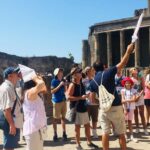
Pompeii hits fast, even on a short tour. This private skip-the-line experience is built around seeing the parts of Pompeii that explain daily life: narrow streets and key public spaces, plus house interiors with frescoes and mosaics like the Villa dei Misteri. I like that your guide is professional and certified, so you get context while you’re standing in the ruins. One thing to keep in mind: the ticket itself (entrance fee) is not included, so you should budget time and money for the official admission process.
You start at Piazza Esedra at 10:00 am and you’ll be finished back at the same meeting point after about 2 hours. I also like that it’s a true private format (only your group), with a mobile ticket, and it’s near public transportation.
Pompeii is not a “just walk and hope” site. The ash, the layout, and the preserved details turn a quick visit into something you can actually understand—if you have the right guide and the right expectations.
In This Review
- Key highlights at a glance
- Pompeii’s “last moment” feeling—why this 2-hour tour works
- Meeting at Piazza Esedra: how the start affects your day
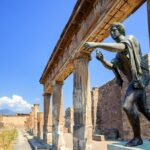
- The streets of ancient Pompeii: what “life in Rome” looks like
- Homes, frescoes, and graffiti: where Pompeii becomes personal
- Public buildings and the layout of power: theaters, baths, markets
- The Forum: Pompeii’s nerve center
- The cast of victims: what you’ll see and how to face it
- Price and “skip-the-line” reality: what you should confirm
- How to pace yourself: you’ll see a lot, but you won’t see everything
- Who should book this Pompeii private tour?
- Should you book Pompeii skip-the-line with a private guide?
- FAQ
- How long is the Pompeii excavations private tour?
- What time does the tour start?
- Where do we meet for the tour?
- Is the entrance fee to Pompeii included?
- Is this a private tour?
- Do I get a mobile ticket?
- Is a guide included?
- Is good weather required?
- How far in advance should I book?
- What is the cancellation window?
Key highlights at a glance
- Skip-the-line, private format: only your group, with a guide leading the route
- Forum focus: you’ll end up at the city’s power center
- House interiors you can read: frescoes, mosaics, and even graffiti
- Villa dei Misteri type of stop: famous painted rooms are part of the route
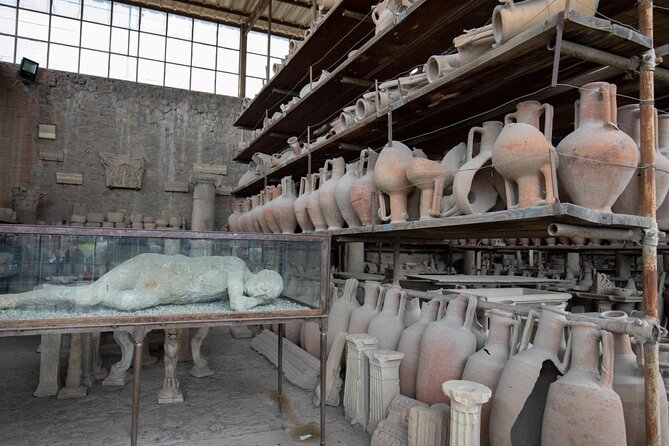
- Plaster casts of victims: the most haunting images are built into the experience
- 2 hours means priorities: you’ll see a lot, but not every corner of Pompeii
Pompeii’s “last moment” feeling—why this 2-hour tour works
Pompeii can overwhelm you in a good way. The scale is big, the site is spread out, and it’s easy to wander without getting the meaning. This tour is designed to keep things moving, while still hitting the places that make ancient Roman life feel real.
I like that the route follows a clear theme: daily streets first, then homes and public spaces, then the Forum. You start with the urban setting—houses, taverns, bakeries, and shops—so the city feels like a lived-in place, not just stone and dirt. Then you layer in the drama: the frescoes and mosaics, the graffiti, and finally the plaster casts of people whose lives stopped mid-flight.
The most important value here is guidance. Pompeii is full of “what am I looking at?” moments. A good guide helps you connect what you’re seeing—like doorway layouts, room function, and public-vs-private spaces—to what people would have experienced.
You can also read our reviews of more private tours in Pompeii


Meeting at Piazza Esedra: how the start affects your day
Your tour starts at Piazza Esedra (80045 Pompei NA). That matters more than you might think. Getting to Pompeii early enough to settle in is a huge advantage because the site can get crowded, and you’re limited to about 2 hours.
You’ll also end back at the meeting point. That’s helpful if you’re planning the rest of your day—maybe you’re pairing Pompeii with a stop in Naples, or you’re heading toward another town on the Amalfi Coast. A round-trip to the same point keeps your schedule tidy.
Because it’s near public transportation, you won’t feel trapped by taxis or private transfers. Still, do yourself a favor: wear shoes you can handle on uneven ground. Pompeii is outdoors and the surface can be rough, especially in the busier paths.
The streets of ancient Pompeii: what “life in Rome” looks like
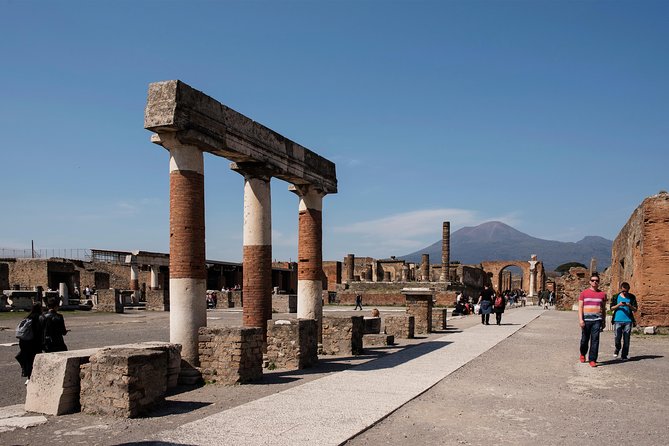
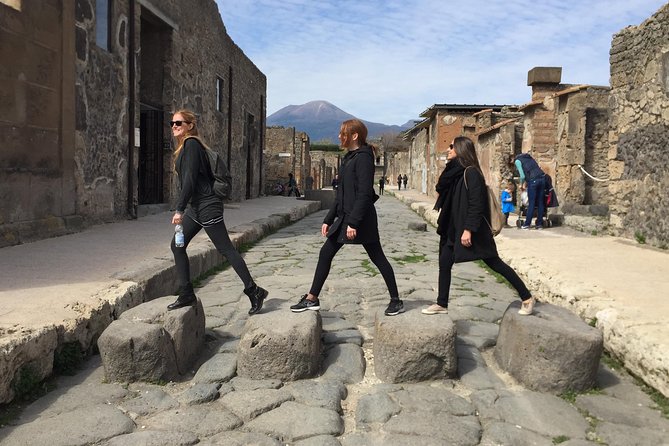
One of the best parts of this tour is that it begins with the city’s rhythm. You’ll stroll along narrow streets overlooked by houses, taverns, bakeries, and shops. In other words, you see Pompeii the way it likely felt—close quarters, constant movement, and commerce happening at street level.
This is where your guide earns their fee. On your own, it’s easy to treat a street as a street. With a guide, you start noticing how buildings face the road, where entries would have been, and how public and private spaces blur at the edges.
You’ll also pass areas linked to entertainment and social life: spots connected to theaters and gymnasiums, along with spaces tied to spas and markets. These are the kinds of buildings that help you understand Roman priorities beyond home life—health routines, leisure, and civic identity.
Homes, frescoes, and graffiti: where Pompeii becomes personal
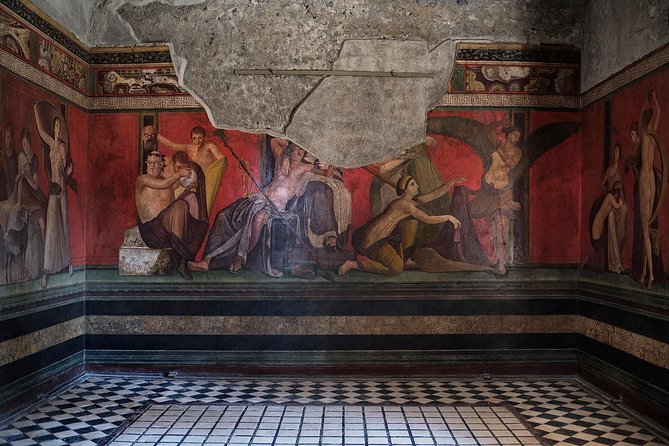
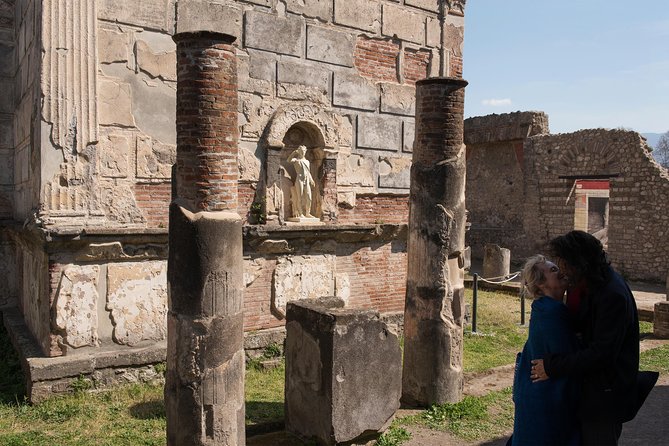
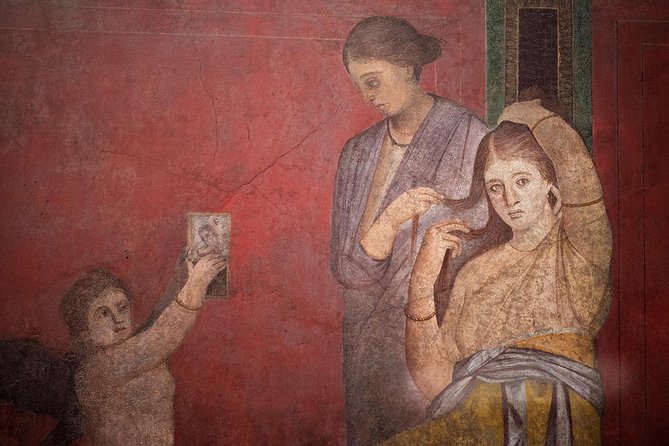
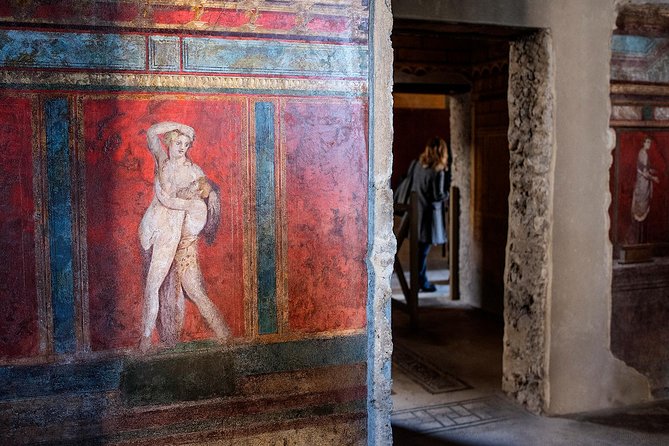
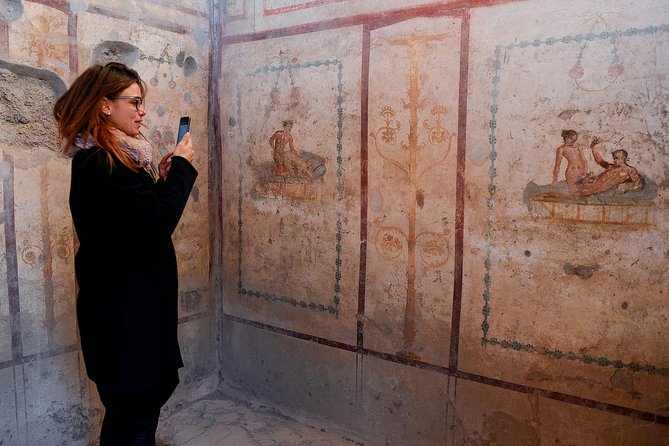
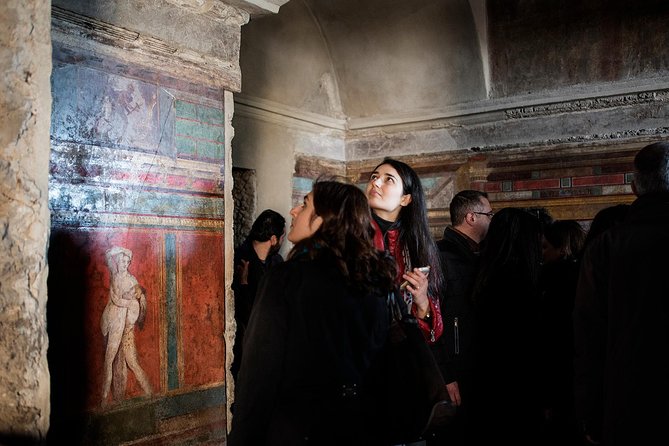
Pompeii’s real magic is inside homes. The tour focuses on entering house interiors decorated with frescoes and refined mosaics. You’ll also see locations described in the context of extraordinary painted rooms, including the Villa dei Misteri type of stop.
Here’s what I love about this approach: the decoration isn’t just artwork. It signals status, taste, and how people wanted their homes to feel. When you’re standing in front of preserved wall paintings and mosaic floors, you can picture daily scenes—visitors, dining, conversations—rather than just admiring ruins from a distance.
Then there’s the graffiti. Pompeii graffiti can still be read, and that’s a big deal. It’s informal writing from real people—comments, names, shorthand messages—meaning you’re not only seeing grand art. You’re seeing the background noise of a city that was alive.
One practical note: house interiors can feel darker and tighter than the street-level paths. If you’re short on time, your guide’s pacing helps you see key rooms without sprinting past details.
Public buildings and the layout of power: theaters, baths, markets
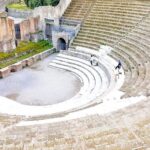
Pompeii isn’t only homes. This tour works through major public areas like theaters, gymnasiums, spas, and markets. These stops help you understand how the Roman city functioned as a machine.
A theater is about spectacle and community. A gymnasium is about routine and physical life. Baths and spas are about cleansing and socializing. Markets are where goods and news changed hands. When you connect these dots, Pompeii feels less like a tragic snapshot and more like a city with habits.
The value of the guided format shows up again here. In a fast self-guided walk, public buildings can feel like stops on a list. On this tour, the guide helps you interpret what you’re seeing and why it mattered.
You can also read our reviews of more tours and experiences in Pompeii



The Forum: Pompeii’s nerve center
At some point, you reach the Forum—the city’s nerve center. This is a turning point in the experience, because it shifts from neighborhoods and buildings into civic life: the places tied to public decision-making and collective identity.
Even if you’re not a Roman history expert, the Forum usually gives people that click moment. It’s where you can sense the city’s hierarchy and movement—who gathered where, why crowds formed, and how public space shaped daily decisions.
If you only have time for one big Pompeii zone, this is often it. The Forum is the kind of place where your guide can translate stone into a story you can follow.
The cast of victims: what you’ll see and how to face it
No Pompeii visit feels complete without the plaster casts of the people caught during the eruption. In this tour, you’ll reach those most authentic and tragic images: individuals fleeing, bodies contorted by harmful gases, and even a dog tied to a leash in the scene.
This part of the tour can hit hard. The casts are confronting because they preserve expressions and attitudes—desperate on the run, people hugging, women and children huddled. It can be emotional, even if you’ve seen photos before.
If you’re traveling with kids or someone who doesn’t handle intense history well, it’s worth preparing them. This isn’t graphic in the gore sense, but it is emotionally heavy. A guide can help with tone and context, which makes it easier to process what you’re looking at.
Price and “skip-the-line” reality: what you should confirm
The tour price is $348.44 per person for about 2 hours. Entrance fee is not included, and that’s a key piece of value math. When you add the official ticket to the total, the “skip-the-line” promise matters even more.
The tricky part with Pompeii is that lines and entry flow can depend on ticket type and timing. If your main goal is avoiding queue time at the site, I strongly suggest you clarify what the skip-the-line includes for your exact date and time. Ask whether you’ll enter through a reserved lane, and whether you still need to stop at the official ticket office in any way.
Also note that there can be different ways to buy tickets: official ticket prices can differ from online booking options, and online purchases sometimes come with extra fees. If you’re price sensitive, compare what you’ll pay for official admission and how it interacts with your tour’s access.
Bottom line: pay attention to the “entrance fee not included” detail and make sure the workflow matches your expectation of how much time you’ll save.
How to pace yourself: you’ll see a lot, but you won’t see everything
Two hours sounds long until you’re walking Pompeii with stops that actually mean something. This tour is efficient. It targets street-level context, key houses with standout decoration, public buildings, then the Forum and the cast area.
That means you’ll likely leave with a strong sense of the city’s structure and daily life—but not with every major site inside the park. If you want a full-on “cover every ruin” day, consider adding self-guided time after your tour or choosing a longer itinerary.
What works best is pairing this with a second half-day to wander. Use the guide’s route as your foundation, then explore at your own pace where the guide pointed out what to notice.
Who should book this Pompeii private tour?
This tour is a strong fit if you want:
- A certified guide to interpret frescoes, mosaics, graffiti, and public buildings
- A private group experience with only your party involved
- A focused visit that hits the Forum and the victim casts without turning your day into a maze
It may be less ideal if:
- You’re trying to optimize for maximum “number of ruins,” since it’s only about 2 hours
- You need guaranteed time savings without any interaction with the official ticket process—Pompeii entry flow can vary, so confirm what you’ll actually bypass
If you’re on a tight schedule and want the emotional and historical highlights in a controlled way, this is the kind of tour that helps you avoid wasted time.
Should you book Pompeii skip-the-line with a private guide?
I’d book it if your top priority is understanding what you’re seeing. Pompeii is too detailed to treat like a checklist. With a guide, you get the story behind the streets, the meaning of house decorations, and the civic layout that pulls everything together at the Forum.
Before you buy, do two quick checks:
- Confirm how the skip-the-line works with the official tickets, since entrance fee isn’t included in the tour price.
- Plan your day so you can still enjoy time at the site without rushing—because Pompeii deserves more than a sprint.
If you’re coming to Pompeii for one visit and you want it to feel coherent, this private guided format is a practical way to make your limited hours count.
FAQ
How long is the Pompeii excavations private tour?
It runs for about 2 hours.
What time does the tour start?
The start time is 10:00 am.
Where do we meet for the tour?
You meet at Piazza Esedra, 80045 Pompei NA, Italy.
Is the entrance fee to Pompeii included?
No. The entrance fee is not included in the tour price.
Is this a private tour?
Yes. It’s a private tour/activity with only your group participating.
Do I get a mobile ticket?
Yes, the experience includes a mobile ticket.
Is a guide included?
Yes. A professional guide is included.
Is good weather required?
The experience requires good weather. If it’s canceled due to poor weather, you’ll be offered a different date or a full refund.
How far in advance should I book?
On average, it’s booked 5 days in advance.
What is the cancellation window?
You can cancel up to 24 hours in advance for a full refund.