REVIEW · POMPEII
Pompeii and Mount Vesuvius Small Group Tour
Book on Viator →Operated by Askos Tours · Bookable on Viator
Pompeii plus a volcano hike in one day is a strong combo. What makes this tour work is the archaeologist-led Pompeii time plus the small-group climb to Vesuvius’s crater edge, with modern minivan transfers. The possible snag is the physical side: steep steps early on and a very uphill last stretch, so pack good shoes and don’t treat this like a stroll.
I also like how the guides turn the site into something you can picture, with Pompeii archaeologists (people like Raffaela or Simona) and a dedicated hiking guide for Vesuvius (often Mario). And when weather turns wild, there’s a built-in plan that can swap Vesuvius for Herculaneum.
In This Review
- Key things I’d zero in on
- Pompeii and Vesuvius, without the usual half-day hassle
- The start point and how you avoid first-day confusion
- Pompeii with an archaeologist: what you’ll actually learn
- Foro (the main square): start with the city’s heartbeat
- Granaries of the Forum: food, water, and the small shockers
- House of Menander: wealth you can read in decoration
- Stabian Baths (Terme Stabiane): the oldest thermal complex vibe
- Lupanar: a famous brothel stop, handled the Roman way
- House of the Faun: big private space, big scale
- Teatro Piccolo and Teatro Grande: why Pompeii has theaters
- The quiet half: what to do with time between ruins and the hike
- Mount Vesuvius crater walk: the part you can’t rush
- What the hike feels like (and how guides help)
- Weather changes everything: when the crater goes missing
- Price and value: what $119.77 buys you
- Who this tour is best for (and who should skip it)
- Small group comfort: why 14 people matters on a long day
- The one drawback to plan for: time at Pompeii is short
- Should you book this Pompeii and Mount Vesuvius small group tour?
- FAQ
- How long is the Pompeii and Mount Vesuvius small group tour?
- Where do we meet for the tour?
- What is included in the price?
- What should I wear or bring for Mount Vesuvius?
- What happens if Vesuvius is not accessible due to weather?
- Is this tour suitable for children or mobility needs?
Key things I’d zero in on
- A real time-saver day plan: both Pompeii and Vesuvius happen in one outing
- Archaeologist guidance at Pompeii for sense-making, not just walking
- Crater trail walk with a licensed hiking guide plus a steep last segment
- Panoramic payoff at the top when visibility cooperates
- Weather contingency: Herculaneum can replace Vesuvius if it’s closed
- Small group size (max 14) for easier pace control and questions
Pompeii and Vesuvius, without the usual half-day hassle
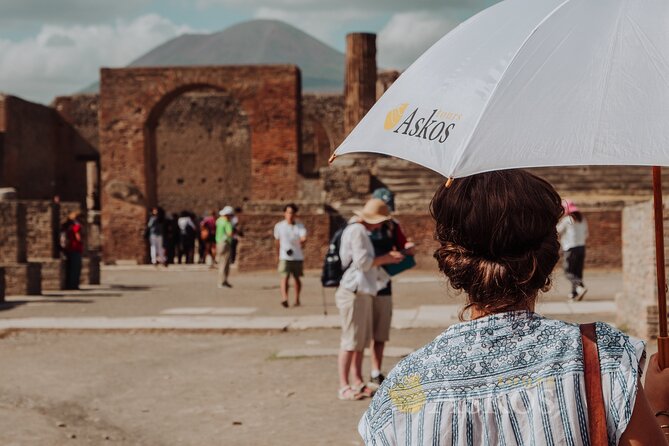
If you only have one day in the Naples area, this is the cleanest way to hit two headline stops. Pompeii is huge, and Vesuvius is its own mini-adventure. By bundling them, you avoid the scattershot feeling of trying to stitch together buses, tickets, and timing on your own.
The tour is built around short, purposeful stops at Pompeii, then a guided hike to the crater area. That structure matters. You still get to see major highlights, but you also get a guide pointing out what to notice so the ruins don’t blur into one long stone maze.
And yes, it’s a long day. You’re moving, walking, and climbing. The upside is that you leave with both the human story of Pompeii and the geology story of Vesuvius in your head.
You can also read our reviews of more tours and experiences in Pompeii.


The start point and how you avoid first-day confusion
You meet at the address Via Villa dei Misteri, 2, 80045 Pompei. From there, the Pompeii portion starts at the main site entrance called Porta Marina Superiore, where the guide holds a sign with Askos Tours.
This kind of detail sounds boring until you’re standing in the wrong spot with a pocket full of time. Showing up a bit early helps. Also, keep your shoes ready—once you’re on the ground, the day moves quickly.
The group size is capped at 14 travelers for the transportation side. That matters at Pompeii because a smaller group is easier to manage through crowds and across uneven routes.
Pompeii with an archaeologist: what you’ll actually learn
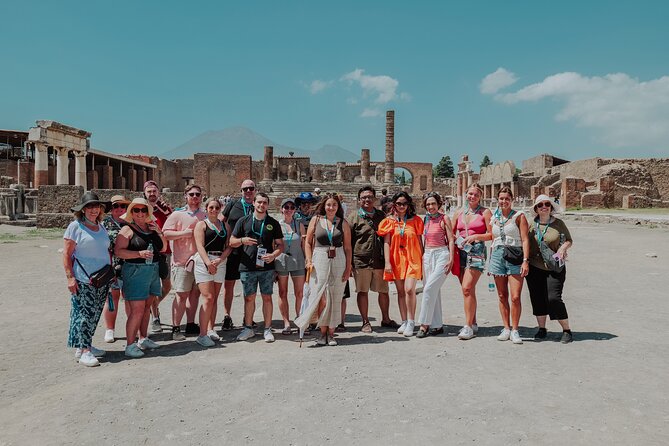
Pompeii works best with a guide who can connect objects to everyday life. That’s what the 2-hour archaeologist-led time is aiming for. Instead of just naming buildings, you learn how the city functioned—its layout, its public spaces, and what daily routines looked like before the eruption.
One of the most praised elements of this experience is the guide style. People describe archaeologists like Raffaela as strong on storytelling and interpretation, and Anna Sorrento as bringing an active-research perspective. Even when the group is moving fast, the explanations are meant to keep the ruins readable.
Foro (the main square): start with the city’s heartbeat
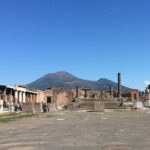
You get a look at Foro de Pompeya—Pompeii’s ancient main square. This is a good early anchor point because it gives you orientation fast. Once you understand where the public life happened, the streets and buildings start to make more sense.
Granaries of the Forum: food, water, and the small shockers
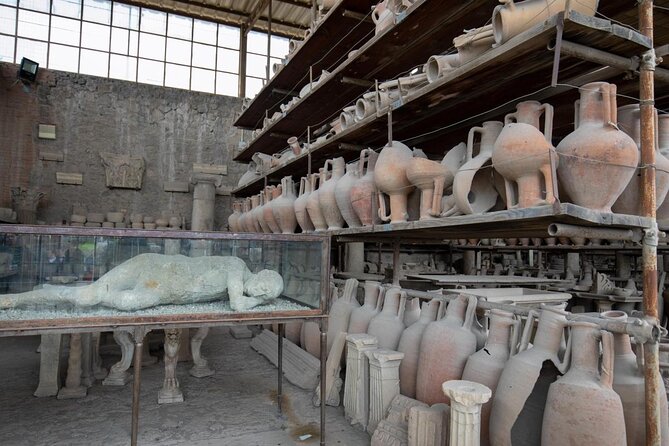
Next you visit the Granaries of the Forum. This stop is memorable because you see practical details tied to everyday needs—marble tables, baths for fountains, and also casts of victims (and even references to a dog and a tree). It’s the kind of place where you realize Pompeii isn’t only art and architecture. It’s also people, systems, and survival—captured in stone.
A short stop can still be meaningful here, as long as your guide is pointing out what the site is showing you.
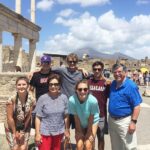
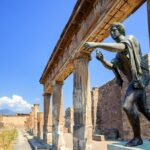
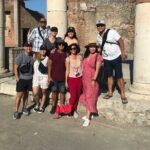
House of Menander: wealth you can read in decoration
The House of Menander is one of Pompeii’s richest homes in terms of architecture and decoration. Even with limited time, it’s a solid pick because it shows how status was displayed through space, layout, and material choices.
In other words, this isn’t a random mansion stop. It’s a snapshot of how elite households lived and how Roman taste showed up in private rooms.
Stabian Baths (Terme Stabiane): the oldest thermal complex vibe
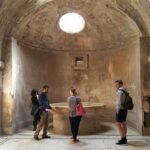
You then head to the Stabian Baths—noted as the oldest thermal complex in the city. Baths are a shortcut to understanding social life in Roman times. You’re looking at infrastructure that served real rhythms: gathering, cleaning, relaxing, and chatting.
This stop also helps break up the walking with a different kind of structure—rooms and corridors designed for movement and comfort.
Lupanar: a famous brothel stop, handled the Roman way
The Lupanar is Pompeii’s most famous brothel. Expect it to be direct and interpretive. The setting can feel intense, but it’s also an important clue to how Roman society worked and how different economic realities showed up in city life.
If you prefer a more sensitive pace, you can lean on your guide here. This is exactly the sort of stop where a good explainer can keep the experience grounded.
House of the Faun: big private space, big scale
The House of the Faun is described as one of the largest and most impressive private residences. This is one of those stops where even a short viewing window can hit hard because the size alone tells you what kind of power and wealth were built into domestic architecture.
And when your guide is connecting layout to function, you’ll start spotting patterns: how you’d enter, where you’d spend time, and how different spaces likely felt.
Teatro Piccolo and Teatro Grande: why Pompeii has theaters
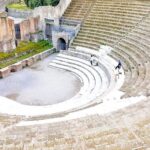
You’ll also get looks at the Teatro Piccolo and then visit the Teatro Grande, described as Pompeii’s most important theater.
Theaters are useful for two reasons. First, they tell you what entertainment and public gatherings meant. Second, they give you a “systems” view of the city—how crowds moved and how public space was planned.
Short theater stops work best when you notice design choices (and your guide tells you what they meant).
The quiet half: what to do with time between ruins and the hike
Food and drinks aren’t included. So you’ll want a plan for lunch snacks and water.
Depending on the day’s flow, you may get time to grab something quickly before switching gears to the volcano. Practically, I’d treat this as a moment to do three things:
- Buy water before you start climbing
- Eat something light enough that you still feel okay on uneven uphill ground
- Use the time to check your shoe laces and keep layers simple
If you’re sensitive to heat, keep it simple: a small carb + water beats a heavy meal that turns into regret on the climb.
Mount Vesuvius crater walk: the part you can’t rush
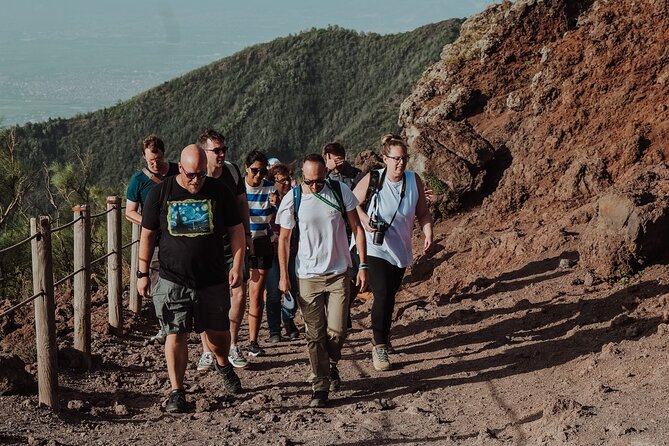
This is the real physical core of the tour. You transfer to Mount Vesuvius National Park, then get on the top to see the crater that still smokes slightly.
Even before the crater, there’s work. The tour notes that from the Vesuvius entrance, the first 30 minutes are step walking to reach the crater. And once you’re close, the last 500 meters are described as a very steep uphill walk. Closed-in shoes are essential—this is not the place for fashion sneakers with slick soles.
The payoff, when visibility is decent, is serious. You’re told to expect panoramic views of the Bay of Naples, Capri, Ischia, and the Sorrento coast edge.
What the hike feels like (and how guides help)
From the experiences shared, guides like Mario are often praised for a pace that respects different fitness levels. In one case, he was described as encouraging people who struggled a bit, and another person said the climb was challenging but manageable with breaks.
There’s also a useful pattern: the climb can be windy, and conditions can change fast. People describe the top as cool enough to need a light layer, even when it’s warm lower down.
Also, if you get lucky, you might meet a specialist on site. One account mentions meeting a scientist at the top who explained volcanic activity and the eruption mechanism. That kind of add-on turns the crater walk into more than scenery.
Weather changes everything: when the crater goes missing
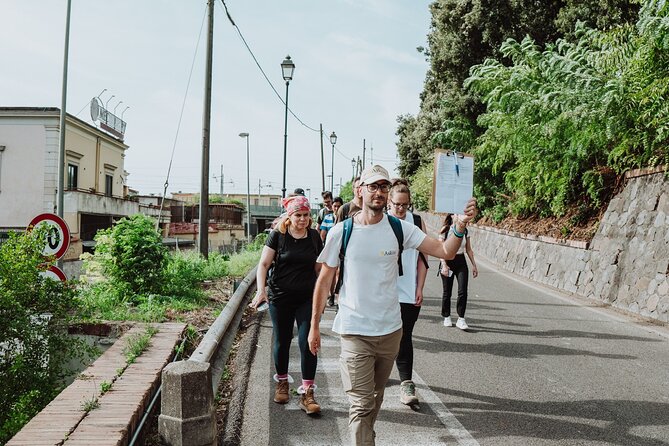
On Vesuvius, weather is king. Fog can roll in fast. Wind can be intense at the summit. Rain can make the ground slippery, and visibility can drop so you feel like you’re climbing into a cloud.
The tour does have an official contingency: if Vesuvius isn’t accessible due to force majeure, the day can include Herculaneum instead.
That’s more than a polite backup. It’s a meaningful swap, because Herculaneum is often described as more intimate and well preserved, with details that help fill the bigger picture alongside Pompeii.
One thing I’d take from this: don’t plan your only day on optimism alone. Pack for changes, and trust the guide to pivot when the park authorities say no.
Price and value: what $119.77 buys you
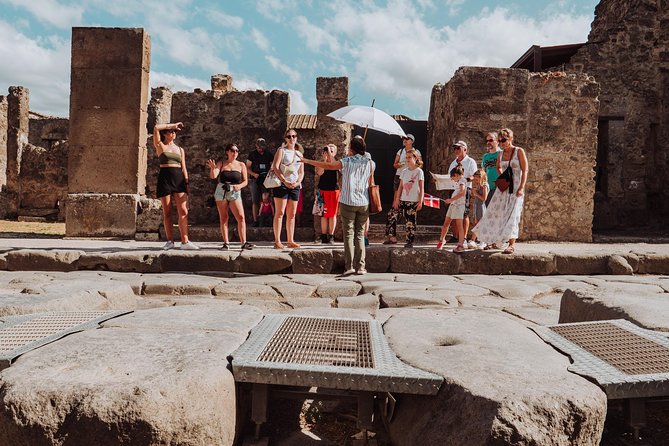
At $119.77 per person, you’re paying for speed and structure. The tour includes:
- 2-hour guidance at Pompeii by an archaeologist (up to 20 people)
- Admission fees for Pompeii Express and Vesuvius
- Transportation by modern minibus (up to 14 people)
- A hiking-licensed guide for Mount Vesuvius
Food and drinks aren’t included, so you’ll budget for that separately.
You might see a separate note that Mount Vesuvius entry is listed as 11.00 euros. In practice, the tour includes the Vesuvius admission fee, which is the part you want to avoid juggling on a tight schedule.
So is it worth it? If your alternative is figuring out two transport legs, separate timing, and trying to self-guide Pompeii, this is a fair price. You’re essentially buying two guided experiences: one on ruins interpretation, and one on a crater hike with real walking safety needs.
Who this tour is best for (and who should skip it)
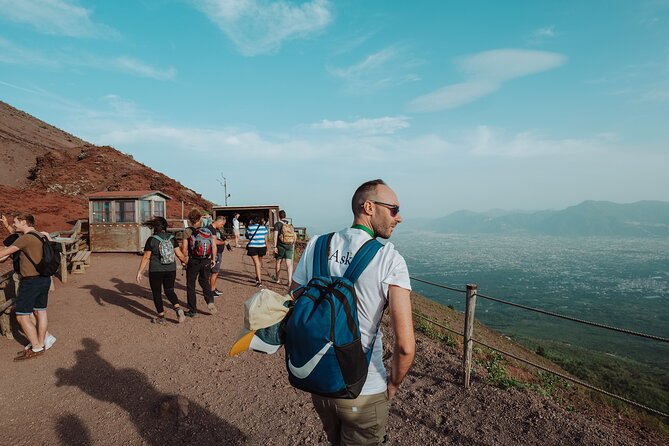
This fits travelers with moderate physical fitness. The hike is the key factor: step walking early on, then a steep uphill finish, plus uneven ground.
It’s also not recommended for mobility or walking issues. Children under 6 are not allowed.
If you love archaeology and also enjoy science or geology, you’ll likely get a lot out of this combo day. You’ll also appreciate it if you don’t want to spend your limited time deciding where to go inside Pompeii. A guided route helps you hit the big landmarks efficiently.
If you hate long days or you’re only comfortable with flat walking, consider a Pompeii-only day instead. The volcano climb is the piece that can make people feel stretched.
Small group comfort: why 14 people matters on a long day
The cap at 14 travelers is a practical detail. It means fewer delays at checkpoints, less crowd friction at stops, and a better chance of hearing explanations and asking questions.
Also, the Pompeii archaeologist time is described as up to 20 people. Even if the Pompeii group is slightly larger than the minibus group, the overall format is still meant to be small enough to keep the day moving without feeling like you’re on a cattle chute.
The one drawback to plan for: time at Pompeii is short
Pompeii is vast. This experience is designed to cover major highlights, not every corner.
So you may feel the pinch in two ways:
- Stops can be brief, which means you’ll want to rely on your guide for context
- You won’t get a slow, wandering day through every neighborhood of Pompeii
I see this as a tradeoff. You’re getting the most important sights with interpretation, plus the volcano climb. If you want full Pompeii depth without time pressure, you’d need more than one day.
Should you book this Pompeii and Mount Vesuvius small group tour?
Book it if you want a single-day plan that actually connects the dots. You’ll get an archaeologist-led Pompeii experience, then a crater walk guided by a licensed hiking professional. The views are the obvious draw, but the real value is the guidance that turns ruins and volcanic features into a story you can follow.
Skip it (or at least reconsider) if:
- you can’t handle steep uphill walking and steps
- you’re the type who needs a slow pace and lots of free wandering time
- weather surprises would stress you out too much, since fog and closures can affect what you see
If you do book, choose shoes like you mean it: closed-in grip for loose sand and steps, plus a layer for wind at the top.
One more tip: this is popular. Booking ahead helps you lock in a spot for the day you want.
FAQ
How long is the Pompeii and Mount Vesuvius small group tour?
The tour runs about 8 hours.
Where do we meet for the tour?
Meeting starts at Via Villa dei Misteri, 2, 80045 Pompei NA, Italy. The Pompeii guide meets you at the Pompeii entrance called Porta Marina Superiore.
What is included in the price?
The tour includes Pompeii archaeologist guidance for about 2 hours, Pompeii Express and Mount Vesuvius admission fees, transportation by modern minibus, and a licensed hiking guide for Mount Vesuvius.
What should I wear or bring for Mount Vesuvius?
Wear closed-in shoes with good grip. The climb includes steps and a steep uphill walk near the top, and the tour advises comfortable walking footwear.
What happens if Vesuvius is not accessible due to weather?
If Vesuvius can’t be accessed due to force majeure, the tour includes a visit to Herculaneum instead.
Is this tour suitable for children or mobility needs?
Children under 6 are not allowed. It is not recommended for travelers with mobility or walking impairments.