REVIEW · POMPEII
Ancient Pompeii Private Tour: Skip the Line & Kid-Friendly Option
Book on Viator →Operated by Leisure Italy · Bookable on Viator
Pompeii hits different with a plan. This private walk through the UNESCO ruins keeps things focused and efficient, with skip-the-line entry and a guide who can steer the day toward what you care about most. You’ll cover the city’s political core, everyday Roman life, and the human stories tied to the AD 79 eruption.
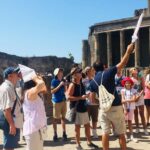
Two things I really like: you get undivided attention from a Blue Badge guide, so you’re not stuck in a herd or guessing what you’re looking at. And if you’re traveling with kids, the family option adds the Pompeii4kids kit—map, stickers, activities, and puzzle-style learning—to keep younger visitors engaged without turning the tour into a cartoon.
One drawback to keep in mind: Pompeii is a walking site, and while the guide can adapt the pace, you’ll still want good walking shoes and a moderate fitness level, especially in hot weather.
In This Review
- Pompeii Tour Quick Hits
- Why Skip-the-Line and Private Time Matter at Pompeii
- Meeting Point, Timing, and What 2 Hours Really Includes
- Entering the Archaeological Park: Forum and Town Layout in One Pass
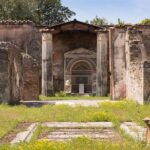
- The Pompeii Forum: Where Politics, Religion, and Commerce Intersect
- Via dell’Abbondanza: Daily Life on Pompeii’s Main Street
- Roman Bath Culture at Terme del Foro: A Real Look at Routine
- Temple of Apollo and the Forum’s Big Public Shape
- Casa dei Vettii and Teatro Grande: Luxury and Leisure Side by Side
- Antiquarium di Pompei: Casts That Change How You See the Ruins
- Kids Tour (Pompeii4kids): Games, Stickers, and How Guides Keep It Fun
- Price and Value: What $165.05 Buys You in Pompeii
- When to Go and What to Wear (Heat Happens Fast)
- Who Should Book This Private Pompeii Tour
- Should You Book This Private Pompeii Tour?
- FAQ
- How long is the Pompeii private tour?
- Is the tour offered in English?
- Does this tour include skip-the-line access?
- Is it a private tour or a shared group?
- Where do we meet, and where does the tour end?
- Is there a family option for children?
- What’s included for the family tour?
- Are admission fees included?
- Do we need a passport for children?
- Is pickup and drop-off included?
Pompeii Tour Quick Hits
- Skip-the-line tickets included so you lose less time standing still.
- Private, flexible guide who can tailor the route to your interests.
- Family option (kids 6–11) with Pompeii4kids map, stickers, games, and clues.
- Top Pompeii highlights in about 2 hours instead of trying to wing it.
- Antiquarium cast room for an unforgettable, emotional stop that adds context to the eruption.
- Real daily-life details like Roman baths and street life—not just big monuments.
Why Skip-the-Line and Private Time Matter at Pompeii
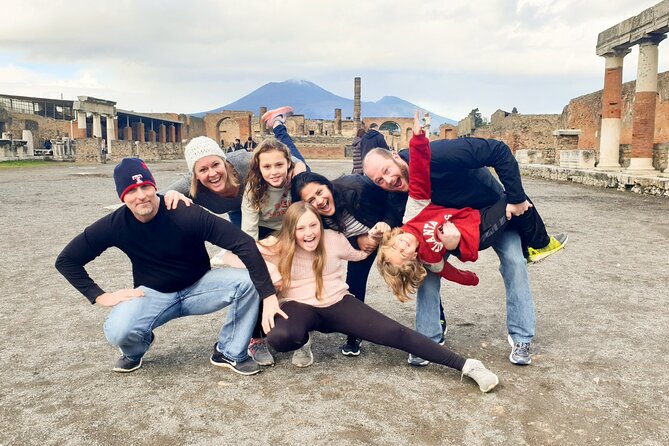
Pompeii is huge, and the best parts are spread out. When you arrive with no plan, you can burn time figuring out entrances, ticket rules, and where to start—then you run out of energy before you reach the places that actually explain the city. This tour solves the first problem by building in skip-the-line access, so you get into the archaeological park fast and start walking with purpose.
Then there’s the private guide piece. Pompeii is not the type of place where you want to read every sign. You want someone who can translate what you’re seeing into human terms: how the Forum worked, why the baths were laid out the way they were, and what the surviving buildings tell you about daily routine. That’s exactly what the private format gives you.
The other quiet advantage is flexibility. The tour description makes it clear you can ask for specific sights, and your guide can adjust. That matters because Pompeii’s “greatest hits” list can change based on whether you’re most interested in architecture, Roman life, or the eruption aftermath.
You can also read our reviews of more private tours in Pompeii


Meeting Point, Timing, and What 2 Hours Really Includes
This tour meets at Via Villa dei Misteri, 2, 80045 Pompei NA, Italy and ends back at the starting point. That’s helpful because Pompeii days often feel like logistics puzzles. You don’t need to worry about finding your way across town at the end—you just walk, see, learn, then wrap up where you started.
The duration is about 2 hours. That’s not long, but it’s the right length for a “high-impact highlights” visit. Expect steady walking between key areas, short stops for photos and explanations, and enough time at each major highlight to understand why it mattered.
You’ll also want to plan for weather. In summer, Pompeii can be painfully bright. One tip I’d take from the experience feedback: guides often shape the route to help you catch breeze and avoid the worst sun patches. Still, you should show up ready to walk in heat if that’s your travel week.
Entering the Archaeological Park: Forum and Town Layout in One Pass
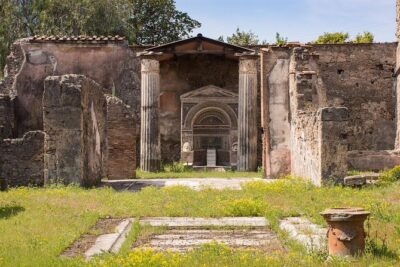
Your first stop is the Archaeological Park of Pompeii, where the guide sets the stage. You’ll get the big picture of what happened on August 24 in AD 79 when Vesuvius erupted and froze the town in ash. From there, the tour moves into “show me” mode: city walls, the kind of streets Romans walked, and the public spaces that defined the city’s rhythm.
This is where having the right guide makes a noticeable difference. Some guides jump straight into facts. Others—like the ones people specifically mention—focus on everyday life. You’ll hear explanations that put you in the time zone of the city, not just the timeline.
Also, you’ll likely get help with what to photograph. Pompeii’s surfaces invite close-up attention—wall paintings, floor mosaics, and textures that you’d easily overlook if you were just passing by. A guided start helps you slow down at the right moments without turning the day into a lecture.
The Pompeii Forum: Where Politics, Religion, and Commerce Intersect
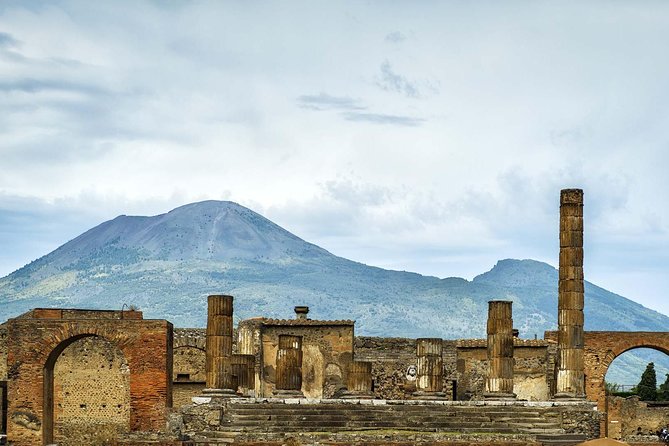
The Forum stop is a key anchor for understanding Pompeii. This open plaza functioned as the city’s heart—political, religious, and commercial. You’ll see it described as a rectangular space (about 157 by 38 meters), and you’ll also understand how it was designed: it was largely off-limits to chariot traffic, which tells you a lot about how people moved and gathered.
If you only visit one area first, make it this. The Forum gives you the framework for everything else you’ll see. When you later look at temples and public buildings, the “why” clicks faster. Without that context, the ruins can feel like separate monuments. With it, they read like a functioning city.
This stop also gives you a natural transition point for the tour’s other big religious and public structures nearby, so it works as both orientation and payoff.
Via dell’Abbondanza: Daily Life on Pompeii’s Main Street
Next comes Via dell’Abbondanza, Pompeii’s long, important commercial and social artery—often described as the Decumanus Inferior. This is the kind of street scene that helps you visualize the city day-to-day: foot traffic, shops, and public gathering.
Even if you’re not into Roman architecture, this is still fun because it’s human-scale. You can almost imagine the soundscape—vendors, chatter, and people moving between the Forum and other key areas. The guide can also point out small details that signal how the city worked: street layout, building functions, and how the street connected the city’s zones.
One practical note: street-level walking can feel uneven in places. Your shoes matter, and so does hydration. Pompeii looks photogenic in every direction, but you’re still crossing an archaeological site, not a museum floor.
You can also read our reviews of more tours and experiences in Pompeii



Roman Bath Culture at Terme del Foro: A Real Look at Routine
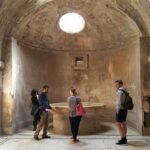
Terme del Foro (Forum Baths) is one of the most satisfying stops because it’s so specific. You walk through a preserved bath complex that shows how Romans structured a bathing experience—changing room to cold to warm to hot.
The stop breaks the routine into clear parts:
- Apodyterium (changing room)
- Frigidarium (cold bath)
- Tepidarium (warm room)
- Calidarium (hot room)
This is also where the guide’s storytelling really pays off. The description emphasizes barrel-vaulted ceilings and decorative elements, including stucco reliefs and telamones. It turns baths from a vague “they had hot water” idea into something you can picture step-by-step.
The drawback here is simple: if you’re short on time, this is the stop where people often wish they could linger longer. But given the overall 2-hour format, it’s still an excellent use of time because it delivers a clear picture of daily Roman life.
Temple of Apollo and the Forum’s Big Public Shape
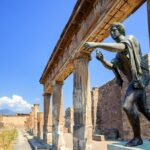
The Temple of Apollo sits in the Forum area and is one of the oldest major religious sites in Pompeii, with origins reaching back to the 6th century BC. The temple is also described as a blend of Greek and Italic elements, including a raised podium and stairs, plus a portico with 48 columns.
What I like about this stop is how it gives the city a sense of identity. Temples are not only spiritual markers here. They’re landmarks, and they help you orient the whole Forum zone. When you see one major structure clearly, the other surrounding buildings start making more sense spatially.
You’ll also see how the site connects to broader art history. Bronze replicas of Apollo and Diana are visible here, while the original Hellenistic bronzes are kept at the National Archaeological Museum in Naples. That kind of information helps you understand Pompeii as part of a larger story, not an isolated ruin.
Casa dei Vettii and Teatro Grande: Luxury and Leisure Side by Side
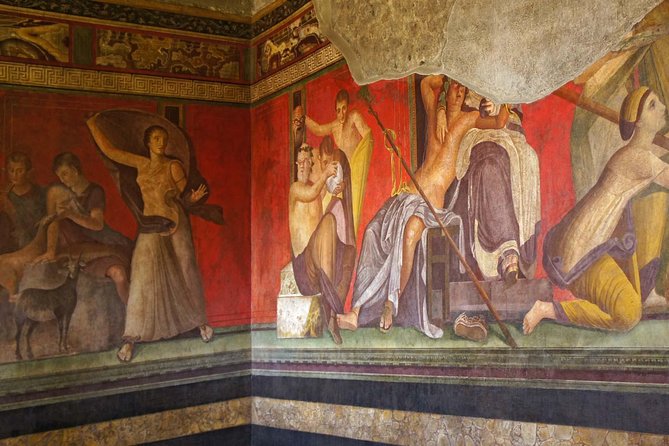
Casa dei Vettii is often called the Sistine Chapel of Pompeii, and the reputation holds for good reason. It reopened in 2023 after a long restoration, and it’s described as especially opulent and well preserved. You’ll also learn who lived there—Aulus Vettius Conviva and Aulus Vettius Restitutus, freedmen who became wealthy wine merchants.
The point of this stop isn’t only to admire pretty rooms. It helps you grasp social structure in Pompeii. When someone rises from slavery to wealth, their home becomes part of the message. The guide can connect those dots quickly, especially if you ask questions about what objects and decoration were meant to communicate.
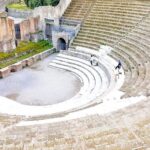
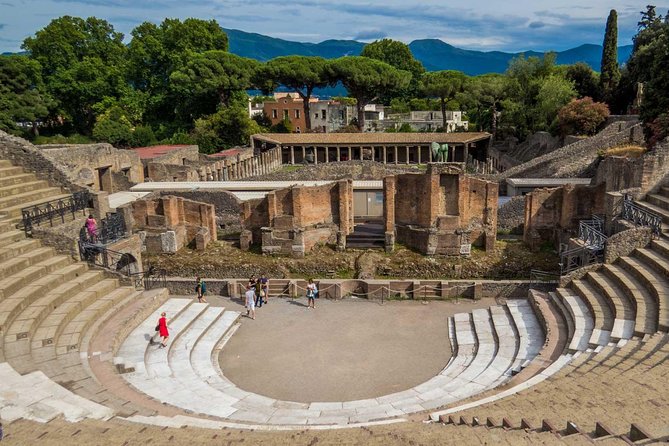
Then you pivot to entertainment at Teatro Grande, one of the oldest surviving masonry theaters. It’s built into a lava hillside, showing the transition from Greek to Roman styles. Even if you’re not a theater person, it’s an impressive architectural reminder that public life included performance.
One small consideration: for people traveling with kids or anyone who prefers fewer steps, these two stops can still be manageable, but they’re visually rich and tend to invite extra lingering. Keep an eye on time if you have a tight schedule.
Antiquarium di Pompei: Casts That Change How You See the Ruins
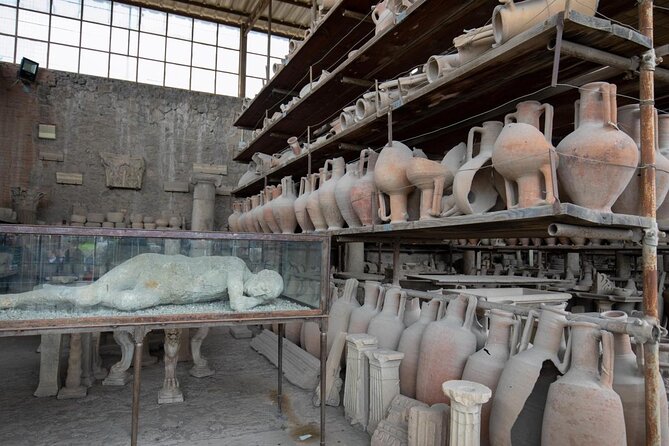
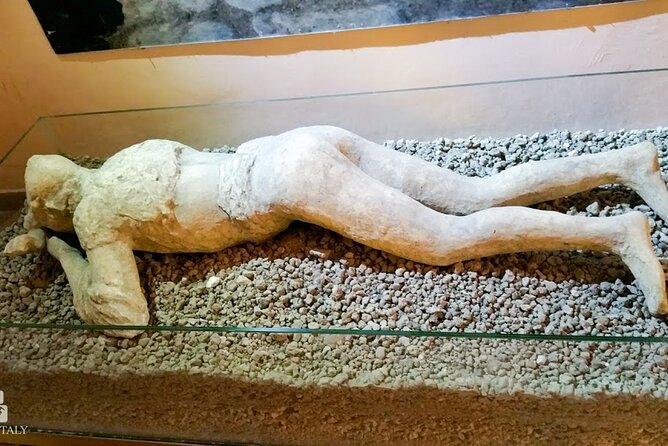
The Antiquarium di Pompei is the museum stop, and it’s the emotional center of the tour. The site displays fragile, precious artifacts in a climate-controlled space, but the big draw is the plaster casts of victims. Some casts remain in situ at the ruins, while the Antiquarium shows victims preserved in their final moments, including children.
This is not a casual “add-on.” It gives the eruption story a human scale that walking through the city alone can’t always do. The casts put bodies into the timeline, which helps you process what ash preservation really means.
If you’re traveling with kids, this stop may be heavy. The family option is designed to keep the day kid-friendly through maps, stickers, games, and clues, but the casts themselves are real and intense. If your child is sensitive, it’s worth preparing them gently and knowing the guide can help you pace the emotional stops.
Kids Tour (Pompeii4kids): Games, Stickers, and How Guides Keep It Fun
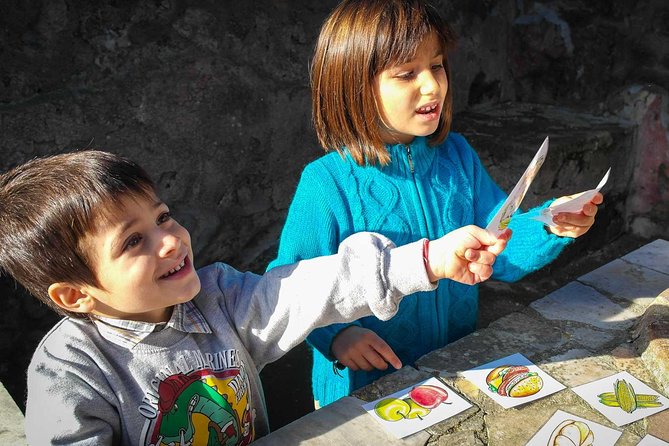
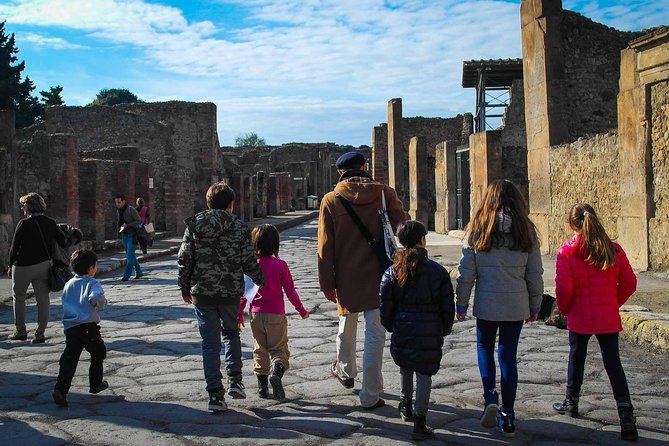
If you’re bringing kids, the family option is the smartest way to do Pompeii without losing them halfway through. It’s recommended for ages 6 to 11 and includes Pompeii4kids: a kit with a kid-focused map, stickers, activities, and an activity book.
What makes this work is how the guide uses the materials in sequence. Kids are asked to match what they see to characters and roles—then place sticker markers at the right points on the map. One guide is specifically described as turning the stop-by-stop visit into a game where kids answer questions tied to each building’s purpose.
The best part: the guide also tailors the route for youngsters. That can mean building in small wins, adjusting explanations to shorter attention spans, and choosing where to slow down.
From the guide behavior highlighted in the experience feedback, the family tour is also built for real life. Guides like Francesca, Anna, Viviana, and Sabrina Cancello are mentioned for patience with younger kids, ability to manage grumpy hot moments, and keeping the whole family engaged. If you can request a specific guide, and one of these names fits your style, it’s a good move.
Price and Value: What $165.05 Buys You in Pompeii
At $165.05 per person for a private tour, the question isn’t just cost. It’s: what’s included that saves you money, stress, or time?
Here’s what you’re paying for in practice:
- Private guide (Blue Badge) with flexible pacing
- Skip-the-line tickets included to reduce your wait
- The tour covers major highlights in about 2 hours, which helps you avoid the common mistake of spending a full day “almost seeing” the key sites
- Admission fee is shown as included in the tour details, but the itinerary text also notes admission fees may not be included. So you should confirm when booking so you’re not surprised
- Mobile ticket support helps with on-the-day smoothness
For families, the value can improve fast because one well-paced private tour can replace several separate add-ons or a frustrating attempt to self-guide a huge site with kids. For couples and solo travelers, it’s a time saver. Pompeii doesn’t reward indecision; it rewards smart route design.
Also, the guide can steer you away from crowd bottlenecks. Several guides in the experience feedback are specifically credited with avoiding crowds and keeping the experience more intimate, which is exactly what you want in a popular site.
When to Go and What to Wear (Heat Happens Fast)
Pompeii in summer can feel brutal, and you can’t photo your way out of it. Even the best route helps, but you still need to bring the basics: water, sun protection, and shoes that handle uneven stone.
A useful tip from the experience notes: going later can make the heat feel worse by the end. One person recommended going as early as possible—around 9:30—rather than starting at 11am if you want a more comfortable finish. Another detail worth noting is that the orientation of the streets and buildings can create better breezes along the main route, which helps when you’re stuck in open areas.
Plan for short shade moments rather than long shade breaks. If the weather turns rainy, one guide is specifically mentioned for helping the group adjust, so flexibility helps in real conditions.
Who Should Book This Private Pompeii Tour
This is a great fit if you want:
- A high-impact Pompeii visit without spending the whole day figuring things out
- A guide who can explain what you’re looking at in plain terms
- A private experience for couples, friends, or families
- The family option if your kids are between 6 and 11 and you want structured fun
It may not be the best fit if:
- You want to wander randomly and stay as long as you like in one area
- Your group has very limited mobility, since it’s still a walking tour on an uneven archaeological site
- You’re not ready for the emotional weight of the casts, especially with very young kids
Should You Book This Private Pompeii Tour?
I’d book it if your goal is to leave Pompeii feeling like you truly understood the city—politics, daily life, architecture, and what happened in AD 79—without wasting hours at the entrance or guessing your route. The combination of skip-the-line, a private Blue Badge guide, and the option to tailor the day makes it a strong value for the time you’ll spend on foot.
If you’re traveling with kids, take the family option seriously. The Pompeii4kids kit turns the visit into a scavenger-style learning day, and the guide support is clearly a big part of why families come away happy.
Just do one thing before you go: confirm what admission fees cover for your booking, and show up with shoes and sun protection. Then you’ll be ready for Pompeii at its best.
FAQ
How long is the Pompeii private tour?
It’s listed as about 2 hours.
Is the tour offered in English?
Yes, it’s offered in English.
Does this tour include skip-the-line access?
Yes. Skip-the-line tickets are included.
Is it a private tour or a shared group?
It’s a private tour/activity, and only your group participates.
Where do we meet, and where does the tour end?
The meeting point is Via Villa dei Misteri, 2, 80045 Pompei NA, Italy, and the tour ends back at the same meeting point.
Is there a family option for children?
Yes. The family tour is recommended for children ages 6 to 11 and includes a Pompeii4kids kit with map, stickers, activities, and an activity-book.
What’s included for the family tour?
The family option adds the Pompeii4kids kit (map, stickers, activities, and an activity-book) and a kid-focused approach with games and clues.
Are admission fees included?
Admission fee is listed as included, but the itinerary text also says admission fees are not included. Please confirm when booking what’s covered for your specific reservation.
Do we need a passport for children?
A current valid passport is required on the day of travel for children under 18.
Is pickup and drop-off included?
No. Pick up and drop off are not included.