REVIEW · POMPEII
Pompeii: Skip the line ticket (art) + audioguide + map
Book on Viator →Operated by Pompei Tour Organizer_Tempio Travel · Bookable on Viator
Pompeii is amazing once you’re in. This ticket package pairs pre-booked express entry with an authorized audioguide so you can explore at your own rhythm, from houses to temples to theatres. I also like that the audioguide experience is built around the numbered prompts on the device, which keeps you from wandering without direction. The main drawback to plan for: it may still take time if you arrive without the right voucher-to-entry understanding.
What you get feels simple on paper, but smart in practice: you start with dedicated access at Porta Marina Inferiore (in Piazza Esedra), and the tour audio comes as a rental device you return at the end. The audioguide can be used hands-free or through standard jack headphones (headphones aren’t included), and you’ll need a valid ID as a deposit.
If you’re short on time, this is one of the more efficient ways to see Pompeii on your own terms. You can usually fit it into about 2 to 4 hours, but Pompeii is big, with limited shade, so I’d plan for heat and a slower walk pace than you might expect.
In This Review
- Key things to know before you go
- Skip-the-line access starts at Porta Marina Inferiore
- Audioguide on a device: how it works (and what to bring)
- Your self-paced Pompeii circuit: houses, temples, theatres, streets
- Planning your 2–4 hours: beat the heat and see the best parts
- Ticket value: what $44.31 buys, and what it doesn’t
- Where the process can get messy (and how to avoid it)
- Parking and practical basics near the access area
- Who should book this Pompeii audio ticket package?
- Should you book this Pompeii skip-the-line audioguide tour?
- FAQ
- What’s included with the Pompeii skip-the-line ticket and audioguide?
- Are headphones included?
- Where is the priority entrance?
- Do I need an ID for the audioguide device?
- How long does the experience take?
- Is the audioguide available in English?
- Is parking available?
- Can I get a full refund if I cancel?
Key things to know before you go
- Priority entrance matters: your dedicated access is tied to Porta Marina Inferiore in Piazza Esedra.
- Number-based audio guidance: the device uses numbers to match explanations to what you’re looking at.
- Headphones aren’t included: bring standard jack headphones if you want private audio.
- Expect a device deposit: bring a valid ID to leave as collateral.
- It’s self-paced: you can move faster than group tours, but you’re responsible for your navigation.
- Skip-the-line isn’t always instant: some steps may still involve swapping vouchers and queuing.
Skip-the-line access starts at Porta Marina Inferiore
The biggest practical advantage here is that your entry is linked to a specific, designated access point: Porta Marina Inferiore, located in Piazza Esedra. That matters because Pompeii has multiple entrances, and going to the wrong one can turn your “skip-the-line” plan into a scavenger hunt.
So here’s my straight-up advice: when you arrive, don’t improvise. Use the instructions you receive with your package and aim for Porta Marina Inferiore. If you’re the type who likes to be flexible, this is the one place where flexibility can cost you time.
Also note what this entry setup is trying to solve. Pompeii’s lines and security checks can slow you down, and Pompeii is not the kind of place where you want your day eaten by logistics. Getting you through the main entry flow faster is the core value.
You can also read our reviews of more tours and experiences in Pompeii



Audioguide on a device: how it works (and what to bring)
This is not a phone app that you download later. You get a dedicated audioguide device that you use during your visit. It’s described as the only authorized audioguide for tour operators by the Pompeii Archaeological Park, which is exactly the kind of detail I like—official sourcing tends to mean better labeling and fewer mismatched explanations.
How it functions is also pretty clear:
- You use the numbers on the device to access the right explanation.
- The device can be used hands-free, or you can plug in standard jack headphones (headphones aren’t provided).
- You’ll return the device at the end, and the ID deposit you leave should be returned then.
Now, here’s the real-world comfort issue to plan for: the audioguide is a physical device, and some visitors found that holding a phone-style audio method to your ear gets annoying fast. If you’re even slightly sensitive to discomfort, bring your own standard jack headphones. If you forget, you’ll still be able to follow along, but you may end up thinking about audio more than Pompeii.
And one more practical note: the device is designed to match where you are, but you still have to look around. Pompeii is a maze of streets and rooms, so a map helps. You’re getting an informative map with the package, which helps you keep your bearings fast.
Your self-paced Pompeii circuit: houses, temples, theatres, streets

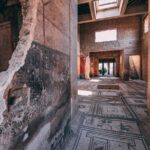
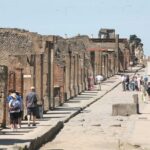
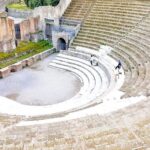
Once you’re inside, the day shifts from logistics to discovery. The tour is built for independent wandering, with an audioguide designed to lead you through the parts visitors usually care about: houses, temples, theatres, and streets.
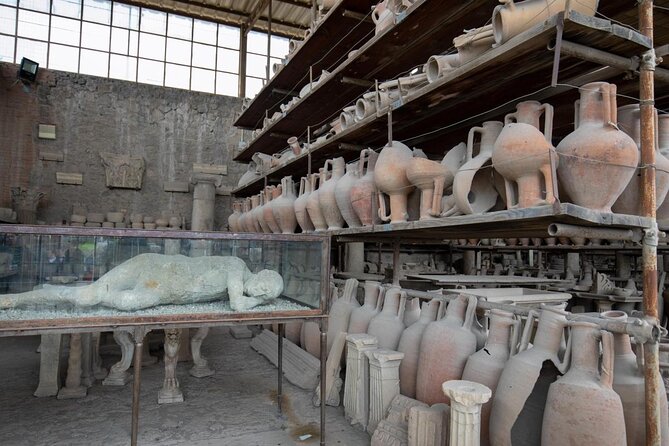
What makes this format work is that Pompeii rewards slow looking. The site is preserved because volcanic ash protected the city for centuries, and you can really feel that in the way buildings and street spaces remain readable—even when you’re just walking along. Instead of rushing between major spots, you can stop when something catches your eye.
Here’s how I’d approach the audio pacing:
- Use the numbered segments to anchor you when you’re unsure where to look next.
- Keep one hand free for the map and photos.
- If you’re moving quickly, you can still get through the high points without feeling lost.
The “self-guided with structure” sweet spot is this: you’re not trapped in a group’s schedule, but you also aren’t totally on your own. That’s why the audioguide format and the map together are valuable—audio alone can feel confusing if you’re not sure what you’re standing in front of.
Planning your 2–4 hours: beat the heat and see the best parts
A 2 to 4 hour visit is the right timeframe for Pompeii if you’re focused and honest with your pace. You’re not trying to see everything. You’re trying to see enough that the place makes sense.
Here’s the pacing strategy I’d use:
- Start with entry confidence: spend as little time as possible figuring out where to go once you arrive.
- Do a highlight loop first: houses, temples, theatres, then the streets connecting them.
- Save your curiosity stops for later: when you’re warmed up and oriented, you can linger longer.
Heat is a real factor. Some visitors noted there’s limited shade and recommended basic sun protection like a hat and water. That’s not an excuse to rush. It’s a reminder to plan so you don’t feel wiped out halfway through.
Also consider this: Pompeii can feel bigger than you expect. One of the best “value” moments of a self-paced visit is realizing you’re not just passing through rooms—you’re walking between zones that help explain how people moved and lived.
Ticket value: what $44.31 buys, and what it doesn’t
At $44.31 per person, this package is trying to bundle the most time-sensitive parts of Pompeii into one purchase:
- Archaeological Park entry express ticket (artecard)
- Dedicated access from Porta Marina Inferiore (Piazza Esedra)
- Audioguide device
- Informative map
- Multilingual assistance at the office
What you should assume will cost extra or require your own items:
- Headphones are not included
- You don’t get food
- No hotel pickup is included
Is it a good value? Usually, yes—because the expensive part of Pompeii isn’t just the ticket price. It’s the time you lose to confusion: finding the right entrance, waiting around while exchanges happen, and trying to orient without an official guide or properly matched audio.
But I’m also going to be honest about the one value trap that shows up: the package involves an artecard/voucher flow, not just one simple gate scan. If you come expecting zero waiting at all steps, you might feel frustrated. If you come expecting a smoother start but not a miracle, you’ll likely feel good about what you paid.
You can also read our reviews of more tours and experiences in Pompeii





Where the process can get messy (and how to avoid it)
The most common pain point isn’t Pompeii itself. It’s the handoffs before entry.
A few visitors ran into issues like:
- Getting turned away because they showed up at the wrong entrance expecting direct entry.
- Confusion about exchanging a voucher for the actual entry situation.
- Maps and meeting instructions that weren’t clear enough, leading to extra wandering before the audio really started.
You can avoid most of that with two habits:
- Bring the exact ID documents the package requests as a deposit, and keep them with you.
- Treat the entrance location instruction as strict. If the access point is Porta Marina Inferiore, go there first.
Also, if you’re visiting at busy times, give yourself extra buffer. Even when “skip-the-line” is working as intended, you can still end up waiting in some form during ticket/voucher processing. The goal is to reduce the worst waits, not eliminate every line.
Parking and practical basics near the access area
If you’re driving, there’s one useful option mentioned: free parking (not gated) from 01/04 at Osteria Nonna Cherubina, Via Andolfi 46. Since the dates matter, double-check your travel period.
And if you’re relying on public transportation, the package notes it’s near public transit. Service animals are allowed too, which can make a difference for families and anyone traveling with a companion.
Who should book this Pompeii audio ticket package?
This works best for people who want control:
- First-timers who don’t want the expense or commitment of a full guided tour
- Visitors who learn best by stopping where they have questions
- Anyone who prefers moving faster through straightforward areas and slowing down for details
It’s also a decent choice if your schedule is tight. The 2 to 4 hour window is realistic if you keep your focus.
It may be less ideal if:
- You strongly dislike any pre-entry voucher exchange step
- You hate using a numbered device while walking
- You’re traveling with kids who need very hands-on help with maps or audio (phone-style navigation can be tricky for smaller hands)
If you want a compromise, consider adding a live guide if that option is available in your booking. One person who upgraded said the live guide was funny and full of detail, and it helped them navigate the site’s scale while adding context.
Should you book this Pompeii skip-the-line audioguide tour?
If you want an efficient Pompeii visit without committing to a full guided tour, I’d book it—with one condition: you need to follow the entry instructions closely and be ready for a smooth-but-not-instant voucher flow.
Choose this package if you value:
- Authorized audioguide guidance
- Self-paced walking through houses, temples, theatres, and streets
- A more controlled entry start via Porta Marina Inferiore
Skip it (or rethink it) if you know you’ll feel irritated by any extra steps before entering, or if you’d rather handle tickets on your own in the most direct way possible.
FAQ
What’s included with the Pompeii skip-the-line ticket and audioguide?
You get an Archaeological Park entry express ticket (artecard), dedicated access from Porta Marina Inferiore (Piazza Esedra), an audioguide device, an informative map, and multilingual assistance at the office.
Are headphones included?
No. Headphones are not included. The device can be used hands-free or with standard jack headphones.
Where is the priority entrance?
Your dedicated access is from the entrance of Porta Marina Inferiore, located in Piazza Esedra.
Do I need an ID for the audioguide device?
Yes. A valid ID is required as a deposit, and it is returned when you give the device back.
How long does the experience take?
It’s listed as about 2 to 4 hours.
Is the audioguide available in English?
Yes. The experience is offered in English.
Is parking available?
Free parking (not gated) is listed from 01/04 at Osteria Nonna Cherubina, Via Andolfi 46, if available.
Can I get a full refund if I cancel?
Yes. Free cancellation is available up to 24 hours in advance for a full refund.