REVIEW · POMPEII
PompeiI Exclusive Tour with your Archaeologist in a Small Group
Book on Viator →Operated by Grand Tour Experience · Bookable on Viator
Pompeii goes faster with the right guide. This small-group tour plans a tight route through the big sights in about two hours, and you enter using a priority line so you do not burn time stuck at the gate. I also like how the guide focuses on how people actually lived, not just what you are looking at on a sign.
One thing to consider: this is a highlights walk, so you will not cover every famous stop (like the amphitheater or brothels). Also, the guided-tour price does not include the Pompeii site admission fee, so budget about €19 per adult on top.
Key points at a glance
- Priority entry via Porta Marina Superiore to reduce waiting time at the entrance
- A focused two-hour loop covering temples, the Forum, baths, street food, and major streets
- Macellum + plaster casts (BODIES) for a hands-on look at how archaeologists reconstruct the past
- Forum Baths details like separate male and female entrances
- Seasonal house access since Casa del Fauno and House of the Vettii can open/close by season
- Maximum 15 people so questions and photo stops do not get swallowed by a large crowd
In This Review
- Entering Pompeii via Porta Marina Superiore (and why it matters)
- The two-hour Pompeii route: what you’ll see, stop by stop
- Porta Marina Superiore to the Temple Zone (Venus and Apollo)
- The Forum core: basilica, main square, and the temples that frame power
- Macellum and the BODIES plaster casts: food, trade, and evidence
- Forum Baths and Thermopolium: the city’s routines, not just monuments
- Houses: Casa del Fauno, House of the Vettii, and the Latin details
- Via dell’Abbondanza and Teatro Grande: the walk to entertainment
- Priority line, tickets, and that skip-the-line link confusion
- Your archaeologist guide: what makes this tour feel different
- Pacing and comfort tips for a smooth two hours
- Price and value: what you actually get for $30.25
- Who this Pompeii tour suits best
- Should you book this Pompeii archaeologist-led tour?
- FAQ
- What’s the duration of the Pompeii VIP small-group tour?
- How much does the tour cost?
- Is the Pompeii site entrance ticket included in the price?
- Do I need to buy skip-the-line tickets, and is that the same as admission?
- Where do we meet for the tour?
- What language is the tour offered in?
- What size is the small group?
- Will we always see the same houses?
- What if the weather is bad?
- Is cancellation free, and how far in advance can I cancel?
Entering Pompeii via Porta Marina Superiore (and why it matters)
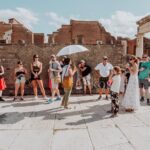
Pompeii is big, and the entrance area can eat up your energy fast. This tour starts at Via Villa dei Misteri, 1 and then heads to the western entrance at Porta Marina Superiore, where your guide is waiting outside with a sign that reads Pompeii Vip. The practical win here is the separate priority line, which helps you start walking sooner instead of standing around with everyone else.
Also note the difference between a tour ticket and the site ticket. Your booking covers the guided experience itself, but you still need to purchase the official Pompeii Archaeological Park admission on your own (with help from the team via a link). That split matters because people sometimes get confused and end up stuck where they cannot just scan into the ruins.
The two-hour Pompeii route: what you’ll see, stop by stop
Think of this as a curated walk through Pompeii’s main “daily life” zones: worship, politics and courts, food markets, baths, street culture, and elite homes. You are moving steadily, with short stops built in so you can actually read what you are seeing.
You can also read our reviews of more tours and experiences in Pompeii.

Porta Marina Superiore to the Temple Zone (Venus and Apollo)
You begin at Porta Marina Superiore, the western entrance to the city. The guide ties the location to the road that once led toward the sea—small detail, big payoff. It helps you picture Pompeii not as a set of ruins, but as a working city connected to trade and movement.
From there, you quickly reach the Tempio di Venere (Temple of Venus). It is Pompeii’s dedication to Venus, the patron goddess. In a fast tour, this is a smart choice: temples give you a key to the city’s mindset—what people honored, and how religion blended into street life.
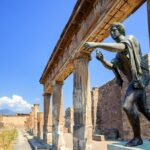
Next is the Sanctuary of Apollo (Temple of Apollo), placed strategically along the street running from Porta Marina toward the public heart of the city. Apollo’s location reinforces a pattern you see all through Pompeii: sacred spaces did not sit off in the hills. They were part of the walk you took every day.
The Forum core: basilica, main square, and the temples that frame power
Pompeii’s Forum is the “center of everything” kind of space, and this tour aims you right at it. You get multiple Forum-related stops in a short span, which is ideal when time is tight.
You visit the Basilica, described as the most lavish building in the Forum. This was where business management happened and where justice was administered—so you see the power center, not just architecture. Even if you are not a courthouse person, it is useful to understand that these weren’t empty grand halls. They were busy places with real decisions being made.
Then comes the Forum (Main Square) itself, the hub for daily city life. This stop is where your guide’s interpretation really helps. The stones may look similar across ancient cities, but here, the Forum layout helps explain how civic life functioned.
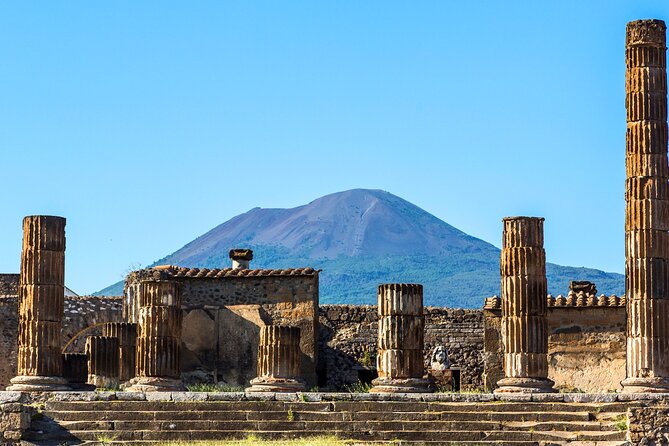
You also see the Temple of Jupiter (Tempio di Giove Capitolino) on the Forum’s northern side. Behind it rises Vesuvius, and that sightline makes Jupiter feel less like a random religious building and more like part of the city’s worldview. The volcano is not just a backdrop; it is part of Pompeii’s geography and story.
Macellum and the BODIES plaster casts: food, trade, and evidence
One of the most memorable stops is Macellum, Pompeii’s monumental marketplace building for selling food and everyday consumer products. This is where the tour shifts from “public life” to “what people actually bought.”
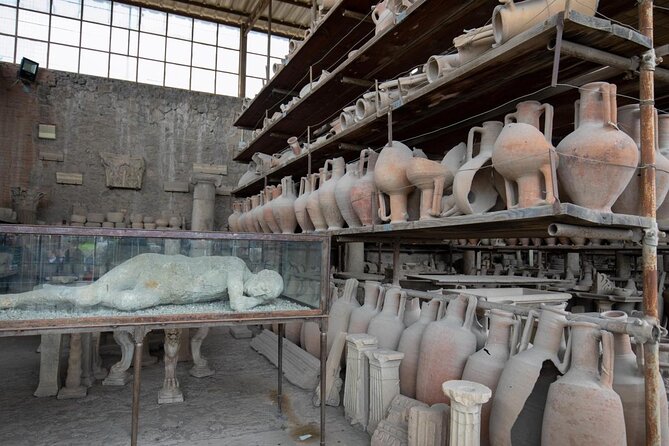
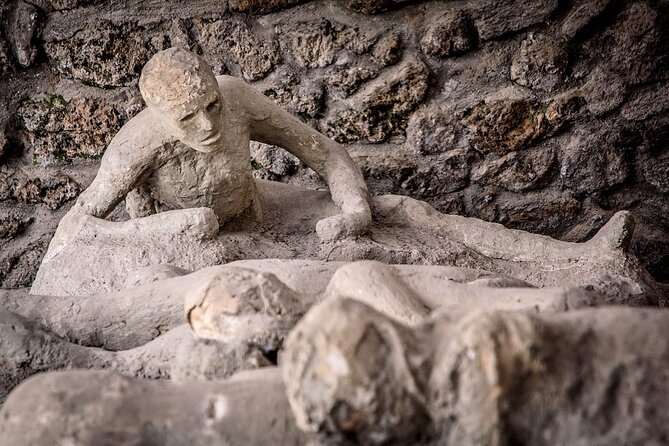
Here you may also see plaster casts (BODIES)—the archaeological method used to reconstruct ancient bodies as they were at the eruption moment. It is heavy subject matter, but guided access is the difference between staring and understanding. Your guide can connect what you are seeing to how archaeologists read traces across the site.
If you like museums and evidence-based storytelling, this is one of the best-value moments in the entire two hours.
Forum Baths and Thermopolium: the city’s routines, not just monuments
Next up is Terme del Foro (Forum Baths), one of the best-preserved areas. What makes it click is the detail that the bath complex had separate entrances for women and men. That small fact changes how you imagine daily life: people had routines with social rules baked in.
Then you reach the Thermopolium of Vetuzio Placido, essentially an ancient diner. This is one of those stops that makes Pompeii feel surprisingly normal. People needed quick hot food and drinks, and this place was built for that rhythm.
For me, these two stops are proof that Pompeii is not only about tragedy. It is also about comfort, habits, and how ordinary life moved through the day.
Houses: Casa del Fauno, House of the Vettii, and the Latin details
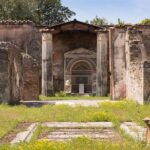
The tour heads to the House of the Faun (Casa del Fauno), one of the largest houses in Pompeii. You get a look at the welcome inscription on the sidewalk bearing the word HAVE in Latin. Little text like that matters here, because it signals that these were real homes with identity, not just preserved shells.
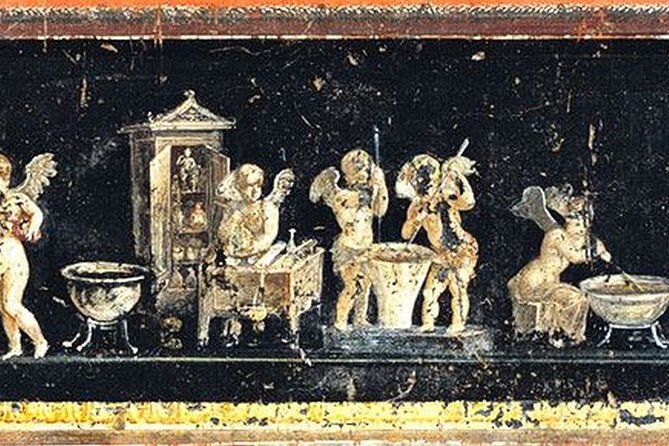
You also include the House of the Vettii, one of Pompeii’s richest and most famous homes. The guide explains its connection to Priapus, the god of prosperity. You will not just see rooms—you should understand why certain themes appeared in elite spaces.
Important practical note: access to these houses can depend on seasonal openings and closings. If one is unavailable on your day, you will still get the route’s core ideas, but the exact home you walk through may vary.
Via dell’Abbondanza and Teatro Grande: the walk to entertainment
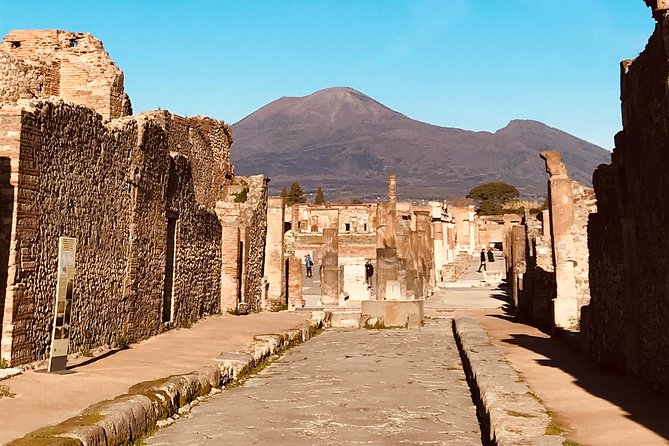
You then cover Via dell’Abbondanza, the ancient main street (decumanus maximus). This is the Pompeii “spine” that helps you understand how neighborhoods and key public spaces connect. Walking this stretch on a guided route makes the city scale feel manageable.
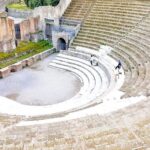
Finally, you reach Teatro Grande (Great Theatre), where comedies and tragedies were performed in the Greco-Roman tradition. The short stop works because Pompeii theatres are easier to grasp when you have context for the culture that used them.
Even with only two hours, this ending spot leaves you thinking about the city as an entertainment hub, not only a political and religious place.
Priority line, tickets, and that skip-the-line link confusion

Here is the part that trips people up: your Viator-style tour ticket is not your entry ticket to the Pompeii Archaeological Park. You still need the official admission, and you can buy it with guidance.
The experience also mentions skip-the-line tickets that can be purchased online. The idea is simple: reduce waiting, start the walk with momentum, and spend time interpreting the ruins instead of juggling paperwork at the gate.
One more practical tip: if the day is busy, the priority line still helps, but it does not turn Pompeii into an empty park. This is why the tour is built around a short, high-impact route. You get the best of what you came for.
Your archaeologist guide: what makes this tour feel different
What you are paying for here is not just movement through space. You are paying for a guide who explains how archaeologists know what they know and why different parts of Pompeii were built the way they were. In the field, details matter, and the guides behind this experience are repeatedly praised for turning stones into stories.
You might be led by different archaeologists—names that show up in past tour experiences include Ricardo, Antonio, Ornella, Raffaele, PierLuigi, and Rafael. The common thread is a lively style: clear answers, patience with questions, and a focus on helping you see what most visitors miss.
One practical cue from real-world experiences: test whatever audio method you receive right at the start. One person reported an earpiece that did not work and no fix happened. You can prevent that moment by checking early and telling the guide immediately if something sounds off.
Pacing and comfort tips for a smooth two hours
This tour is about 2 hours (approx.), so you want to treat it like a smart workout, not a leisurely stroll. Pompeii involves uneven ground, lots of steps and short walks between sights, and constant shifting attention between architecture and interpretation.
The biggest comfort item is simple: wear comfortable walking shoes. If you want a real photo hunt after the tour, you’ll appreciate not having painful feet by the time you wander.
Pacing is another factor. Several people note they liked how the small group kept things relaxed enough for questions and photo moments. The max group size for this experience is 15 travelers, which is large enough for lively energy but small enough that you are not one face in a crowd.
And yes, weather can affect your day. This tour is noted as requiring good weather, so plan your Pompeii visit with that in mind.
Price and value: what you actually get for $30.25
At $30.25 per person, the guided portion is a budget-friendly way to see the core of Pompeii with expert direction. The catch is that the official Pompeii park admission is not included—it is listed as €19 per adult and free under 18.
So your real “all-in” cost depends on your age. For most adults, you should think of this as roughly the guide fee plus the site fee. The value part is that a guided route is not just faster. It is more understandable. When you see the Forum, the baths, the thermopolium, and the theatre with interpretation, the stones become a narrative instead of random walls.
If you like learning by walking, and you want the main sights without trying to DIY Pompeii with a vague map, this one is priced to fit real budgets.
Who this Pompeii tour suits best
This tour is a strong match if you:
- want a two-hour highlights loop without trying to cover the entire archaeological park
- prefer guided interpretation over staring at ruins and guessing
- like evidence-based details like the plaster casts (BODIES) and market/bath street-life stops
- travel as a family or group that will appreciate the smaller scale (max 15)
It may be less ideal if you:
- expect to see every major attraction in Pompeii, because this route is intentionally selective
- want a long, slow, “only one street per stop” style tour
Should you book this Pompeii archaeologist-led tour?
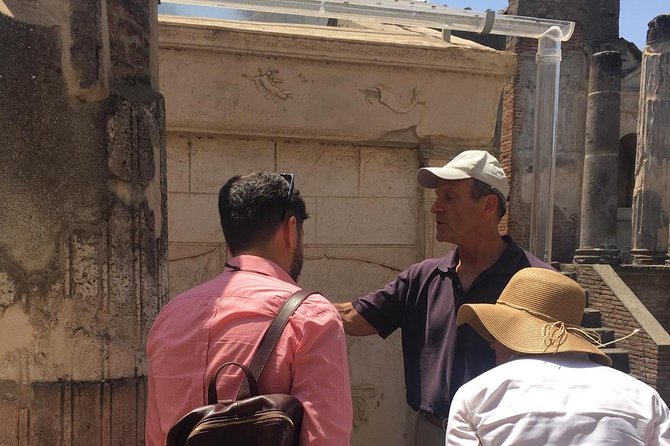
I would book it if your goal is to get your bearings and leave with a real understanding of how Pompeii functioned—civic space, worship, marketplaces, baths, daily food, and elite homes—without wasting your limited time on the wrong corners.
Skip it if you already have a deep Pompeii study plan and you want a self-guided day covering everything from the amphitheater to the brothel area at your own pace. For most people, though, a guided hit list with a priority entry option is the smartest way to make Pompeii feel navigable and meaningful.
FAQ
What’s the duration of the Pompeii VIP small-group tour?
The tour runs for about 2 hours.
How much does the tour cost?
The price is $30.25 per person.
Is the Pompeii site entrance ticket included in the price?
No. The Pompeii Archaeological Park admission is not included. The listed admission is €19 per adult (free under 18).
Do I need to buy skip-the-line tickets, and is that the same as admission?
Skip-the-line tickets are offered through a link, but they are not the same as the official site admission ticket. The tour ticket lets you join the guided experience; you still need the entry ticket for the Pompeii park.
Where do we meet for the tour?
The meeting point is Via Villa dei Misteri, 1, 80045 Pompei NA, Italy. The tour ends back at the meeting point.
What language is the tour offered in?
The tour is offered in English.
What size is the small group?
This experience has a maximum of 15 travelers.
Will we always see the same houses?
Access to Casa del Fauno and House of the Vettii can depend on seasonal openings and closings, so the exact house access may vary by day.
What if the weather is bad?
The experience requires good weather. If it is canceled due to poor weather, you will be offered a different date or a full refund.
Is cancellation free, and how far in advance can I cancel?
You can cancel for a full refund up to 24 hours in advance. If you cancel less than 24 hours before the start time, the amount paid is not refunded.