REVIEW · POMPEII
Fast Access Exclusive Private Ancient Pompeii Herculaneum & Oplontis Guided Tour
Book on Viator →Operated by Private Tours of Pompeii · Bookable on Viator
Fast ruins, real context, no line chaos. This private day connects three UNESCO World Heritage sites so you can understand how Romans lived after AD 79. I like that you get priority admission at each stop (so you spend less time stuck in queues) and that your guide brings the place to life with practical, on-the-ground explanations. One thing to consider: it is a full 8-hour circuit with a moderate walk, and it doesn’t include lunch.
I also appreciate that this tour is genuinely private, meaning your pace and questions drive the day. When our guide, Loretta, shared what to look for, it turned simple wall paintings and street corners into a story you can follow without getting lost.
Price-wise, it’s not a bargain, but the value can be real when you factor in entrance tickets, a professional guide, and the time saved by skipping long lines. If you’d rather go at your own speed with a budget ticket, this might feel like overpaying. If you want structure and expert guidance across multiple sites, it’s a strong match.
In This Review
- Key highlights you’ll actually feel during the day
- Three UNESCO sites without the full-day queue battle
- What you get: private guide, mobile ticket, and entrance included
- Stop 1: Scavi di Oplontis and the Villa Poppea area
- Stop 2: Pompeii Archaeological Park, then quick hits that matter
- Pompeii Archaeological Park: the large picture
- Foro de Pompeya: the main square feeling
- Teatro Grande: perfect acoustics, not just a building
- Casa del Menandro: the domus details you can actually recognize
- Stop 3: Parco Acheologico di Ercolano (Herculaneum)
- The pacing: how 8 hours works in real life
- Price and value: is $411.55 per person worth it?
- Who this tour is best for
- Should you book the Fast Access private Pompeii, Herculaneum & Oplontis tour?
- FAQ
- How long is the tour?
- What is included in the price?
- Is lunch included?
- Where does the tour start and end?
- What time does the tour begin?
- Is this a private tour?
- What should I wear?
- Are children allowed?
- Is it accessible if I’m not very mobile?
- What is the cancellation policy?
Key highlights you’ll actually feel during the day
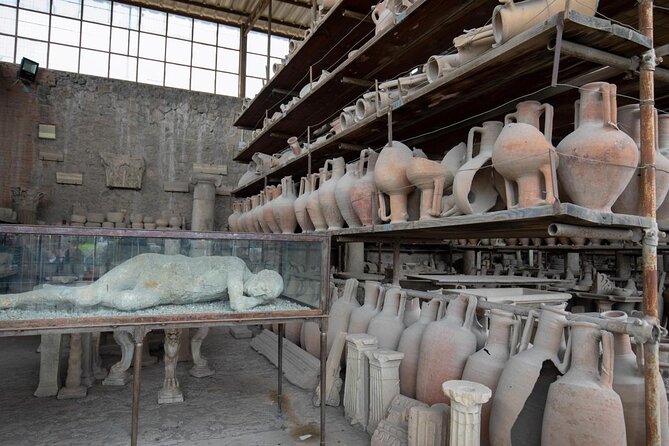
- Three UNESCO sites in one route: Oplontis, Pompeii, and Herculaneum, all guided
- Priority admission at every stop so you keep moving through the ruins
- A private guide with a real back-and-forth, not a scripted group rush
- Villa Poppea stop at Oplontis to balance the city streets you’ll see later in Pompeii
- Pompeii highlights in short bursts: Foro, Teatro Grande, and Casa del Menandro
- Herculaneum visit built for contrast after Pompeii, so you notice how places differ
Three UNESCO sites without the full-day queue battle
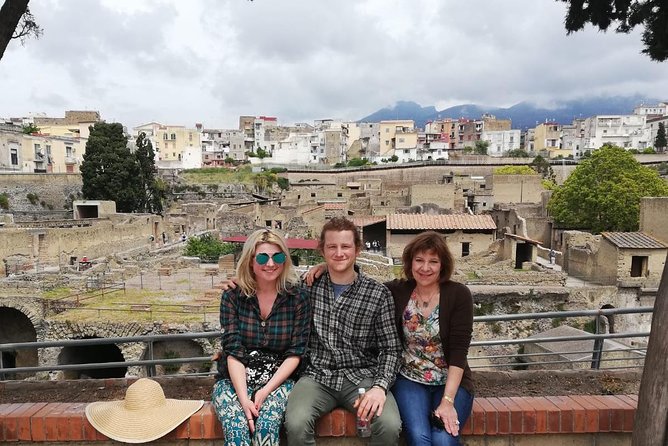
If you’ve ever tried to visit Pompeii in high season, you know the truth: lines can eat the day. This tour is designed to cut that problem down fast. You’re still visiting major archaeological parks, but you’re doing it with guaranteed priority admission at each site, plus a professional guide to keep the experience coherent.
The big win here is the way the route connects different types of Roman spaces. You’re not just seeing ruins in a random order. You get a villa-focused start at Oplontis, then the big “city” picture in Pompeii, then a second stop at Herculaneum to round out what the broader world looked like around Vesuvius.
And since it’s private, the day doesn’t feel like herding cats. You can ask questions at the places that catch your eye instead of saving them for later when the group has already moved on.
You can also read our reviews of more guided tours in Pompeii

What you get: private guide, mobile ticket, and entrance included
This experience lists the core essentials up front. You get a professional guide, entrance tickets, and a promise to skip the long lines. You also get a mobile ticket, which helps you avoid extra stops or printed-paper wrangling on the day.
Because it’s private, “guided” means more than facts on a sign. It’s the difference between looking at a doorway and understanding what a doorway tells you. You’re aiming to learn about daily life in ancient Rome, and the tour’s stop choices reflect that goal.
Here’s what’s not included, and it matters for planning:
- Lunch (you’ll need to handle this on your own)
- Transportation to and from attractions (you’ll need to get yourself to the meeting point)
- Hotel pickup and drop-off
So yes, you’re paying for convenience and guidance. If you already plan your logistics tightly and enjoy wandering, you can spend less on entry and hire a guide only in one area. But if you want one organized day across three sites, the package approach becomes easier.
Stop 1: Scavi di Oplontis and the Villa Poppea area
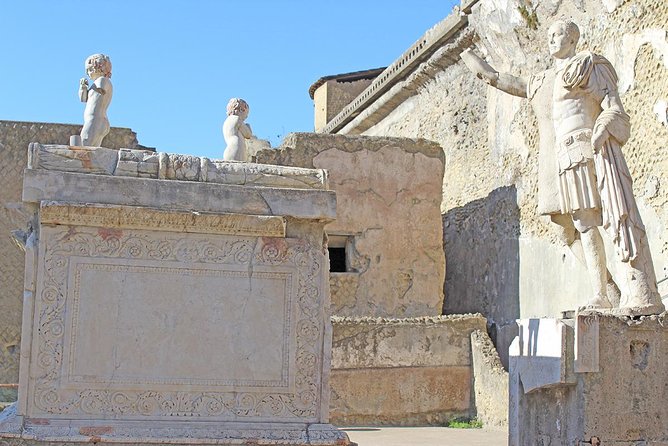
You start with Scavi di Oplontis, with about 1 hour on the site and admission included. This is your first “type of place” lesson. Instead of a public square or theater, you’re heading toward the world of the wealthy—Oplontis is presented here as the setting for Villa Poppea.
That early start matters. Pompeii can be overwhelming fast. Beginning at Oplontis gives you a reference point for what a villa looks like in the Roman world: a private environment built for comfort, routine, and status. By the time you reach Pompeii’s busier spaces, you’ll be better at noticing contrasts.
Practical note: because it’s only about an hour here, you’ll want to pay attention early. Don’t waste the first minutes waiting for your eyes to adjust. This is the stop where your guide can set up the rest of the day with the right context.
Stop 2: Pompeii Archaeological Park, then quick hits that matter
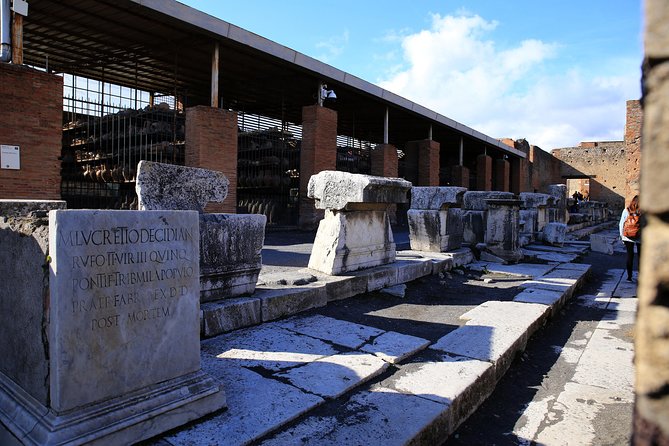
Pompeii is the star, and this tour treats it like one. You get about 2 hours at the Pompeii Archaeological Park, plus three additional focused highlights later in the route:
- Foro de Pompeya (about 15 minutes)
- Teatro Grande (about 15 minutes)
- Casa del Menandro (about 15 minutes)
Pompeii Archaeological Park: the large picture
Two hours is a good chunk for the main area, but it’s still not unlimited time. The guide’s job is to help you see the “why” behind what you’re looking at, so you don’t just collect random images.
In a place like Pompeii, the value of a guide is simple: you stop spending energy figuring out what matters and start using that energy to understand how people lived and moved through the city.
You can also read our reviews of more private tours in Pompeii



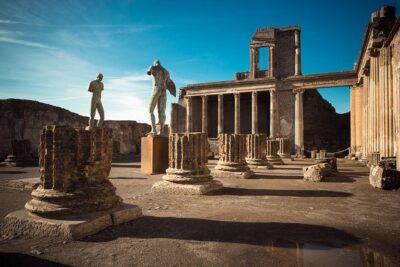
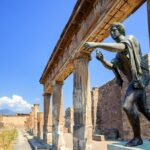
Foro de Pompeya: the main square feeling
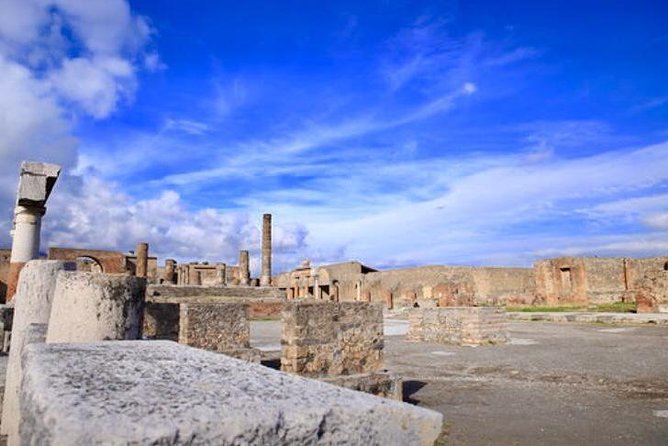
Next comes Foro de Pompeya, the main square. You’re scheduled for about 15 minutes. That short time can work well because the forum is where you learn how a city organizes public life. It’s the right place to connect architecture with human behavior: where people gather, how civic space is used, and how the city’s rhythm plays out.
Even if you’re not a “forum person,” this stop tends to click because it’s the social core. You’ll leave with a clearer sense of what “public” meant in Roman daily life.
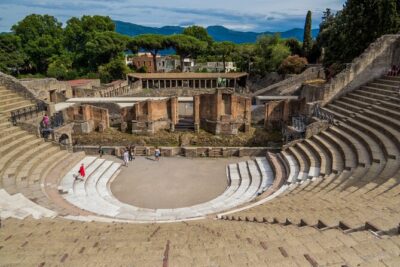
Teatro Grande: perfect acoustics, not just a building
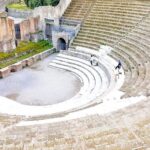
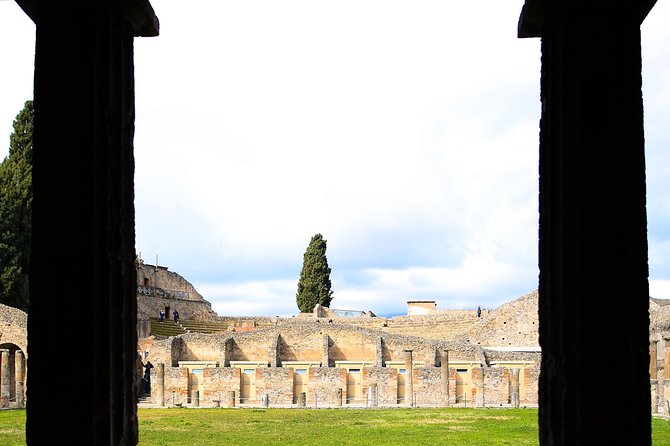
The tour then gives you Teatro Grande, again about 15 minutes. The highlight here is the theater’s perfect acoustic reputation. That’s useful because it nudges you beyond visual curiosity into thinking about sound, performance, and crowd life.
A theater is a place where the city becomes human. You can almost picture the noise and movement, even in still stone. And if you’re the type who likes to know how a space functioned, this stop is especially satisfying.
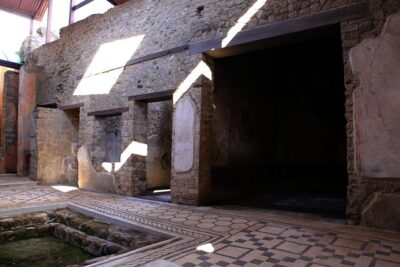
Casa del Menandro: the domus details you can actually recognize
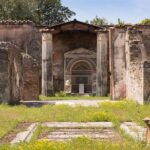
Finally, you get Casa del Menandro, scheduled for about 15 minutes. This is described as a typical Pompeian domus with frescoes, calidarium, rooms, and a private garden.
This is a short stop, but the itemized focus helps you look for specific things:
- frescoes tell you about taste and decoration
- calidarium gives you a practical window into daily comfort and heat routines
- rooms and a private garden show how domestic space worked beyond one room or one hallway
If you’ve only seen Pompeii as “ruins,” this is where the tour shifts you toward “homes.” You’ll finish Pompeii with a better grasp of private life, not just public landmarks.
Stop 3: Parco Acheologico di Ercolano (Herculaneum)
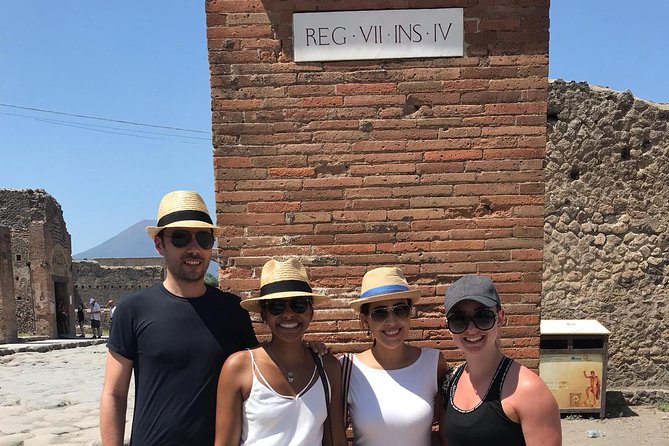
After Pompeii, you move to Parco Acheologico di Ercolano for about 2 hours, admission included. This is your second major “Roman living” lens.
The tour presents Herculaneum as the archaeological site of ancient Herculaneum, and that’s exactly why it works after Pompeii: you’re able to compare. Even if you don’t have every location memorized, the feel of the visit changes when you move to a different site type and layout.
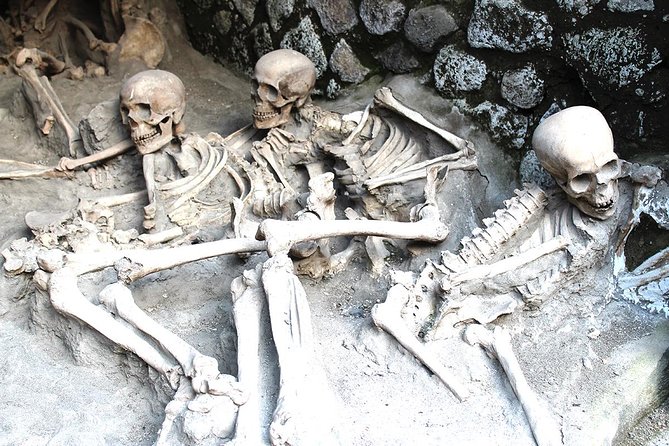
Two hours is a good time here because Herculaneum isn’t a quick photo stop in this format. You’re meant to connect it to the day’s theme: daily life under the shadow of the AD 79 eruption.
A tip for enjoying this part: don’t rush straight through. Pick a couple moments where your guide points out what to watch for, and use those as your anchors. You’ll remember the day more clearly that way.
The pacing: how 8 hours works in real life
The tour runs about 8 hours total, starting at 9:00 am. You begin at Piazza Esedra in Pompei, and you end at Scavi di Oplontis – Villa Poppea, at Via Sepolcri in Torre Annunziata.
That end location is important for your logistics. Since hotel pickup and drop-off aren’t included, you’ll want a plan for getting from the end point back to where you’re staying. Even a simple taxi or local transit plan can save you from the stress of figuring it out after a long day.
Also keep in mind:
- smart casual dress code
- moderate physical fitness level
- near public transportation
- children must be accompanied by an adult
- service animals allowed
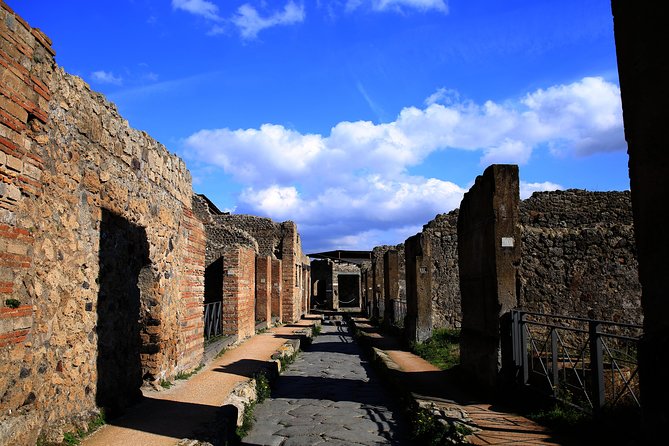
One more pacing reality: you’ll be stepping through multiple sites in one day. That means comfortable shoes are not optional, even if your schedule looks “reasonable” on paper. Pompeii areas can be uneven, and you’ll appreciate having the right footwear.
Price and value: is $411.55 per person worth it?
At $411.55 per person, this is a premium-priced day. The question isn’t just whether it’s expensive; it’s whether you’re paying for the things that actually improve the experience.
Here’s what you are buying:
- a private guide (not a large group script)
- priority admission to avoid long lines at each site
- entrance tickets included in the price
The most practical value is time. When you skip queues, you gain more “real sightseeing” time and less “waiting in the sun” time. Over 8 hours, that adds up fast.
It’s also a value play if you’re the kind of traveler who wants answers. Instead of puzzling out what you’re seeing, you get guidance tied to the route’s theme: how Romans lived across different spaces and locations affected by AD 79.
Where it may not be worth it: if you’re traveling solo on a tight budget, you might prefer buying tickets yourself and hiring a guide for just one site. Or if you love roaming without structure, the private format can feel like you’re paying for a plan you’d do anyway.
Who this tour is best for
This experience fits best if you want:
- expert guidance across multiple sites in one day
- a plan that’s built around high-value highlights
- an experience that reduces friction with guaranteed line skipping
- a private format that works well for questions and pacing
It’s especially appealing if you’re the type who gets more out of history when someone points out what to look for. The stops are chosen for daily-life context: public space (Foro), performance and sound (Teatro Grande), and home routines (Casa del Menandro), plus villa life at Oplontis.
If you’re traveling with kids, it can work too since children are allowed as long as they’re with an adult. Just know the day is long and walking is part of the package.
Should you book the Fast Access private Pompeii, Herculaneum & Oplontis tour?
Book it if you want a guided day that actually connects the dots between sites, with priority admission keeping you focused on the ruins instead of the queues. The guide quality seems to be a standout—Loretta is specifically noted as exceptional, knowledgeable, and engaging, which is exactly what you want in a place this big.
Don’t book it if you’re happy piecing the day together on your own, you have a flexible schedule you don’t mind juggling, and you’d rather spend your money on food and extra stops than on a private structure.
My practical take: if you’re in the area for a limited time, this route is a smart way to see more of the Vesuvius story without turning your day into a waiting game.
FAQ
How long is the tour?
The tour is listed as approximately 8 hours.
What is included in the price?
The experience includes a professional guide, guaranteed to skip the long lines, and entrance tickets.
Is lunch included?
No. Lunch is not included.
Where does the tour start and end?
It starts at Piazza Esedra, 80045 Pompei NA, Italy, and ends at Scavi di Oplontis – Villa Poppea, Via Sepolcri, 80058 Torre Annunziata NA, Italy.
What time does the tour begin?
The start time is 9:00 am.
Is this a private tour?
Yes. It’s a private tour/activity, and only your group participates.
What should I wear?
The dress code is smart casual.
Are children allowed?
Children must be accompanied by an adult.
Is it accessible if I’m not very mobile?
The tour notes a moderate physical fitness level, and it is near public transportation.
What is the cancellation policy?
You can cancel for free up to 24 hours in advance for a full refund. If you cancel less than 24 hours before the start time, the amount paid is not refunded.