REVIEW · POMPEII
Pompeii Ancient City Walking Tour – Italian & English Guide
Book on Viator →Operated by Sesto Continente Tours · Bookable on Viator
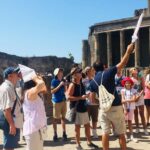
Pompeii hits you fast, even at a walking pace. This is a guided, group-style way to see the biggest names—temples, houses, and the Villa dei Misteri—without having to piece everything together yourself. You also get help at the ticket office entry, which matters more than it sounds when Pompeii is busy.
What I like most is the guided stop-by-stop format that keeps you moving through the key areas instead of wandering for hours. I also like that the guide is actually present at the entry gate/ticket office area to help you get started. One possible drawback: the Pompeii entrance ticket is not included (it’s €22 for adults), so your real total cost will be higher than the headline tour price.
In This Review
- Key Points You’ll Feel on the Ground
- Price and Logistics: The Real Cost of Getting In
- Meeting Point at Piazza Porta Marina: Start Fast, Stay On Time
- Day 1 in Pompeii Archaeological Park: Where the Guide Does the Work
- Tempio di Apollo and Tempio di Giove: Religion Built Into the Streets
- The Roman Amphitheater (Anfiteatro Romano): The Scale You Can Feel
- Casa del Fauno, Casa del Menandro, Casa dei Vettii: Houses With Stories
- Casa del Fauno: Mosaics and the Big Scale of Wealth
- Casa del Menandro: Named by Art, Not Owners
- Casa dei Vettii: Frescoes After Freedom
- Villa dei Misteri: The Freakishly Specific Story Stop
- Day 2 at the Roman Catholic Sanctuary of Pompeii: A Different Kind of Meaning
- Guide Language and Real-World Group Mix
- How Much Time You’ll Need After This Tour
- Who Should Book This Tour (and Who Might Not)
- Quick Reality Check: Value vs. What’s Extra
- Should You Book This Pompeii Walking Tour?
Key Points You’ll Feel on the Ground
- Small-group size (max 25): easier questions, less bottlenecking at the popular stops.
- Guide at the ticket office entry: you’re not left guessing where to line up.
- Day 1 is the heavy lift: Archaeological Park plus major houses and temples in one long morning/afternoon arc.
- Stop choices are focused on meaning: mosaics, frescoes, and household life—not just stone walls.
- English is the listed language, with flexibility: one guide (Simone) was reported as able to repeat points in Italian if needed.
- Day 2 is included but lighter: a 1-hour visit at the Roman Catholic Sanctuary of Pompeii.
Price and Logistics: The Real Cost of Getting In
The tour price is $36.12 per person for about two days (approx.), and it’s offered in English. The big budgeting catch is that the Pompeii entrance ticket isn’t included—it’s listed at €22 per person for the general adult price. If you’re trying to keep totals simple, plan for both the tour fee and the site entry fee.
Why that matters: Pompeii tickets are the gateway to everything. With this tour, you get facilitation at the entrance to the Ticket Office, which can save time and stress, especially when lines form and people start calling out different meeting instructions.
A note on group feel: the tour caps at 25 travelers, and it’s designed for most people to participate. If you’re the type who hates crowd movement and quick turns, you should still expect a guided rhythm—Pompeii is large, and the tour keeps you moving between important stops.
You can also read our reviews of more walking tours in Pompeii
Meeting Point at Piazza Porta Marina: Start Fast, Stay On Time
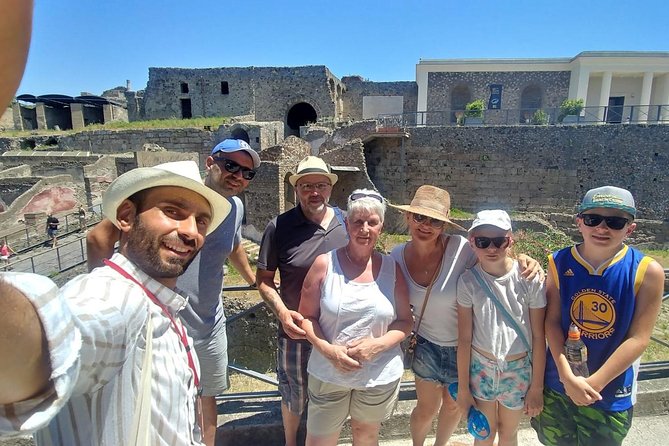
You meet at Piazza Porta Marina, 80045 Pompei NA, Italy, and the tour ends back at the same place. The good news: it’s described as near public transportation, so it’s not a logistics nightmare if you’re bouncing between Naples and Pompeii.
Bring practical expectations. You’ll want to arrive early enough to find the group and get checked in. One important caution from real-world accounts: a small number of people described communication problems before the tour and said the operator didn’t meet them as expected. That’s not the norm implied by the high overall score, but it’s enough that I’d treat meeting-time details as serious business.
Day 1 in Pompeii Archaeological Park: Where the Guide Does the Work
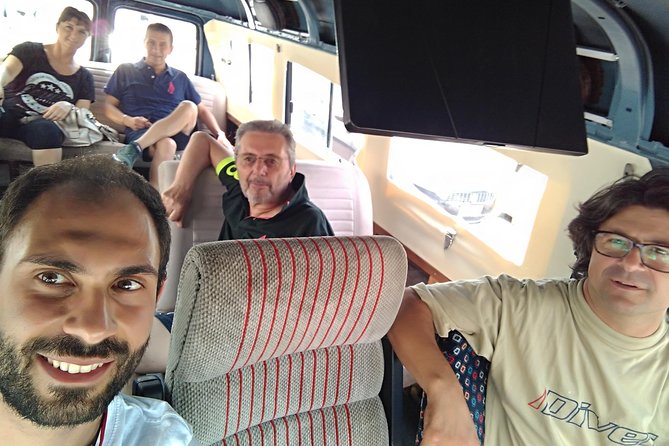
Day 1 centers on the Pompeii Archaeological Park, with a guided introduction after you enter. You’ll see Pompeii’s “greatest hits” in a way that connects sites into a story—Roman city life, wealth and status, and what people were doing just before catastrophe.
You’ll spend about 2 hours at the park as a guided walk through major areas. The stops aren’t random. They’re the kind of places where a guide can explain why Pompeii matters beyond the obvious: how public space worked, how temples were positioned, and how houses were designed around everyday routines.
Plan for your attention span. Two hours in Pompeii can feel short if you stop to take pictures constantly. This tour is structured for understanding, so if you want deep browsing in every doorway, you may need extra time on your own after the guided portion.
Tempio di Apollo and Tempio di Giove: Religion Built Into the Streets
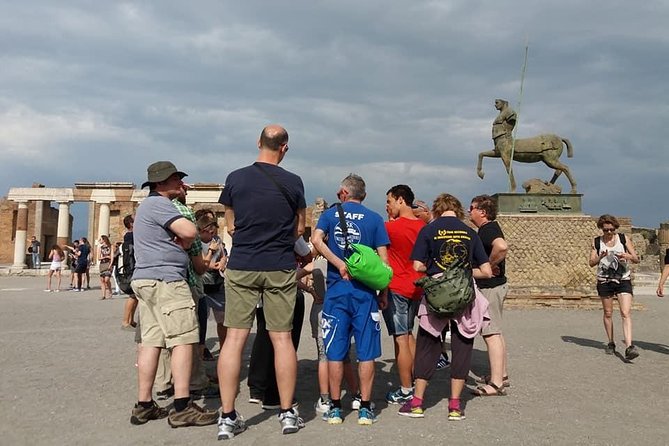
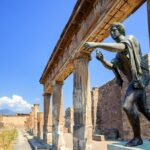
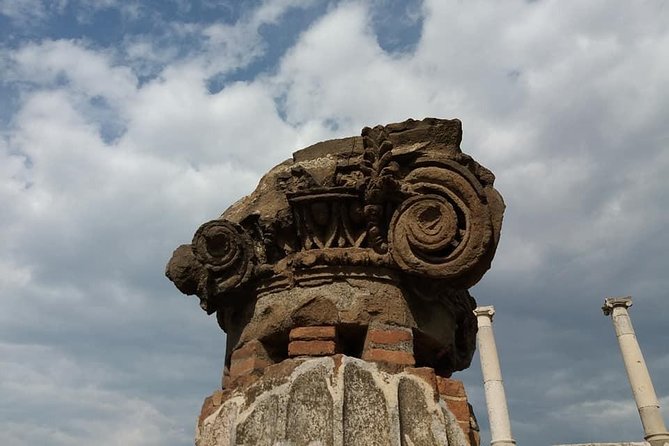
One of the most satisfying parts of a guided Pompeii day is how quickly you start seeing the city’s layout as a system. The Temple of Apollo is described as one of Pompeii’s earliest religious buildings, and you’ll also see a reproduction related to the bronze statue of Apollo—positioned among Corinthian columns. Even without obsessing over architecture, it’s the kind of stop where a guide can explain how sacred space signals status.
Then you move to the Temple of Jupiter Capitolino (dedicated to the Capitoline Triad: Jupiter, Juno, and Minerva). The Roman idea here is power at the top—Jupiter as the supreme deity. The reason this is valuable on a tour is simple: without context, temples can feel like pretty stones. With context, they become anchors for how Romans organized public life.
Time at each of these stops is around 10 minutes, so think of them as meaning stops, not slow museum-style visits.
The Roman Amphitheater (Anfiteatro Romano): The Scale You Can Feel
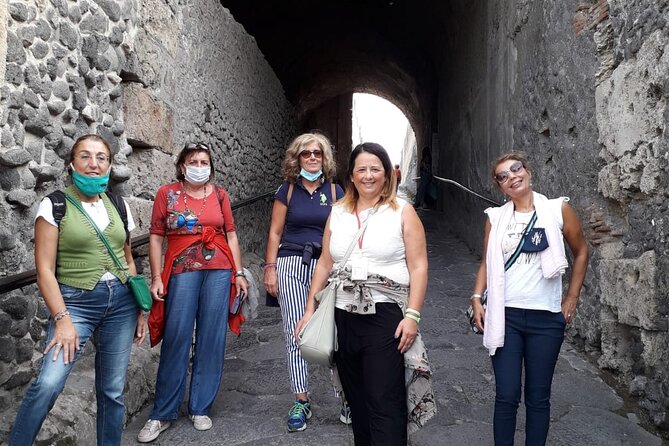
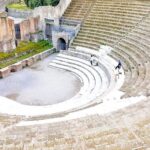
Next up is the Roman Amphitheater, built in 80 a.C. and described as the oldest amphitheater of its type. You’ll hear how it held up to 20,000 spectators, divided into sections by social class. That detail is a big deal because it tells you Pompeii wasn’t just a pretty ruin—it was a society with rules, hierarchies, and entertainment as a public performance.
A 10-minute window can’t give you a full history lecture. But it’s enough to orient you and help you read the site later if you return on your own.
If you’re sensitive to crowds or want to linger, show up prepared to take quick photos and move on. Pompeii amphitheaters are popular for a reason, and the tour schedule reflects that reality.
You can also read our reviews of more guided tours in Pompeii



Casa del Fauno, Casa del Menandro, Casa dei Vettii: Houses With Stories
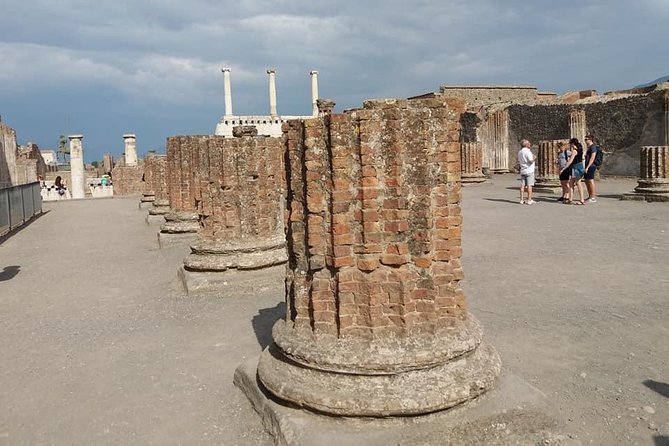
Pompeiian villas and homes are where people often start to understand what they’re actually looking at. This tour uses three major residences to show different angles of status and art.
Casa del Fauno: Mosaics and the Big Scale of Wealth
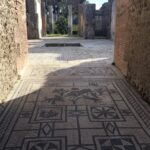
The Casa del Fauno is described as one of Pompeii’s largest residences and includes a reproduction of Alexander’s famous battle mosaic, showing Alexander the Great versus King Darius III. That mosaic detail gives you an instant lens for how art functioned: it wasn’t decoration only. It was a statement of culture and power.
This stop is short—about 10 minutes—but the guide presence helps you notice what to look for without getting lost.
Casa del Menandro: Named by Art, Not Owners
The Casa del Menandro doesn’t get its name from the original owners (the Poppaei family is mentioned). Instead, it’s named for a fresco depicting the Greek poet Menander. This is one of those Pompeii lessons you’ll carry with you: in archaeology, names often come from what survives, not what we can prove.
Casa dei Vettii: Frescoes After Freedom
Then there’s Casa dei Vettii, linked to two brothers (the Vettii) who became freedmen. The point of the stop is how they spent to signal their new status, with standout frescoes and wall paintings. If you want a human thread—how people celebrated identity and achievement after a major life change—this is the stop that can land emotionally.
All three are time-boxed at around 10 minutes each, so the guide helps you get meaning fast.
Villa dei Misteri: The Freakishly Specific Story Stop
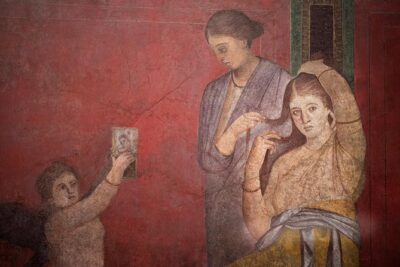
If there’s one stop that tends to create a lasting memory, it’s the Villa dei Misteri. The tour focuses on the nine sequential painted scenes on the walls of the “Chamber of Initiation,” linked to a rite of passage for a bride transitioning into adulthood, and also connected to the cult of Dionysus (the Greek god of wine and fertility).
This is exactly the kind of place where you benefit from a guide who can connect images to ideas. Without context, fresco cycles can blur. With context, it becomes a story you can follow scene by scene.
Like others, this is scheduled for about 10 minutes, so you’ll be absorbing more than “reading every inch.” If you love art and want to linger longer, plan extra time outside the guided pace.
Day 2 at the Roman Catholic Sanctuary of Pompeii: A Different Kind of Meaning
Day 2 shifts away from the ancient city layout and into a Roman Catholic Sanctuary of Pompeii visit. It’s about 1 hour, and the admission is included for this portion.
This matters because Pompeii today isn’t just archaeology. It’s also a living place of worship and meaning, and that can change how you emotionally frame the site. If Pompeii’s tragedy feels heavy in your chest after Day 1, this day can offer a different kind of reflection.
Guide Language and Real-World Group Mix
The tour is listed as offered in English, and that’s a big reason it’s easy to join without language prep. One guide named Simone was reported as able to handle a mixed group situation by delivering the English content and repeating in Italian if anyone needed it.
So here’s my practical take: if you speak basic Italian, you might catch extra pieces. If you don’t, you’ll still have the guide’s explanations to anchor what you’re seeing.
For best results, come with a few questions ready. Pompeii can be overwhelming; your best “value per minute” comes from asking what you care about: daily life, social status, religious space, or why certain art survived.
How Much Time You’ll Need After This Tour
This is a guided highlights style experience. You’ll see key structures, but Pompeii is vast. Even with a guide, you won’t cover every corridor and every detail unless you return for extra time.
If you want the best payoff, I suggest using your guided day as orientation. Then, on a separate block of time, go back to one area that grabbed you—like the homes or the villa fresco scenes—and slow down there.
Who Should Book This Tour (and Who Might Not)
This tour is a good fit if you want:
- a structured way to see top Pompeii sites in a group of up to 25
- guide explanations that connect houses and temples to a larger picture
- a practical start at the site with ticket office facilitation
It may be less ideal if you’re:
- someone who wants a totally self-paced experience with long stops at one location
- easily frustrated by short stop windows and lots of moving between sites
- traveling with tight time constraints if you still need to purchase the €22 entrance ticket
Also, if communication and meeting-point precision are your biggest trip nerves, plan to double-check details the day before and arrive early enough to avoid stress.
Quick Reality Check: Value vs. What’s Extra
Here’s the simple math for value thinking. You’re paying for:
- a guided walk through the biggest Pompeii landmarks
- entrance gate/ticket office facilitation
- a second-day sanctuary visit with admission included
What’s extra:
- the Pompeii entrance ticket (€22 per person) for Day 1
So yes, the tour price alone looks low. The better way to judge it is as “guided time + help” plus the entrance fee. For many people, that’s a fair deal because Pompeii is hard to navigate emotionally and intellectually when you’re trying to figure it all out from scratch.
Should You Book This Pompeii Walking Tour?
If you want a focused, guide-led day in Pompeii without spending your vacation stuck in decision mode, I think this one is worth considering. The strongest draw is the combination of structured stops (temples, homes, the Villa dei Misteri) with real help at the ticket office, so you lose less time getting started.
Just be smart about the biggest practical variable: budget for the €22 admission ticket and show up early at Piazza Porta Marina. If you do that, you’ll get a very usable Pompeii overview, plus enough guide context to make what you see on your own later feel much less random.