REVIEW · POMPEII
Pompeii Guided Group Tour with Entry Ticket and Archaeologist
Book on Viator →Operated by Pompei Tour Organizer_Tempio Travel · Bookable on Viator
Two hours. Endless Roman clues. This small-group Pompeii tour is built to get you inside the big site fast with express entry and a guide who brings the ruins to life with daily-life stories. You pick the time that fits your day, then walk a tight route through the places that make Pompeii feel real instead of just impressive.
What I like most is the focus on the city’s everyday rhythm, not only famous sculptures. You’ll spend real time around the Forum area, including the market zone (Macellum) and a hot-food counter (a thermopolium), plus a look at bath space (Terme del Foro) where both men and women had separate access. I also like the practical setup: express admission is included, and if your group is over 15 you’ll get headsets to hear the guide.
One thing to keep in mind: the meeting point needs attention, and a few people reported confusion locating the correct spot in the Circumvesuviana station area. Also, headset audio quality can be hit or miss depending on your guide and the room acoustics—so bring patience and plan to arrive early.
In This Review
- Key things to know before you go
- Quick reality check: is a 2-hour group tour enough?
- Finding the meeting point at Pompeii (and why it matters)
- The route start: Porta Marina Superiore and why the entrance choice is smart
- Stop 1: Archaeological Park of Pompeii (your orientation moment)
- Stop 2: The Forum of Pompeii (politics, religion, and the city’s engine)
- Stop 2.5: Macellum (the market) and why the food details stick
- Stop 3: Terme del Foro (baths with separate areas)
- Stop 4: Casa del Fauno (luxury Roman living)
- Stop 5: Casa dei Vettii (art, owners, and a very human story)
- Walking stretch: Via dell’Abbondanza and how Pompeii connects its neighborhoods
- Stop 6: Thermopolium Regio VI, Insula VIII, 8 (fast food, Roman style)
- Guides make or break the experience (and you can feel it in the details)
- Pace, crowd levels, and the value of short timing
- What to do after the tour (how to get more than 2 hours)
- Who this tour suits best
- Should you book Pompeii with this guided group?
- FAQ
- How long is the Pompeii guided group tour?
- Is an entry ticket included?
- What language is the tour offered in?
- Where do we meet and when should we arrive?
- Do I get headsets to hear the guide?
- How big is the group?
- What should I bring for the walking portion?
- Is the tour canceled for bad weather?
Key things to know before you go
- Express entry saves time when Pompeii is crowded and lines are messy
- Forum-centered route connects politics, food, baths, and social life in one walk
- Headsets for larger groups help you follow along without constantly turning your head
- Real-market stops: Macellum and a thermopolium show what Romans ate and how they bought it
- Two impressive homes: Casa del Fauno (big-house luxury) and Casa dei Vettii (surviving wall art)
- You won’t cover everything in 2 hours, but you’ll cover the stops that explain the city
Quick reality check: is a 2-hour group tour enough?
Pompeii is huge. A self-guided stroll can turn into a long day of guessing, backtracking, and losing time to crowds. This tour is a smart fix: it’s short enough to stay energetic, but structured enough that you don’t waste your one good visit hour staring at random walls wondering what you’re looking at.
In about two hours, you’ll hit a concentrated slice of Pompeii: the gateway area, the Forum and its nearby market and bath spaces, then residential highlights and a snack-and-go stop. The tradeoff is simple: you’re not seeing the entire site. If you want a full-dramatic list of every major monument, plan extra time after the tour.
You can also read our reviews of more tours and experiences in Pompeii


Finding the meeting point at Pompeii (and why it matters)

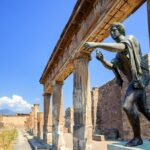
Meeting point is Via Villa dei Misteri, 1, Pompei. You’re told to arrive 15 minutes before the time on your voucher. The tour office is on the first floor of the Circumvesuviana station building for Pompei Scavi Villa dei Misteri, in a red building. The office name is Tempio Travel / Pompeii Tickets, and it’s about 100 meters from the Porta Marina Superiore entrance.
Here’s the practical advice that will save you stress:
- Use the station name (Pompei Scavi Villa dei Misteri) as your anchor in your maps app.
- Add buffer time. A couple people had trouble because navigation directions didn’t match what they expected.
- Once you’re at the station, look for the red building and the office sign, not just the main gate area.
If you’re the type who hates last-minute confusion, this is your sign to show up early and take a moment to confirm you’re at the right floor and office.
The route start: Porta Marina Superiore and why the entrance choice is smart
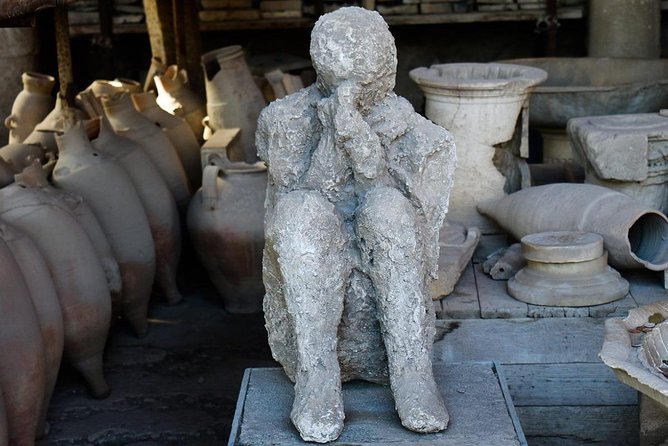
The tour begins at Porta Marina Superiore. That starting point is useful because it helps you avoid the most common beginner mistake: wandering in without a plan and ending up far from the Forum when your energy drops.
From the start, the guide sets the tone. Pompeii isn’t just broken stone—it’s a lived-in city with streets built for foot traffic, commerce, and quick errands. You’ll get the kind of framing that turns ruins into an actual town layout.
Stop 1: Archaeological Park of Pompeii (your orientation moment)
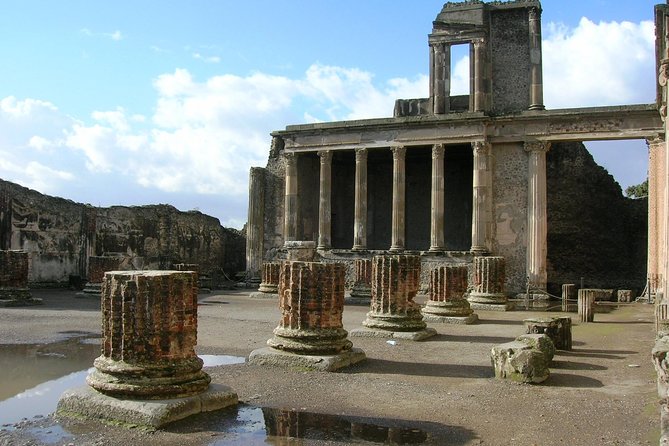
This first stop is brief, but it matters. You’re getting into the archaeological park, and the guide’s job right away is to give you a mental map of what’s coming next.
You’ll hear context that helps you connect later stops: where the Forum sits, why certain buildings cluster, and how Pompeii’s plan lets you understand daily life. Think of this as your “how to read the city” stage.
Admission is included here (express entry ticket to the Pompeii archaeological site), which is exactly what you want on a busy day.
Stop 2: The Forum of Pompeii (politics, religion, and the city’s engine)
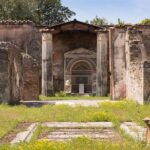
The Forum is Pompeii’s main square: the center for political, economic, and religious life. It’s the tour stop that most people instantly understand because it acts like a town center you’d recognize today—just with Roman architecture and a very different vibe.
What makes this stop valuable on a guided route is how the guide links functions. You’re not only looking at columns and paving. You’re learning how people gathered, what mattered publicly, and how power and business sat in the same space.
Time on site: about 30 minutes, which is enough to absorb the layout and still keep moving.
You can also read our reviews of more guided tours in Pompeii



Stop 2.5: Macellum (the market) and why the food details stick
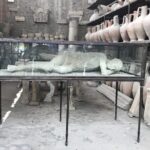
Right after the Forum, you’ll visit the Macellum. This was Pompeii’s market area for meat and fish, and it’s remembered for the wall artwork that shows what Romans ate in the 1st century CE.
This is one of the most “oh wow” stops because the market isn’t abstract. You’re seeing evidence of meals and purchasing culture, which makes Pompeii feel like it had routines, not just drama.
The guide can also help you notice how market spaces sit close to the civic center—because in Roman life, shopping and public life were tangled together.
Stop 3: Terme del Foro (baths with separate areas)
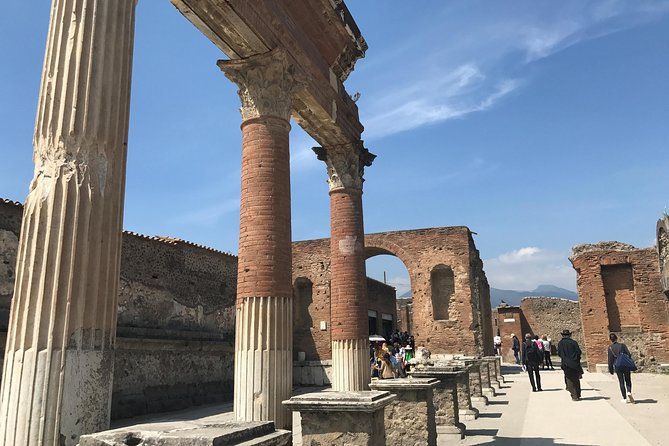
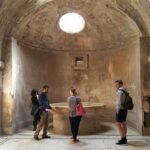
Next comes the Terme del Foro, located behind the Temple of Jupiter. This is bath culture, and it’s also city life. The sector covers about 410 square meters and had separate male and female areas, each with its own entrance.
A few specific details stand out:
- Water was supplied by the Serino aqueduct.
- The building also had a well in case water supply failed.
- The original ceiling survives in its original form with period stucco.
- The calidarium tub is in marble, with a mosaic-tiled floor.
Even if you don’t care about architecture, baths are a shortcut to understanding routine. They were about hygiene, social contact, and comfort—an everyday luxury.
Time on site: about 15 minutes. That’s long enough to notice the structure without getting lost in it.
Stop 4: Casa del Fauno (luxury Roman living)
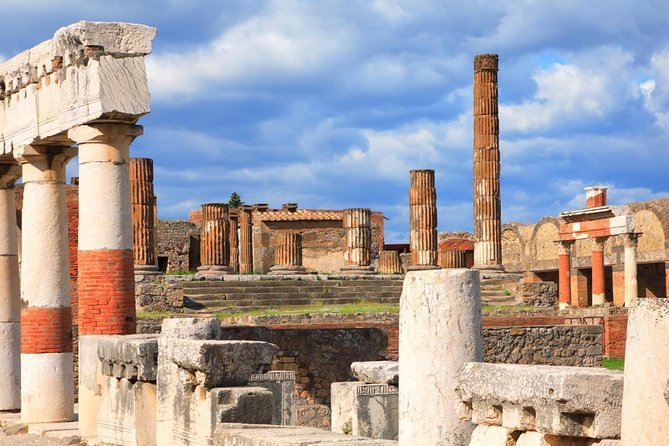
Casa del Fauno is one of the grand aristocratic houses of Pompeii’s Roman republic era. It’s big, and it shows you how wealth looked in built form: space, status, and decorative ambition.
Inside, you’ll see the Mosaico di Alessandro, but note an important detail: the tour mentions that what you can view there is a copy. The original is preserved in the MANN (Museo Archeologico Nazionale di Napoli).
This stop is great for helping you understand how Pompeii wasn’t all street markets and working life. There were major households with art and wealth on display.
Time on site: about 10 minutes. That means you get the highlights, not every room. If you love houses, it’s worth planning extra time after the tour to wander longer.
Stop 5: Casa dei Vettii (art, owners, and a very human story)
Casa dei Vettii is a Roman house unearthed after the 79 CE eruption. It’s famous as one of the best examples of 1st-century Roman art.
The name comes from its owners: Aulo Vettio Restituto and Aulo Vettio Conviva. This is a stop where the guide can make the place feel personal, because you’re not only looking at layout—you’re hearing about who lived there and what the walls were used to communicate.
A particularly striking element mentioned in the tour info is a room with preserved erotic paintings. The tour context explains that this room is linked to a woman who worked as a prostitute and lived with the owner.
Even if that content isn’t your comfort zone, it’s also what makes Pompeii so different from sanitized museum history. It’s frank about human life.
Time on site: about 10 minutes. You’ll get the story arc, then keep moving.
Walking stretch: Via dell’Abbondanza and how Pompeii connects its neighborhoods
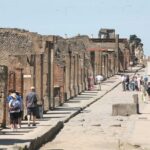
Between the residential stops and the final food stop, you’ll walk along Via dell’Abbondanza. This street connected major parts of the city between the Forum and Porta Sarno, with key buildings along the way.
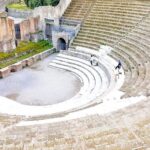
In practical terms, this is the “how the city fits together” segment. You’re moving through Pompeii in the same way people once did—along the arteries that linked public life to entertainment spaces like theaters and the Amphitheater, plus religious sites like the Temple of Isis and the Stabian Baths.
You’ll still want to watch your footing. Uneven stone floors and busy groups mean you’ll appreciate any pace control the guide offers.
Stop 6: Thermopolium Regio VI, Insula VIII, 8 (fast food, Roman style)
The final set-piece is a thermopolium—literally a place where something is sold hot. The tour frames it as the ancient fast-food model: food for take-away and quick meals.
This stop is fun because it’s instantly relatable. You can picture the flow: someone hungry, someone ordering, and the everyday speed of the exchange. You’re not studying an elite ritual—you’re seeing a business that served ordinary people.
Time on site: about 10 minutes. It’s short, but it lands your tour with an “everyday life” note that makes everything you saw feel connected.
Guides make or break the experience (and you can feel it in the details)
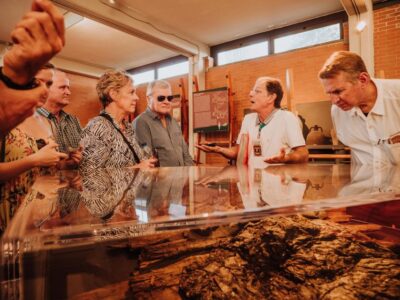
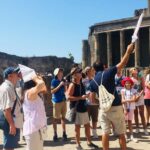
Pompeii guidance varies by personality and voice. The good news: this tour format is designed to support hearing the guide. Headsets are included for groups larger than 15, and guides in the past have been described as engaging, patient, and very capable at turning ruins into scenes.
I’ve also seen real examples of different guide styles tied to the same route. Names mentioned include Laura, Alessandra, Eraldo, and Rita—all described as strong in history storytelling and keeping the group moving at a pace that works across ages.
Still, there are two considerations:
- If your headset audio echoes or feels weak, it can make details harder to follow. Being near the guide and adjusting your headset can help.
- The tour description mentions an archaeologist, but one review flagged disappointment when they felt the guide role was more like standard touring. If you’re strict about credentials, go in knowing you’re buying a guided interpretation, not a university lecture.
Pace, crowd levels, and the value of short timing
With a 2-hour structure, you get something many people miss on Pompeii: momentum. You see a meaningful slice, you learn what you’re looking at, and you’re not exhausted before your favorite area.
That also affects value. At $59.13 per person, you’re paying mainly for:
- Guided interpretation that connects stops into a coherent story
- Express admission so you’re not stuck waiting
- Time savings versus doing the same highlights unguided and figuring it out as you go
Some visitors feel the price should be lower compared to other tour options. Fair. But if you’ll spend your saved time wisely—either by seeing more in the rest of your day or by enjoying fewer dead-end stops—this tour can earn its keep quickly.
What to do after the tour (how to get more than 2 hours)
This tour ends back at the meeting point. That’s your cue to keep your Pompeii day alive.
Here’s my practical advice:
- After the tour, wander with your new context. When you see a building type now—market, bath, house—you’ll recognize patterns instead of just seeing ruins.
- Bring time for photos, but don’t let the camera steal your attention completely. The site becomes easier when you slow down and read stone and space.
- If you’re hungry, remember this tour does not include food or drinks.
The biggest “pro move” is planning extra time before you buy a separate add-on like the Villa of Mysteries. The tour info makes it clear that an entrance ticket plus for the Villa of Mysteries is not included.
Who this tour suits best
This is a strong choice if you:
- Want a guided highlights route without committing to a full-day tour
- Like history tied to daily routine—food, markets, baths, and homes
- Appreciate a structured plan in a huge site
- Prefer a meeting point that’s easy to locate once you arrive early
It may be less ideal if you:
- Want to spend long hours inside fewer sites rather than covering more ground
- Are extremely sensitive to audio quality through headsets
- Hate any chance of meeting point confusion and would rather avoid group logistics entirely
Should you book Pompeii with this guided group?
If you want Pompeii to make sense fast, I think you should book it. The combination of express entry, a tightly chosen Forum-and-everyday-life route, and headset support for larger groups is a practical way to get real value out of a short visit.
But if you’re very picky about the meeting point being perfectly simple, do this: arrive early, confirm the office in the red station building on the correct floor, and don’t plan to “arrive right at start time.” Pompeii rewards planning. A few minutes saved at the front end can turn into a much better day once you’re inside.
FAQ
How long is the Pompeii guided group tour?
The tour lasts about 2 hours.
Is an entry ticket included?
Yes. You get an express entry ticket to the Pompeii Archaeological site. The Villa of Mysteries ticket plus is not included.
What language is the tour offered in?
The tour is offered in English.
Where do we meet and when should we arrive?
You meet at Via Villa dei Misteri, 1, Pompei. The tour instructions say to arrive 15 minutes before the time on your voucher at the agency office inside the Circumvesuviana station area.
Do I get headsets to hear the guide?
Headsets are included for groups with more than 15 people.
How big is the group?
The tour has a maximum of 35 travelers.
What should I bring for the walking portion?
You should plan for walking, and the tour involves comfortable shoes being important for the visit.
Is the tour canceled for bad weather?
The experience requires good weather. If canceled due to poor weather, you’ll be offered a different date or a full refund.