REVIEW · POMPEII
Pompeii 2-hour Private Tour with an Archaeologist-Ticket included
Book on Viator →Operated by Askos Tours · Bookable on Viator
Pompeii feels different with a live archaeologist. This 2-hour private walk through Pompeii focuses on major sights with admission included, and you skip the big-group sprint so you can actually take in what you’re seeing. You’ll meet at the main entrance, Porta Marina Superiore, where the guide holds an Askos Tours sign.
What I like most is the chance to move at your pace while still getting expert context, not just standing in front of stones. You also get a true private setup, so questions, photo stops, and even slower steps for steeper ground can happen without making everyone else wait. One drawback to plan for: 2 hours is brief, so if you’re hoping to linger everywhere or add museums beyond the core ruins, this won’t give you that long, wandering feel.
In This Review
- Why This Private Pompeii Tour Works Better Than the Big-Group Sprint
- Key Stops, Real Time: How the 2 Hours Get Spent
- Entering the Archaeological Park via Porta Marina Superiore
- Basilica: The Merchants’ Portico Moment
- Foro de Pompeya: The Main Square Feeling
- Walking the Main Street: Where the City’s Rhythm Shows Up
- Granaries of the Forum: Tables, Fountains, and Tragic Casts
- House of Menander: Where Luxury Shows in Architecture and Decor
- Stabian Baths (Terme Stabiane): Oldest Thermal Complex Energy
- Lupanar: The Most Famous Brothel Stop
- House of the Faun: Big Private Residence Perspective
- Teatro Piccolo and Teatro Grande: Two Theater Tastes
- What the Archaeologist Guide Adds (Beyond Facts on a Sign)
- Price and Value: What You’re Really Paying For
- Best Fit: Who Should Book This Pompeii Tour
- Weather, Shoes, and Getting Your Steps Right
- End Point and Leaving the Ruins With a Plan
- Should You Book This Pompeii Private Tour?
- FAQ
- Is the Pompeii admission ticket included?
- How long is the Pompeii private tour?
- Is this tour only for my group?
- What language is the tour offered in?
- Where do we meet the guide?
- Where does the tour end?
- Does the tour run in bad weather?
- Should I wear special shoes?
- Is lunch or hotel pickup included?
- What is the cancellation policy?
- Are service animals allowed?
Why This Private Pompeii Tour Works Better Than the Big-Group Sprint
Pompeii is the kind of place where distance and time trick you. A quick group tour can turn the whole site into one long slideshow, where you’re trying to keep up instead of noticing details.
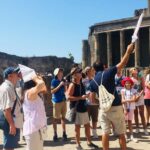
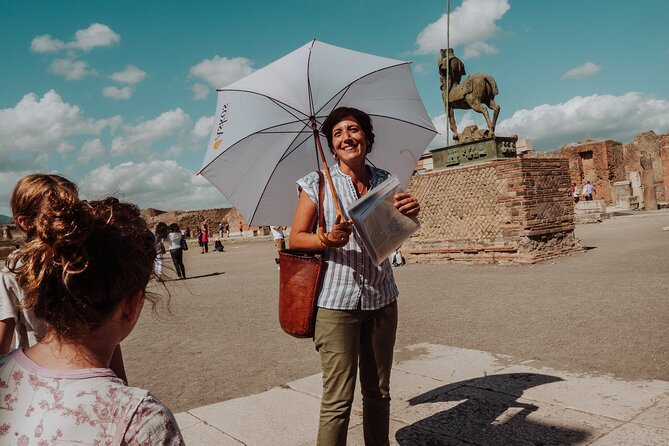
Here, you get a private guide for your group only, and the pacing is built around stopping at the big moments along the main route. In real feedback, guides like Amedeo, Giovanni, Ivan, Luca, and Silvia were praised for bringing the site to life with clear explanations—and for handling questions without rushing people. One review even singled out how the guide was patient when they arrived late, and still made the visit feel unhurried.
The other practical win: Pompeii admission is included in the tour price. That matters because it keeps you from juggling ticket logistics while you’re already walking and checking time.
Key Stops, Real Time: How the 2 Hours Get Spent
This tour is designed like a guided highlight circuit. You’ll cover a mix of public spaces (where daily life happened), domestic areas (homes and luxury), and the famous older “human moments” Pompeii is known for—without trying to cover every corner of the park.
Expect a steady rhythm: meet the guide, head into the ruins, stop, listen, and walk again. Because it’s only around 2 hours, the stops are short, but they’re chosen to hit themes: commerce, the forum, public baths, residential wealth, theaters, and the street life in between.
Here’s what that looks like in order, with what each section is really for.
You can also read our reviews of more tours and experiences in Pompeii


Entering the Archaeological Park via Porta Marina Superiore
You start at the main entrance, Porta Marina Superiore. The guide meets you there holding a sign for Askos Tours, which is genuinely helpful when you’re arriving on your own.
This entry choice is practical. Starting at a main entrance keeps you from spending your limited time figuring out where to go first. And because the tour is private, you’re not waiting on a late straggler who slows the entire group down.
You’ll also want to keep an eye on comfort here. Even though this is a 2-hour tour, Pompeii’s surfaces can be uneven and the walking can feel more work than you’d expect. The good news: the tour is run with a moderate fitness level in mind, and multiple reviews praised guides for adjusting pace for older family members.
Basilica: The Merchants’ Portico Moment
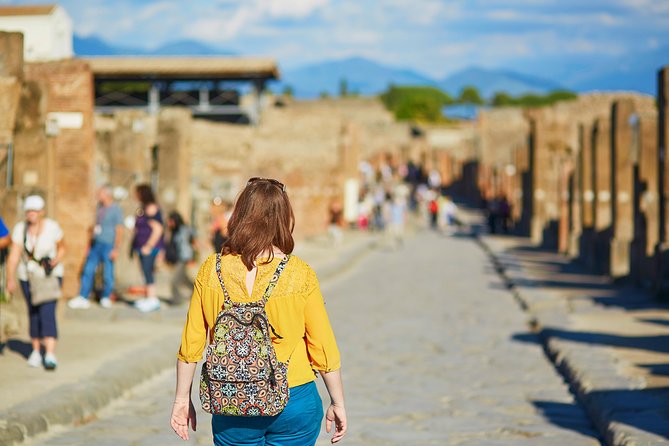
Next up is the Basilica. The Basilica is described as an open portico that offered shelter to merchants and other activities.
This stop is smart because it sets up a theme right away: Pompeii wasn’t just temples and theaters—it was a city that ran on commerce and daily movement. When your guide explains what this kind of space was for, you start to “read” where people would gather, trade, and wait.
Time here is short, so you’ll want to stay present. This is the part of the tour where you learn how to look: roofs and open-air design mattered, and the flow of people mattered.
Foro de Pompeya: The Main Square Feeling
Then you reach the Foro de Pompeya, the ancient main square. This is where a city’s center shows itself—space for gathering, movement, and the pulse of public life.
Even if you only spend a few minutes here, a good guide makes the square feel less like ruins and more like a working place. In the feedback I saw, guides were praised for focusing on day-to-day life and the lifestyle of the people connected to what you’re seeing. That makes the forum stop more than a photo stop.
Walking the Main Street: Where the City’s Rhythm Shows Up
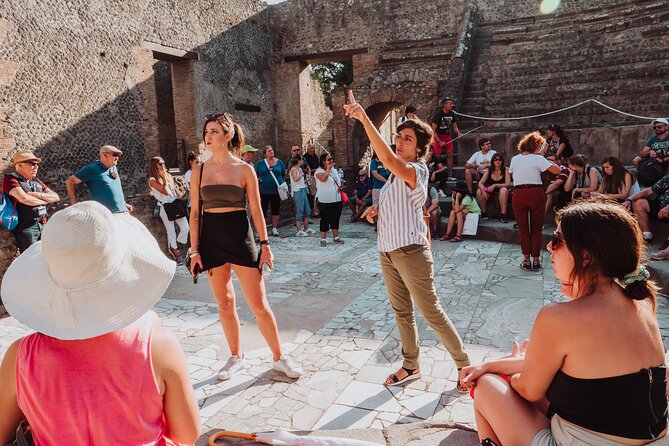
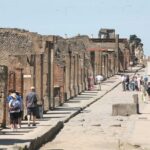
Between major stops, you’ll walk through the main street. This segment matters because it helps you understand Pompeii as a connected place, not isolated buildings.
It also helps you reset mentally. After listening at public spaces, the walking portion lets you look around and notice how the route flows. It’s the difference between memorizing points and understanding the layout.
You can also read our reviews of more private tours in Pompeii


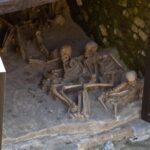
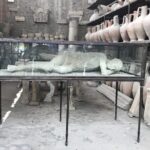
Granaries of the Forum: Tables, Fountains, and Tragic Casts
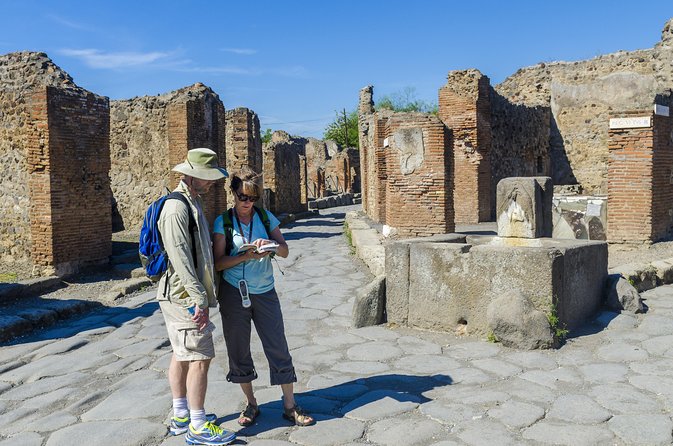
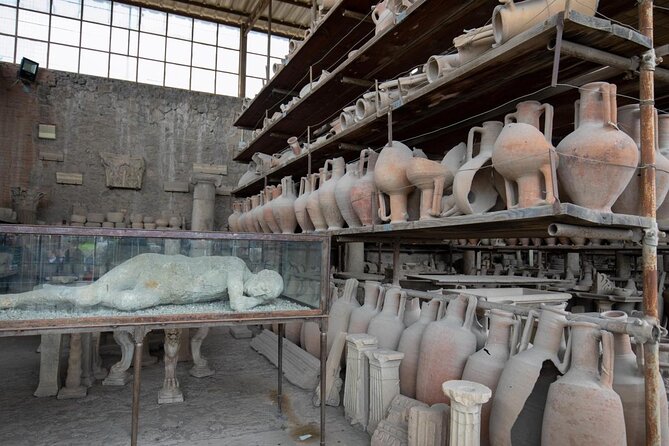
Next are the Granaries of the Forum. This stop includes marble tables and baths that connected to fountains at house entrances, plus casts of victims of the eruption—along with a dog and a tree.
This is one of the most emotionally heavy parts of Pompeii. The value of a guide here is context and clarity—because the site can feel overwhelming if you don’t know what you’re looking at. A short stop with the right explanation can help you see why these elements are placed where they are and what they reveal about ordinary life and the disaster’s impact.
The practical consideration: this is a place where you may want a moment to pause. If you’re sensitive to tragedy, plan to take that pause without guilt. A private guide gives you that flexibility.
House of Menander: Where Luxury Shows in Architecture and Decor
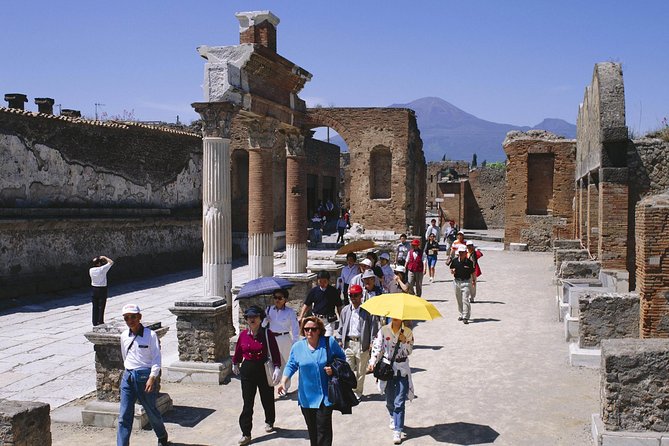
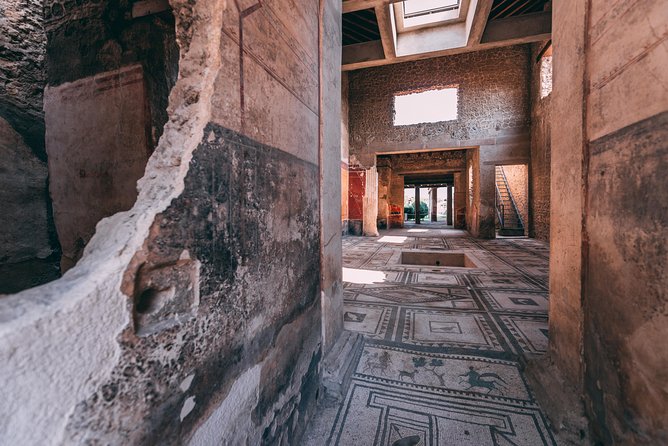
The House of Menander is presented as one of Pompeii’s richest and most magnificent houses, especially for architecture, decoration, and contents.
In plain terms, this stop answers a question many visitors have: who lived like this, and what did that lifestyle look like? A guide helps tie the fancy surfaces to social meaning, not just aesthetics.
This is also a great spot if you like detail. The stop is timed, but the content is built for understanding. If you enjoy architecture and interior design cues, you’ll likely get more from this stop than you expect from a brief visit.
Stabian Baths (Terme Stabiane): Oldest Thermal Complex Energy
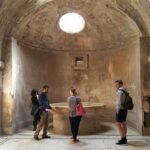
Then you’ll see the Stabian Baths, described as the oldest thermal complex in the city.
Even with limited time, baths are a powerful Pompeii stop because they reflect leisure and routine. When a guide explains what a complex like this represented, it shifts how you think about the ruins. This isn’t just a dead city; it’s people living, washing, socializing, and spending time.
If you’re the type who likes how daily life worked, this is one of the stops that usually “clicks” fast.
Lupanar: The Most Famous Brothel Stop
Next comes the Lupanar, the most famous brothel in the ruined Roman city of Pompeii.
This stop can surprise people, mainly because it’s one of the most direct “human” remnants left behind. The benefit of having a private guide is that you can ask questions calmly and get explanations that keep things respectful and grounded.
It’s also a good moment for balance. You’ll have already seen markets and public space, then luxury homes and baths. This adds another layer: how the city served people across very different walks of life.
House of the Faun: Big Private Residence Perspective
The House of the Faun is described as one of the largest and most impressive private residences in Pompeii.
This is where you start seeing the scale. When guides explain these homes in context, the ruins feel less random. The point here isn’t just size—it’s what the scale suggests about wealth, status, and the household world.
If you’ve visited Rome and you like Roman domestic life, this stop gives you a Pompeii-specific version: not palaces in a city built for new traffic, but a preserved glimpse into older domestic space.
Teatro Piccolo and Teatro Grande: Two Theater Tastes
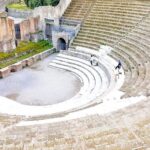
The tour includes time to look at Teatro Piccolo, and then you visit Teatro Grande, described as the most important theater in Pompeii.
The value of including theaters is that it shifts your sense of Pompeii. You’re not only seeing public and private spaces; you’re also seeing culture and performance. A guide helps connect the structure to why people would gather there.
Time is short at each theater, so treat it like a guided orientation. The goal isn’t to become an expert on theater design; it’s to understand why this was central enough to matter.
What the Archaeologist Guide Adds (Beyond Facts on a Sign)
This is the part that people consistently praise: the guide makes the site readable.
I noticed several strong patterns in feedback:
- Guides were described as passionate and enthusiastic, like Amedeo, Giovanni, Diego, and Rafaella.
- Some guides were noted as PhD archaeologists with hands-on excavation experience, including Silvia and Alessandra. That kind of background matters because it often shows in how they explain what’s been found and why it matters.
- A few guides stood out for adjusting the pace and comfort needs of different ages. Silvia, for example, was praised for slowing down for older family members on rough or steep ground.
- If your group cares about photos, you’ll likely appreciate how guides handled photo focus and still kept explanations clear—Mena was specifically praised for that kind of patience.
You’ll also benefit from the “why this spot” framing. Instead of wandering, you learn how one stop connects to the next—commerce to public space, public baths to daily routines, houses to lifestyle, and theaters to community culture.
Price and Value: What You’re Really Paying For
At $214.75 per person for a private 2-hour tour, this isn’t a budget option. But the math gets more reasonable when you look at what you’re actually getting.
You’re paying for:
- A professional archaeological guide
- Pompeii admission included
- A private format where only your group participates
- A guided route across multiple major zones
For a lot of visitors, Pompeii becomes expensive or frustrating when you mix tickets, finding entrances, and coordinating meeting points. Here, the admission piece is handled, and the private guide structure keeps the time focused on the essentials.
This is also a tour style that works well when you’re traveling with kids or multiple generations. One review praised the way the guide kept children engaged during the visit, while still supporting older relatives with a slower pace.
Best Fit: Who Should Book This Pompeii Tour
This private format is a great fit if you want Pompeii’s highlights without stress. You’ll likely enjoy it most if you:
- Prefer questions and conversation over self-guided wandering
- Like learning context while you walk
- Want admission handled for you
- Have limited time and want a structured route
It can also suit families. A review mentioned two kids staying engaged, and another highlighted how the guide handled older relatives thoughtfully.
If you want to spend half a day roaming at your own rhythm, or if you plan to stop repeatedly for extra museums beyond the core ruins, you might find the 2-hour time window tight.
Weather, Shoes, and Getting Your Steps Right
This tour runs in all weather, so come prepared. Pompeii can be slippery when wet, and uneven ground doesn’t become kinder just because the forecast changes.
Comfortable shoes are strongly recommended, and it’s smart to bring layers even in mild weather. You’ll walk enough that you’ll feel it, and the tour is short enough that you don’t want aches cutting into your attention.
Also, if you need a service animal, service animals are allowed. That’s useful to know ahead of time.
End Point and Leaving the Ruins With a Plan
You finish at Piazza Esedra. The guide is happy to help with directions back to your accommodation or the closest train station.
That final piece matters more than it sounds. Pompeii can be confusing after you’ve spent time walking and absorbing everything. Having someone point you in the right direction helps you keep the day from becoming a scramble.
Should You Book This Pompeii Private Tour?
I’d book it if you want a focused Pompeii visit with expert context and zero group-pressure pacing. The archaeologist guide angle is the heart of this tour, and the included Pompeii admission removes a common friction point.
You should think twice if you want long, slow wandering or if you’re hoping to cover everything in Pompeii in two hours. This tour is built for key stops and clear explanations—not for taking your time in every corner.
If you do book, I’d also bring a short list of what matters most to you—public life, theaters, homes, baths, or the more human side of the story—so the guide can steer attention where you’ll get the most out of the time.
FAQ
Is the Pompeii admission ticket included?
Yes. Admission fees to Pompeii are included with the tour.
How long is the Pompeii private tour?
It lasts about 2 hours.
Is this tour only for my group?
Yes. It’s a private tour/activity, so only your group participates.
What language is the tour offered in?
The tour is offered in English.
Where do we meet the guide?
You meet at the main entrance of the archaeological site, Porta Marina Superiore, where the guide holds an Askos Tours sign.
Where does the tour end?
The tour ends in Piazza Esedra (Pompei).
Does the tour run in bad weather?
Yes. It operates in all weather conditions, so you should dress appropriately.
Should I wear special shoes?
Comfortable shoes are recommended because you’ll be walking through the ruins.
Is lunch or hotel pickup included?
No. Lunch and hotel pickup and drop-off are not included, and transportation to/from the ruins is also not included.
What is the cancellation policy?
Free cancellation is available up to 24 hours in advance for a full refund.
Are service animals allowed?
Yes. Service animals are allowed.
If you want, tell me your travel dates and whether you’re coming from Naples or Rome. I can suggest a realistic time plan for squeezing Pompeii into your day.