REVIEW · POMPEII
2.5-Hour Guided Tour of Pompeii with an Archaeologist
Book on Viator →Operated by Enjoy Pompeii · Bookable on Viator
Pompeii is impressive, even before you learn the story. This 2.5-hour guided visit helps you read the ruins with an archaeologist, from the civic heart to everyday spaces. I like that it’s a small group format (max 10 in the tour description) with skip-the-line access through the park. The one catch: the group cap is listed as high as 15 depending on the operator, and the time on-site can be slightly shorter than advertised.
My two favorite parts are the route and the guide style. You focus on the western side of Pompeii and hit big, recognizable anchors like the Basilica and the Forum, plus the thermal baths, a bakery, and residential houses—so you see both public life and daily routines. And guides such as Francesco, Paulo, Ana, and Monica get named in feedback for keeping the pace moving and the explanations clear, with humor and story-driven details.
One possible drawback to plan for: if you want very deep, academic-level debate nonstop, this can feel more like a guided “highlights plus context” walk than a lecture. Also note that Pompeii can be hot, and there’s not always a formal break built into the schedule.
In This Review
- Key Things You’ll Notice on This Pompeii Tour
- A 2.5-Hour Pompeii Walk That Actually Helps You Read the Ruins
- What You Visit: Western Pompeii in a Smart, Time-Saving Loop
- Basilica and the Forum: Civic power, public life, and social rhythm
- Thermal baths: hygiene, status, and routine
- Bakery and food life: the city runs on daily calories
- Residential houses: homes as small worlds
- The AD 79 context: what you’re seeing is interrupted time
- Meeting Point at Ristorante Bar Sgambati, Ending at the Forum
- Skip-the-Line Value: Why This Matters More Than You Think
- Price and What $71.20 Actually Covers
- Group Size, Pace, and Guide Style: The Real Experience
- How to Get the Most Out of Your Pompeii Time
- Arrive ready to walk and pay attention
- Use the guide’s pointers, then look again
- Take your own notes lightly
- Should You Book This Pompeii Guided Tour?
- FAQ
- How long is the Pompeii guided tour?
- What is included in the tour price?
- Is skip-the-line access included?
- What part of Pompeii do you visit?
- Where do we meet and where does the tour end?
- Can I cancel for a full refund?
Key Things You’ll Notice on This Pompeii Tour
- Skip-the-line entry so you lose less time waiting at the entrance
- A western route that mixes the Forum/Basilica area with baths, bakery, and homes
- An archaeologist-led explanation connecting buildings to life before AD 79
- Small-group pacing (10 max in the description; operator notes up to 15)
- Shade-and-water awareness from guides who manage the heat in practice
A 2.5-Hour Pompeii Walk That Actually Helps You Read the Ruins
If you’ve ever stared at a pile of old stone and thought, I need a map and a brain… you’ll get relief here. Pompeii isn’t short on “wow,” but it can be hard to know what you’re looking at. This tour spends your limited time putting meaning to the sights—why a space exists, how people likely used it, and how the city’s layout made ordinary life work.
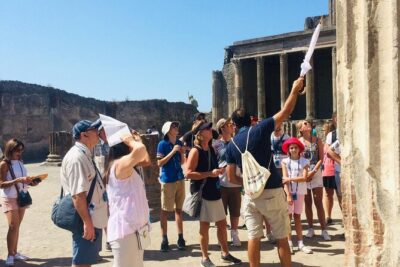
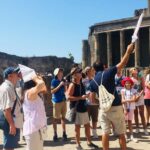
The small-group setup matters. Even when Pompeii is crowded, you’re moving as a unit with an archaeologist guide who can keep the group together and manage questions. That doesn’t mean it turns into a private tour, but it’s a better fit than the huge bus crowd. If you’re a first-timer, this is a strong way to get your bearings fast.
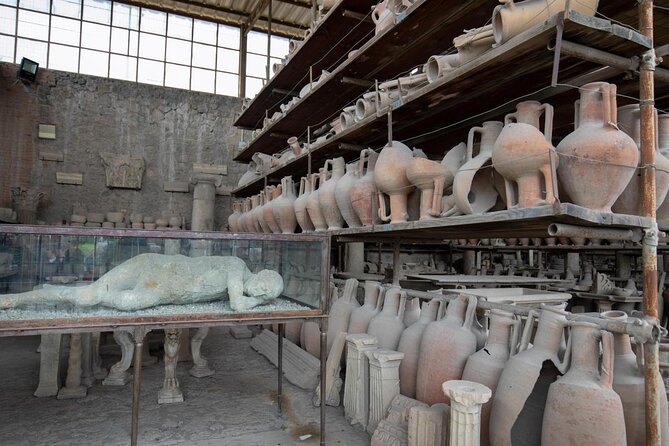
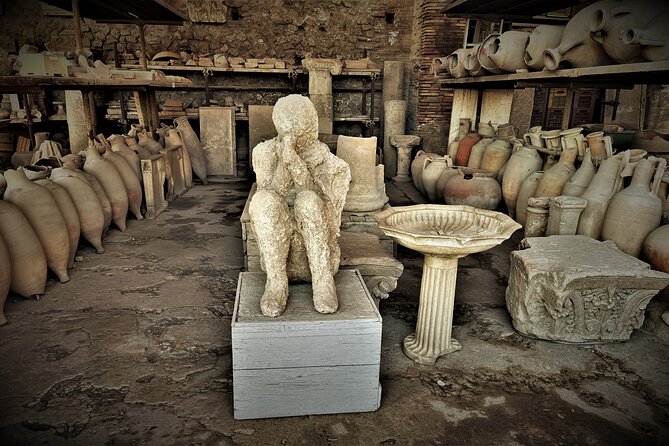
You’ll also get the emotional anchor that makes Pompeii more than sightseeing: the eruption of Mount Vesuvius in AD 79. The ruins are not just old; they’re frozen moments. A guide can help you understand what the city was like right before it changed forever.
You can also read our reviews of more guided tours in Pompeii


What You Visit: Western Pompeii in a Smart, Time-Saving Loop
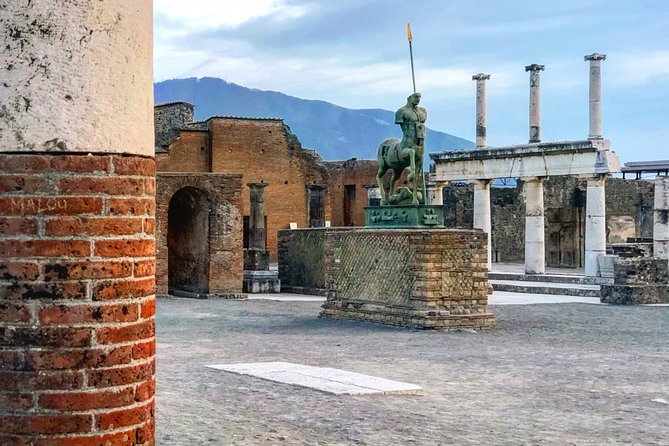
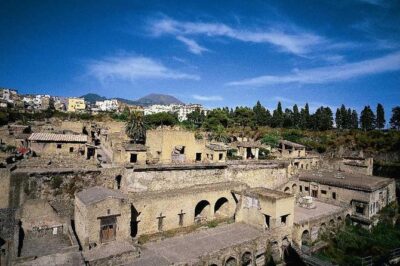
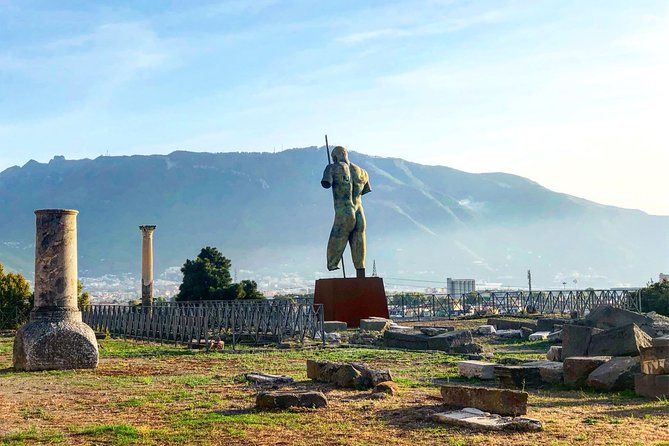
The itinerary centers on the archaeological park of Pompeii with a guided walk focused on the western part of the city. Expect a series of stops that alternate between public monuments and everyday infrastructure. That’s the right balance if you want the highlights without trying to sprint across the entire site on your own.
Basilica and the Forum: Civic power, public life, and social rhythm
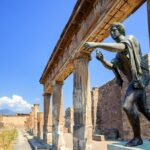
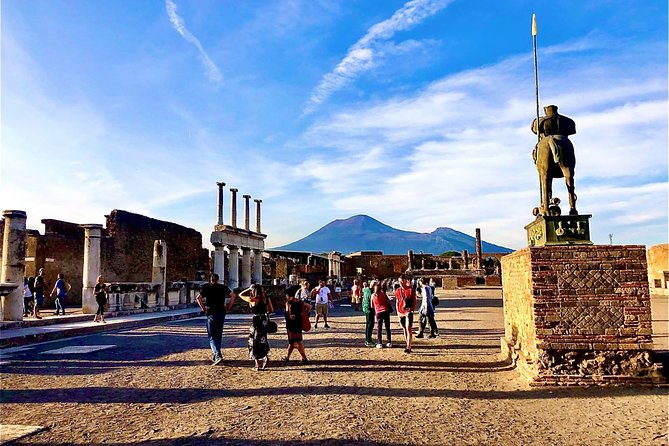
You’ll see major civic spaces that help explain how the city organized itself. The Basilica and the Forum are the kind of locations where you can feel the “public” Pompeii energy—meeting, governing, conducting business, and showing status. Even if you don’t memorize every architectural detail, you’ll leave with a clearer picture of how the city functioned.
Practical tip: when you’re in the Forum area, take a minute to orient yourself—figure out where people would have walked, gathered, or faced one another. A good guide will point out what to look for, but you’ll get more out of it if you also slow down for your own mental map.
Thermal baths: hygiene, status, and routine
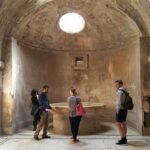
Next up are the thermal baths, which are a favorite stop for many visitors because they connect directly to routine. Baths weren’t a once-in-a-lifetime event; they were part of daily life. Seeing the layouts—where people would move, wash, and socialize—helps you understand Pompeii as a lived-in city, not a museum label.
If you like “how people lived” details, this is where the tour usually clicks. Even if your background in Roman culture is basic, the baths give you something concrete: a place designed for repeated use.
Bakery and food life: the city runs on daily calories
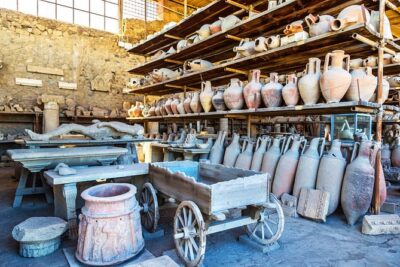
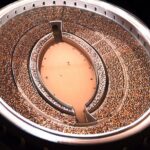
Then comes the bakery. It’s easy to overlook food production when you’re rushing between monuments, but the bakery reminds you that Pompeii required constant supply and work. A guided explanation here can turn “a building” into a system—grain, processing, distribution, and the simple fact that people needed to eat every day.


Residential houses: homes as small worlds
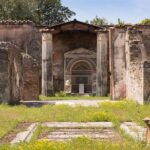
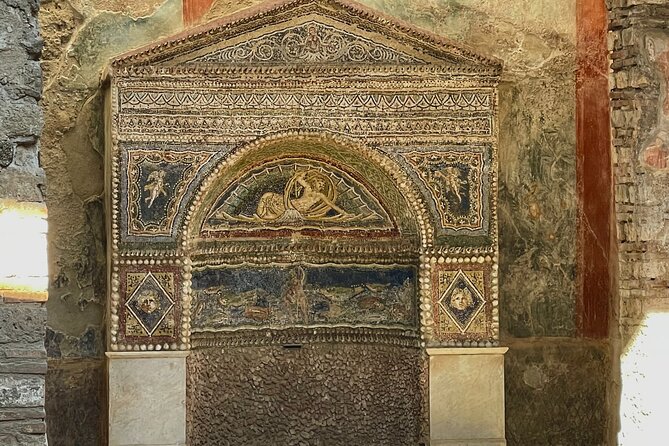
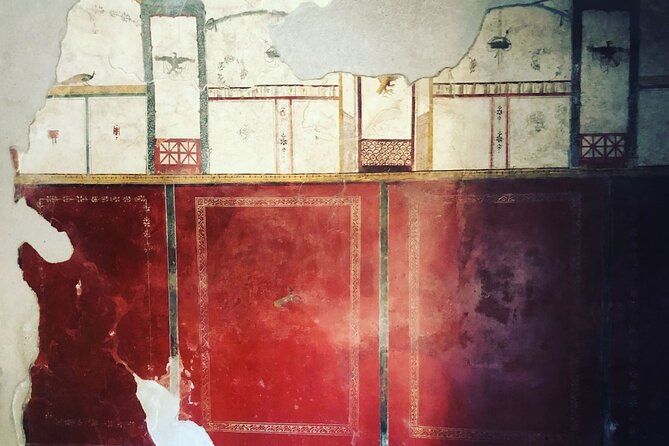
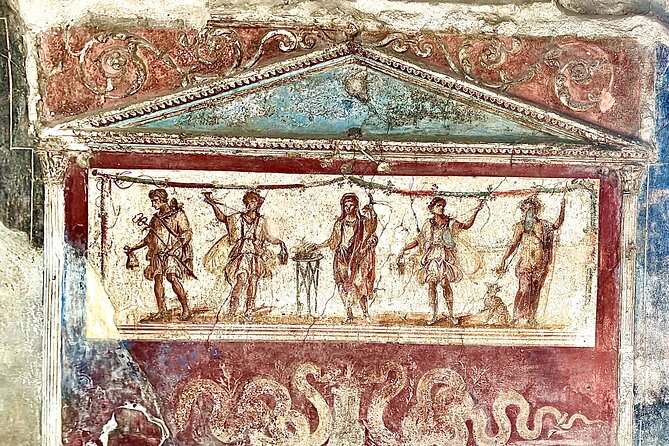
You’ll also view some residential houses. These stops help you compare everyday domestic life with what’s happening in public spaces. Where public areas reflect civic identity, residences can suggest comfort, privacy, and social habits. Even if you can’t see every room in detail, the contrast makes the whole city feel more human.
The AD 79 context: what you’re seeing is interrupted time
Throughout the walk, you’ll hear how Pompeii’s eruption in AD 79 preserved a snapshot of life. That makes the visit different from other Roman ruins where you’re reconstructing history. Here, you’re standing close to a moment that ended abruptly.
Meeting Point at Ristorante Bar Sgambati, Ending at the Forum
This tour starts at Ristorante Bar Sgambati, Via Villa dei Misteri, 1, 80045 Pompei NA, Italy. The finish is at the Forum of Pompeii, Via Villa dei Misteri, 2, 80045 Pompei NA, Italy.
That end point is handy. The Forum area is central, so after the guided portion you’re already positioned to keep exploring on your own—whether you want to wander nearby ruins, grab a drink, or re-check a stop you liked. It’s a small detail, but it affects how smoothly your afternoon flows.
Skip-the-Line Value: Why This Matters More Than You Think
Pompeii can involve a lot of standing around, especially in peak hours. This tour includes skip-the-line access, which often changes the whole day. When you’re paying $71.20 per person, the biggest “value” lever isn’t the guide alone—it’s buying back your time.
Here’s how that value plays out for you:
- You spend more time inside the park and less time waiting at entry
- You can keep your attention on the sights instead of the clock
- A guided route helps you avoid getting lost in choices once you’re in
It’s also why advance booking helps. This one averages being booked about 34 days in advance, which usually means popular time slots move quickly. If your travel dates are fixed, booking earlier is smart.
Price and What $71.20 Actually Covers
At $71.20 per person, you’re paying for a guided walk of about 2 hours 30 minutes, plus entrance tickets and skip-the-line access. Parking and transport aren’t included, so you’ll still need to plan how you get to Pompeii.
Is it worth it? If you’ll only visit Pompeii once—or you want your visit to feel organized—yes. The combo of admission + guided time is where you get leverage. The archaeologist guide helps you connect structures to life, and that connection is what turns “seeing” into “understanding.”
If you already know Roman history and you’re comfortable building your own route, you might not need a guided tour. But if you’d rather spend your energy inside the ruins instead of planning which street to follow, this price is easier to justify.
Group Size, Pace, and Guide Style: The Real Experience
The tour is marketed as a small group. The description cites a maximum of 10 people, while the operator info lists a cap of up to 15 travelers. In plain terms, you should expect a group that stays together, but it may not always feel tiny.
Pace is another big factor. Several guides are described as entertaining and effective at keeping momentum, even in harsh conditions. One visitor noted that shade-seeking and water awareness made the difference when the heat hit early. Another highlighted that the pace was perfect and allowed plenty of time to see the ruins.
Two practical considerations:
- Heat management: Pompeii is exposed. If you go in hotter parts of the day, don’t rely on a scheduled rest stop. Plan for discomfort and take your time when the guide encourages it.
- Depth vs. breadth: Some feedback calls out that parts of the storytelling can be more family-friendly or simplified. If you want nonstop factual density, you may want to compare other tour options or ask what kind of focus the guide uses.
How to Get the Most Out of Your Pompeii Time
Because this tour is short (about 2.5 hours), your best strategy is mental, not physical.
Arrive ready to walk and pay attention
You’ll move between the Forum/Basilica area, thermal baths, the bakery, and residential zones. Even if you’re not sprinting, it’s still active walking. If you’re sensitive to heat, aim to bring what you can realistically handle.
Use the guide’s pointers, then look again
Guides can point out what matters, but you’ll benefit from one extra habit: when you hear a key explanation, look for it with your own eyes. Follow along with the movement of the space—how people would enter, where they’d gather, and what function the room served.
Take your own notes lightly
You don’t need a full journal. But jot a couple of keywords—baths, bakery, Basilica/Forum—so your afternoon self-guided wandering has structure.
Should You Book This Pompeii Guided Tour?
I’d book this tour if you want:
- Skip-the-line entry and a guided route that makes Pompeii make sense fast
- A balanced visit that includes both public spaces (Forum, Basilica) and daily-life stops (baths, bakery, homes)
- A small-group feel with a guide who tells the story in a way you can follow
I’d think twice if you want:
- Very academic, ultra-detailed history all the time
- A guaranteed start-to-finish exact timing down to the minute (some experiences finish early or feel compressed)
- A tour with a long rest break built in
If your goal is to come away with a clear picture of Pompeii before AD 79—and you don’t want to spend the day guessing what you’re looking at—this is a solid value play.
FAQ
How long is the Pompeii guided tour?
It runs for about 2 hours 30 minutes.
What is included in the tour price?
The tour includes a 2.5-hour archaeological guided visit, entrance tickets, and skip-the-line access.
Is skip-the-line access included?
Yes, skip-the-line access to the ruins is included.
What part of Pompeii do you visit?
You visit the western part of the city, including the Basilica, the Forum, thermal baths, the bakery, some residential houses, and more.
Where do we meet and where does the tour end?
You start at Ristorante Bar Sgambati, Via Villa dei Misteri, 1, and the tour ends at the Forum of Pompeii, Via Villa dei Misteri, 2.
Can I cancel for a full refund?
Yes—free cancellation is offered. You must cancel at least 24 hours in advance for a full refund, and poor weather cancellations may also lead to a different date or a full refund.