One sentence wonders work best here: Pompeii is huge, and lines eat time. This private tour is built for getting inside the ruins fast with priority admission, then slowing down just enough to actually understand what you’re looking at. I especially like the way the experience mixes major monuments with the nitty-gritty of daily life, from theatre spaces to the spots where Romans relaxed.
I also like that you get a guide who can tailor the pace and answer questions without rushing you. Guides such as Romolo (a fan-favorite name from prior groups), and others like Sophia or Francesco, are reported to keep things clear and flexible—handy when you’ve got mixed ages or a slower walker. One consideration: admission fees to Pompeii aren’t included, so you’ll still need to plan for tickets, even with priority entry.
In This Review
- Key takeaways before you go
- Pompeii with an expert guide in your ear
- Priority admission: what it changes (and what it doesn’t)
- The main stop: Pompeii’s everyday life route
- Why the theatres and square matter
- The streets: where the city becomes real
- Lupanare House, thermal baths, and Roman villas: the good stuff (plus context)
- Lupanare House: uncomfortable, informative
- Thermal baths: how Romans relaxed and socialized
- Roman villas: domestic life you can actually picture
- How long is enough? 2 to 3 hours that feel focused
- If you want a certain kind of guide, here’s what to look for
- Price and value: $98.51 plus tickets
- Meeting point at Via Villa dei Misteri: keep it simple
- What you’ll leave with (besides great photos)
- Should you book this private Pompeii tour?
- FAQ
- How long is the Pompeii private tour?
- Is admission to Pompeii included?
- Is this a private tour?
- Where do we meet for the tour?
- Does the tour start and end at the same place?
- What language is the guide?
- Does the tour include priority admission?
- Is there a mobile ticket?
- Are service animals allowed?
- Can I get a full refund if I cancel?
Key takeaways before you go
- Priority admission cuts waiting so you can spend more time in the ruins
- Private, customized pacing means fewer “group herding” moments
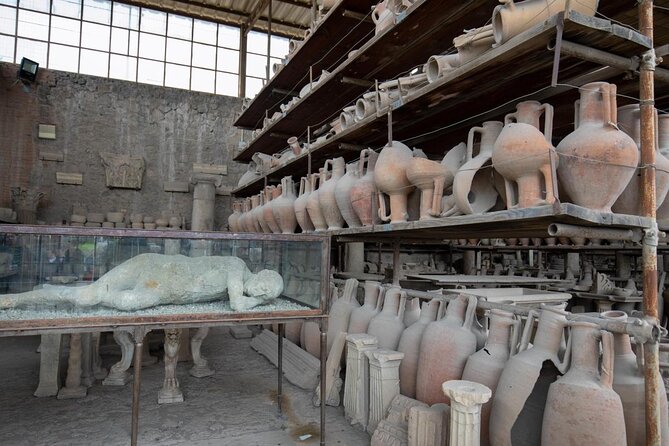
- Expect a route that covers theatres, the square, streets, and Roman home life
- You’ll also see Lupanare House, thermal baths, and Roman villas (route dependent)
- There’s time for questions, which makes the short 2 to 3 hours feel fuller
Pompeii with an expert guide in your ear
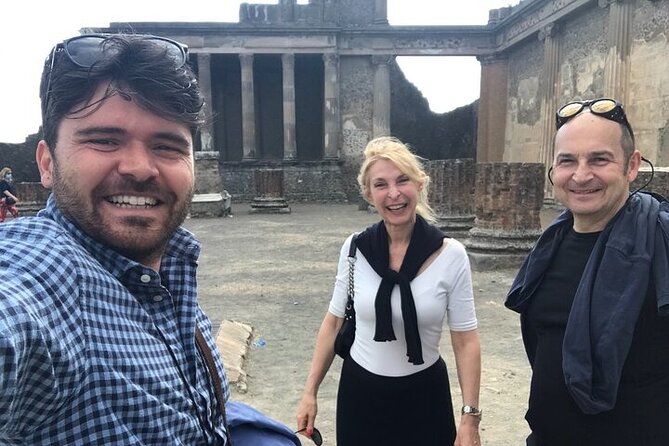
Pompeii works best when you can connect the dots. Without help, it’s easy to see stones and arches and think you’re missing the real story. With a guide, the place starts explaining itself—street by street, room by room, and even through the architecture choices people made every day.
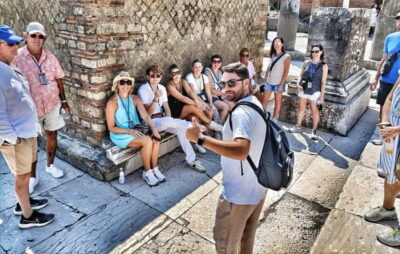
That’s what I like about this format: it’s private, so the guide can steer the walk toward what matters to your group. If you care more about how people lived, you’ll get that. If you’re more curious about the big picture—like the events around the eruption—you’ll still get the context without it turning into a lecture.
Also, the vibe is made for real conversation. You’re not just walking past signs. You have room to stop, ask, and get answers tied to what’s right in front of you.
You can also read our reviews of more guided tours in Pompeii



Priority admission: what it changes (and what it doesn’t)
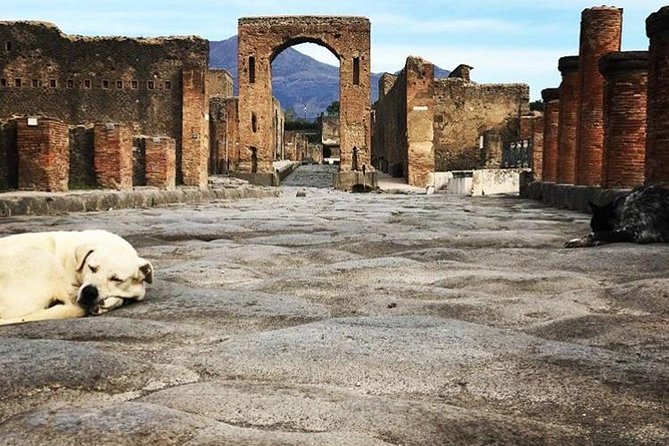
The tour includes priority admission, which is a big deal at Pompeii. Even when you’re excited, long lines can drain your energy and shorten the time you actually spend among the ruins.
In practice, priority admission usually means you lose less of your limited walking time to queues. Since this tour is only 2 to 3 hours, that time saving matters. You’re not trying to conquer Pompeii in one go—you’re trying to make your go count.
Just keep one thing straight: admission tickets are not included. Priority helps with entry flow, but you’ll still need to budget for the site admission yourself. If you show up without tickets sorted, you’ll still feel friction.
The main stop: Pompeii’s everyday life route
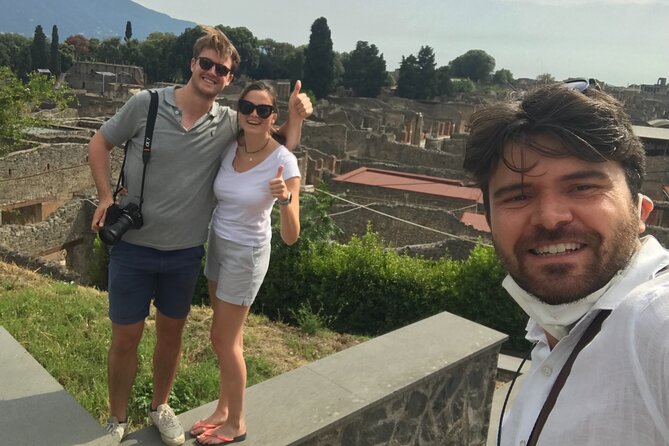
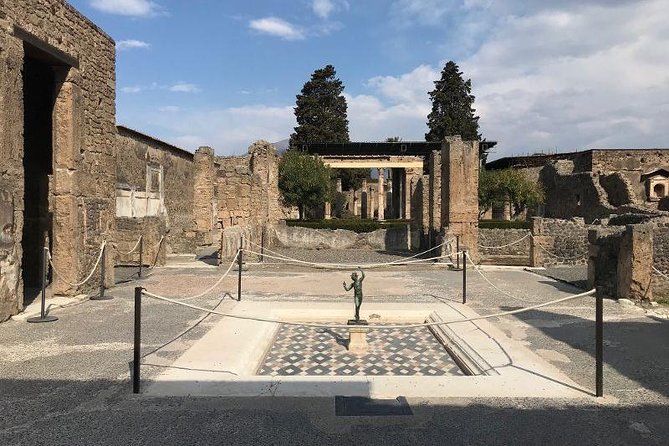
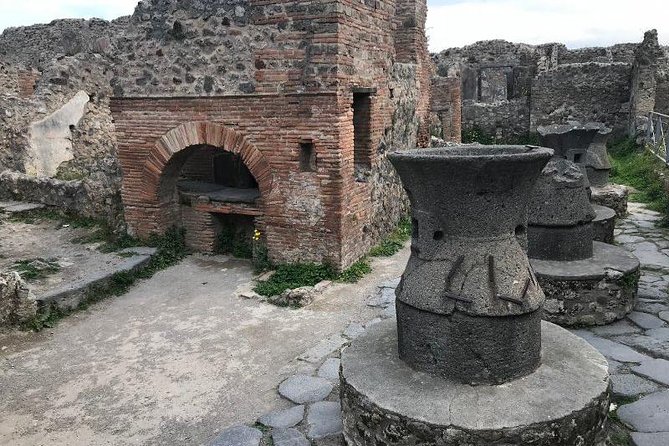
This experience is centered on one place: the Archaeological Park of Pompeii. The focus isn’t just monuments for photos. It’s about how the city worked for ordinary people—how they moved through streets, spent time in public spaces, and lived in houses and neighborhood hubs.
You’ll start from the meeting point at Via Villa dei Misteri, 2, 80045 Pompei NA, Italy, and the tour finishes back there. So it’s a simple loop: meet, walk the highlights at a smart pace, then wrap up without you needing to re-plan transportation.
Expect a route that mixes several types of sites:
- public entertainment spaces (like theatres)
- civic or central areas (like the square)
- everyday streets and neighborhood buildings
- residential and recreational zones (like Roman villas and thermal baths)
- a few of the more infamous-but-informative sites tied to Roman street life (like the Lupanare House)
The upside of this mix is variety without chaos. You won’t just stay in one zone for the whole time.
Why the theatres and square matter
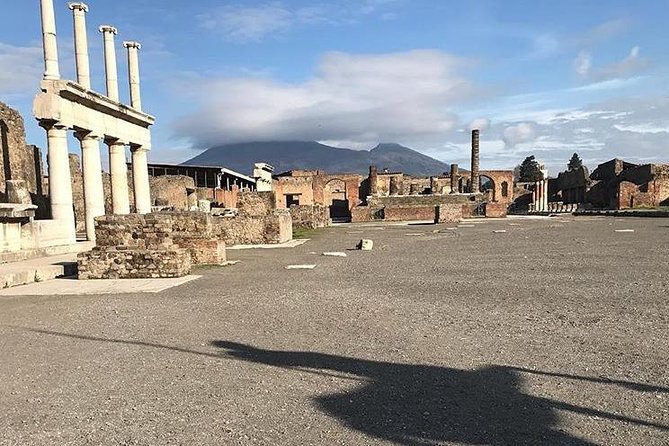
Theatres and the square are powerful anchors because they show how Pompeii’s culture played out in public. A guide can point out how these spaces shaped daily rhythms—where people gathered, how crowds moved, and what the architecture suggests about community life.
This is also where a private guide helps most. In a big tour, you might get a quick stop and keep moving. In a private tour, you can actually ask follow-ups—what you’re seeing, why it’s laid out that way, and what that tells you about how Pompeii felt as a living city.
The streets: where the city becomes real
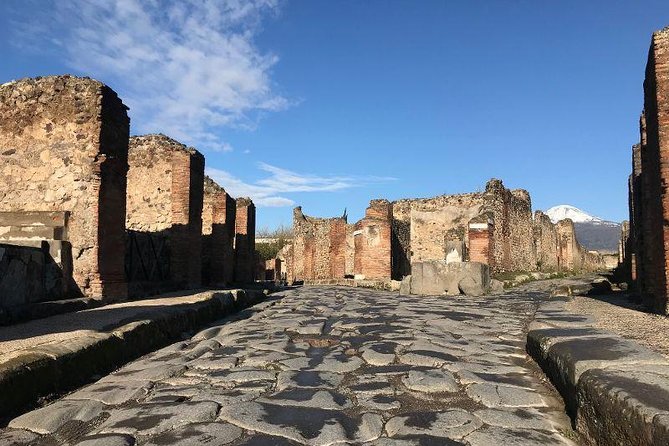
Pompeii’s streets are where “ancient ruins” start feeling like a place with routines. A good guide will help you notice layout, flow, and the relationship between buildings and walking routes. That’s how you move from looking at things to understanding how people got around.
And because the tour is customized, you can slow down when something grabs you—like a doorway detail, a wall feature, or the way one street links into another major area.
You can also read our reviews of more private tours in Pompeii






Lupanare House, thermal baths, and Roman villas: the good stuff (plus context)
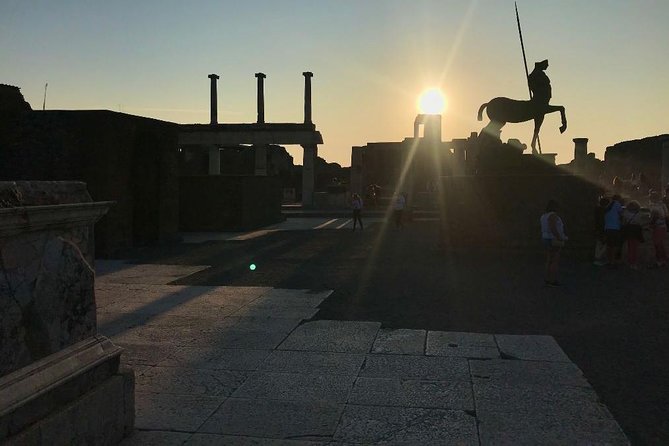
If you only look at the most famous ruins, Pompeii can feel like a history display. Sites like Lupanare House, thermal baths, and Roman villas add the human angle—how people used leisure, space, and privacy.
Lupanare House: uncomfortable, informative
The Lupanare House is one of those sites that’s likely to pull you in immediately. It’s also one of those places where you’ll want context, not just a quick glance. A specialist guide can explain what you’re looking at and how it fit into the city’s social life—without turning it into sensationalism.
This is a good example of why Q&A matters. If you’re curious or unsure about what you’re seeing, you’re not stuck trying to interpret it alone.
Thermal baths: how Romans relaxed and socialized
Thermal baths help you understand Pompeii as a city of routines, not a collection of ruins. Even in a short visit, baths give you a sense of everyday comfort: spaces people used for cleansing, gathering, and passing time.
A private guide can point out architectural clues that show how the rooms worked together. It’s the kind of attention that makes the experience feel real, not rushed.
Roman villas: domestic life you can actually picture
Roman villas recently open are specifically called out for this tour route. That matters because newly accessible areas can feel like a bonus—more freshness, less repetition, and a chance to see parts of Pompeii that not everyone gets to in a quick tour.
Villas also help you connect the “big public Pompeii” to private life. You start noticing what changes from room to room: layout choices, how spaces were used, and what that implies about daily living.
How long is enough? 2 to 3 hours that feel focused
Pompeii can swallow whole days. This tour keeps you to 2 to 3 hours, which is both the strength and the tradeoff.
The strength: you’re guided through a tight set of highlights and you leave with a sense of the city’s structure and daily rhythm. Guides reported as fast but thoughtful—like Romolo in past groups—can cover a lot while still answering questions. That’s the key: speed that doesn’t flatten meaning.
The tradeoff: you won’t see everything. This isn’t a full “every stone” campaign. It’s a curated highlight walk built around understanding. If you’re the type who wants to explore each street for an hour, you may feel the time pressure.
The good news is the pacing is tailored. If your group is slower—say you’ve got older family members—the guide can adjust so you don’t end up sprinting between stops.
If you want a certain kind of guide, here’s what to look for
You can’t pick the guide in advance based on the info provided, but the past experiences around this tour show some patterns worth noticing.
Three guide names come up repeatedly in positive write-ups: Romolo, Sophia, and Francesco. What stands out is not just facts—it’s how those facts get delivered.
Here’s what you’ll want to feel on the walk:
- answers that connect architecture to daily life
- flexibility about pace and routes
- a guide who enjoys Pompeii enough to keep it lively
- room to ask questions without time penalties
If you’re lucky enough to get a guide with that energy (Romolo is a name that pops up often), Pompeii can go from overwhelming to surprisingly graspable.
Price and value: $98.51 plus tickets
The tour price is $98.51 per person for a 2 to 3 hour private guided experience with tour guide service and priority admission.
Here’s how I’d evaluate the value:
- You’re paying for time and clarity: a knowledgeable guide helps you avoid aimless wandering.
- You’re paying for convenience: priority entry can reduce line stress.
- You’re paying for customization: private means the experience can adapt to your group’s needs.
The part that changes the equation: admission fees to the Pompeii ruins are not included. So your real day cost is the tour price plus site admission.
If you’re visiting for a short window, traveling with mixed ages, or you want to understand what you’re seeing without studying guidebooks for hours, this format can be a smart use of money. If you’re the ultra-independent type with deep interest in archaeology and you’d rather spend the day exploring at your own speed, you might prefer a self-guided approach. But if you want Pompeii to make sense quickly, a private guide is one of the best investments you can make.
Meeting point at Via Villa dei Misteri: keep it simple
You’ll meet at Via Villa dei Misteri, 2, 80045 Pompei NA, Italy. The tour also ends back at the meeting point, which helps reduce the annoying “where do we meet after” headache.
The area is noted as being near public transportation, which is helpful if you’re mixing transit with walking. Also, you’ll want to plan around the fact that the site admission isn’t included—so you’ll want your ticket plan sorted before the walk gets going.
One more practical note: service animals are allowed, and most travelers can participate. Still, Pompeii involves walking on uneven ground. If you know your limits, tell the guide early so they can adjust the pace and route.
What you’ll leave with (besides great photos)
The best outcome from this style of tour is a mental map. Not just a list of “things we saw,” but a sense of how Pompeii functioned as a city—public gathering areas, domestic spaces, and everyday routes.
The guides described in past experiences emphasize culture and daily life, plus the events around the eruption. That combination matters because it gives you both sides of the story: how people lived and what ended it.
You’ll also pick up small, practical perspective shifts—like realizing how close certain areas are to the sea. In one past experience, the guide helped make sense of the Via Marina area and how the 79 AD landscape around the coast relates to the city’s setting. That kind of context can completely change how Pompeii feels once you see it.
Should you book this private Pompeii tour?
Book it if:
- you want priority entry and less line time
- you value Q&A and a flexible route
- you’re visiting in a short window and want the experience to feel efficient
- you’re traveling with mixed ages or mobility needs and want a pace that can adapt
Skip it or consider other options if:
- you want to spend most of your time wandering without guidance
- you’re trying to see absolutely everything in one visit (this is focused, not exhaustive)
- you don’t want to handle admission fees separately
If your goal is to understand Pompeii in a few hours, with someone who can connect architecture to everyday life, this private tour is a strong choice. You’ll spend less time stuck waiting and more time where the story actually lives: inside the streets and rooms of Pompeii.
FAQ
How long is the Pompeii private tour?
It runs about 2 to 3 hours.
Is admission to Pompeii included?
No. Admission fees to the Pompeii ruins are not included.
Is this a private tour?
Yes. It’s a private tour/activity, and only your group participates.
Where do we meet for the tour?
The meeting point is Via Villa dei Misteri, 2, 80045 Pompei NA, Italy.
Does the tour start and end at the same place?
Yes. The activity ends back at the meeting point.
What language is the guide?
The tour is offered in English.
Does the tour include priority admission?
Yes. You get priority admission to spend less time in line.
Is there a mobile ticket?
Yes. A mobile ticket is included.
Are service animals allowed?
Yes. Service animals are allowed.
Can I get a full refund if I cancel?
Yes. There is free cancellation, and you can cancel up to 24 hours in advance for a full refund.