REVIEW · POMPEII
Private Pompeii & Amalfi Coast Tour: Sorrento & Positano -Tickets
Book on Viator →Operated by Leisure Italy · Bookable on Viator
Pompeii plus the Amalfi views is a big day.
This private tour strings together Pompeii’s top ruins with scenic drives and time in Sorrento and Positano, so you get Roman history and coastal Italy in one shot. It also runs with live commentary and a Mercedes Minivan, meaning the day flows instead of turning into a logistics puzzle.
Two things I really like: you start Pompeii with priority access, and you get optional guidance that helps you choose what to focus on. Second, the Amalfi Coast road time is built in—so you’re not just parked in a town for hours, you’re actually traveling the dramatic stretch of coastline and then dropping into Sorrento and Positano for your own pace.
One consideration: this is still a long, active day. You’ll do a lot of walking in Pompeii and the stops move quickly, so comfortable shoes and a moderate fitness level really matter, and lunch isn’t included unless you choose it on your own.
In This Review
- Key highlights worth knowing
- Why This Pompeii + Amalfi Combo Works So Well
- The Mercedes Ride: How the Day Moves Without Stress
- Pompeii’s Main Stops: What You’ll See and Why It Matters
- A practical note on the “quick” Pompeii stops
- The Amalfi Roads: Photo Stops Before You Hit Town Time
- Sorrento on Your Own: Piazza Tasso, Corso Italia, and Cliff Views
- Tip for your hour in Sorrento
- Positano: Spiaggia Grande and Santa Maria Assunta
- Tip for choosing what to do in that hour
- Pace, Comfort, and Who This Tour Fits Best
- Value Check: Does the Price Make Sense?
- Should You Book It?
- FAQ
- How long is the tour?
- Do I get skip-the-line tickets for Pompeii?
- Is there a guide inside Pompeii?
- Do you stop in Sorrento and Positano?
- What transportation is included, and what language is used?
- Is lunch included?
- Is passport required, and can I cancel for free?
Key highlights worth knowing
- Priority access at Pompeii saves time at one of Italy’s busiest sites
- Private Mercedes Minivan with A/C and live English commentary keeps things smooth
- Kids-focused Pompeii option is recommended for children ages 6 to 11
- Sorrento and Positano are self-exploration time, not just photo stops
- Photo-worthy gates and viewpoints break up the ruins with quick stops
- Flexible pacing lets you slow down or shift focus based on your group
Why This Pompeii + Amalfi Combo Works So Well
This tour is smart if you want more than one “wow” moment. Pompeii hits hard—everything is close, preserved, and visual in a way that makes the eruption story feel immediate. Then the Amalfi Coast roads reset your brain with sea views, cliff towns, and the kind of coastal driving that looks like it was made for cameras.
The best part is that the day isn’t just ticking boxes. You get a structured Pompeii route with key stops, then you transition to free time in Sorrento and Positano so you can actually enjoy the atmosphere, not just march through it.
You’ll also feel the value in how it’s organized. Priority tickets, a private vehicle, and live commentary mean you’re paying for a plan that reduces friction—especially when Pompeii and the Amalfi Coast both demand timing and careful route choices.
You can also read our reviews of more tours and experiences in Pompeii
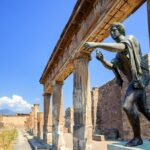


The Mercedes Ride: How the Day Moves Without Stress
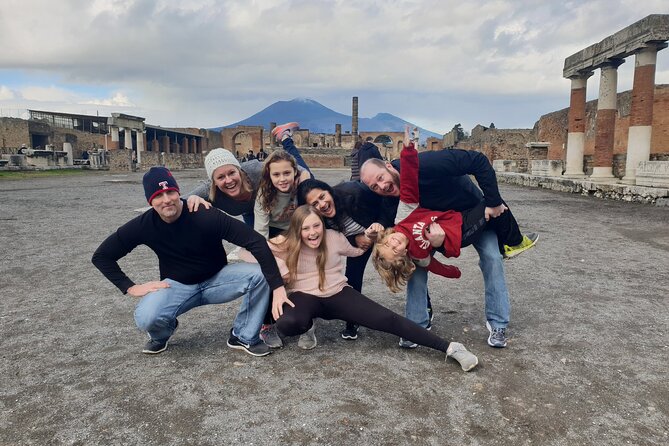
Pickup is available from Naples, Sorrento, Pompeii, and more, including hotels, vacation rentals, train stations, and airports (and cruise terminals for ship days). That matters because Pompeii is its own travel headache for self-planners—finding the right entrance time, navigating local transit, and coordinating ticket lines all take energy.
You travel in a clean, comfortable Mercedes Minivan with A/C and an English-speaking driver, plus live commentary onboard. The commentary helps you link what you’re seeing—like why Pompeii’s gates mattered, or what the coast roads meant for trade and travel.
You also get mobile ticket delivery, which is a small detail but a real time saver once you’re standing at a busy entrance. And since the tour is private (only your group), you’re not stuck with a pace that doesn’t match you.
Pompeii’s Main Stops: What You’ll See and Why It Matters
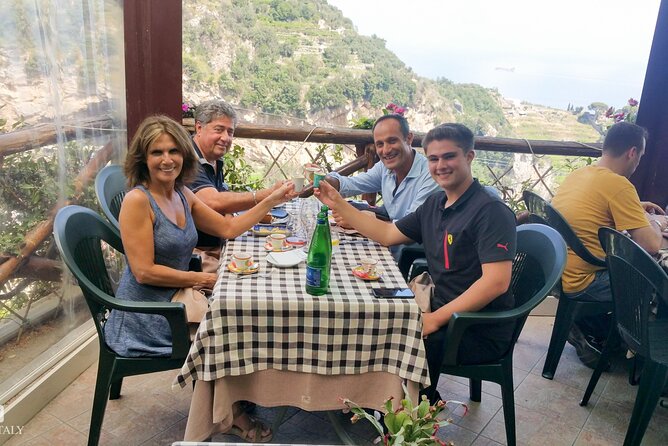
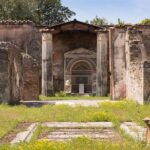
Pompeii is huge, but you’re not just getting random ruins. The route is built around big themes: how people entered the city, where civic life happened, how religion shaped daily rituals, how commerce fed the city, and what elite homes looked like.
Stop 1: Archaeological Park of Pompeii (about 2 hours, admission included)
This is where your guide (and the option for kids activities) shapes the day. The walk is designed around the park highlights, and there’s a special Pompeii for Kids experience recommended for ages 6 to 11, with activities and games that keep younger visitors engaged. For adults, it’s still a strong setup: you get context early, so later details in homes, baths, and markets make more sense.
Stop 2: Porta Marina e cinta muraria (about 5 minutes, admission included)
This is one of the main gates, near the port area, where many travelers first entered. It’s short, but it’s a useful anchor stop. You can connect Pompeii’s relationship to the Bay of Naples—merchants, sailors, and visitors coming in through controlled access—while seeing the defensive walls and the ramp that still shows the original stone path.
Stop 3: Basilica (about 5 minutes, admission included)
This building was a public hub for business, justice, and political life. Even in a brief stop, it helps you picture everyday power structures. You’ll see the tall-column feel and the large open space where people negotiated deals and where magistrates issued rulings—ideas that show how public decisions shaped normal lives.
Stop 4: Temple of Apollo (about 5 minutes, admission included)
This temple was a religious center near the Forum. It’s dedicated to Apollo, tied to the sun, music, and prophecy. The courtyard setting and the idea of offerings and guidance make it more than just an old stone spot; it’s a clue to how spirituality was woven into civic space.
Stop 5: Forum (about 10 minutes, admission included)
This is Pompeii’s civic heart, and the timing is good because it gives you a high-level view of multiple structures around the square. From the elevated walkways, you can understand how temples, administrative buildings, and market structures intersected in one central stage—politics, religion, and commerce all in view with Mount Vesuvius in the background line of sight.
Stop 6: Macellum (about 5 minutes, admission included)
The food market complex is a practical stop. It shows how the city fed itself—fish, meat, fruit, and imported goods. You’ll be able to picture vendor stalls and storerooms, plus the organization of Roman commerce inside a covered setting.
Stop 7: Terme del Foro (about 10 minutes, admission included)
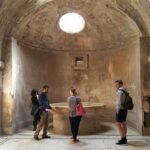
The Forum Baths are one of the more rewarding Pompeii stops because they show how daily life worked beyond work and politics. You’ll see the different bathing areas and the hypocaust heating system. Even if you only spend a short amount of time, the preserved reliefs and vaulted spaces help you imagine bathing as social time, not just hygiene.
Stop 8: Casa dei Vettii (about 10 minutes, admission included)
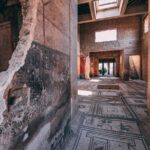
This aristocratic residence is known for decorative frescoes and an elegant layout with atria and peristyle gardens. It’s a chance to see what wealthy merchant owners wanted to show off—art, status, and taste—right alongside the more public buildings.
Stop 9: Insula dei Casti Amanti (about 10 minutes, admission included)
This block is named for a famous lovers fresco. The layout is approached with elevated ramps so you can look into workshops and living spaces without damaging fragile surfaces. It’s one of the best “daily life” stops on the route because it lets you connect trade, home, and neighborhood movement—people working below while families moved through interconnected rooms.
Stop 10: Teatro Grande (about 5 minutes, admission included)
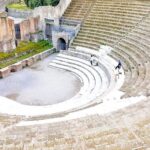
The large theater stop is short, but it’s visually powerful. You’ll look down on the seating tiers and stage areas, and it’s easier to imagine crowds because you can see the shape of the space. The views help too, since the theater sits in a way that links entertainment with the city’s wider geography, including toward Mount Vesuvius.
Stop 11: Antiquarium di Pompei (about 10 minutes, admission included)
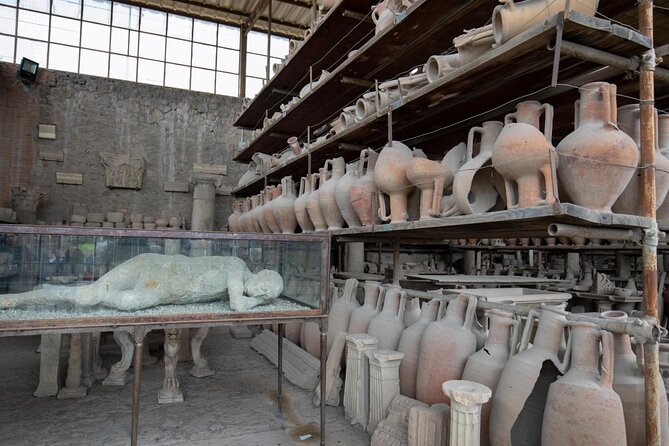
This museum stop is the emotional and educational bridge. You’ll walk through galleries with statues, household objects, inscriptions, jewelry, and other recovered items. Later rooms with plaster casts of victims and eruption material add a serious frame for what you’ll feel outside in the open ruins.
A practical note on the “quick” Pompeii stops
Many stops are 5 minutes and some are 10. That isn’t a failure of planning—it’s how Pompeii keeps you from burning out. You’ll still get the major themes, but you’ll stay fresh enough to actually take in details rather than rushing through everything without context.
If you want to linger longer at any one place, this is where the private format helps. Ask your guide to slow down your strongest interest—Forum civic life, baths, elite homes, or the theater feel—and the rest can flex around your pace.
The Amalfi Roads: Photo Stops Before You Hit Town Time

After Pompeii, the day pivots to the coast. Expect scenic driving along Strada Statale 145 into Sorrento first, then along the Amalfi Drive (SS163) for the coastal cliffs and towns.
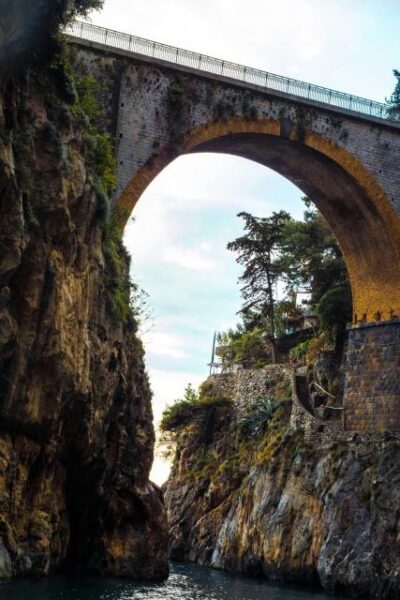
On the approach to Sorrento via SS145, you’ll get those classic Bay of Naples viewpoints: terraced lemon groves, ports, and fishing villages below, with glimpses of Mount Vesuvius across the water. It’s not just sightseeing from a window. It’s the kind of road that makes you understand why these towns developed the way they did along trade routes and sheltered coves.
The Amalfi Drive part works similarly. The curves and panoramic turnouts are the point—you’ll see deep valleys planted with lemons, rugged headlands, and towns clinging to slopes. This is where your camera habit becomes part of the itinerary rather than an interruption.
You can also read our reviews of more private tours in Pompeii

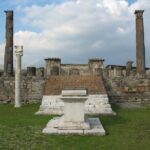




Sorrento on Your Own: Piazza Tasso, Corso Italia, and Cliff Views
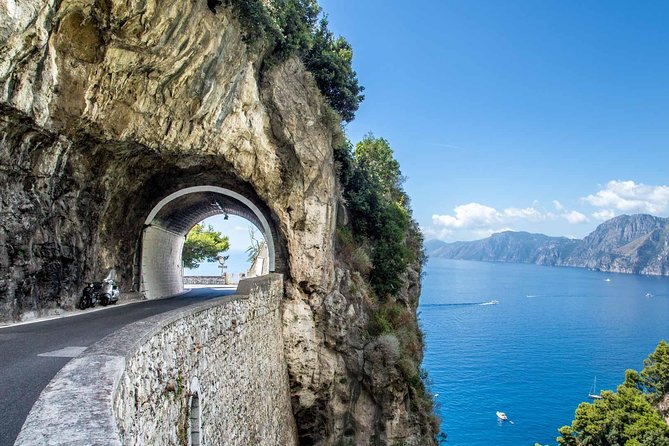
In Sorrento, you’re not trapped in a schedule of nonstop sights. You get about 1 hour to explore at your own tempo, after arriving via those SS145 coastal views.
Sorrento is perched above the Bay of Naples, with sweeping outlooks toward Vesuvius and islands like Capri and Ischia. Once you’re in the historic center, narrow lanes lead to cafés, boutiques, and small artisan shops, with orange and lemon trees and a steady flow of street life.
Piazza Tasso is your natural starting point. It’s the social center—cafés and patisseries around a square that works for a quick espresso, gelato, or people-watching while you orient yourself.
From there, Corso Italia is the main promenade. It’s the practical “walk and browse” street: leather goods, limoncello producers, and classic Sorrento shopping. If you want souvenirs, this is where you’ll feel the rhythm of the town.
If you need a quiet pocket, the Cloister of San Francesco is a good mental reset. It’s a calm courtyard with portico, pointed arches, and a mix of medieval and Renaissance elements—an easy stop when the streets feel too busy.
Tip for your hour in Sorrento
Pick one job: either grab a drink and wander, or walk toward a terrace viewpoint above Marina Piccola area for sea views. Trying to do both can turn an hour into stress. This is where you decide what you want from Sorrento: taste and stroll, or higher views and slower breathing.
Positano: Spiaggia Grande and Santa Maria Assunta
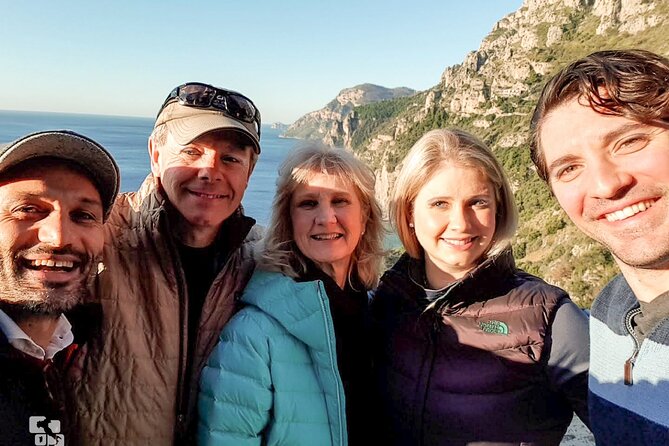
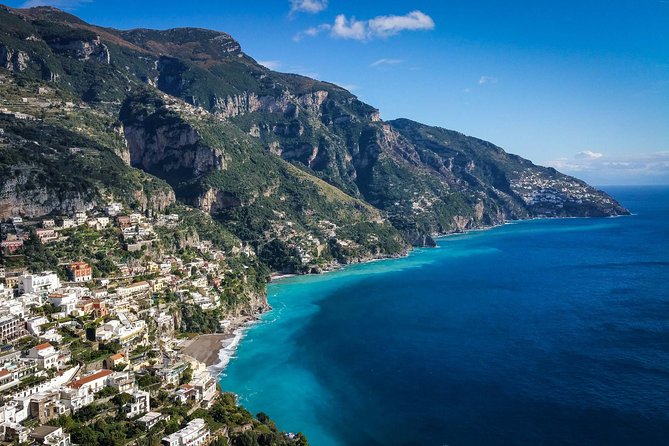
Positano is the dramatic finish. The town rises almost vertically from the sea, with pastel houses and stairways that make the place feel like it’s stacked for postcards. Approaching along SS163 gives you that instant silhouette effect, and then you’ll descend into the town’s maze of streets.
You get about 1 hour in Positano for self-exploration, with a chance to see the main beach and the town’s most recognizable church.
Spiaggia Grande is the main beach and social hub. The waterfront promenade sits right above the sand, with boats and ferries coming and going. It’s also the most useful orientation point—if you feel turned around, coming back toward Spiaggia Grande helps you regain your bearings fast.
Then there’s Chiesa di Santa Maria Assunta, famous for its colorful majolica-tiled dome that’s easy to spot above town. Inside, the Baroque setting includes marble altars and side chapels, and there’s a celebrated Byzantine icon tied to local legends connected to storms and pirates. Even if you only spend a few minutes, the church steps give you a strong view back toward Spiaggia Grande and the harbor.
Tip for choosing what to do in that hour
Positano can eat time because it’s steep and stair-heavy. If your legs are feeling it, prioritize the church viewpoint and the beach promenade. If you want shopping and people-watching, spend less time at the beach edge and more time in the lower streets near the waterfront.
Pace, Comfort, and Who This Tour Fits Best

This is built for people who want structure but still want moments to roam. It’s also ideal if you dislike the stress of coordinating entrance times, ticket formats, and drive schedules across multiple locations.
You should have moderate physical fitness because Pompeii involves walking on archaeological terrain and you’ll move between several key stops. Comfortable shoes are non-negotiable. Add sun gear too—after Pompeii, you’ll still be out and about during coastal sightseeing.
Families can be a great match, especially with the kids-focused Pompeii option. One guide name that comes up in the family-friendly feedback is Giuseppe, described as using games, stories, and patience for kids questions. If your group has energetic kids who need a reason to care, that matters.
For older travelers, the private format is also useful. If you don’t want to do the entire walk inside Pompeii, there are cafés and gift shops right outside the entrance, so you can step back without killing the whole day.
Value Check: Does the Price Make Sense?
At $486.47 per person, this isn’t a bargain-basement outing. But it’s also not just a taxi ride to a couple of stops. You’re paying for three big value drivers:
1) Priority access tickets at Pompeii Express, which reduces the most annoying bottleneck of the day
2) Private transportation in a Mercedes Minivan with A/C and English live commentary
3) A guided route through Pompeii’s major zones, including time in the Antiquarium to connect artifacts to the ruins
Then you add the fact that you get both Sorrento and Positano for your own exploring time. That’s a lot of real “place time” for an 8 to 9 hour day.
If you were to self-plan, you’d likely spend hours coordinating tickets, transit, and meeting points—plus you’d still face Pompeii crowd pressure. Here, those friction points are handled, and you focus on the experience instead of the scheduling.
Also, the booking feedback score is strong: 4.9 out of 5 with 97% recommending it. That usually lines up with a tour that nails pacing and communication.
Should You Book It?
Book this if you want:
- One-day Pompeii plus coast time, without spending your morning wrestling with logistics
- A guided Pompeii experience with priority access, then time on your own in Sorrento and Positano
- A private vehicle plan that keeps comfort high during long driving and stop-and-go moments
Skip it if:
- You hate walking and need long, slow, sitting-heavy sightseeing. Pompeii will ask for movement, even with smart stops.
- You want a deep, hours-long dive into only one site. This tour is designed as a balanced day, not a single-topic deep dive.
If you’re on the fence, treat this as a “best-of” day. It’s built to give you momentum: Roman ruins in the morning, sea views by midday, and that Positano wow-factor before you head back.
FAQ
How long is the tour?
The tour runs about 8 to 9 hours.
Do I get skip-the-line tickets for Pompeii?
Yes. The experience includes Pompeii Express skip-the-line tickets.
Is there a guide inside Pompeii?
You’ll have a private guide for Pompeii, and there’s an optional guide approach described for your Pompeii time.
Do you stop in Sorrento and Positano?
Yes. You get time in both towns to explore on your own, with about 1 hour in Sorrento and about 1 hour in Positano.
What transportation is included, and what language is used?
You travel in a Mercedes Minivan with an English-speaking driver, A/C, and live commentary on board.
Is lunch included?
No. Lunch is not included unless you arrange it yourself.
Is passport required, and can I cancel for free?
A current valid passport (or just a picture of it) is required on the day of travel. You can cancel for free up to 24 hours in advance for a full refund.