REVIEW · POMPEII
2 Hours Private Walking Tour in Pompeii with an Archaeologist
Book on Viator →Operated by Tours with an archaeologist · Bookable on Viator
Pompeii feels real fast. This private walking tour with a Pompeii archaeologist helps you focus on the UNESCO site’s big public areas and quieter corners, without the usual wandering and guesswork.
I really like how the route is built to help you understand daily life in Roman Pompeii, not just snap photos. One possible drawback: you’re walking the park for about 2 hours, so comfortable shoes matter.
What I like most is the guide quality. You get a licensed guide with a degree in archaeology, and that changes the experience: the Forum makes sense, the thermal baths stop being random ruins, and you can connect what you see to how people actually lived.
If you want Pompeii explained clearly in plain language, this format fits.
One thing to plan for: the Pompeii entrance fee (€20 per person) is not included in the tour price, so your total will be higher once you add tickets.
In This Review
- Key reasons this Pompeii tour gets high marks
- Why a 2-hour private walk works so well in Pompeii
- Meeting at Piazza Esedra: quick start, easy orientation
- The Pompeii Archaeological Park stops: what you’ll actually learn
- Public Roman life: theatres, thermal baths, Forum, and sacred areas
- Private Pompeii life: Thermopolium, bakery, fabric market, and houses
- Price and logistics: what you’re paying for (and what to add)
- Booking timing, weather, and how to plan your day
- Who should book this Pompeii archaeologist tour
- Should you book this Pompeii private walking tour with an archaeologist?
- FAQ
- How long is the Pompeii private walking tour with an archaeologist?
- How many people are in the group?
- What language is the tour offered in?
- Where does the tour start?
- Where does the tour end?
- Is the Pompeii entrance fee included?
- What’s included in the tour price?
- Do I get a ticket on my phone?
- When will I receive confirmation after booking?
- What happens if weather is bad?
Key reasons this Pompeii tour gets high marks
- Private, up to 8 people means the pace stays human and questions don’t get lost.
- Licensed archaeology guide brings context to major sights like the Forum and theatres.
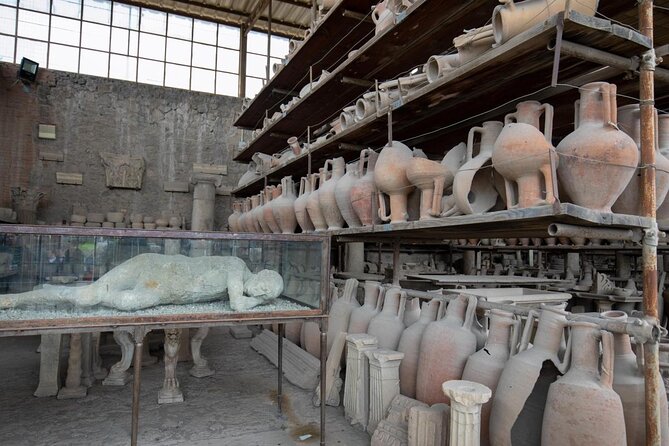
- Public + private Pompeii: you’ll see major public spaces and also private buildings like a Thermopolium.
- Thermopolium, bakery, fabric market, and houses give you a fuller picture of everyday life.
- Choose a tour time that works with your day, and you get a mobile ticket in English.
Why a 2-hour private walk works so well in Pompeii
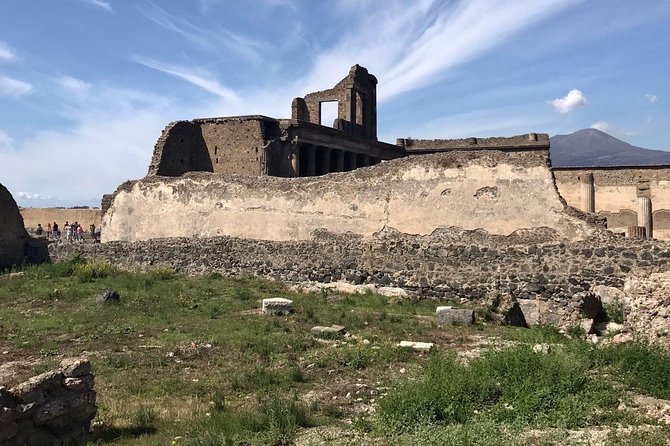
Pompeii is huge in your imagination, and even bigger on foot. What makes this tour smart is the tight time window: about 2 hours, guided, with a plan that targets the most meaningful areas first.
You’re not trying to do everything. Instead, you’re getting the key “anchors” that let the rest of Pompeii click. When the guide explains what the Forum was used for, you start spotting patterns everywhere else. When you understand how the thermal baths functioned, you stop viewing them as just walls and doorways.
And because it’s private (only your group), you avoid the typical problem of “everyone moves at once.” If you want to slow down for a question, you can. If your group needs a quick rest, you can usually work it into the flow.
You can also read our reviews of more walking tours in Pompeii

Meeting at Piazza Esedra: quick start, easy orientation
This tour starts at Piazza Esedra, 10/13, 80045 Pompei NA, Italy, and it ends back at the meeting point. That round-trip setup is practical. You don’t have to solve logistics halfway through or worry about finishing somewhere inconvenient.
It’s also a spot that helps you get oriented fast—and Pompeii rewards orientation. Once you know how the public areas connect, it’s easier to make sense of where you’re standing and what you’re looking at.
One more practical note: it’s near public transportation, so it’s easier to plug into a day that might include other sights in the area.
The Pompeii Archaeological Park stops: what you’ll actually learn
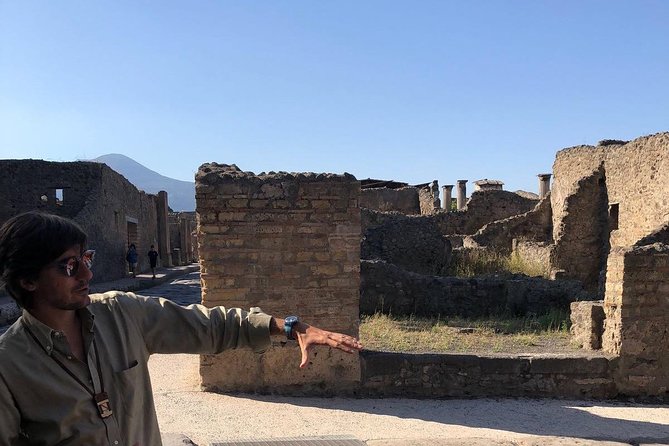
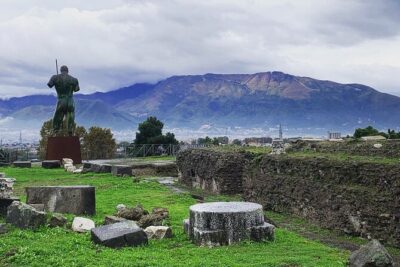
The tour focuses on the most important parts of the ancient city, with time for both major public areas and quieter, out-of-the-main-routes areas. You’ll get a guide who knows how to translate ruins into real rooms, real jobs, and real routines.
Admission to the park is separate (more on that below), so you’ll walk in with the right context already lined up by the archaeologist guide. That’s a big value point. Pompeii can feel like a pile of stone until you have a framework.
Here’s the structure of the experience, in human terms:
- You start with public spaces that show Roman civic life.
- You move into areas connected to daily routines and commerce.
- You finish with a broader sense of how public and private life overlapped in Pompeii.
Public Roman life: theatres, thermal baths, Forum, and sacred areas
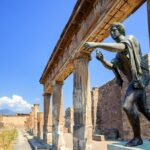
This is where Pompeii can turn from impressive to understandable. The guide includes several of the most visible public spaces, and that matters because these were the places where Pompeians met, shopped, argued, worshipped, and relaxed.
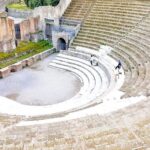
You’ll spend time with theatres, which are more than big seating bowls. With the right explanation, you can connect performances to social life—who went, why it mattered, and how entertainment fit into the day.
You’ll also see thermal baths. Baths weren’t just places to get clean. They were social hubs and a routine. Even if you’ve seen bath ruins elsewhere, Pompeii’s remains help you picture the flow of spaces and the role bathing played in Roman culture.
The Forum (main square) is the next anchor. If you learn what the Forum did—civic activity, public decision-making, daily movement of people—you’ll start recognizing how the city was organized around shared spaces.
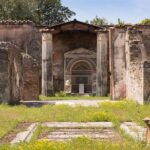
Finally, you’ll visit the sacred area, which helps you understand the religious side of city life. It rounds out the picture so Pompeii doesn’t feel like a show of entertainment and commerce only.
A practical benefit: public areas are usually easier to navigate during a short tour. In two hours, you want key stops that don’t require long repositioning.
Private Pompeii life: Thermopolium, bakery, fabric market, and houses
This tour doesn’t stop at the big set pieces. It includes a look at private structures connected to daily work and neighborhood life.
One standout is the Thermopolium, a Roman fast-food spot. The term can sound abstract, but the idea is straightforward: people bought prepared food quickly rather than cooking every meal at home. When you see a Thermopolium through the guide’s lens, it becomes obvious why Pompeians would rely on it—especially in a dense city where food, timing, and trade all mattered.
You’ll also see a bakery. That’s a huge clue about how bread and staple foods reached homes and streets. Even when you’re just standing among stones, a guide helps you picture the operation and the rhythm of local production.
The route also includes the fabric market and houses. That combination is useful because it helps you understand Pompeii beyond the street view. Markets explain commerce and distribution. Houses explain how personal life unfolded next to it all.
This part of the tour is also where your time feels best spent. Public areas can be impressive from far away. Private buildings reward attention. You’ll get guided help so you’re not stuck guessing what each space was for.
And yes, there’s an extra promise here: you may get to see areas that feel more out-of-the-way than the most crowded routes. That’s valuable because you get a clearer sense of scale and everyday function without constant interruptions.
You can also read our reviews of more private tours in Pompeii



Price and logistics: what you’re paying for (and what to add)
The price is $336.43 per group (up to 8 people) for about 2 hours. That sounds high until you do the math with group size: if you fill all eight spots, the tour guide cost becomes much more reasonable per person.
Then add the one extra line item that’s important: Pompeii entrance tickets (€20 per person) are not included. So your total depends on how many people are in your group and whether you need tickets for all of you.
What you’re paying for is the guide. You’re not just hiring access to ruins; you’re hiring a licensed archaeologist guide with a degree in archaeology to interpret what you’re seeing. In a short, private format, that interpretation is the whole point.
Two more practical touches that help:
- Mobile ticket is provided, which simplifies last-minute day-of logistics.
- English is the tour language, which keeps the explanations detailed without language friction.
The overall value is strongest if you’re the kind of group that wants guidance. If you prefer wandering with a map app and no real explanation, you might not get as much from the price.
Booking timing, weather, and how to plan your day
On average, this kind of tour is booked about 7 days in advance, so if your schedule is tight, it’s smart to reserve early.
Timing-wise, you can choose from several tour times to fit your day. That matters in Pompeii because the site can get crowded depending on when you go. A flexible start time helps you avoid clashing with other plans and keeps the day moving.
Weather is a real factor here. The experience requires good weather. If it’s canceled due to poor weather, you’ll be offered a different date or a full refund. That’s the key practical takeaway: build a little slack into your Pompeii day if you can.
Also note the tour is non-refundable and cannot be changed for any reason, so if your travel plans are unstable, think carefully before booking. The weather clause offers protection only in the specific case of cancellation for poor conditions.
Who should book this Pompeii archaeologist tour
I’d recommend this tour if you want Pompeii with structure and interpretation.
It’s a great fit for:
- Couples or small groups who want a private pace and time for questions.
- People who like learning about how daily routines worked—food, civic spaces, baths, religion—rather than only architecture.
- Visitors who want to cover the main points of Pompeii in about two hours without trying to sprint through the whole park.
It may be less ideal if:
- You want a long, independent day in Pompeii with time to roam widely on your own.
- Your group needs a very slow schedule, since the tour is designed around a short walk with set stops.
The vibe is straightforward and practical. Even one of the guide names that shows up in feedback—Yana—is praised for making the tour match what people want: clear, well-focused, and easy to book.
Should you book this Pompeii private walking tour with an archaeologist?
If you’re deciding between random sightseeing and a guided plan, I think this one is the smarter pick. For $336.43 per group up to 8, you’re basically buying an archaeologist-led interpretation that turns Pompeii from scenery into a readable place.
Book it if you:
- want Forum + baths + theatres + sacred areas plus private daily-life stops like the Thermopolium, bakery, fabric market, and houses
- prefer a smaller group and a guide who can explain as you walk
- are okay adding the €20 per person entrance fee on top
Skip it if you want a full-day independent exploration or if your group is likely to be uncomfortable with a short, guided walking schedule.
FAQ
How long is the Pompeii private walking tour with an archaeologist?
The tour lasts about 2 hours.
How many people are in the group?
It’s private, and the group can be up to 8 people.
What language is the tour offered in?
The tour is offered in English.
Where does the tour start?
The meeting point is Piazza Esedra, 10/13, 80045 Pompei NA, Italy.
Where does the tour end?
The activity ends back at the meeting point.
Is the Pompeii entrance fee included?
No. The Pompeii Archaeological Park entrance fee is €20.00 per person.
What’s included in the tour price?
A licensed guide with a degree in archaeology is included.
Do I get a ticket on my phone?
Yes. The tour features include a mobile ticket.
When will I receive confirmation after booking?
Confirmation is received within 48 hours of booking, subject to availability.
What happens if weather is bad?
The experience requires good weather. If it’s canceled due to poor weather, you’ll be offered a different date or a full refund.