REVIEW · POMPEII
Fast Access Exclusive Private Ancient Pompeii Half Day Tour with Local Guide
Book on Viator →Operated by Private Tours of Pompeii · Bookable on Viator
Pompeii can feel like a full-day project, but this tour keeps it short and high impact. I like that you get a private setup with a local guide plus a professional art historian, and that you’re routed to skip long lines instead of waiting in them. One thing to think about: the whole experience is about 2 hours, so you’ll cover a lot, but you won’t have time to wander at your own pace.
You’ll also get to shape the visit to what you care about most, whether that’s mosaics, daily life, or the dramatic stories tied to the eruption. I like the practical format: quick, guided stops at major landmarks, with the option of a morning or afternoon departure to match your schedule.
Logistics matter in Pompeii, and this one is straightforward but not effortless. Hotel pickup isn’t included, and the walking still adds up, so plan for moderate fitness even though it’s only a half day.
In This Review
- Key things that make this Pompeii tour work
- Two hours in Pompeii: what you’re really buying
- Meeting at Piazza Esedra: quick start, clear end
- The skip-the-line part: how you turn time into meaning
- Teatro Grande: Roman theater as a social machine
- Odeon and Teatro Piccolo: smaller stage, sharper feeling
- Via dell’Abbondanza: Pompeii’s main street, shops, and villas
- Terme del Foro: Roman baths buried by the eruption
- Lupanar: the ancient brothel and what art can tell you
- Morning vs afternoon: pick the timing that suits your energy
- Price and value: is $203.95 per person worth it?
- Who this Pompeii half-day tour suits best
- A few practical tips before you go
- Should you book this Fast Access private Pompeii tour?
- FAQ
- How long is the Pompeii tour?
- Is this a private tour?
- What’s included in the price?
- Is hotel pickup included?
- Do I need a passport for this tour?
- Is there free cancellation?
Key things that make this Pompeii tour work
- Guaranteed skip-the-line access so your time goes to ruins, not queues
- Local guide + professional art historian for both street-level context and art details
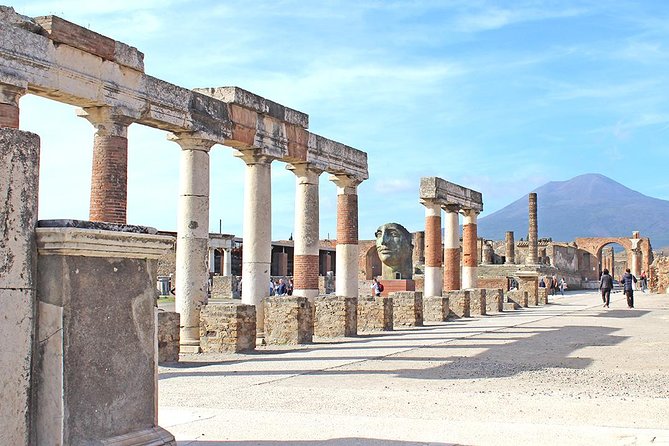
- UNESCO Pompeii core stop plus major public sites in a tight 2-hour route
- Main Street (Via dell’Abbondanza), Roman baths, and the Lupanar for daily life and culture beyond temples
- Morning or afternoon options so you can avoid your own timing problems
Two hours in Pompeii: what you’re really buying
If you’ve got limited time, this is the kind of tour that makes sense. Pompeii is big, and the difference between seeing “some ruins” and getting real context is usually the guide part. Here, you’re not just walking from sign to sign. You’re moving through key areas with an art-history-minded voice that helps you connect what you’re seeing to what life looked like before Vesuvius erupted in 79 A.D.
The other thing you’re buying is focus. In a group or on your own, it’s easy to bounce between sites and end up with scattered impressions. This tour funnels you through the most memorable public spaces and everyday-life stops in a compact route. It’s also built for efficiency: each stop is short, timed, and designed to keep you moving.
At $203.95 per person, it’s not “cheap.” But with Pompeii, time costs money. When you factor in the private format, the professional guide team, and the skip-the-line promise, the price starts to feel less like a splurge and more like buying back hours.
You can also read our reviews of more guided tours in Pompeii

Meeting at Piazza Esedra: quick start, clear end
Your tour starts at Piazza Esedra, 80045 Pompei NA, Italy, and ends back at the same meeting point. That matters more than you’d think. Pompeii routes can be confusing, and having a single start-and-finish point reduces stress.
You’ll also use a mobile ticket, which is handy on busy mornings. Since you’re near public transportation, you’re not locked into a specific hotel shuttle. Just know you’re responsible for getting yourself to the start point, because hotel pickup and drop-off aren’t included.
One more item that’s easy to overlook: you need a current valid passport on the day of travel. I’d treat that like an absolute checklist item, not a “maybe I’ll remember” thing.
The skip-the-line part: how you turn time into meaning
The headline feature is the guaranteed skip-the-long-lines access. In Pompeii, line time can be brutal because the ruins are popular and entry bottlenecks are real. The best value of this tour is that you don’t burn your limited time standing still.
You’ll start by visiting one of Pompeii’s major UNESCO areas. Even if you’ve read about Pompeii for years, the physical scale still hits you when you first step into the archaeological zone. A good private guide helps you get your bearings fast: what you’re looking at, how the city was laid out, and what specific scenes and objects were used for in daily life.
This is also where the “private” advantage shows up. Instead of everyone crowding the same points at the same time, you’re guided to the right spots at the right moments. In the accounts I’ve seen, guides like Anna are described as getting people through less crowded gate options early, which is exactly what you want on a place that fills up.
Teatro Grande: Roman theater as a social machine
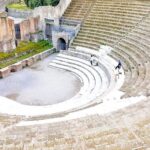
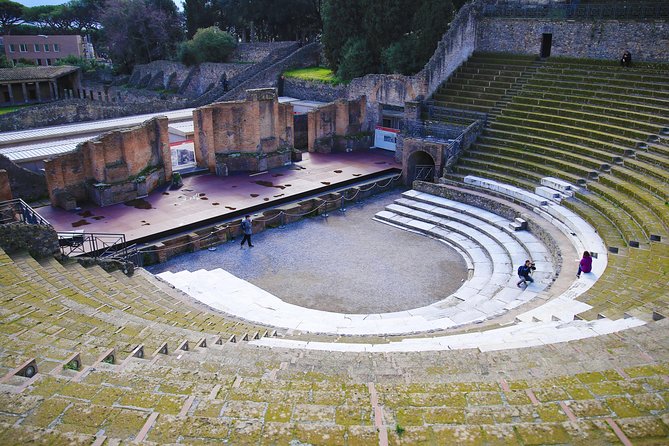
Next up is Teatro Grande, a massive open-air theater with about 5,000 seats. This isn’t just a building with a view. It’s a place where politics, culture, and community life met. In other words, it’s the ancient version of a major public event space.
With only about 20 minutes here, you’ll focus on the highlights: the scale of the performance space, how open-air theaters worked, and why Pompeii would devote serious resources to public entertainment. A guide also helps you notice the parts many visitors miss, like how the seating and stage orientation shaped what audiences experienced.
Possible drawback: since this is a timed stop, you won’t linger to take in every corner of the structure. If you’re the type who wants to read every inscription slowly, you may wish you had more time. For most people, though, it’s a smart snapshot.
Odeon and Teatro Piccolo: smaller stage, sharper feeling
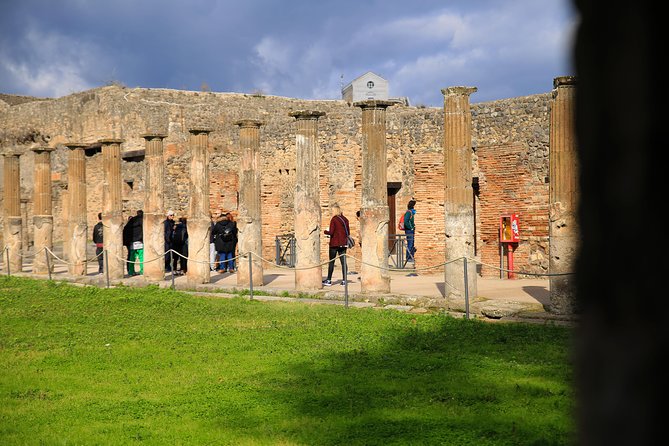
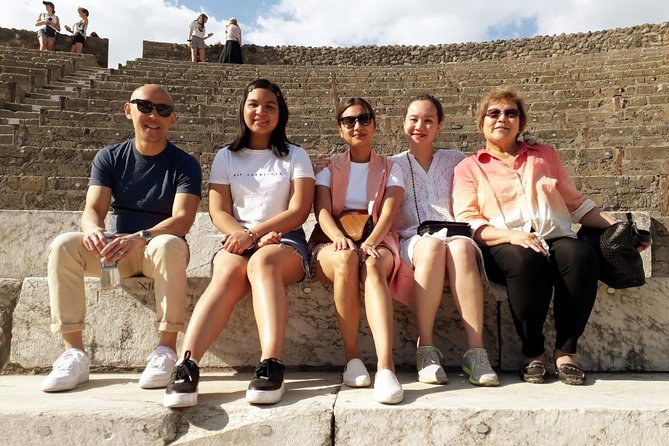
After the big theater, you’ll head to Odeon – Teatro Piccolo, the smaller open-air theater with about 800 seats. This contrast is useful because it shows that Roman entertainment wasn’t one-size-fits-all.
In a short visit, your guide can help you compare the two spaces. You’ll likely notice how a smaller venue changes the atmosphere. It’s the kind of stop that makes you understand the day-to-day rhythm of city life: public spectacle for the masses, plus smaller performances for different audiences and occasions.
This stop also tends to work well for photographs because the setting feels different from the main street and bath areas. Think of it as a breather in the itinerary—still informative, but less “city street” and more “performance space.”
You can also read our reviews of more private tours in Pompeii




Via dell’Abbondanza: Pompeii’s main street, shops, and villas
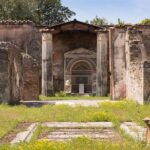
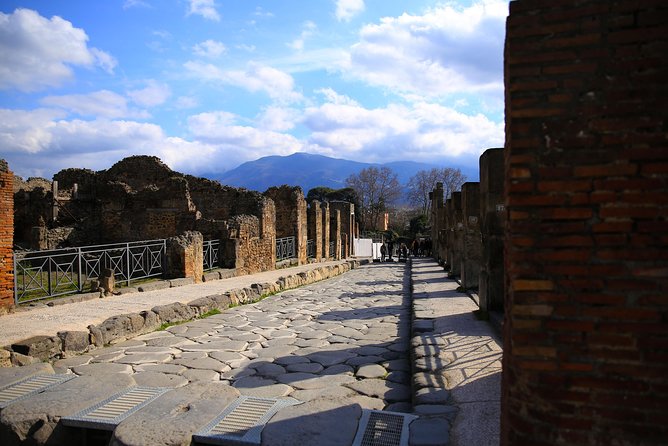
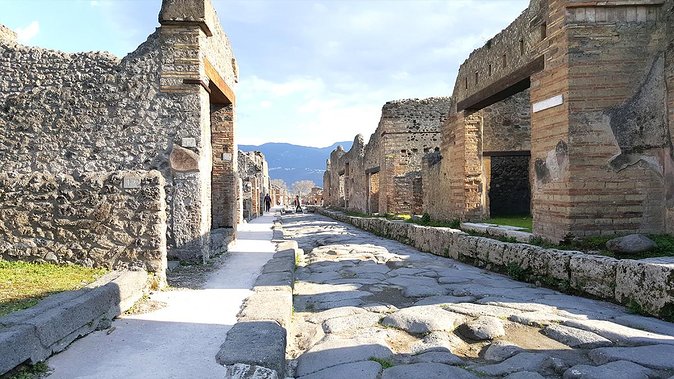
Then comes Via dell’Abbondanza, one of Pompeii’s best-known streets. This is where you walk past the kind of spaces that felt normal to residents: major villas, Roman shops, and the everyday spine of the city.
A guided walk here is the difference between seeing a corridor of stone and understanding how commerce and home life mixed. You’ll get context for what these streets meant and why they’re central to how Pompeii still reads like a real city, not just a museum.
What I like about this stop is that it’s motion-friendly. Even within a short time window, you can see more variation than you might in a single building. Just be prepared for uneven ground and the usual Pompeii walking conditions—this tour mentions a moderate physical fitness level, and you should take that seriously.
Terme del Foro: Roman baths buried by the eruption
At Terme del Foro, you’ll visit a Roman bath complex buried by the Vesuvius eruption in 79 A.D. Baths are such a smart stop because they were a core part of social life. This isn’t a temple where you go once in a while. It’s a place where people met, talked, worked, relaxed, and repeated their routines.
With about 20 minutes, you’ll likely focus on what makes these baths distinct and how the space functioned. Your guide can help you connect the layout to daily use: circulation through different areas, the idea of bathing as a community activity, and why the baths show so much about Roman habits.
One consideration: if you’re sensitive to heat or weather, dress for conditions. The tour operates in all weather, so the guide keeps going as long as possible. Pompeii can be sunny and exposed, and in rainy weather the stone surfaces can be slick.
Lupanar: the ancient brothel and what art can tell you
Next is the Lupanar, an ancient Roman brothel where some frescoes are still visible. It’s a stop many people approach with curiosity and a bit of hesitation, and that’s normal. What makes it worth having a guide is interpretation—what those images meant, how the space was used, and what it reveals about sex work in the ancient world.
This is also one of the few stops where the story isn’t only about public life. It brings you closer to how everyday people lived and how a city handled private or semi-private services.
Your guide can also connect the art to function. Frescoes here aren’t just decoration; they acted like a visual language. In the accounts I’ve seen, guides such as Livio have been praised for being fun and explain-it-well, which helps this kind of subject stay grounded rather than awkward.
Morning vs afternoon: pick the timing that suits your energy
You can choose between morning or afternoon departures. The main reason to care is crowd flow and comfort. Earlier sessions usually feel easier on the legs and less chaotic in the entry rhythm. Later times can be fine too, but you’ll want to manage heat and energy.
If you’re combining Pompeii with other stops around Naples or the Amalfi Coast, picking the right time can save you from a rushed day. A half-day format means you keep flexibility. You can still plan for lunch, museums, or a beach break afterward—if your schedule allows.
Price and value: is $203.95 per person worth it?
Let’s talk about money like adults. $203.95 per person isn’t a budget buy, especially if you’re traveling solo.
Here’s what you’re paying for:
- Private tour format (only your group participates)
- Local guide plus a professional art historian guide
- Guaranteed skip-the-line access
- Admission tickets included for each stop mentioned in the route
When this is worth it: if you want the highlights with context, your time is limited, or you strongly prefer not to wait in lines, it’s a solid value. Pompeii punishes wasted hours, and “I’ll just do it on my own” can become “I spent half my morning waiting.”
When it might not be worth it: if you’re traveling extremely slowly, want hours of wandering, or you’re the type who enjoys figuring everything out by yourself with a map, then a DIY visit could cost less. But you’ll trade time, guidance, and efficiency.
Also worth noting: this experience tends to get booked in advance (on average, around 43 days). That’s usually a sign people like it and that slots can tighten.
Who this Pompeii half-day tour suits best
This format fits well if you’re:
- Short on time but still want top sites and interpretation
- Traveling as a couple, or as a small family/group that wants a guided pace
- Interested in both the big public spaces (theaters) and the daily-life details (street life, baths, and the Lupanar)
It’s less ideal if you want a long, unstructured stroll. The tour is built to cover a lot in about 2 hours. That’s the whole point, and it can feel fast if you prefer to linger.
A few practical tips before you go
Pompeii rewards preparation. Here are the things that make a difference with a fast, timed route:
- Wear shoes you trust on uneven ground. Pompeii is not a smooth sidewalk.
- Bring a small bottle of water and plan snacks if you’re touring at a busy time of day.
- Expect walking even with a short duration. Moderate fitness is requested, so treat it as a real guideline.
- Bring your passport for day-of travel.
- Plan for weather. The tour runs in all conditions, so you’ll want rain gear or sun protection depending on the forecast.
Should you book this Fast Access private Pompeii tour?
If your goal is to see Pompeii’s biggest landmarks with real context, and you want to avoid the line chaos, I think this is a smart booking. The combination of private guidance, a professional art historian, and guaranteed skip-the-line access is exactly what turns a visit from sightseeing into understanding.
I’d skip it only if you have plenty of time to spare and you’re comfortable building your own route and reading everything on your own. Otherwise, this is one of those rare tours that feels efficient without feeling shallow.
FAQ
How long is the Pompeii tour?
It’s about 2 hours.
Is this a private tour?
Yes. It’s private, and only your group will participate.
What’s included in the price?
You get a local guide and a professional art historian guide, plus a professional guide. The tour also guarantees skipping long lines, and admission tickets are included for the listed stops.
Is hotel pickup included?
No. Hotel pickup and drop-off are not included.
Do I need a passport for this tour?
Yes. A current valid passport is required on the day of travel.
Is there free cancellation?
Yes. You can cancel for a full refund if you cancel at least 24 hours before the experience start time.