REVIEW · POMPEII
Half-Day Exclusive Private Tour of Pompeii and Herculaneum
Book on Viator →Operated by LivTours · Bookable on Viator
Two Roman cities in one half day. This private Pompeii + Herculaneum tour is built for people who want clear context fast, with skip-the-line admission and a guide who stays focused just on your group. I especially like the way the Pompeii portion talks about practical city design (roads, residential planning, and sewage) and how Herculaneum is treated like a preservation miracle rather than just ruins. The main consideration is the price: at about $4,655.67 per person, it’s a premium option, and it only really feels worth it if you value expert guidance and tight time.
The schedule is compact but not rushed-chaos. You get a direct start at Pompeii’s archaeological park, then a short transfer to Herculaneum for a second, equally guided walk, with tickets included at both stops. One small trade-off: the tour ends at Herculaneum, so plan your day around finishing there rather than returning to Pompeii afterward.
Key Points at a Glance
- Skip-the-line entry for both sites saves real time at peak hours.
- Private guide attention means more Q&A and better pacing for your group.
- Pompeii’s everyday systems are explained: roads, homes, and even sewage.
- Herculaneum’s preservation story includes delicate materials like wood and food remnants.
- Two guided 2-hour blocks make it realistic to see two major sites in about four hours.
In This Review
- Why This Half-Day Private Pompeii and Herculaneum Combo Works
- Pompeii Arrival: Skip-the-Line, Then Straight Into the Excavations
- Forum, Basilica, and Neighborhood Life: What You’re Actually Looking At
- The Quick Transfer to Herculaneum: Keeping Momentum
- Herculaneum’s Volcanic Preservation: Wood, Beds, and Food Remnants
- The Guide Factor: Knowledge, Patience, and Kids Who Don’t Drift Off
- Price and Value: When $4,655.67 per Person Makes Sense
- How the Tour Runs in Real Life (and What to Plan)
- Should You Book This Private Pompeii and Herculaneum Tour?
- FAQ
- How long is the Half-Day Exclusive Private Tour of Pompeii and Herculaneum?
- Is this tour private?
- What language is the tour offered in?
- Are admission tickets included?
- Do you get skip-the-line access?
- Is transportation included between Pompeii and Herculaneum?
- Where does the tour start and end?
- Can I cancel for a full refund?
Why This Half-Day Private Pompeii and Herculaneum Combo Works
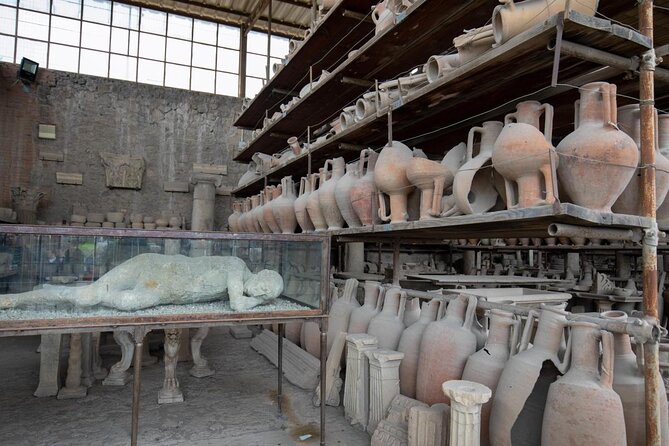
I like this format because it respects your time. Pompeii and Herculaneum are both huge, and doing them with zero planning can turn into an exhausting loop of looking at stone and hoping it will start making sense. Here, the guide’s job is to translate the layout and details into something you can actually understand in a short window.
This is also “exclusive” in the practical sense: you’re not sharing your guide with a busload of strangers. That matters because Pompeii isn’t just one pretty viewpoint. It’s thousands of fragments of daily life—street patterns, neighborhood setups, public spaces—and you get more value when a guide can explain while you’re standing in the exact spot.
The other thing I like is the value of structure. Each site is about two hours, which keeps you from burning out halfway through. You’ll still be walking through archaeological areas, but you won’t feel like you’re sprinting to hit random photo stops.
Pompeii Arrival: Skip-the-Line, Then Straight Into the Excavations
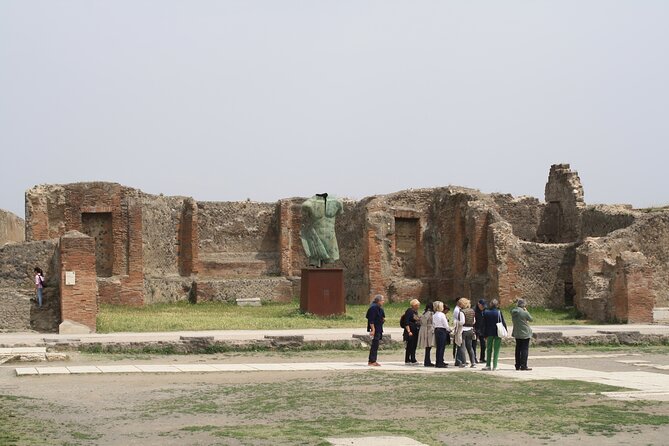
Your tour begins at Via Villa dei Misteri, 1, 80045 Pompei NA, Italy. From there, the approach is simple: get you into Pompeii quickly and start with the parts that help you understand how the city worked.
You’ll have skip-the-line access, which is a big deal at Pompeii. If you’ve ever waited in a long queue at a major site, you already know the truth: time disappears while you stand still. Here, that time is used for interpretation—your guide walks you through the excavations instead of letting you figure it out alone.
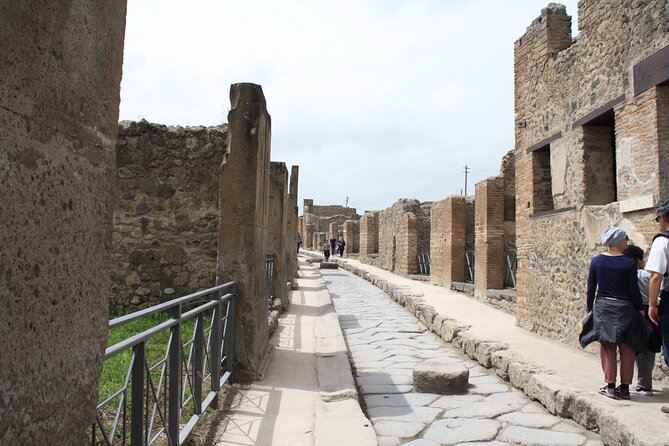
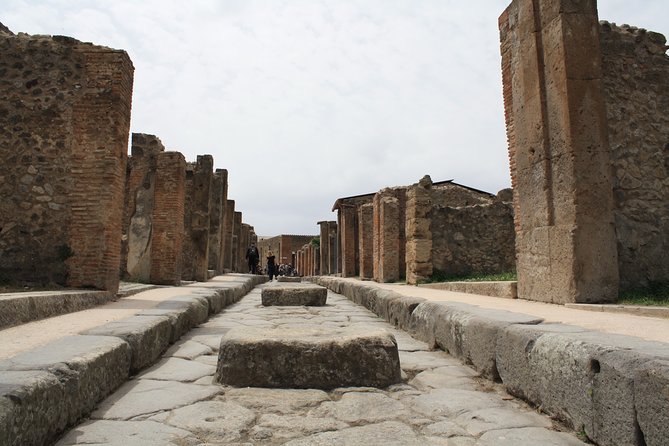
What stands out in the Pompeii experience is how much of the tour is about “how it was built and used.” You’ll hear about ancient road mapping and residential planning, plus the city’s sewage system. That kind of detail can sound nerdy on paper, but it’s exactly what turns ruins into a real place. When you understand how water and waste moved, you start noticing why certain streets and homes are arranged the way they are.
You’ll also get context for a commercial, trade-driven city. The guide takes you along the streets where shops lined up to catch the attention of traveling tradesmen. That’s one of those moments where you stop thinking of Pompeii as a museum and start imagining daily commerce.
You can also read our reviews of more private tours in Pompeii


Forum, Basilica, and Neighborhood Life: What You’re Actually Looking At
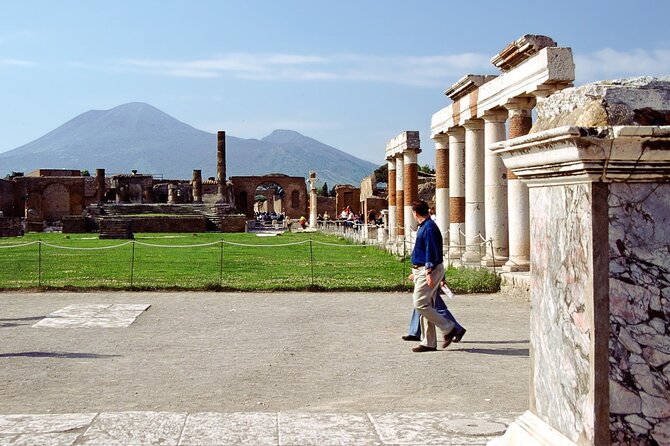
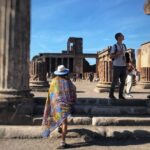
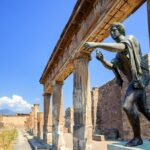
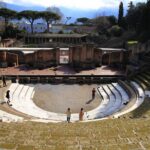
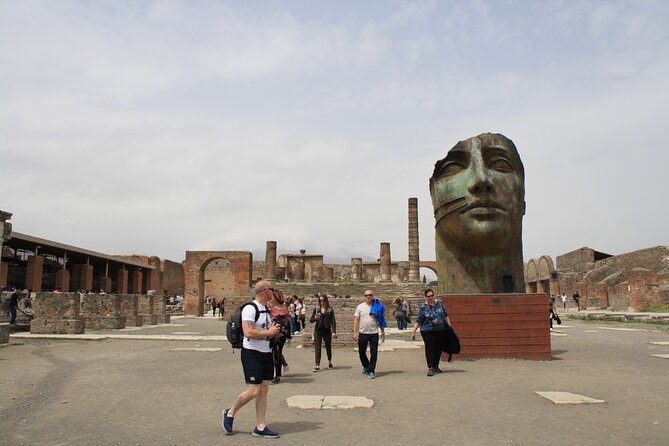
In Pompeii, the tour spends real time on the Forum, described as the city’s pulse. It’s where residents practiced religious life and where economic and commercial activity happened too. The benefit for you is that you’re not just seeing columns and open space. You’re being told what people did there and why that space mattered.
You’ll also pass the ancient basilica of town. The tour framing highlights it as a preserved architectural prototype of Christian basilicas. Even if you’re not a history buff, it’s a helpful comparison point. It gives you a way to connect ancient Roman architecture to later European building traditions.
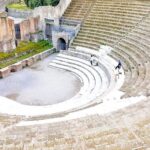
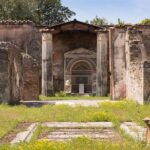
One of the most memorable parts—at least in the way this tour is explained—is the residential neighborhoods. Your guide uses the houses and street layouts to tell stories about how private residents of Pompeii lived and loved. That phrasing is playful, but the underlying idea is serious: Pompeii was not only public buildings and big monuments. It was families, routines, hobbies, and relationships. When a guide makes that clear, you’ll notice more details during your walk.
A practical consideration: Pompeii can feel intense if you try to do everything on your own. With a private guide, you’ll probably enjoy the pacing more, but you’ll still want comfortable footwear. This is an archaeological park with walking between key areas, and you’ll cover ground in a short time.
The Quick Transfer to Herculaneum: Keeping Momentum
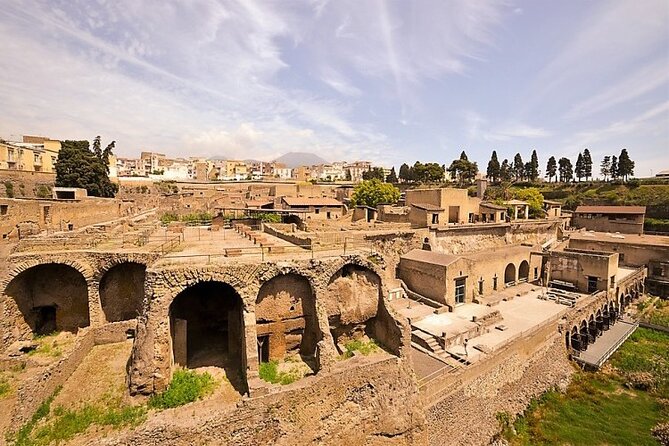
After Pompeii, you take a transfer to Parco Acheologico di Ercolano (Herculaneum). The tour description notes Herculaneum is about five miles southeast of Naples, so this isn’t a long cross-country slog. In a half-day format, that short hop is the difference between “two sites done” and “one site partially done because your day collapsed.”
I like how the tour treats the transfer as part of the plan, not an obstacle. Your guide is there to handle the movement between the two places, and you keep the momentum going instead of spending the best part of your day figuring out buses or waiting for trains.
It also helps that the tour is timed as two focused blocks of about two hours each. You’re not stuck trying to rush Pompeii late in the day, then arrive at Herculaneum with zero energy for careful looking.
Herculaneum’s Volcanic Preservation: Wood, Beds, and Food Remnants
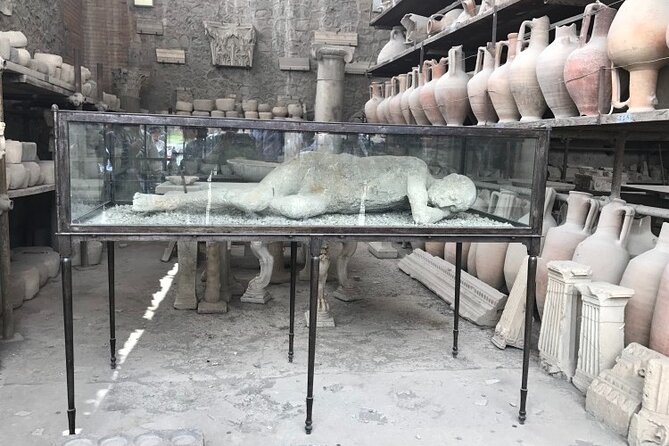
Herculaneum is often called the better-preserved counterpart to Pompeii, and this tour explains why in a way that helps you understand what you’re seeing. The volcanic material that covered the city didn’t just preserve frameworks of buildings. It helped preserve delicate materials too—things that usually disappear over time.
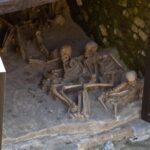
This is where the tour really earns its keep. In Pompeii, you’re often looking at stone structures and trying to picture what used to be inside them. In Herculaneum, the preserved evidence makes it easier to imagine daily life in a more concrete way. The tour highlights the chance to see beds and even food remnants left behind from that deadly day. That’s the kind of detail that changes a visit from scenic to meaningful.
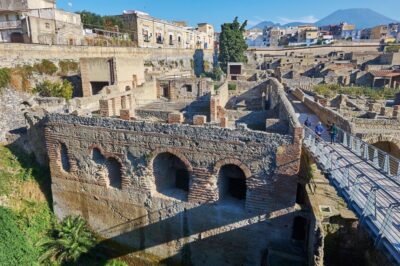
Depending on the route, you may see stop highlights like the House of Galba, the Thermal Baths, mosaic floors, and the Samnite House. Even if you’ve read about these names before, a guide ties them to layout and purpose. Instead of being random label words, they become part of a story: how people lived, bathed, ate, and moved through their neighborhoods.
Another real benefit: Herculaneum feels more intimate than Pompeii in terms of how close the layers of evidence are to your path. You’re still outdoors, still walking, but the “follow the evidence” style can feel calmer than trying to manage a huge sprawl of ruins.
The Guide Factor: Knowledge, Patience, and Kids Who Don’t Drift Off
This tour’s strongest theme is the guide. The private format makes that obvious, but the guide quality is what turns it from decent to excellent.
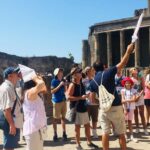
One named guide who shows up in the provided feedback is Carla (of Viv tours). The comments highlight her knowledge of both sites and her ability to keep things engaging. That matters because Pompeii and Herculaneum can put people into two modes: either overload (too much information) or boredom (you see ruins, but they don’t connect). A strong guide finds the middle.
There’s also a practical moment worth noting. In one case, a family’s train was delayed by about 45 minutes, and Carla waited patiently. She even shared a tip about which train option works better for people coming from Sorrento (an express train is mentioned as the better option). That’s the kind of real-world adjustment you don’t get with rigid group tours.
Family value is a major praise point too. For a group traveling with preteens and teens, Carla kept three kids engaged by learning their interests first and then pointing them to relevant sights in the ruins. She also built in time for bathroom and snack breaks. That’s not just nice hospitality—it’s what keeps a half-day plan from feeling like a long squeeze.
If you’re the kind of person who wants to ask questions and actually understand what you’re looking at, a private guide is the right match here. If you prefer a self-guided wander with no structure, this might feel like you’re being “told” what to notice.
You can also read our reviews of more tours and experiences in Pompeii

Price and Value: When $4,655.67 per Person Makes Sense
Let’s talk money directly. At $4,655.67 per person, this is not an impulse buy. It’s a premium private tour price, and it should be judged against what you get: two major sites, tickets included, fast-track admission, transfers between sites, and an expert guide who stays with only your group.
So the value question becomes: do you want an expert to steer the visit and translate the ruins for you, while also handling the time-saving logistics? If the answer is yes, the price can start to feel logical. You’re basically paying to buy back your time and reduce mental effort. Instead of spending hours figuring out where to go and what to look for, you get guided interpretation at the exact spots where the stories live.
There’s also the flexibility angle. The feedback notes the ability to start later than most other options, which can matter a lot if you’re coordinating travel from Naples, Sorrento, or elsewhere in the region. That flexibility can be worth more than you think when your day has train schedules and family needs.
The drawback is obvious: if you’re traveling with a bigger group or you’re budget-focused, a private guide can be hard to justify. In that case, you might consider other formats. But if you’re doing Pompeii and Herculaneum in one half day, and you want it done with clarity instead of chaos, this is one of the smoother ways to do it.
How the Tour Runs in Real Life (and What to Plan)
This tour is about four hours total, split into two guided blocks of roughly two hours each. You start in Pompeii and finish in Herculaneum, with skip-the-line entry for both archaeological parks included.
Here’s how that affects your planning:
- You should plan to be flexible with timing, since even small delays can feel bigger when the whole visit is compressed.
- Bring patience for the day: you’re seeing a lot of evidence in a short span, and some sites can feel overwhelming if you’re not used to archaeological walking.
- Since the tour involves walking through excavations, wear shoes that work well on uneven stone and keep water/snacks handy (the guide can build in breaks, and families in the provided feedback specifically appreciated that).
Also note the endpoints. It begins at Via Villa dei Misteri, 1, 80045 Pompei NA, Italy, and it ends at the Archaeological Park of Herculaneum, Corso Resina, 187, 80056 Ercolano NA, Italy. That’s useful when you’re lining up your next train or meal after the tour.
Should You Book This Private Pompeii and Herculaneum Tour?
Book it if you want two top Roman sites in one half-day and you care about understanding what you’re seeing. The skip-the-line entry, the transfers, and the private guide time are a strong match for first-timers, families, and anyone who doesn’t want to spend their vacation turning ruins into homework.
Skip it (or look for another option) if the price feels too steep for your budget or if you’d rather wander independently. Also consider your expectations: four hours is great for highlights and context, but it won’t replace a full-day, slow-motion exploration.
If you like guided clarity, appreciate expert explanation, and want Pompeii and Herculaneum handled with speed and care, this is an excellent choice.
FAQ
How long is the Half-Day Exclusive Private Tour of Pompeii and Herculaneum?
It lasts about 4 hours.
Is this tour private?
Yes. It’s a private tour/activity, and only your group participates.
What language is the tour offered in?
The tour is offered in English.
Are admission tickets included?
Yes. Admission tickets for both sites are included.
Do you get skip-the-line access?
Yes. The tour includes skip-the-line entrance to both Pompeii and Herculaneum.
Is transportation included between Pompeii and Herculaneum?
Yes. The tour includes transfer from Pompeii to Herculaneum.
Where does the tour start and end?
It starts at Via Villa dei Misteri, 1, 80045 Pompei NA, Italy, and ends at Archaeological Park of Herculaneum, Corso Resina, 187, 80056 Ercolano NA, Italy.
Can I cancel for a full refund?
Yes. Free cancellation is available. You can cancel up to 24 hours in advance for a full refund. If you cancel less than 24 hours before the start time, the amount paid isn’t refunded.