REVIEW · POMPEII
2 Hours Pompeii Group Tour with Archaeologist Guide and Skip the Line
Book on Viator →Operated by ELIANA SANDRETTI · Bookable on Viator
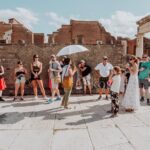
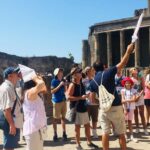
Skip the ticket line and start fast. This 2-hour Pompeii tour gives you skip-the-line entry and a max 15-person group, with an archaeologist guide who connects the ruins to daily life. The trade-off: you cover a lot in a short time, so you’ll need to accept a quicker pace if you like to linger.
I also like that the stops are practical and easy to follow, from gladiators and laundry to theatres, baths, and markets. Guides such as Mariagrazia and Eliana (the tour provider) show up in reviews for storytelling that makes the stones feel lived-in, not just explained.
One more thing to consider: the entrance ticket is separate (18 euros for adults), so plan on paying that on top of the tour price for a full visit.
In This Review
- Key highlights
- Two hours in Pompeii: a smart pace, not a half-day fantasy
- Meeting at Ristorante Suisse and using your skip-the-line ticket
- Gladiators and the Laundry of Pompeii: Vicolo di Gladiatori + Fullonica di Stephanus
- Jupiter’s Temple and the Forum zone: where politics and religion mixed
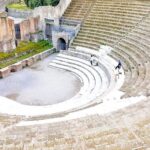
- Two theatres in one sweep: Odeon + Teatro Grande
- Pompeii home life and the Lupanar: Casa del Menandro + Lupanar
- Justice, markets, and shopping streets: Basilica + main street + market area
- Baths and a 3D add-on: Stabian Baths + Pompei 3D
- Temple of Venus and the Apollo stop: the religious edge of the route
- Price and value: what $132.03 really buys you
- What I think about the guide quality (Mariagrazia, Eliana, and others)
- Who this Pompeii tour fits best
- Should you book this 2-hour Pompeii tour?
- FAQ
- How long is the Pompeii group tour?
- What is the price per person?
- Is the tour in English?
- Where do I meet the group?
- Does the skip-the-line feature include buying tickets?
- Is the Pompeii entrance ticket included?
- How large is the group?
- What’s included in the tour price?
- What should I expect to see during the tour?
- Can I get a refund if I cancel?
Key highlights
- Skip-the-line ticket purchase means less time stuck at the office
- Max 15 people keeps the tour easy to hear and follow
- Archaeologist guide in English for clear, site-specific explanations
- Big Pompeii hits in one loop: Forum-area landmarks, theatres, homes, baths
- Bonus stop with Pompei 3D to help you visualize bodies and the impact of the eruption
- Guides handle real-world moments (one Eliana story involved helping a father who fell ill before the tour)
Two hours in Pompeii: a smart pace, not a half-day fantasy
Pompeii is big. Even with a plan, it’s easy to wander and miss the most meaningful corners. This tour is built for people who want the essentials in about two hours, without spending half the day just figuring out where to go next.
I like that the format is a guided run through the main attractions, not a scattershot walk. You get a “story arc” through the city—work, worship, entertainment, home life, commerce, and public spaces—so your photos come with context, not just a view.
The only drawback is obvious but worth saying plainly: a short tour means you won’t have long, quiet moments at every doorway. If you’re the type who wants to sit and study frescoes for ages, you may want to pair this with extra free time later.
You can also read our reviews of more guided tours in Pompeii

Meeting at Ristorante Suisse and using your skip-the-line ticket
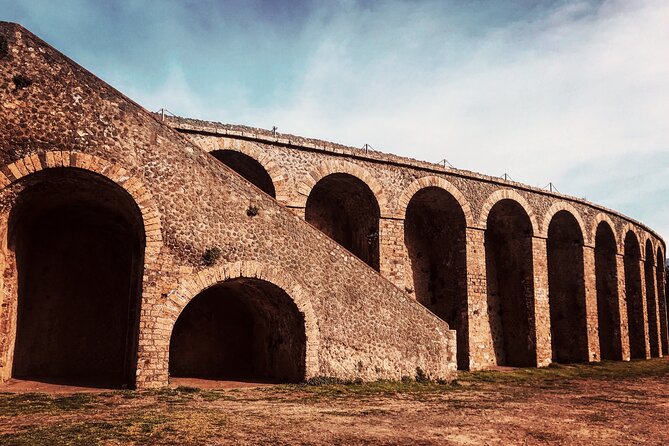
You meet at the main entrance of Ristorante Suisse in Piazza Esedra (10/13). The tour ends back at the same meeting point, which matters in Pompeii where it’s easy to lose time crossing between areas.
One of the best parts here is the skip-the-line promise, focused on buying tickets on site. That can save you from the slow-moving part of the visit. You still pay the official entrance ticket separately—18 euros for adults—and minors enter free, but they need to bring an identity card.
You also get a mobile ticket, and the tour runs in English. That’s helpful if you don’t want to hunt for printed vouchers on arrival.
Gladiators and the Laundry of Pompeii: Vicolo di Gladiatori + Fullonica di Stephanus
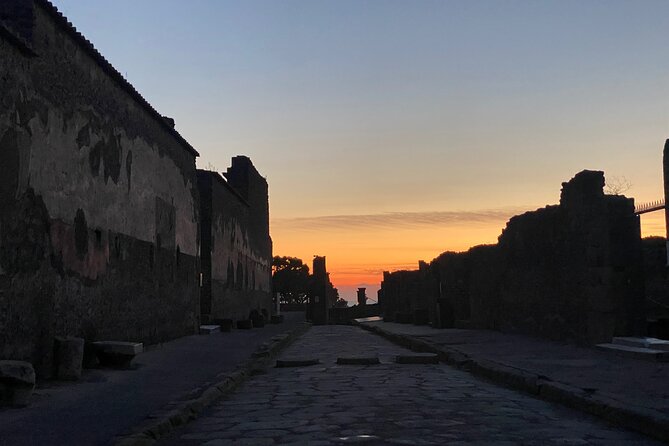
The tour kicks off with Vicolo di Gladiatori, the gladiators’ barracks area where fighters trained and prepared. Even with only a brief stop, this is the kind of place that pulls you in fast. You’re standing in a part of Pompeii tied to spectacle, discipline, and the social world around fighting.
Next comes Fullonica di Stephanus, Pompeii’s famous laundry facility. This isn’t just a “cool ruin to photograph.” It helps you understand how Romans dealt with washing and fabric processing, including the rough materials used. When an archaeologist guide explains the function of the space, the whole area feels more like an operating workshop than a museum exhibit.
A small practical note: because these are short stops (around 10 minutes each), you’ll get the key ideas and then move on. If you want to read every sign slowly, you’ll need outside time after the tour.
Jupiter’s Temple and the Forum zone: where politics and religion mixed
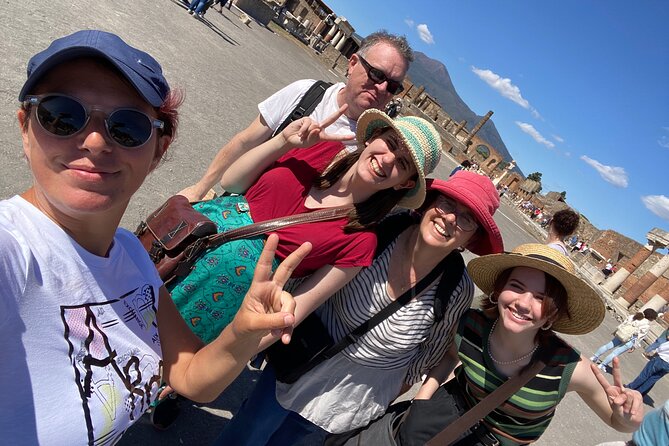
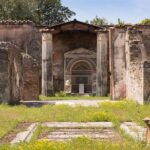
The tour then moves toward the Tempio di Giove Capitolino—the temple connected to the cult and rituals of Pompeii. It sits in the large forum area, a place that was active in the mornings with both commercial life and worship.
This is one of those stops where a good guide really changes what you see. When you understand that these spaces weren’t just religious set pieces, you start noticing how public decisions, trade, and ceremony intertwined.
The stop is short, but it gives you the reference points you need to imagine the forum as a daily hub. That helps later when you’re walking past markets and civic areas—things start to “click” as the same city system, not random buildings.
Two theatres in one sweep: Odeon + Teatro Grande
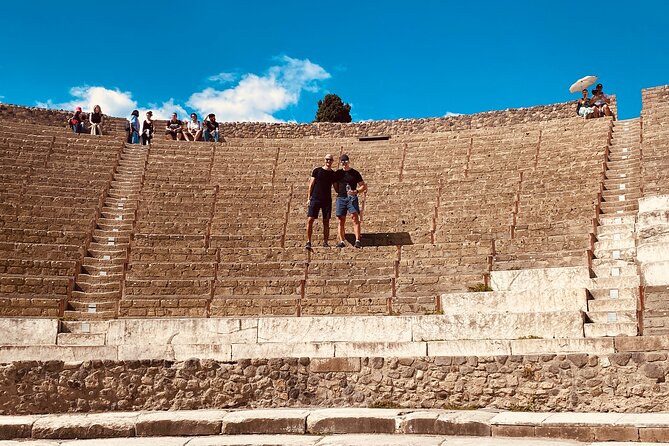
Pompeii does drama well. The tour includes both smaller and larger performance spaces, which is a rare opportunity in a tight schedule.
First, you’ll visit the Odeon – Teatro Piccolo, a theatre tied to musical events. Reviews and on-site finds can point you toward how musical instruments were found here and why that matters for how performances may have worked. If you like hearing how people actually made music in ancient spaces, this stop is one of the more satisfying ones.
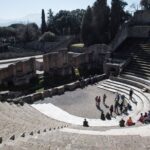
Then comes the bigger stage: Teatro Grande, Pompeii’s largest theatre. You’ll hear about the renovation efforts tied to the Gens Holconia, one of the key families in Pompeii. Again, you won’t have hours here, but you’ll leave with the scale and purpose clear.
In my view, the theatre pair is strong value because it shows range: intimate musical events in the Odeon, and large-scale drama in Teatro Grande. Even if you’re not a theatre person, it helps you understand how public leisure functioned in the city.
You can also read our reviews of more tours and experiences in Pompeii


Pompeii home life and the Lupanar: Casa del Menandro + Lupanar
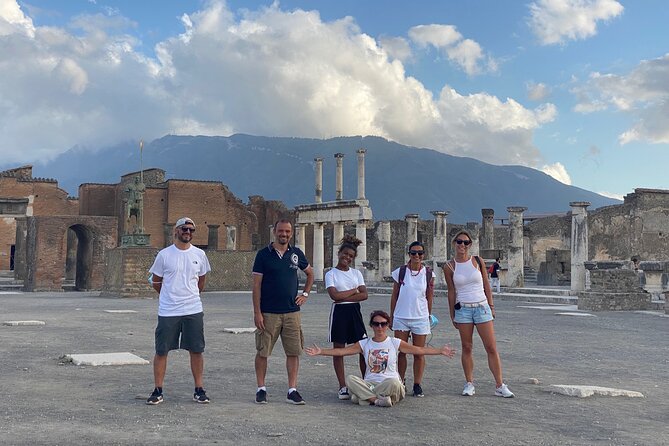
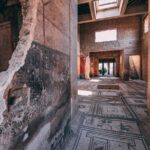
From public spaces, the tour turns to private life with Casa del Menandro. This is where you see what “luxury” looked like for Pompeii’s residents—frescoes, decorative elements, and sculptures. A well-led visit makes it easier to picture daily routines in a home like this, instead of treating it as a stop-and-go photo op.
Then comes one of Pompeii’s most talked-about sites: the Lupanar (a famous brothel). You’ll see original frescoes with explicit sexual scenes. I’m not going to pretend this is comfortable for every visitor. But if you want a full-spectrum view of Roman daily life, this is part of that reality.
For me, the value here is balance. Pompeii isn’t only temples and theatres; it also shows how sex work, privacy, and commerce existed in the same city. If you’re easily shocked or traveling with kids, I’d treat this as the point where you decide how much you want to see and how you want to handle explanations.
Justice, markets, and shopping streets: Basilica + main street + market area
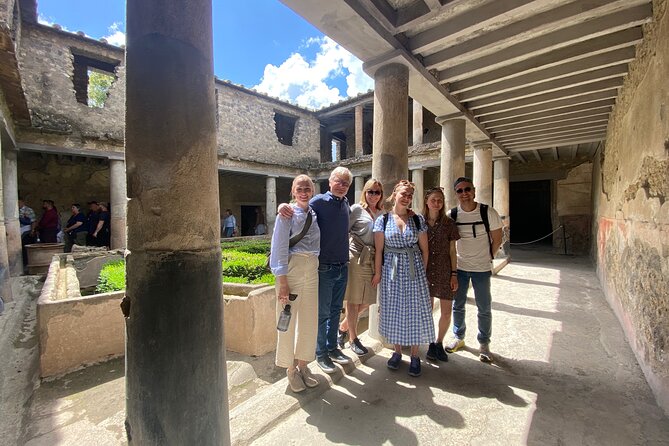
Next is the Pompei La Basilica, a civic building where justice was administered near the main square. It’s a key contrast after the theatres and homes because it brings you back to how authority worked in Pompeii’s daily rhythm.
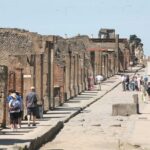
You’ll also walk through the street full of shops, described as Pompeii’s main street. This is where the city feels most like a real place you could have walked through for errands—only the shops are ancient and the signage is long gone.
The tour also includes the city market near the large forum, where large purchases of goods for resale happened in shops. This stop is especially helpful because it connects public areas (forum and civic buildings) with how people actually obtained and traded everyday items.
I like these blocks because they’re “system” stops. You leave with a sense of how Pompeii worked—what people did, where they gathered, and where they bought things—rather than just memorizing building names.
Baths and a 3D add-on: Stabian Baths + Pompei 3D
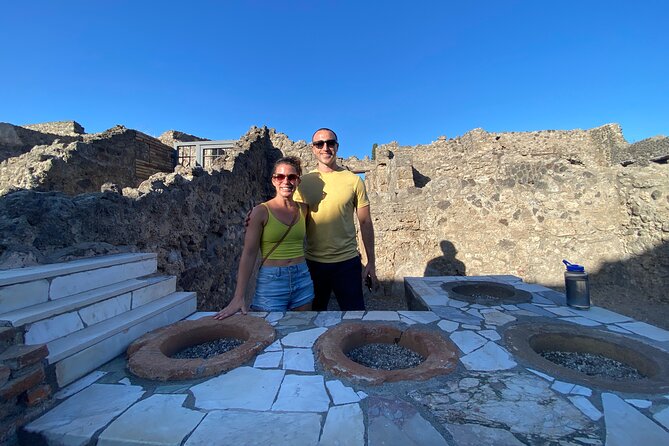
The tour reaches Stabian Baths (Terme Stabiane), one of the first baths built in Pompeii. You get to see parts of the baths that still have casts and frescoes. Bathing in Roman life wasn’t just hygiene; it was social time and routine, so explaining the layout changes the experience.
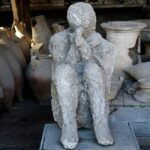
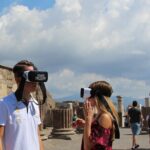
Then there’s a short but memorable stop at Pompei 3D (Bodies of Pompeii). This is designed to help you visualize what you’re seeing and why the eruption had such an enormous human impact. It’s only about five minutes here, so think of it as a quick mental reset tool, not a full documentary.
If you’ve been to other archaeological sites, you may notice that Pompeii’s storytelling benefits from “outside the stone” tools. This 3D stop does that work without eating your tour time.
Temple of Venus and the Apollo stop: the religious edge of the route
Pompeii isn’t only civic and commercial. This tour includes a stop for the Temple of Venus, noting that it was partly destroyed during the Second World War. Even with that short visit, it gives you another layer: how religious sites fit into the city’s layout and identity.
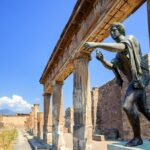
There’s also a stop connected to the Temple of the Apollo deities, described as one of Pompeii’s most popular temples. Together with the earlier Jupiter temple, it frames Pompeii’s worship landscape as a network of places people visited for ritual and meaning.
These religion stops are quick by design. The win is that you walk away knowing the names and the “type” of place you saw, so if you return on your own, you’re not guessing.
Price and value: what $132.03 really buys you
The tour price is $132.03 per person, for roughly two hours. Entrance is not included, and the official ticket is 18 euros for adults (free for minors with an identity card). So for adults, you should plan around about 150 euros total once you add the site ticket.
What justifies the cost, in my opinion, is the combination of three things:
- You don’t spend time in the ticket office because of the skip-the-line setup.
- You get a guided circuit of major sites, with an archaeologist guide focused on Pompeii’s specifics.
- The group size is capped at 15 people, which keeps questions possible and hearing the guide more realistic than in huge crowds.
If you’re coming to Pompeii for a first visit, this is often the easiest way to avoid the classic mistake: trying to self-tour and ending up under-informed about what you’re looking at. If you’re already an enthusiast who knows the layout cold, you might prefer a cheaper self-guided entry and spend your time more slowly. But most first-timers will appreciate having the structure.
What I think about the guide quality (Mariagrazia, Eliana, and others)
One of the strongest signals in the provided feedback is the human side of the guiding. Guides like Mariagrazia and Eliana are repeatedly praised for making the ruins feel like a place people actually lived.
Mariagrazia is described as engaging and full of stories that can shift between lighter details and somber moments while still tying back to everyday life before the eruption. Eliana is highlighted for careful organization, including avoiding heavy crowd clashes so the group could see more. There’s also a story about Eliana going beyond the tour moment by helping a father who wasn’t feeling well before the tour started, arranging medical help and then a taxi back for rest.
Even other named guides in the feedback—Luciana and Luisa—are praised for being fun while still informed, with Luisa specifically noted for patience and kindness with young kids.
I can’t guarantee which guide you’ll get, but the pattern tells me the company takes guidance seriously. For a site as emotionally heavy as Pompeii, that matters.
Who this Pompeii tour fits best
This experience makes the most sense if you:
- Want Pompeii highlights without building your own route
- Prefer an English archaeologist-led overview
- Like structured explanations that connect ruins to daily life
- Appreciate a smaller group setting (max 15)
It may be less ideal if you:
- Want long, silent time inside every space
- Get frustrated by moving between multiple stops in a short window
- Are sensitive to explicit content at the Lupanar
Because it runs on good weather, you should also be ready for the reality that outdoor ruins don’t behave like indoor museums. If it’s canceled for weather, you’ll be offered a different date or a full refund.
Should you book this 2-hour Pompeii tour?
Yes—if you want an efficient first taste with a guide who can explain what you’re seeing and why it matters. The skip-the-line component plus the small group size makes the two hours feel productive, not rushed for nothing.
I’d book it especially if you’re visiting Pompeii for the first time and you’re likely to get overwhelmed on your own. The circuit hits gladiators, laundry, forums and justice, theatres, homes, the Lupanar, baths, a market area, and even a quick 3D stop. That’s a lot of meaning packed into a short visit.
If you’re the type who likes slow wandering, treat this as your orientation trip. Do it first, then come back later for your favorite buildings when you can spend more time.
FAQ
How long is the Pompeii group tour?
It runs for about 2 hours.
What is the price per person?
The tour price is $132.03 per person.
Is the tour in English?
Yes. The tour is offered in English.
Where do I meet the group?
You meet at the main entrance of Ristorante Suisse in Piazza Esedra, 10/13, 80045 Pompei.
Does the skip-the-line feature include buying tickets?
Yes. The skip-the-line is specifically to purchase tickets on site.
Is the Pompeii entrance ticket included?
No. The entrance ticket costs 18 euros for adults, and it is free for minors (minors must bring an identity card).
How large is the group?
The tour has a maximum of 15 people.
What’s included in the tour price?
It includes skip-the-line ticket purchase support, an authorized tourist guide and assistance for the full duration, and a group visit to Pompeii’s main attractions with a specialized archaeological guide.
What should I expect to see during the tour?
You’ll visit multiple major sites, including gladiators’ barracks, Fullonica di Stephanus, Tempio di Giove Capitolino, Odeon/Teatro Piccolo, Teatro Grande, Casa del Menandro, Lupanar, the Temple of Venus (partly destroyed during WWII), Pompeii La Basilica, shopping streets and the city market, Stabian Baths, Pompei 3D, and the Temple of Apollo deities.
Can I get a refund if I cancel?
Yes. You can cancel up to 24 hours in advance for a full refund. If you cancel less than 24 hours before the start time, it won’t be refunded.