REVIEW · POMPEII
Pompeii 360° – 4-hour tour with an expert Guide in archaeology
Book on Viator →Operated by Guide Centre Sorrento · Bookable on Viator
Pompeii in four focused hours beats chaos. If you want the big names plus the small details, this private archaeology-guided route is a smart way to see a lot without getting lost in the stones. I like how the pace is built around key buildings and what they meant, and I also like that you get a real expert guiding you through the site’s layers, not just a walk-and-look. One thing to plan for: the Pompeii entrance ticket (€20 per person) is not included in the tour price.
You’ll start at Piazza Esedra in Pompeii and finish back near the same place, so you’re not piecing together transit or transfers mid-visit. The tour runs about 4 hours, in English, and it’s designed for people who want structure but still want to stop for photos (Vesuvius views come up more than once). If you’re sensitive to crowds and uneven ground, start with comfortable shoes and take it slow—Pompeii is famous, but it’s not built for smooth strolling.
In This Review
- Key things that make Pompeii 360° worth your time
- Pompeii 360°: a 4-hour plan that keeps you oriented
- Tickets, meeting point, and what to pack for a smooth visit
- Start strong at the Roman amphitheater: an ancient crowd-pleaser
- Orto dei Fuggiaschi and plaster casts: the eruption explained in a human way
- Jupiter’s temple and the Vesuvius photo stop you’ll be glad you planned
- Through the Forum: where political, religious, and business life collided
- Casa del Fauno and its mosaics: big-room Pompeii life
- Temple of Apollo and the sun-and-moon story (plus another Vesuvius view)
- Via dell’Abbondanza: shops, fountains, and the commercial pulse
- Casa del Cinghiale and the mosaic near the Forum
- Odeon – Teatro Piccolo: where music and poetry lived
- Stabian Baths: gym, pool, sauna, and massages
- Casa dei Vettii and the mythological frescoes that hold up close
- Basilica and the courthouse angle
- Tempio di Venere and the panoramic spot mindset
- House of Venus in the Shell: garden vibes and birth-of-Venus fresco
- Lupanar: the pleasure-house option, decided by you
- Price and value: what $203.70 buys you (and what it doesn’t)
- Should you book Pompeii 360°? My practical take
- FAQ
- Is the Pompeii Archaeological Park entrance fee included?
- How long is the Pompeii 360° tour?
- Where do we meet, and where does the tour end?
- What language is the tour offered in?
- Is this a private tour?
- What should I wear or bring?
- Can I cancel for free?
Key things that make Pompeii 360° worth your time
- Licensed archaeology guide: you’ll get context on what you’re seeing, not just dates on a sign
- Vesuvius photo moments built in: temples chosen for views, so you know where to point your camera
- A route with variety: amphitheater, forum, baths, domus (houses), temples, and even the Lupanar option
- Private means your group drives the rhythm: only your party participates, so you can ask more questions
- Mobile ticket and easy meeting point: start at Piazza Esedra (and return nearby)
- Extra costs are clear upfront: Pompeii park entry is €20 per person
Pompeii 360°: a 4-hour plan that keeps you oriented
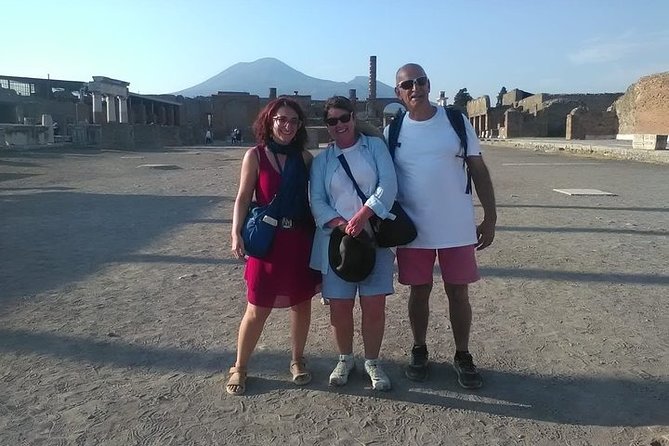
Pompeii can swallow a whole day. This tour is built to keep you oriented from the first steps, with a route that moves through the city’s main types of places: entertainment, worship, public life, and private home life.
At about 4 hours, you get enough time to notice details that most first-timers miss. The guide’s job here is to turn a pile of ruins into a readable city—what each space was for, who would have used it, and what to look at while you’re standing right there.
Because it’s private, you also aren’t stuck behind a moving wall of strangers. You can ask why a temple is positioned where it is, or what a mosaic scene is trying to show—questions you’ll never think of if you’re just wandering.
You can also read our reviews of more guided tours in Pompeii


Tickets, meeting point, and what to pack for a smooth visit
Plan on two parts to the cost: the tour price (listed at $203.70 per person) and the Pompeii Archaeological Park entry ticket ( €20 per person). That makes this tour best when you value guided time, since you’re paying for expert interpretation plus a structured route through multiple major stops.
Meeting point is Piazza Esedra, 80045 Pompei NA, Italy. The tour ends back at Piazza Esedra, and at the discretion of the customer it can end at the exit of Piazza Esedra, so you’re not walking all the way across town to get out.
Bring what you’ll actually need on the ground:
- Sunglasses, a hat, comfortable clothing and shoes
- A day bag within the allowed size (backpacks no larger than 30×30×15)
- Your tickets via mobile ticket (with confirmation received within 48 hours, if available)
If you’re traveling under 18, you’re covered on the park ticket. EU residents aged 18 to 25 with valid ID pay €2 per person for the park entry, which is a nice saving if you qualify.
Start strong at the Roman amphitheater: an ancient crowd-pleaser
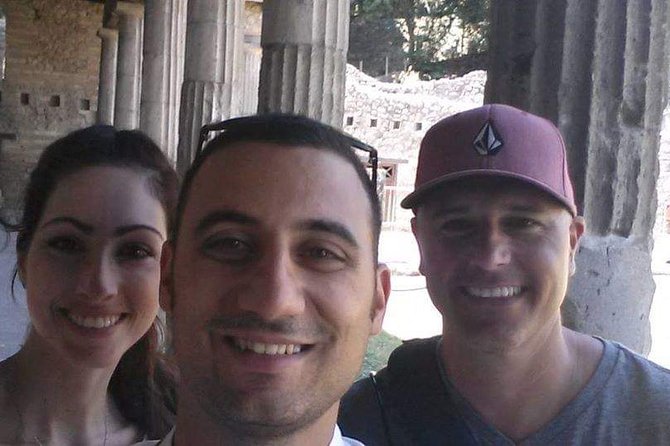
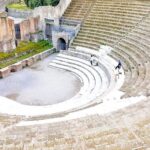
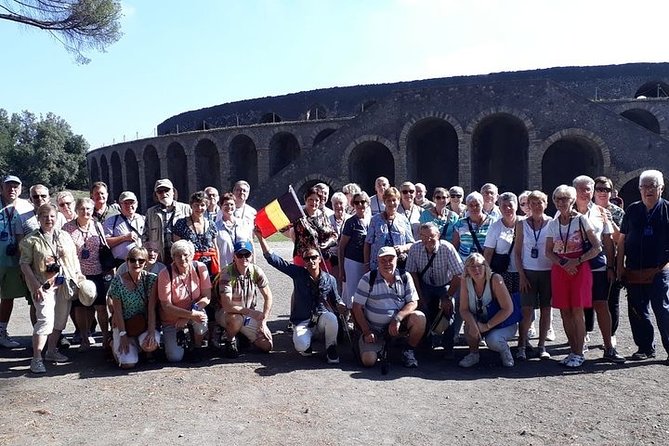
The tour begins at the Anfiteatro Romano, described as the oldest amphitheater in the Roman world and very well preserved. Even if you’ve seen amphitheaters in other cities, Pompeii’s form here helps you understand what “public spectacle” looked like in daily life.
This is one of those stops where the guide’s explanations really matter. You’re not just staring at stones—you’re learning how Romans organized viewing, movement, and built spaces for mass gatherings. And because it’s early in the visit, it also sets the tone for the rest: Pompeii isn’t random; it’s a planned city.
You’ll have around 15 minutes here, and it’s enough time to orient yourself and learn what you’re seeing without feeling rushed off to the next site.
Orto dei Fuggiaschi and plaster casts: the eruption explained in a human way
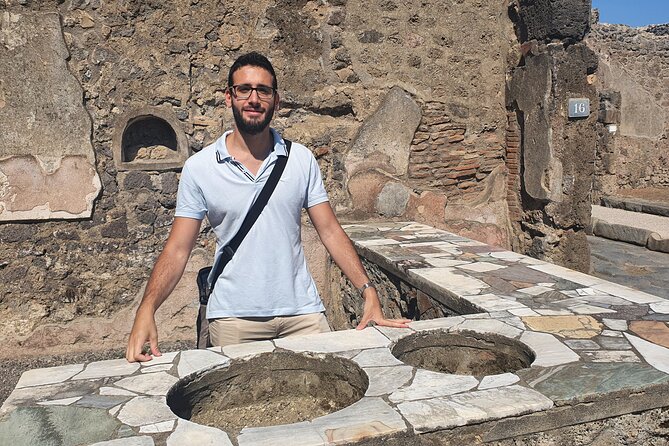
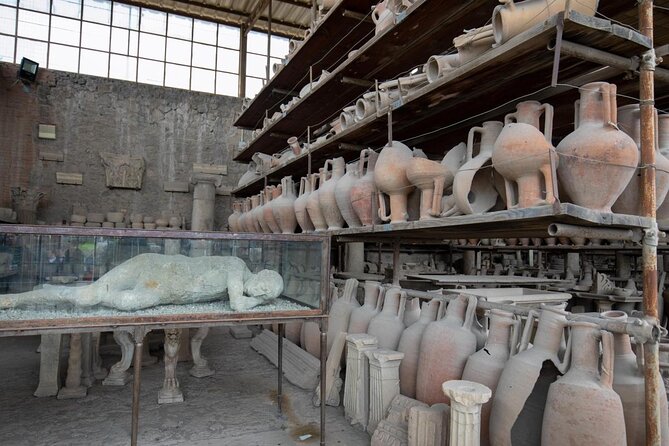
Next is the Orto dei Fuggiaschi, a famous garden where people took refuge during the eruption. What makes this stop special is the focus on the plaster casts—so you’re not only thinking about the disaster as a headline. You’re seeing how archaeologists interpret human presence from the preserved evidence.
This part also changes your emotional footing. You go from civic entertainment to a place tied directly to survival and the eruption’s immediate impact.
Again, it’s timed at about 15 minutes, which is good. This is the kind of stop where too long a pause can turn heavy, and too short a stop means you miss the meaning the guide is trying to put in context.
Jupiter’s temple and the Vesuvius photo stop you’ll be glad you planned
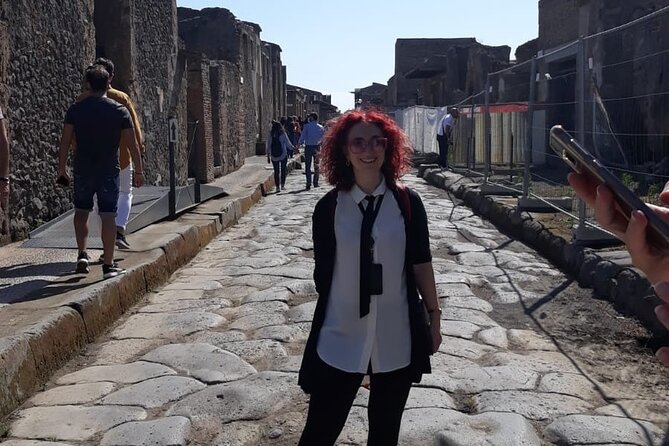
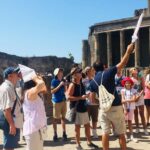
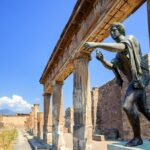
The Tempio di Giove Capitolino is one of Pompeii’s most famous temples, and it comes with a payoff: the view of Mount Vesuvius. The tour even builds in time as a photo stop—about 5 minutes—so you don’t have to hunt for the right angle on your own.
This is also a quick lesson in how Pompeii was visually staged. The temple isn’t just religious architecture; it’s positioned so people could experience awe and perspective. When you stand there with the explanation from your guide, the location starts to make sense right away.


Through the Forum: where political, religious, and business life collided
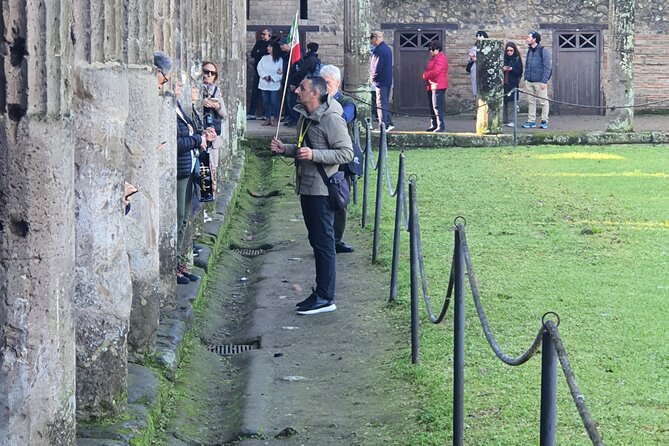
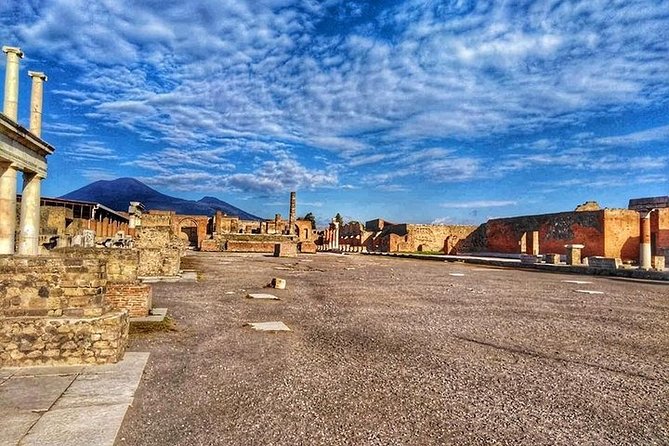
Then you hit the heart of the city: the Foro de Pompeya. This is the center of political, religious, civil, and economic life, with temples and public buildings packed into a walkable area.
If Pompeii feels confusing at first, the Forum is usually where it clicks. You begin seeing relationships between structures: where people would gather, where officials would operate, and how public space shaped daily routines.
You’ll get about 10 minutes here plus a photo stop with Vesuvius behind. That photo moment isn’t filler. It helps you remember where you are in the city—and why that volcano is not just a background detail.
Casa del Fauno and its mosaics: big-room Pompeii life
One of the major house stops is the Casa del Fauno, described as the largest house in ancient Pompeii, with gardens and multicolor mosaics. One highlight is the mosaic connected to Alexander the Great.
This is your chance to see how wealthy households used art to broadcast identity, taste, and power. A mosaic isn’t just decoration; it’s a message designed for people who could afford to linger.
The tour gives about 15 minutes at this stop, and Pompeii’s houses can eat time if you let them. The benefit of a guide here is that you learn what to focus on so you don’t wander from one room to the next without understanding why that room matters.
Temple of Apollo and the sun-and-moon story (plus another Vesuvius view)
Next comes the Temple of Apollo, one of Pompeii’s most ancient temples. It’s noted as recently restored and offers another spectacular Vesuvius view, with about 10 minutes here.
This temple is dedicated to Apollo—the sun—and his twin sister Diana, the moon goddess. Even in a short stop, that pairing gives you a way to remember what you’re looking at. You’re not just seeing columns; you’re seeing religious ideas expressed through architecture and placement.
If you like photos, this is one to treat like your second best one. The first Vesuvius view helps you orient. This one helps you appreciate the geography.
Via dell’Abbondanza: shops, fountains, and the commercial pulse
Walking along Via dell’Abbondanza brings you back to the everyday side of Pompeii. This is described as the main commercial street, with shops, houses, and public fountains lining the route.
This is where Pompeii turns from museum-like ruins into a city you can almost imagine working. You can picture customers, deliveries, and routine movement through narrow streets.
You’ll spend around 15 minutes here. It’s a nice rhythm break: you’ve hit temples and grand houses; now you see the practical “how the city functioned” layer.
Casa del Cinghiale and the mosaic near the Forum
Near the Forum, you’ll also stop at Casa del Cinghiale, called the house of the wildboar. The main draw is the beautiful mosaic floor.
This is a smaller stop, about 5 minutes, but it’s worth it. Mosaics in Pompeii often act like calling cards—what someone chose to display, and what artistic styles were valued locally.
The guide helps you notice what makes this mosaic stand apart from the broader mosaic themes you’ll see later.
Odeon – Teatro Piccolo: where music and poetry lived
The Odeon – Teatro Piccolo is the small theater in the complex, and the focus here is on detail like the precious marble floor. It also gets a role explanation: this theater was used for music and poetry.
This is one of the stops that often feels more interesting than people expect. Roman entertainment wasn’t only big-game spectacle; there were also cultural performances, and a theater like this is built for that kind of refined audience experience.
You’ll have about 10 minutes, which is enough time to take in the stage area and floor details without losing the flow of the route.
Stabian Baths: gym, pool, sauna, and massages
Then you hit the Stabian Baths (Terme Stabiane). This is a classic Pompeii experience because it shows that public life included wellness and leisure. The tour includes a walk through a typical Roman thermal bath setup, featuring a gym, swimming pool, and rooms dedicated to sauna and massages.
Plan for this stop to feel practical. It’s the opposite of temple awe or mosaic art. It’s human-scale routine—people coming to the baths to spend time, exercise, and socialize.
You’ll spend about 15 minutes here, and with a guide’s explanations, you can better understand how these spaces worked as a system.
Casa dei Vettii and the mythological frescoes that hold up close
Next is Casa dei Vettii, described as one of the best-preserved examples of Roman domus. The highlights include excellently preserved mythological frescoes and mosaics.
This is the stop where you’ll want to slow down a little—even if your guide keeps you moving. With the right context, frescoes and mosaics start to look like storytelling, not just decoration.
You’ll get about 30 minutes here, the longest window in the middle of the route. That extra time makes sense: houses like this can’t be properly appreciated in a quick glance.
Basilica and the courthouse angle
The Basilica in Pompeii isn’t a religious building, despite the name. It’s an ancient Roman courthouse, and the tour has you look at its beautiful details.
This is an important correction that helps you avoid a common first-timer mistake. When you’re standing in a civic space, it helps to understand how Romans organized law and public decision-making.
You’ll spend about 10 minutes here—enough to register the function and notice architectural elements without turning it into a long detour.
Tempio di Venere and the panoramic spot mindset
The Tempio di Venere is dedicated to the main goddess of Pompeii and is located in a panoramic spot. You’ll have about 10 minutes here.
Venus shows up as a key part of local religious identity, and the viewpoint adds an emotional layer. Even if you don’t do the statue-and-fresco deep dive at every temple, the panoramic placement helps you understand how worship spaces worked as places of meaning and visibility.
House of Venus in the Shell: garden vibes and birth-of-Venus fresco
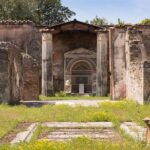
Another highlight is House of Venus in the Shell. This domus near the amphitheater is famous for a beautiful garden and a fresco representing the birth of Venus.
This is where Pompeii feels a little more personal again. Gardens in Roman houses weren’t just greenery; they were intentional design for shade, relaxation, and private beauty.
You’ll get about 10 minutes. It’s a short visit, but with the guide’s focus on what makes this house distinctive, you’ll know where to look.
Lupanar: the pleasure-house option, decided by you
The final stop in the route is Lupanar, the house of pleasure of Pompeii, with erotic frescoes. Importantly, this part is handled at the customer’s discretion.
If you prefer to skip the more adult-themed content, you can. If you’re comfortable seeing it as a window into how Romans lived—and how archaeology records uncomfortable truths—you’ll have time to view it within the schedule.
You’ll spend about 15 minutes here, and this is the stop where it’s especially helpful to follow your guide’s pacing so you don’t feel rushed or awkward trying to make sense of what you’re seeing.
Price and value: what $203.70 buys you (and what it doesn’t)
Let’s break down the value in a way that’s actually useful.
You’re paying $203.70 per person for:
- a licensed archaeology guide
- a structured route across major Pompeii areas
- a private tour for your group
- time windows for each key stop so you hit the high points without burning your whole day
Not included:
- Pompeii Archaeological Park entrance ticket: €20 per person
That means the total outlay is tour price plus the park entry fee. For many people, the decision comes down to whether you want the guide’s interpretation in real time. If you’re okay reading and researching on your own, you might feel the tour is optional. But if you want the site explained while you’re standing in it—amphitheater function, temple placement, household messaging through mosaics—this tour is priced like a “buy back your time and clarity” experience.
Also, this tour is often booked about 23 days in advance on average, so if you have firm travel dates, I’d plan to reserve sooner rather than later.
Should you book Pompeii 360°? My practical take
Book it if you want a tight route with an expert doing the explaining, and you’re trying to see Pompeii without spending all day wandering. The itinerary covers big-ticket categories—entertainment, religion, public civic life, elite homes, baths, and the pleasure district option—so you leave with a fuller mental map than you’d likely get from a shorter self-guided visit.
Skip it (or change your approach) if you’re hoping for long free time inside each building. This is a 4-hour plan with timed stops, so you’ll move through a lot. If your dream is hours of slow wandering and sketching, you might prefer a more open format.
If you do book, I’d show up ready to walk, bring sun protection, and treat the Vesuvius photo stops as scheduled moments, not random luck.
FAQ
Is the Pompeii Archaeological Park entrance fee included?
No. The Pompeii Archaeological Park ticket costs €20 per person and is not included in the tour price.
How long is the Pompeii 360° tour?
It lasts about 4 hours.
Where do we meet, and where does the tour end?
You meet at Piazza Esedra, 80045 Pompei NA, Italy. The tour ends back at Piazza Esedra, and at the discretion of the customer it can end at the exit of Piazza Esedra.
What language is the tour offered in?
The tour is offered in English.
Is this a private tour?
Yes. It’s a private tour/activity, and only your group participates.
What should I wear or bring?
Wear comfortable clothing and shoes, and bring sunglasses and a hat. Backpacks should be no larger than 30×30×15.
Can I cancel for free?
Yes. Free cancellation is available if you cancel up to 24 hours in advance for a full refund.
If you want, tell me your travel month and whether you’re visiting with kids or anyone who prefers to skip the Lupanar, and I’ll suggest how to pace your day around this 4-hour visit.