REVIEW · POMPEII
Pompeii Archaeological Area Entrance Ticket
Book on Viator →Operated by Weekend in Italy · Bookable on Viator
Pompeii is history you can walk through. With a pre-booked Pompeii Archaeological Area ticket, you enter at your chosen time and explore the city frozen in ash from the 79 AD eruption of Mount Vesuvius at your own pace. I love that you get a simple, on-site route plan and freedom to focus on what grabs you—big civic spaces or intimate houses.
Two things I really like: you’re set up for skip-the-line entry and you can build your own route around major anchors like the Forum, Theatre, and the Lupanare (the famous brothel with erotic frescoes). The one drawback to weigh is that Pompeii is so large that the ticket’s 2 to 3 hour “window” can feel short if you get absorbed (and the process at the gate can take longer than expected if your voucher details aren’t easy to scan).
In This Review
- Key things to know before you go
- Pompeii Timed Entry: Fast Access Without a Guided Script
- Your 2–3 Hour Reality Check in a 66-Hectare Ruin
- Starting From Porta Marina: Walls, Temples, and Civic Buildings
- Piazza Esedra: Forum Area Energy, Baths, Shops, and Houses
- Piazza Anfiteatro and the Theatre Circuit: Amphitheater, Odeion, and Temples
- The Highlights You’ll Want to See: Forum, Theatre, Lupanare, and Victim Casts
- Maps, Rules, and the Stuff That Changes Your Day
- Price and Value: Is $54.44 a Smart Pompeii Move?
- Who This Ticket Fits Best (and Who Might Want Something Else)
- Should You Book This Pompeii Ticket?
Key things to know before you go
- Timed entry means you choose when to start, and you explore independently once inside
- A route map is available on-site, so you’re not guessing your first turns through Pompeii
- Pompeii covers 66 hectares (163 acres), so you’ll want a quick plan before you get lost in ruins
- Big highlight cluster includes the Forum, Theatre, and Lupanare in one practical walking day
- Practical rules matter here: no climbing, watch your footing near excavation edges, and store bulky items at the wardrobe
- Mobility guidance exists: limited-mobility visitors are advised to enter via Piazza Anfiteatro and focus around the Amphitheater
Pompeii Timed Entry: Fast Access Without a Guided Script
This is a self-guided Pompeii entry ticket, not a tour with a guide shepherding you from stop to stop. You book the entrance time, then on the day you make your own way to the Pompeii Archaeological Area. At the gate, you show your pre-booked ticket to bypass the ticket lines and head inside at your time.
What makes this ticket worth considering is the balance: you get managed entry (with multiple entrance times throughout the day), but you still control the pace. Pompeii is the kind of place where your mood changes every 5 minutes—one moment you’re staring at a street corner, the next you’re walking under columns and trying to picture daily life. A scripted guided pace can feel too rigid here.
One more thing: the experience says it ends when you exit the park. So you’re planning a start time, not a guided endpoint. If you arrive ready to walk and you keep your route tight, 2 to 3 hours works. If you tend to linger (I do), you’ll likely want more time.
You can also read our reviews of more tours and experiences in Pompeii
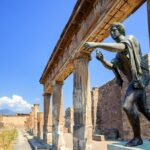


Your 2–3 Hour Reality Check in a 66-Hectare Ruin
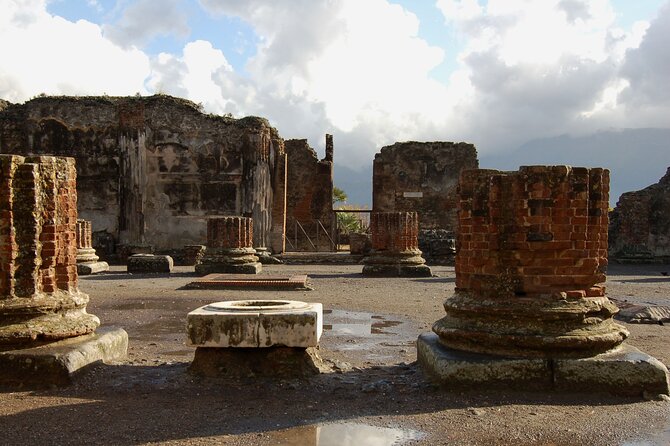
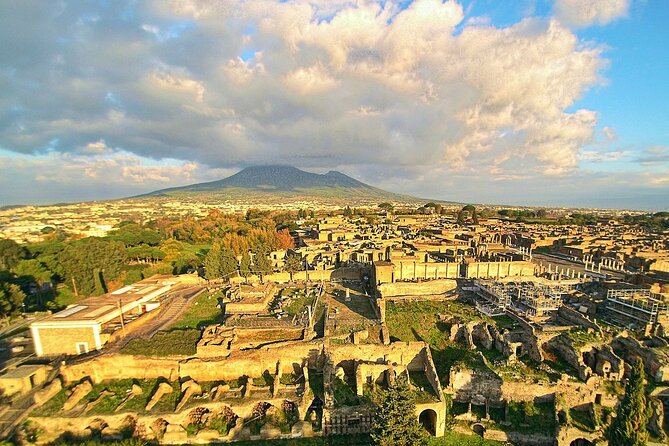
The ticket duration is listed as about 2 to 3 hours, but Pompeii is huge. The archaeological area covers 66 hectares (163 acres), and the site is full of streets, houses, temples, shops, and public buildings frozen by ash.
Here’s a practical way to make the time work for you:
- Pick one “spine” route (Porta Marina, Piazza Esedra, or Piazza Anfiteatro) and then add only 2 to 4 side stops that you care about most.
- If you want the “greatest hits,” prioritize Forum + Theatre + Lupanare early, then decide what you can still fit after.
- Bring your patience for walking and heat. The ruins are stone, open-air, and exposed.
Also, keep your footwear in mind. The site recommends flat-soled shoes, and it’s smart to go with something grippy because you’ll be stepping near excavation areas. Pompeii is fragile and precious—your feet and your behavior both matter here. You’ll want to walk carefully, avoid stopping on the edges, and never climb on walls.
Starting From Porta Marina: Walls, Temples, and Civic Buildings
One of the easiest ways to manage Pompeii is to start from a major entrance area and follow a route “leg” through the ruins. From Porta Marina, you can build a strong first arc that mixes fortification, religion, and public life.
If Porta Marina is your starting point, you’ll pass through highlights like:
- Porta Marina and the walls, where you get a sense of the city’s boundaries
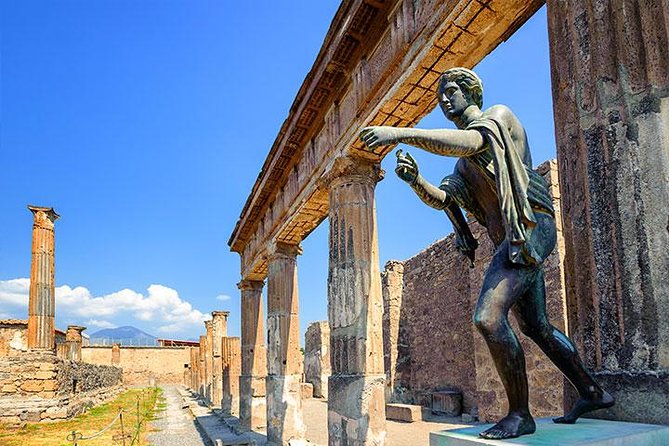
- The Temple of Apollo, a major anchor for early context
- The Basilica, a big public building that helps you understand how civic space worked
- Public Administration Buildings
- Building of Eumachia, another landmark that signals how organized and influential certain parts of the city were
Why this leg works: it gives you structure fast. Instead of jumping randomly between scattered ruins, you move through a sequence that feels like the city’s “machinery”—walls and temples first, then public administration.
Possible drawback: if you start here and you’re short on time, it’s easier to feel pulled into too many buildings before you’ve seen the iconic Forum and Theatre cluster.
Piazza Esedra: Forum Area Energy, Baths, Shops, and Houses
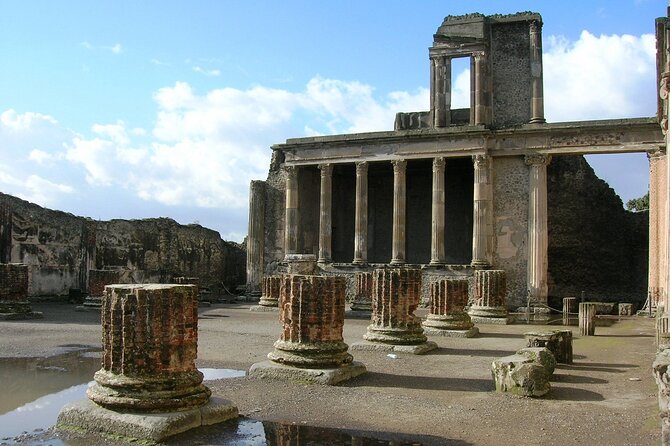
Piazza Esedra is a great choice if you want more of the everyday Roman Pompeii experience—public spaces, markets, and homes.
Along this route segment, you’ll see a stack of stops that help you build a complete picture:
- Forum Baths
- Temple of Fortuna Augusta
- House of Pansa
- House of the Tragic Poet
- Thermopolium, a place associated with buying hot food
- House of the Faun
- House of Cecilio Giocondo
- House of Citharist
- Fullonica Stephanus, associated with cloth laundering
If you like context—how people ate, worked, worshipped, and walked—this is the leg to spend time on. It’s also where you can connect the dots between big public sites (like temples and baths) and smaller commercial corners (like the thermopolium and shop-related spaces).
A smart tactic here: don’t try to read every inscription you can’t fully see. Instead, look for how spaces connect—street to shop, shop to household doorway, household to garden-like layouts. Even without a guide, Pompeii starts to feel like a living city.
Piazza Anfiteatro and the Theatre Circuit: Amphitheater, Odeion, and Temples
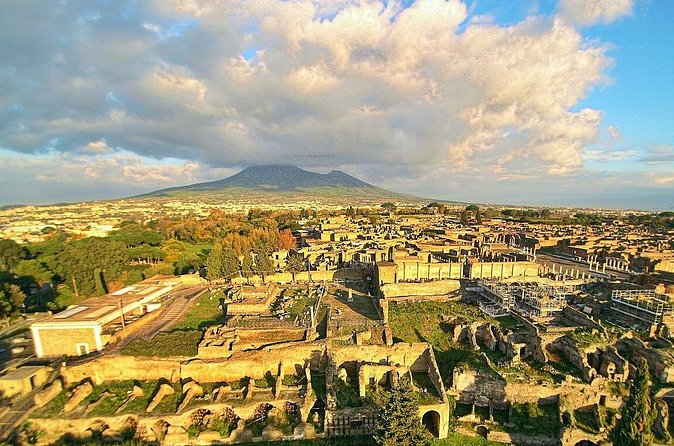
If you’re prioritizing performance spaces and major gathering areas, head toward Piazza Anfiteatro.
This area connects multiple key sites, including:
- Necropolis of Porta Nocera
- Porta Nocera and walls
- Garden of the Fugitives
- House of the Garden of Hercules
- House of Octavius Quartio
- House of Venus in the shell
- Amphitheater
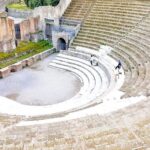
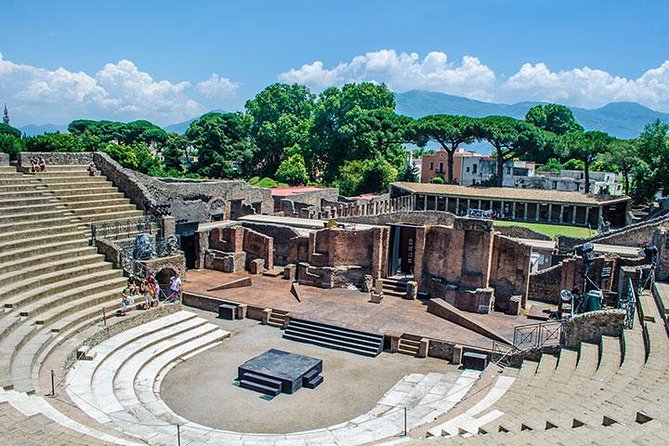
- Small Theater (Odeion)
- Great Theater
- Temple of Isis
- Triangular Forum
- Doric Temple
There’s also an important practical note: for people with limited mobility, the guidance is to enter from Piazza Anfiteatro and limit the visit to the surroundings of the Amphitheater. Even if you don’t have mobility limitations, this is a useful reminder that this area can be easier to structure as a shorter loop.
Why this circuit is powerful: you see how Pompeii staged community life. Theatres and amphitheaters weren’t background entertainment. They were part of the city’s social rhythm, and the ruins make that tangible.
Time risk: theatres and temples pull you in. If you’re only doing the “2 to 3 hours” version, you may need to choose between theater time and the Forum/Lupanare highlights rather than trying to tick everything.



The Highlights You’ll Want to See: Forum, Theatre, Lupanare, and Victim Casts
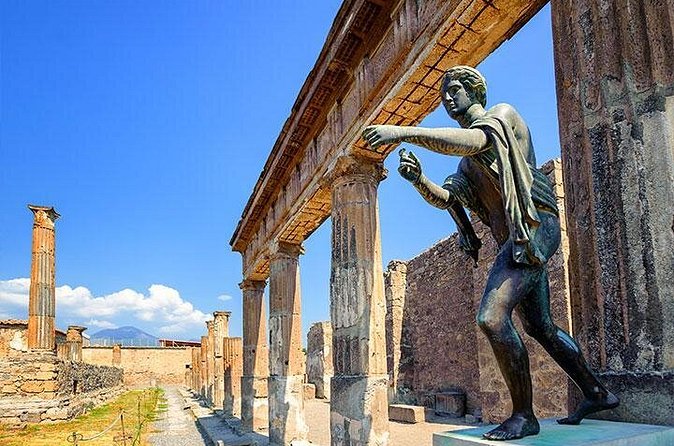
Pompeii’s most requested sights are popular for a reason, and the ticket experience specifically calls out key highlights:
- The Forum, the civic heart of the city
- The Theatre, a central entertainment and public space
- The Lupanare (also noted as a two-story brothel), where the walls are still adorned with erotic frescoes
The Lupanare can be uncomfortable for some visitors, but it’s historically significant. It’s also one of the clearest examples of how private and public life overlapped in the city. If you go, look respectfully and keep moving; don’t linger in a way that blocks others.
Another standout mentioned in the experience overview: you can view the casts of the victims’ bodies. This is one of Pompeii’s most sobering elements. It doesn’t read like a textbook. It hits like a real human loss preserved by the ash.
Practical tip for pacing: aim to see these major anchors earlier in your entry window. The site is exposed, and fatigue makes it harder to appreciate the details.
Maps, Rules, and the Stuff That Changes Your Day
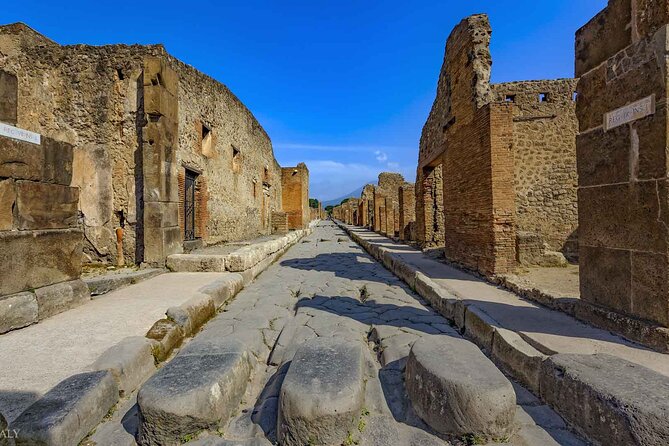
This ticket includes the core essentials, but Pompeii rewards good planning. The experience notes that you can pick up a complimentary map inside the gate for recommended routes, and a site route map is available at the entrance.
Here’s what I’d do to get smooth momentum:
- Before you move far, pause and orient yourself using the route map.
- Pick your main cluster (Forum + Theatre + Lupanare, or an amphitheater circuit, or a civic/house leg).
- Don’t wander randomly from the start. Pompeii is huge, and good signage can vary by entrance area.
A few on-site rules you should know ahead of time:
- Leave bags, backpacks, umbrellas, and other bulky items at the wardrobe.
- Don’t climb on walls or stop right on the edges of excavations.
- Photography and filming is allowed for private use, but the rules get stricter for tripods, flash, artificial light, and commercial use. For those cases, you’d need to contact the Office of the Superintendent.
- No smoking.
- Keep noise down and respect the site: no shouting, no writing on walls, and dispose of waste properly.
Two safety notes from the experience details:
- There may be stray dogs near the perimeter. Stay away from them and watch your steps.
- The site recommends flat-soled shoes and suggests moderate physical fitness.
One more practical consideration: the entry flow is meant to be smooth with guaranteed long-line skipping. Still, I’d plan for the possibility that you might need extra help at the gate if your ticket details aren’t immediately scannable. If you want a stress-free visit, arrive with time buffer around your entrance window.
Price and Value: Is $54.44 a Smart Pompeii Move?
At $54.44 per person, this ticket isn’t “cheap,” but it’s not priced like a full guided tour either. You’re paying mainly for timed entry and the promise of skipping long lines, plus the fact that you’re set up to enter and explore independently.
Value is highest if:
- You have limited time and want a scheduled start.
- You don’t want to spend your day negotiating entry lines.
- You like self-guided wandering with a map and a clear shortlist of highlights.
Value is weaker if:
- You expect a guided narrative. This does not include a guided tour.
- You end up spending lots of extra time at the gate exchanging or clarifying voucher details. (That can erase the value of “skip the line.”)
- You truly need a structured plan and commentary. In that case, you might be happier paying for guidance rather than playing map roulette.
A note on guides: since the entry ticket is self-guided, you might still decide to hire a guide on-site if you want more explanation. The experience info doesn’t bundle a guide, and some visitors find on-site guiding can be cost-effective.
Who This Ticket Fits Best (and Who Might Want Something Else)
This is a good fit if you:
- Want to explore at your own pace.
- Prefer choosing what to spend time on: Forum, theatres, baths, houses, or the brothel Lupanare.
- Can handle walking over uneven stone and want a moderate-physical-effort outing.
- Like using your own navigation style with the help of maps inside the gate.
It may be less ideal if you:
- Need step-by-step guidance to avoid getting overwhelmed. Pompeii can swallow a plan fast.
- Want a “learn every detail” experience. Without a guided tour, the depth depends on what you bring—your curiosity, a phone map, or any audio guide you use on your own.
- Are expecting entry to be effortless in every circumstance. If your ticket needs extra attention at the gate, you’ll lose time that could go into the ruins.
Should You Book This Pompeii Ticket?
Yes, book it if you’re planning a straightforward Pompeii visit with independence. The combination of timed entry, on-site route mapping, and the big named highlights (Forum, Theatre, Lupanare) gives you a practical way to see a lot without paying for a full guided package.
Skip this ticket only if you clearly want a guided experience with ongoing narration, or if your trip is so tight that even a small gate hiccup would derail the day. Pompeii rewards calm pacing. If you’re ready for that, this ticket is a solid way to get inside and start walking the streets that were buried—and found again—centuries later.