REVIEW · POMPEII
Pompeii Unveiled: 3-Hour Private Tour In-Depth Discovery
Book on Viator →Operated by Visita Con Me · Bookable on Viator
Pompeii moves fast, so pacing matters. This 3-hour private tour keeps you focused on the best stops without the lost-in-a-crowd feeling. I especially like how the route balances big public spaces with quieter house details, and I also like the easy, around-30-minutes-per-stop rhythm that keeps energy up. One thing to watch: the tour info says admission tickets are included for each stop, but it also lists Pompeii site ticket entry as not included, so confirm what you’re actually covered for when you book.
You’ll meet at P.zza Anfiteatro and finish near the Foro di Pompei by Via Villa dei Misteri (close to Porta Marina Inferiore). It’s designed for small groups (up to 8) and is offered in English, with the private-guide format meaning you can ask questions and set the pace for your group.
In This Review
- Key highlights worth your time
- Private Pompeii in 3 hours: what you really get
- Stop 1: Anfiteatro Romano and Pompeii’s entertainment engine
- Stop 2: Palestra Grande and the training-life you can actually picture
- Stop 3: Casa di Ottavio Quartione and a garden that changes the mood
- Stop 4: Pompei Casa dei Ceii and the hunting scene on the back wall
- Stop 5: Stabian Baths (Terme Stabiane) for a human-scale break
- Stop 6: Foro de Pompeya and the Vesuvius view finish
- Price and logistics: is $361.23 per group worth it?
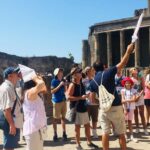
- Guides who make Pompeii feel alive (without turning it into a lecture)
- Who should book this Pompeii Unveiled tour
- Should you book Pompeii Unveiled
- FAQ
- How long is the Pompeii Unveiled private tour?
- What’s the group size for this private Pompeii experience?
- What language is the tour offered in?
- Are admission tickets included?
- Where do we meet and where does the tour end?
- Is the tour near public transportation?
- What’s the cancellation window?
Key highlights worth your time
- Old-school Roman crowd energy at the Anfiteatro Romano, including its scale and how it shaped daily life
- Palestra Grande artifacts and the three display showcases with charred organic remains
- Garden-focused domus visits, including a scenic house (Casa di Ottavio Quartione)
- A colorful smaller house stop with one of Pompeii’s finest hunting scenes
- Stabian Baths as a reset, so the tour feels less like only ruins
- Forum + Vesuvius views as the natural “wrap-up” to Pompeii’s story
Private Pompeii in 3 hours: what you really get
A private tour of Pompeii can be either a sprint or a thoughtful walk. This one is built to stay in the sweet spot: 3 hours total with six stops, each running about 30 minutes. That matters because Pompeii is huge, and even motivated people can get mentally tired fast. Here, the structure helps you keep your bearings and still leave with a clear sense of how the city worked.
The value is in the group experience, not just the sights. At $361.23 per group up to 8, your per-person cost depends on how many people you bring. If you fill the group, it can work out surprisingly reasonable for a private guide. If it’s just two or three of you, the price tilts more toward “special occasion” territory, but you’re paying for the guide’s time and for not wasting your precious hours wandering.
English is the listed language, and the tour is private, so it’s only your group. One more practical note: the tour finishes on the Forum side. That’s great for sightseeing, but if you want to go back to your exact starting point, plan on about 15 extra minutes of walking.
You can also read our reviews of more private tours in Pompeii


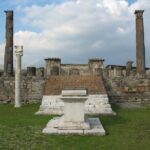
Stop 1: Anfiteatro Romano and Pompeii’s entertainment engine
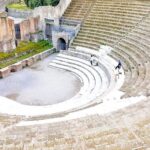
You start at Anfiteatro Romano, described as the oldest Roman amphitheatre known from Roman times. It could hold up to 20,000 spectators, including people not only from Pompeii but also from nearby towns. That’s the first useful context your guide can give you: you’re not just looking at stones. You’re looking at a machine for public life.
What I like about this start is how it sets the tone for the day. Pompeii didn’t just have temples and houses. It had big gatherings where social life happened in plain sight. An amphitheatre also helps you understand why the city’s layout and crowd routes mattered. Even if you’re not into gladiators specifically, the scale tells you something about the culture: people came from outside the city to be part of the show.
The stop is 30 minutes with an admission ticket included for this part of the tour. That’s a good amount of time to orient yourself and then move on without lingering too long before the heat and crowds (Pompeii can do both) start to matter.
Stop 2: Palestra Grande and the training-life you can actually picture
From entertainment, you shift to training life at Palestra Grande, the large gymnasium where ancient Pompeians trained. This is where the tour’s “daily life” approach can really land.
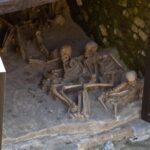
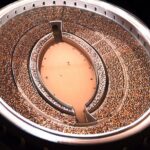
The standout detail here: in the large gymnasium, there are three showcases with charred organic remains found in Pompeian homes. That sounds heavy, and it is. But it also makes the past feel specific. You’re not guessing at what people did all day. You’re seeing physical evidence that helps explain how bodies, routines, and private spaces connected.
A 30-minute focus works well at this stop because the information can be dense. You don’t want to rush through it, but you also don’t want to get stuck. If your group loves questions, this stop is one of the best places to ask them, because your guide can link sport, space, and what survives archaeologically.
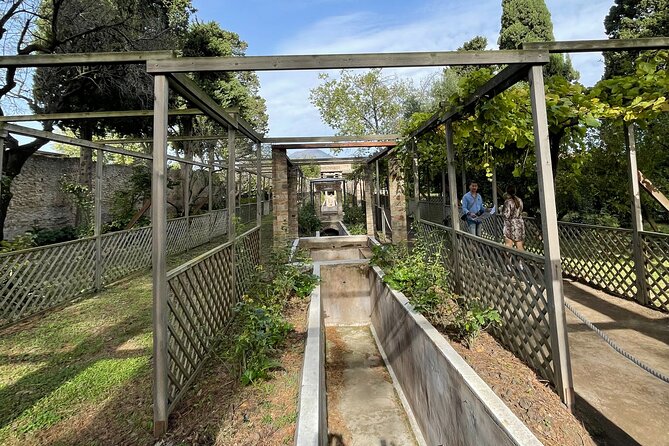
Stop 3: Casa di Ottavio Quartione and a garden that changes the mood
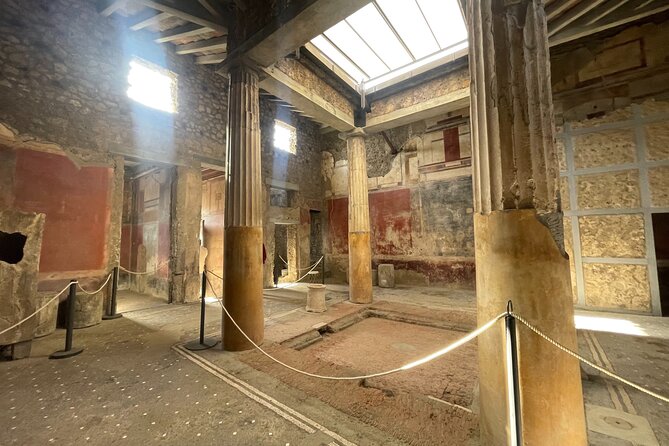
Next comes one of Pompeii’s most scenic houses: Casa di Ottavio Quartione, known for a breathtaking garden. This is a smart mid-tour pivot. After amphitheatre and palestra, the city can feel like public walls and public crowds. A garden house brings you back to daily rhythm: shade, plants, and the idea of home as a lived-in space.
What to look for here: how the house’s layout frames space and light, and how the garden creates a different atmosphere than the forum zones. Pompeii’s private architecture can feel small compared to the big public buildings, but gardens are how you understand comfort and status. Even a short visit helps you see that Pompeii wasn’t only about disaster—it was also about ordinary pleasures.
The stop runs about 30 minutes, with an admission ticket included for this part. That’s enough time to enjoy the space without feeling like you’re doing a checklist.
Stop 4: Pompei Casa dei Ceii and the hunting scene on the back wall
Then you move to Pompei Casa Dei Ceii, described as a smaller but colorful Pompeian domus. The highlight is on the back wall of the garden: one of Pompeii’s finest hunting scenes.
This is a great stop if you like art that tells stories. Hunting scenes are not just decoration. They reflect what people valued—skill, leisure, power, and the idea of control over nature. In Pompeii, paintings and mosaics do more than decorate rooms. They communicate identity.
The drawback to keep in mind: domus visits can feel quick because you’re reading a lot of surfaces in a limited time. If your group wants extra time for close-looking—colors, figures, room-by-room details—this 30-minute slot is probably still fine, but it won’t satisfy someone who wants a slow, museum-style pace.
Still, it fits the tour goal: you get a meaningful private-house contrast without eating your entire 3 hours.
You can also read our reviews of more tours and experiences in Pompeii


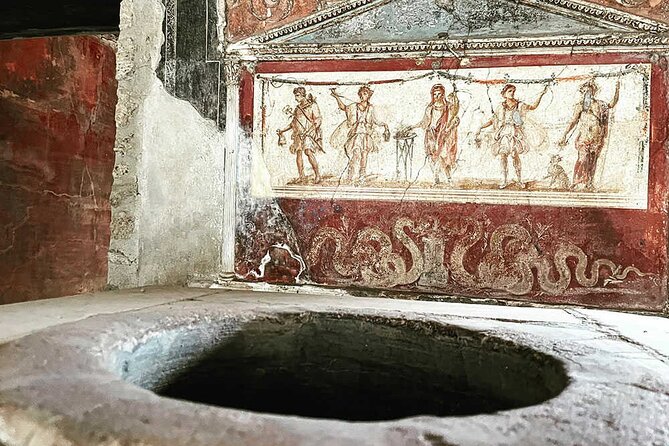
Stop 5: Stabian Baths (Terme Stabiane) for a human-scale break
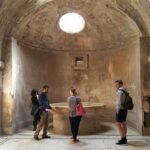
After houses, you head to something much more physical: the Stabian Baths (Terme Stabiane). A dip in the ancient thermal baths is not something you can literally do today, but the idea is the same—this is where the city’s social and bodily routines show up in built form.
I like this stop because it breaks the pattern. You go from rooms and paintings to architecture made for bathing and conversation. Baths in Roman cities weren’t private in the modern sense. They were social infrastructure.
The tour gives about 30 minutes here, with an admission ticket included. That’s enough time to understand the layout conceptually and to appreciate the scale and atmosphere of thermal spaces—without the exhaustion that can come when you stack too many indoor/outdoor ruins back-to-back.
Stop 6: Foro de Pompeya and the Vesuvius view finish
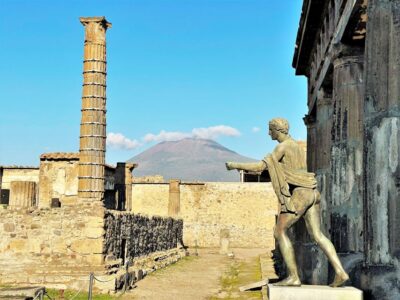
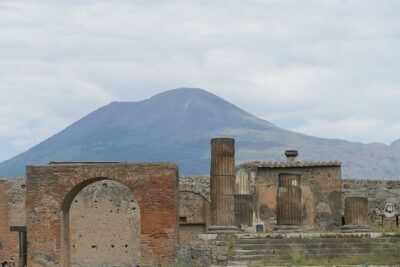
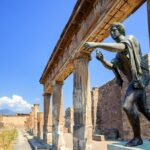
You end at the Forum (Foro de Pompeya), the beating heart of the city. The tour notes that it’s the place where beauty meets crowds, and it also gives you one of Pompeii’s best postcard moments: the view of Vesuvius from here.
Why end here? Because the Forum pulls everything together. It’s where public power, daily movement, and civic identity meet. Earlier stops show you entertainment, training, and private domestic life. The Forum gives you the connective tissue: how people gathered, where decisions happened, and how the city looked when you stood in its center.
The tour ends on the Forum side near Via Villa dei Misteri, with the nearest exit mentioned as Porta Marina Inferiore. If you’re hoping to “walk it off” after, you’ll be in a good spot. If you need to return to your exact meeting area, remember the note about at least 15 minutes of walking back.
Price and logistics: is $361.23 per group worth it?
Let’s talk value in plain terms.
You’re paying $361.23 per group up to 8 for a private guide over 3 hours. If you travel with family or friends and you can fill the group, your per-person cost becomes easier to swallow. If it’s just you and one other person, you’re essentially buying a premium “no-wait, no-guess” experience.
So what are you buying?
- Time saved. You’re not hunting for meaning in every corner. A guide points you to what to notice first.
- Route management. Pompeii crowds can be real. A good private guide helps keep the flow moving and helps reduce the time you spend stuck behind bottlenecks.
- Personal pacing. This format matters for kids, multigenerational groups, and people who like to ask lots of questions.
One important practical check: ticket details. The stop descriptions say admission tickets are included for each listed area, but the “not included” section says Pompeii site entrance ticket isn’t included. That’s the one place I’d be proactive. When you book, ask the provider to confirm exactly which entries are covered so you don’t show up short.
Guides who make Pompeii feel alive (without turning it into a lecture)
The strongest theme in the feedback around this tour is not just that the guide is friendly. It’s that the guide’s approach makes the ruins easier to understand and easier to remember.
Names that show up in the guide conversation include Annarosa and Mariarosa. In the descriptions, these guides are praised for being prepared, explaining with real confidence, and keeping the tour aligned with the group’s interests and rhythm. That last part is practical. Pompeii can be overwhelming if the tour reads like a textbook. Here, the aim seems to be story + details, with time for questions.
There’s also mention of an academic-style background and being up to date on recent excavations, studies, and theories. You don’t need a PhD to enjoy Pompeii, but you do benefit when a guide knows what new research changes—and what doesn’t. It keeps the tour from sounding recycled.
And if your group includes kids, the tour’s short-stop format helps. The stops are varied enough to keep attention. The guide’s skill is in turning Pompeii into something you can picture, not just something you can photograph.
Who should book this Pompeii Unveiled tour
This tour fits best if you want:
- A first-time Pompeii visit without spending your time figuring out where to go and what matters
- A family-friendly pace across public spaces, baths, and homes
- An art-and-evidence mix (like the hunting scene and the charred organic remains showcases)
- A private experience where you can ask questions and shape the day to your group
It might be less ideal if you want a long, slow, deep-museum day—Pompeii is so large that 3 hours can’t cover everything. This tour is for people who want the best sequence and clear takeaways, not total coverage.
Also, since it ends near the Forum, it helps if you’re comfortable finishing there and continuing your day from that side of Pompeii.
Should you book Pompeii Unveiled
Yes, I’d book it if your goal is a focused, private Pompeii experience that still covers major highlights in a logical order. The mix of the amphitheatre, palestra, house gardens, Stabian Baths, and the Forum is a smart way to understand Pompeii as a living city—public life and private life side by side.
Before you click confirm, do two quick checks:
- Ask the provider to clarify whether Pompeii site entrance tickets are included in your total cost, since the info is slightly conflicting.
- Decide whether ending near the Forum works for your day plan, since you won’t finish back at the exact meeting door.
If those pieces line up, this is the kind of tour that makes Pompeii feel less like an overwhelming ruin field and more like a place you can actually picture.
FAQ
How long is the Pompeii Unveiled private tour?
The tour is about 3 hours.
What’s the group size for this private Pompeii experience?
It’s a private tour, and the pricing is listed per group up to 8 people.
What language is the tour offered in?
It’s offered in English.
Are admission tickets included?
The tour stop details list admission tickets included for each stop, but the overall info also lists ticket entrance to the Pompeii site as not included. To be safe, confirm what’s covered for your booking.
Where do we meet and where does the tour end?
You meet at Pompei – P.zza Anfiteatro. The tour ends near the Foro di Pompei by Via Villa dei Misteri, with the nearest exit listed as Porta Marina Inferiore.
Is the tour near public transportation?
Yes. The tour is listed as being near public transportation.
What’s the cancellation window?
Free cancellation is available up to 24 hours in advance for a full refund.