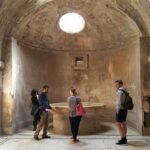
REVIEW · POMPEII
Pompei Archaeological Park Skip The Line ticket With audio Guide
Book on Viator →Operated by QUO VADIS TOUR · Bookable on Viator
Pompeii rewards slow footsteps. This audio-guided, skip-the-line experience is a smart way to see the Pompeii Archaeological Park without losing hours to crowd bottlenecks, and you get to decide how fast (or slow) you move. I particularly like the self-paced format, because it fits how you actually wander a site like this—pausing when something clicks, moving on when you’re done. One trade-off: the experience is built around listening, so you’ll get the most out of it if you’re willing to manage your headset and pay attention instead of treating it like a quick photo stop.
Here’s the good part for planning: you choose a ticket time that matches your schedule, and priority admission helps you get inside smoothly. The one consideration I’d keep in mind is that the park takes time and footwork, so if you try to do everything in the 1–3 hour window, you may end up rushing sections that deserve slower stops.
In This Review
- Key highlights at a glance
- Priority entry at Pompeii: what you’re really paying for
- Via Roma logistics: meeting point vs redemption point
- The audio guide: how it turns ruins into a story
- How a 1–3 hour visit plays out on the ground
- Exploring at your pace: avoiding the crowd crush
- UNESCO World Heritage: why the story matters
- What’s worth your attention while you listen
- Value check: $55.79 for skip-the-line plus audio
- Who this tour suits (and who should think twice)
- Should you book this Pompeii skip-the-line audio tour?
- FAQ
- Where does the experience start?
- Where do I redeem my ticket?
- How long does the Pompeii visit last?
- Is this a private tour?
- Is the audio guide included?
- Can I choose a time that works for my schedule?
- What is the price per person?
- Are service animals allowed?
- Can I cancel and get a full refund?
- Is it near public transportation?
Key highlights at a glance
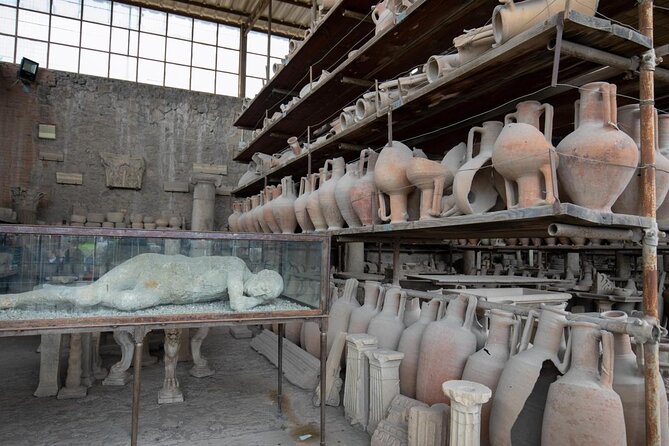
- Skip-the-line priority admission helps you start seeing Pompeii faster
- Audio headset guidance explains daily life and the AD 79 turning point
- Ticketed time slot means you can line it up with the rest of your day
- Private group format keeps the experience quieter and more flexible
- Flexible pacing lets you linger where you care and skip what you don’t
Priority entry at Pompeii: what you’re really paying for
The big reason this option can feel like better value is simple: you’re buying time back. With a standard ticket, you can easily lose momentum waiting to get in. Here, the whole point is that you use skip-the-line access with audio support so your visit starts with less friction and more sightseeing.
At $55.79 per person, it isn’t the cheapest way to enter Pompeii. But you’re not just paying for admission—you’re paying for a guided listening layer plus faster entry. In a place like this, those two things matter because Pompeii is spread out and you don’t want your day carved into waiting-room breaks.
You also have a time advantage that’s useful when your schedule is tight. This is set up around a ticketed time, not a vague “sometime that day” window. That helps you plan things like lunch or the next stop after Pompeii without guessing.
You can also read our reviews of more tours and experiences in Pompeii
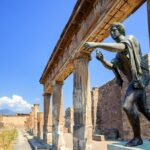


Via Roma logistics: meeting point vs redemption point

Small address mix-ups can become big day-of problems, so I’d take this part seriously. Your tour start point is Via Roma, 32, 80045 Pompei NA, Italy, and the redemption point is listed separately as Via Roma, 123, 80045 Pompei NA, Italy. They’re close, but they’re not the same.
Why this matters: if you show up at the wrong spot, you can lose your time slot and end up solving it on the fly. Before you head out, I recommend you double-check the exact Via Roma number shown in your voucher and bring it up on your phone. Even if you’re familiar with Pompei, this is one of those “tiny detail, big effect” moments.
Good news: the meeting location is described as near public transportation, so you can get there without relying entirely on a car or taxi. And the activity ends back at the meeting point, which keeps the “how do I get home from here?” question easier.
The audio guide: how it turns ruins into a story

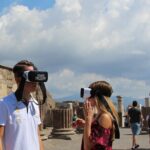
This isn’t a live guide walking you step-by-step. Instead, you get an audio guide setup and a headset so you can move at your own pace. That’s a great fit if you don’t like being rushed, and it’s useful if you want to spend more time in the parts that catch your eye.
The audio content is centered on two themes. First, it explains what day-to-day life was like in the ancient Roman city. Second, it covers the fateful day in AD 79 when the city came to a standstill. Those are the exact kinds of anchor topics that keep a visit from feeling like disconnected streets and walls.
One practical tip: treat the audio as your “on-site compass.” When you pause to read the surroundings, the headset also keeps the context moving. If your headset isn’t working well or you’re not sure how to use it, it can slow you down—so make sure you understand how to start playback right after you enter.
How a 1–3 hour visit plays out on the ground
The stated duration is 1 to 3 hours. That’s a wide range, and it makes sense because how long you’ll take depends on your style.
If you’re the kind of visitor who likes to skim, take key photos, and keep moving, you might fit the highlights into closer to the lower end of the window. If you prefer to stop frequently—read, listen, and look closely—you’ll likely want more time. Either way, the audio format helps because you can pace the listening alongside your walking.
Also, Pompeii’s layout can mean some areas are harder to walk through than others, so plan for tired feet. A site like this tends to punish “comfortable shoes” complacency. If you’re planning to go, I’d wear supportive footwear you’d actually trust for uneven ground and long stretches.
Exploring at your pace: avoiding the crowd crush
This experience is designed to help you avoid large groups. Even when you’re inside a major attraction, fewer people around you means you can hear the audio more clearly and move without constant sidestepping.
Here’s the best way to think about it: the skip-the-line part gets you in faster, but the self-paced part is what makes the time inside feel usable. You’re not stuck in a rigid tour rhythm. You can choose when to listen closely and when to move on.
One more advantage of the private group setup: it’s listed as a private tour/activity where only your group will participate. That usually translates to fewer scheduling headaches and more flexibility in practice—especially if your timing is tight and you don’t want to feel like you’re waiting on a bigger crowd.
You can also read our reviews of more guided tours in Pompeii





UNESCO World Heritage: why the story matters
Pompeii isn’t just visually impressive—it’s meaningful because it preserves a snapshot of life and change. The audio guide’s focus on daily life is what turns the site into something more than sightseeing. Instead of asking only what you’re looking at, you’re also learning how people lived there, what their routine could have looked like, and how the place operated as a functioning community.
Then AD 79 gives the visit its dramatic pivot: the day that brought the city to a standstill. When you combine that narrative arc with the self-paced format, it helps you connect scenes you might otherwise treat as separate stops.
The UNESCO World Heritage framing also signals that this isn’t a minor outing. It’s a major cultural site, and the format you choose should respect that. Priority entry plus audio context is a practical match, because it keeps your attention on the experience rather than on logistics.
What’s worth your attention while you listen
Because you’re moving through Pompeii with audio, the listening part becomes your guide to prioritizing what matters. I’d do this in a simple way:
- Start strong when you first enter, so you understand the setting before you start wandering.
- Pause when a topic feels relevant, especially around the audio’s two anchor areas: daily life and AD 79.
- If you’re short on time, let the audio steer you toward the most important segments rather than trying to build your own route from scratch.
One warning from real-world experience on similar audio setups: the map you rely on needs to work with how the audio segments are organized. If you find yourself turning circles, switch strategy quickly—use the headset as the main ordering tool rather than forcing the map to do the job it wasn’t built for.
Value check: $55.79 for skip-the-line plus audio
Let’s be honest about the price. At $55.79 per person, you’re paying for two extras: priority admission and an audio guide component.
If you were to buy a standard entry ticket and then figure out how to route yourself, you might save money. But you’d also likely spend more time dealing with lines and decision-making. In a high-demand site, decision fatigue is real. Buying priority entry can be the difference between a visit that feels smooth and one that feels like a daily grind.
Is it worth it? It usually is if:
- you want to protect your schedule with a ticketed time,
- you prefer independent pacing over a group march,
- and you like learning in the moment via audio.
It might not be worth it if:
- you already know you’ll spend very little time inside,
- or if you’d rather use your own plan entirely and skip the listening layer.
For most people who want a practical mix of autonomy and context, this strikes a sensible balance.
Who this tour suits (and who should think twice)
This experience fits best if you like control over pace. The self-paced audio style works well for visitors who don’t want a rigid schedule. It also works well if you value understanding what you’re seeing, because the audio is built around daily life and AD 79.
It can also be a good choice if you’re going with a small group and want the private setup rather than being absorbed into a larger crowd.
Who should think twice? If you’re the type who hates any device-based guidance, or if you’re likely to struggle with headset use, you may find the audio less enjoyable than a traditional live guide. The duration is also only 1 to 3 hours, so if you want to slow-travel Pompeii for half a day, you might feel compressed.
That said, most travelers can participate, and service animals are allowed. And being near public transportation can make it easier to fit into a broader Italy itinerary.
Should you book this Pompeii skip-the-line audio tour?
I’d book it if you want a smoother entry, you like the idea of learning through audio, and you’re happy to explore within a focused time window of 1 to 3 hours. The priority access is the practical win, and the audio themes around daily life and AD 79 give your walk a clear narrative backbone.
I’d pause and double-check your plan if you’re worried about logistics, because the start and redemption addresses are different (Via Roma 32 vs Via Roma 123). If you handle that detail upfront, this option is a solid way to see Pompeii without turning your trip into a queue-and-chaos exercise.
FAQ
Where does the experience start?
It starts at Via Roma, 32, 80045 Pompei NA, Italy, and it ends back at the meeting point.
Where do I redeem my ticket?
The ticket redemption point is Via Roma, 123, 80045 Pompei NA, Italy.
How long does the Pompeii visit last?
The duration is approximately 1 to 3 hours.
Is this a private tour?
Yes. It’s listed as a private tour/activity, and only your group will participate.
Is the audio guide included?
Yes. The experience includes an audio guide with priority admission and a headset.
Can I choose a time that works for my schedule?
Yes. You choose a ticketed time suitable for your schedule.
What is the price per person?
The price is listed as $55.79 per person.
Are service animals allowed?
Yes, service animals are allowed.
Can I cancel and get a full refund?
Free cancellation is available. You can cancel up to 24 hours in advance for a full refund.
Is it near public transportation?
Yes, it is described as near public transportation.