REVIEW · POMPEII
Pompei three hours with an expert guide
Book on Viator →Operated by Campaniaguide · Bookable on Viator
Pompeii can feel overwhelming fast, but this tour helps you read it. The 3-hour format is designed for real understanding of what everyday life looked like in a city that was buried by Vesuvius. I like that you get an expert guide walking you through the complex ruins instead of just following rope lines.
Two things I especially like: you get a route that’s practical for time, and you can adjust it to your group’s interests and ages. I also love that the walk includes major high-interest sights such as the Street of Abundance, the Thermopolis, spas, theaters, and the amphitheater, with context that helps the buildings make sense. One possible drawback is the entrance fee to Pompeii is not included, so you’ll want to plan for that extra cost before you go.
You’ll meet at Piazza Esedra in Pompeii and start at 9:30 am, and the tour ends back at the same meeting point. It’s a private activity for your group (up to 7), so you’re not stuck with a large-group pace that leaves you confused. A big plus: guides such as Giovanna and Vincenzo are specifically praised for being detailed and for slowing down when older guests need extra time and maneuvering.
In This Review
- Key highlights at a glance
- What You Get in a 3-Hour Pompeii Tour (and Why It Matters)
- Meeting at Piazza Esedra and Getting Oriented Fast
- Inside Pompeii: Street of Abundance to the Amphitheater
- The Sights That Explain Daily Life Before Vesuvius
- Why the Classic Ruins Plus Newer Finds Works Better
- Private Pace vs Fast Group Tours
- Price and Tickets: Getting Value for $416.34 Per Group
- Who This Pompeii Tour Fits Best
- Should You Book This Pompeii Guided Walk?
- FAQ
- Is the Pompeii entrance fee included?
- How long is the Pompeii tour with an expert guide?
- What time does the tour start, and where do we meet?
- Is this tour private?
- What language is the tour offered in?
- What happens if weather is poor?
- Is there free cancellation?
Key highlights at a glance
- Private, flexible route that matches your group’s ages and interests instead of a fixed scramble
- Expert interpretation to make Pompeii’s layout and buildings click
- Street of Abundance plus big civic stops like the amphitheater (up to 20,000 people)
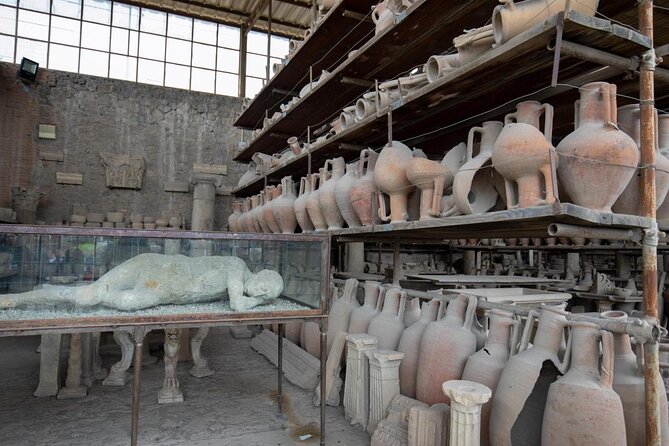
- Everyday-life sights including private homes, villas, baths, theaters, brothel, and the Thermopolis
- Classic vs newer areas with time set aside to reach parts that many tours rush past
What You Get in a 3-Hour Pompeii Tour (and Why It Matters)
Pompeii is huge, but you’re only there for about 3 hours. That’s exactly why a guided route is such a smart way to spend your time. Without help, it’s easy to bounce from one dramatic wall to the next and miss the larger story.
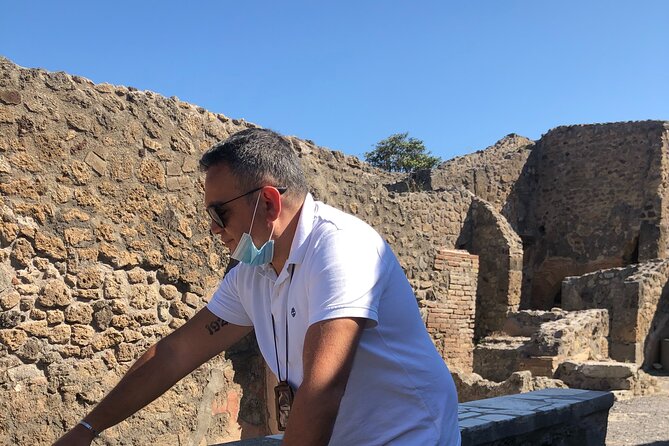
This tour is built around interpretation, not just sightseeing. The guide helps you understand what you’re looking at, where it fits into the city, and why certain places mattered right before the eruption of Vesuvius. I like that the pacing is meant to feel human, not a sprint.
It’s also private for your group of up to 7. That matters because it’s easier to ask questions, pause for photos, and keep the walk comfortable. If your group includes someone who moves slower, the guide can build in time so you don’t feel pressured.
The only real caveat: Pompeii is outdoors and weather matters. If conditions aren’t good, the experience can be rescheduled or refunded, so plan flexibility into your day.
You can also read our reviews of more guided tours in Pompeii


Meeting at Piazza Esedra and Getting Oriented Fast
You start at Piazza Esedra, 80045 Pompei NA, Italy, at 9:30 am. The tour ends back at the same meeting point, which makes it easier if you’re juggling other plans in Naples or along the Amalfi Coast.
The meeting point being near public transportation helps too. In practice, it means you can arrive without turning your morning into a logistics puzzle. Also, because the tour is private, you don’t have to hunt through a sea of strangers trying to match the right “Pompeii tour” sign.
You’ll receive a confirmation at booking, and you use a mobile ticket. That’s a small thing, but it cuts down on morning stress when you’re already dealing with heat, walking shoes, and ticket lines for the site itself.
One more practical note: the admission ticket to Pompeii is not included in the tour price. So, you’ll want to have your entrance sorted separately before you show up. This keeps the whole experience from getting chopped up at the start.
Inside Pompeii: Street of Abundance to the Amphitheater

Your main time is spent inside Pompeii Archaeological Park. The walk is structured around key areas that connect the city’s daily rhythm to the larger public life of ancient Rome.
A signature part of the route is the Street of Abundance, Pompeii’s main road. This isn’t just a scenic lane of ruins. With a good guide, it becomes a way to understand how movement, commerce, and neighborhood life flowed through the city.
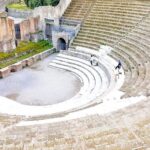
From there, you’ll move toward major public architecture, including the amphitheater. The amphitheater is big enough to hold up to 20,000 people, and the guide helps you translate what that size meant in terms of crowds, events, and civic pride. It’s the kind of place where context changes everything: you stop seeing stones and start picturing the people.
The itinerary also includes a route that moves between the classic parts of Pompeii and areas tied to more recent discoveries. That means you get more than the most predictable “top hits.” It’s still focused, but it adds texture to what the city was like.
The Sights That Explain Daily Life Before Vesuvius
Pompeii isn’t just one monument. It’s a whole city that suddenly stopped, and that’s why it’s so gripping. A tour like this helps you see it as lived-in space rather than an outdoor museum.
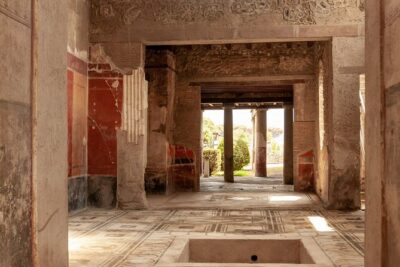
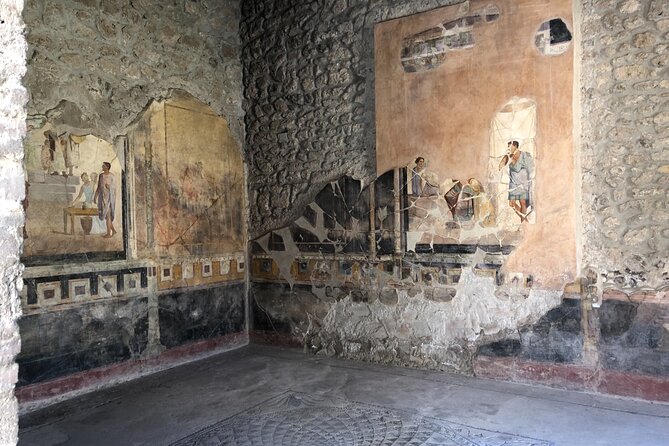
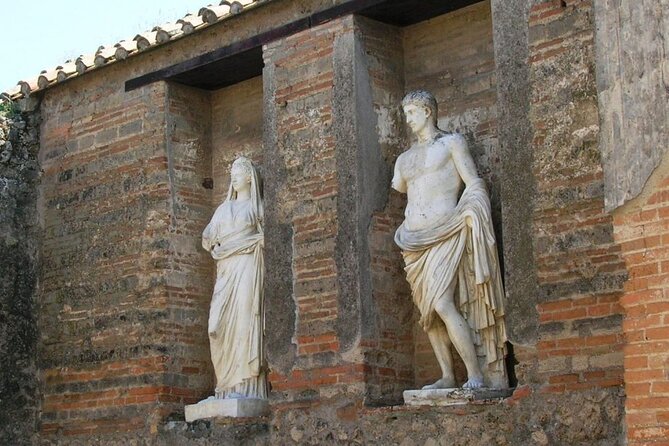
You’re shown private homes and villas, which are often what people imagine when they think of Pompeii. The difference here is the guide’s role: you don’t just look at rooms and walls, you get help interpreting what they were for and how they connected to daily routines.
You’ll also see the two theaters, plus places like the brothel and spas. These aren’t random stops. They widen your view beyond domestic life to entertainment, social culture, and how people spent time in public or semi-public spaces.
One of the most interesting stops is the Thermopolis. Even if you know the name, it’s hard to fully grasp its function without interpretation. The guide makes that part click by placing it in the flow of city life rather than treating it like a standalone ruin.
And yes, baths show up in the mix too. Pompeii’s bathing culture is one of the quickest ways to understand social habits in the Roman world, because it connects routine with architecture. With the guide’s explanations, you can spot patterns instead of just admiring remains.
Why the Classic Ruins Plus Newer Finds Works Better
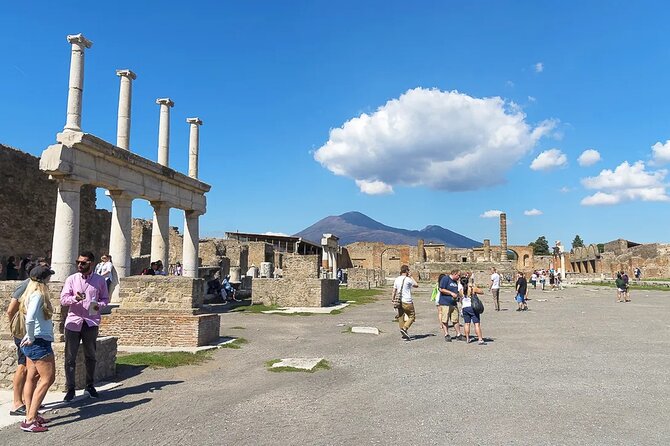
Not every Pompeii itinerary gives equal time to what’s known and what’s been newly uncovered. This tour’s route includes time to move between the classic sections and the newer area that has joined the story over time.
Why does that matter? Because Pompeii is still being interpreted. The best guides help you understand that what you see is part of an evolving picture. That keeps the experience from feeling like a repeat of the same photo spots everyone posts.
It can also make the walk feel less “touristy” in the pacing sense. When you’re not only doing the fastest possible circuit, you can slow down, ask questions, and look longer at details the guide points out. One of the standout things from the experience is that it’s described as time-managed to focus on the important areas without feeling like you’re being rushed.
If you’re the type who likes seeing a range, not just the biggest crowd-pleasers, you’ll probably appreciate this balance. It’s a practical way to get depth in a short visit.
You can also read our reviews of more tours and experiences in Pompeii



Private Pace vs Fast Group Tours
Large-group Pompeii tours often feel like a conveyor belt: walk, point, move on. This tour is designed to avoid that fast and fixed itinerary feeling.
Because it’s private for your group (up to 7), you can tailor the route to match your needs. The tour is explicitly described as customizable for your group’s ages and interests, which is a real quality-of-experience lever. In Pompeii, that flexibility isn’t about “preference,” it’s about staying oriented and enjoying what you’re seeing.
The guides are also praised for being kind and accommodating, especially for older guests. In particular, Giovanna is singled out for handling the needs of guests around 80 and 81, including giving them the time needed to maneuver through the site. That’s the difference between a tour that’s technically “possible” and one that actually feels comfortable.
There’s another advantage: you’ll have a better chance of avoiding the worst crowd pressure. You’ll still be in a popular UNESCO site, but having a guide who knows how to time and route a walk can change how stressful the day feels.
Bottom line: if you want Pompeii to feel like a conversation with the site rather than a race through it, this format is aimed at you.
Price and Tickets: Getting Value for $416.34 Per Group
The price is $416.34 per group, up to 7 people, for about 3 hours with a guide. That can sound high at first glance, but with Pompeii it’s a fair question: what are you paying for?
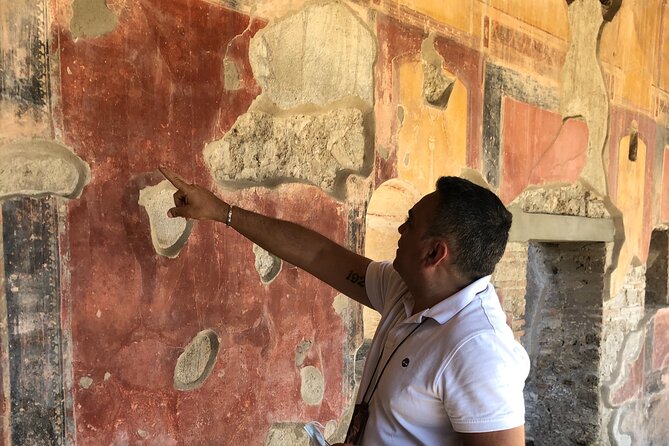
You’re paying for an expert who helps you interpret the ruins instead of watching you speed past them. Pompeii is confusing if you don’t know how to read it. A guide helps you connect the street layout, public spaces, and domestic areas into one story. In practice, that means fewer “I don’t get it” moments.
Also, because it’s per group and private, you can spread the cost across several people. If you’re traveling with family, or you’ve got a small group of friends, it becomes a more reasonable value than you might think. If you’re traveling solo, it’s still a strong option if you care more about meaning than savings.
Just remember the Pompeii entrance fee is not included. That’s not a dealbreaker, but it does change the total cost of your day. If you’re comparing options, compare the full amount: tour price plus entry.
Where this tour tends to score high is in time efficiency. You’re not spending your visit sorting out what to see and what matters. You’re walking a route that targets major sights and ties them together.
Who This Pompeii Tour Fits Best
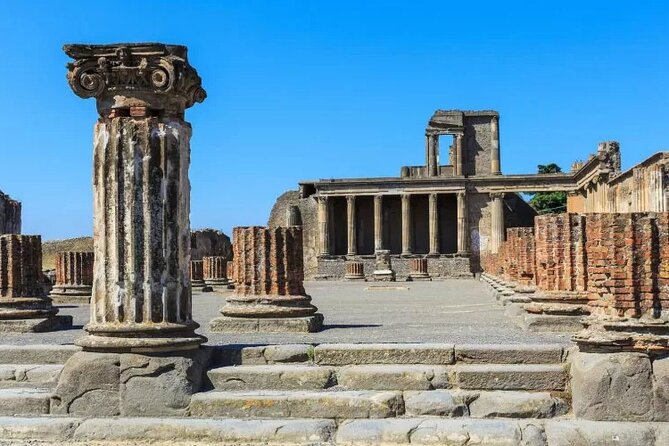
This tour is a good match if you want structure but still want a human pace. It works especially well for groups where ages and walking speeds vary, because the route is described as adjustable for your group’s needs.
It’s also ideal if you care about interpretation. Pompeii can be visually impressive but still hard to understand. An expert guide turns what looks like scattered walls into a city you can mentally navigate.
If you’re the type who likes “top sites,” you’ll get plenty of them: main road walking, theaters, spa/bathing life, brothel, private homes and villas, Thermopolis, and the amphitheater. The difference is that you’re not seeing them like a checklist. The guide’s explanations give you a framework.
On the other hand, if you already have a strong grasp of Pompeii and you’re traveling as a super-fast, independent walker who loves reading museum-style signs alone, you might feel you could do it without a guide. In that case, weigh your priorities: understanding versus cost and time.
Should You Book This Pompeii Guided Walk?
I think this is a strong booking choice if your top goal is to understand Pompeii in a short visit. The private format, the focus on key daily-life and public-life sites, and the ability to customize the route are the ingredients that tend to make Pompeii feel satisfying rather than exhausting.
It’s especially worth it if you want help interpreting the place, not just seeing it. If your group includes older guests or anyone who needs extra time to maneuver, the guide approach here is a major selling point.
Before you book, just make sure you’re ready for two practical realities: you’ll need your Pompeii entrance ticket separately, and good weather matters since it’s an outdoor site. If you plan around those, you’re set up for a Pompeii visit that feels clear, organized, and genuinely enjoyable.
FAQ
Is the Pompeii entrance fee included?
No. Admission to Pompeii is not included in the tour price.
How long is the Pompeii tour with an expert guide?
It lasts about 3 hours.
What time does the tour start, and where do we meet?
The start time is 9:30 am, and the meeting point is Piazza Esedra, 80045 Pompei NA, Italy.
Is this tour private?
Yes. It’s a private tour/activity for your group only (up to 7 people).
What language is the tour offered in?
The tour is offered in English.
What happens if weather is poor?
This experience requires good weather. If it’s canceled due to poor weather, you’ll be offered a different date or a full refund.
Is there free cancellation?
Yes. You can cancel up to 24 hours in advance for a full refund.