REVIEW · POMPEII
Pompeii Exclusive 2h Private Tour with your Archaeologist
Book on Viator →Operated by Grand Tour Experience · Bookable on Viator
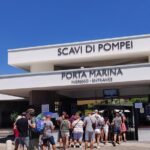
Pompeii gets better when it’s not a race. This 2-hour private tour is paced to your group and led by a professional archaeological guide, with skip-the-line access so you can spend your energy looking, not queuing. The meeting point is at Scavi di Pompei near Porta Marina Superiore, and the tour begins around the Porta Marina area to start you off in the right spot.
I especially like how the guide turns big stone scenery into stories you can actually follow. You’ll see standout entertainment areas like the Great Theatre and the smaller Odeion, plus the shockingly human plaster casts that preserve people as they were during the eruption. I also love the flexibility: the route can be adjusted to match your ages and interests, which makes a huge difference with mixed groups.
One consideration: the skip-the-line benefit doesn’t mean the park ticket is free. Admission is €19.00 per person and isn’t included in the tour price, so budget for that add-on before you commit.
In This Review
- Key points to know before you go
- A 2-Hour Pompeii Tour That Doesn’t Feel Like a Sprint
- Skip-the-Line at Porta Marina: How You Start Without Losing Your Day
- Great Theatre and Odeion: The Stage Where Roman Life Played Out
- Banquets, Plaster Casts, and the People Behind the Ruins
- The Cardo and Via Stabiana: Shops, Snack Stops, and Street Life
- Houses and Everyday Items: When You Can Imagine Dinner
- Main Square, Roman Spa, Plaster Casts, and the Brothels
- Private Guide Value: Why This Works for Families and Friends
- Price and Logistics: What You Pay for the Time Saved
- Should You Book Pompeii Exclusive 2h Private Tour?
- FAQ
- FAQ
- How long is the Pompeii private tour?
- What’s included in the price?
- Is the Pompeii admission ticket included?
- Where do we meet for the tour?
- Is this tour private?
- Can I get a full refund if plans change?
Key points to know before you go
- Skip-the-line entry saves time at Pompeii so you start seeing ruins sooner
- Private pace means you can move slower for kids or older family members
- Archaeologist-led explanations connect art, architecture, and daily life
- Teatro and Odeion give you a clear look at Roman entertainment culture
- Plaster casts and forum sights make the site feel intensely personal
- Choose your start time to fit your day in the Bay of Naples area
A 2-Hour Pompeii Tour That Doesn’t Feel Like a Sprint
Pompeii is the kind of place that punishes bad timing. Too late in the day, you’re stuck in crowds. Too early, you’re still trying to find your bearings. This tour aims to solve that problem by pairing a private guide with skip-the-line entry, then keeping you inside a tight about two-hour window.
That short length is a real perk. You’re still seeing major zones—set pieces like theatres, streets, houses, and the Roman spa complex—but you’re not stuck for an all-day grind that can drain kids or less-mobile visitors. And because the route is custom when needed, you’re not forced to follow a one-size-fits-everyone checklist.
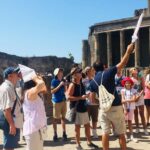
If you’re traveling with mixed ages, this is where the private format pays off. People in your group can ask questions as you go, and the pacing can shift. Guides like Raffaele have been praised for making the experience fun and interactive for a six-year-old, which is exactly the kind of timing you want when you’re trying to keep attention without turning it into a lecture.
You can also read our reviews of more private tours in Pompeii


Skip-the-Line at Porta Marina: How You Start Without Losing Your Day
The tour meets at Scavi di Pompei – Biglietteria Porta Marina Superiore, Via Villa dei Misteri, 2, 80045 Pompei. From there, you get moving toward the entrance area to begin your walk at Porta Marina Inferiore.
Here’s why that matters: Pompeii’s ruins are big, but your time is limited. “Skip-the-line” sounds like a small detail until you’re standing there wondering why you didn’t plan your day differently. With this format, you lose less time to the ticketing bottleneck and more time actually reading what the site shows.
Also, the tour ends back at the meeting point. That’s not just convenient—it helps you plan the rest of your day without guessing how far you’ll be from transit afterward.
Great Theatre and Odeion: The Stage Where Roman Life Played Out
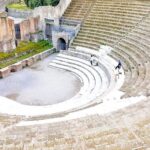
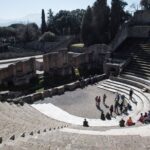
You start with the Great Theatre and also the smaller one called the Odeion. Even if you’re not a “theatre person,” these spots are a gift for understanding how Romans gathered and performed.
A guide helps because the buildings are only half the story. The other half is how space was designed for viewing, seating, and crowd energy. In a private setting, you can ask simple questions like what people did there, why a smaller theatre existed, and how this space fit into everyday city rhythm.
This is one area where a good guide really shows their skill. When people describe guides like Massimo, they talk about how the anecdotes make the two hours fly by. That kind of storytelling is especially useful in places like theatres, where the stone looks familiar from photos but needs context on-site.
Banquets, Plaster Casts, and the People Behind the Ruins
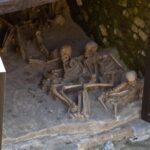
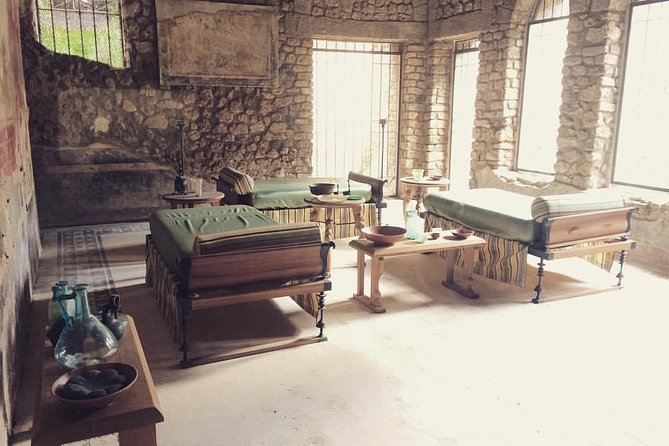
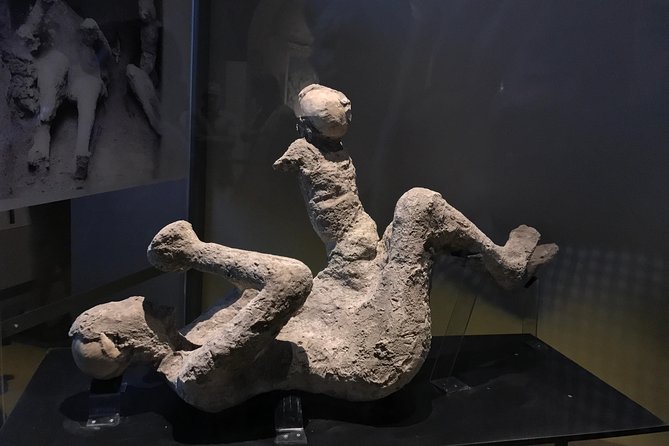
Next comes a set of sights that changes Pompeii from “cool ruins” into something emotionally real. You’ll pass places associated with Roman banquets and see plaster casts of citizens—preserved as they were during the eruption.
Plaster casts can sound like a museum trick until you see them in the place that gave them meaning. Here, they’re not in a glass case separated from the world. They’re tied to the city’s layout and the way rooms and streets were used. A guide’s job is to connect what you’re looking at to what it likely felt like—without turning it into melodrama.
This is also where the private format helps. You can spend an extra minute where something hits you, and you don’t feel rushed by a group that’s marching on schedule. If you’re curious, you can ask why certain spaces held gatherings or how everyday life intersected with public zones.
The Cardo and Via Stabiana: Shops, Snack Stops, and Street Life
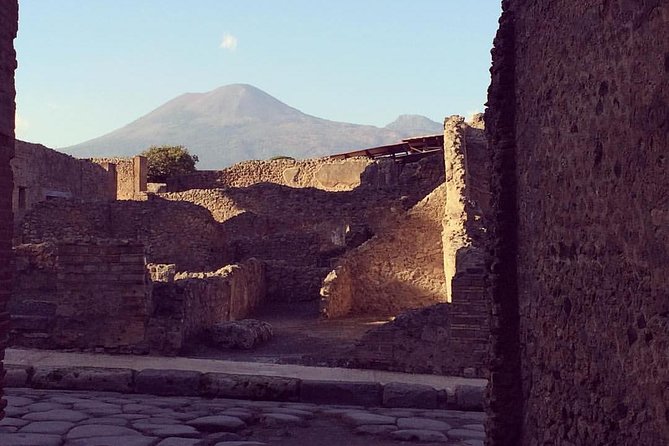
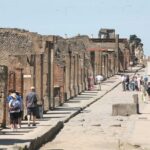
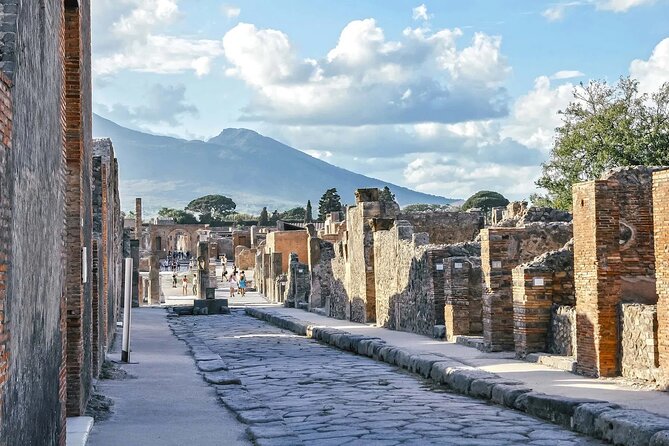
As you reach the roman Cardo / Via Stabiana area, you’ll be walking through a street lined with typical Roman shopfronts. Think tabernae and an ancient-style snack bar vibe—small businesses built into the fabric of the city.
This part is great because it flips your mental model. Pompeii isn’t only temples and grand architecture. It’s also commerce: people buying food, trading goods, and walking past neighbors on their way somewhere else. Seeing a guide connect that street grid to daily routines makes the ruins feel less like a postcard and more like a real city.
If your group includes younger kids, this is a smart zone to keep them engaged. It’s easy to ask questions like what the shop spaces were used for, how movement would work along the street, and why the layout mattered. Guides described as strong with kids—again, Raffaele is an example—are especially useful here, because they can steer attention from “look at walls” to “how the city functioned.”
You can also read our reviews of more tours and experiences in Pompeii



Houses and Everyday Items: When You Can Imagine Dinner
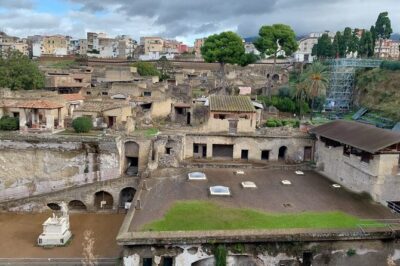
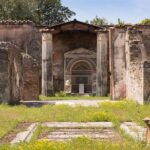
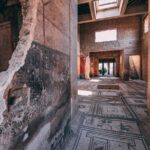
You’ll then explore houses and everyday items that were still close to intact when the city was unearthed. This isn’t just about seeing rooms. It’s about learning how Romans organized domestic life—where people moved, what rooms were for, and how ordinary objects survived.
A private guide helps you look past decorative details and toward the practical side: how a home supported daily routines. You’ll also get a sense of how private and public spaces blended in a city where people were never far from their neighbors.
One caution: houses and interior spaces can be easier to interpret when you have a guide explaining layout and purpose. If your group is mostly self-guided style, you might want to arrive ready to ask questions. In this format, that’s easy to do.
Main Square, Roman Spa, Plaster Casts, and the Brothels
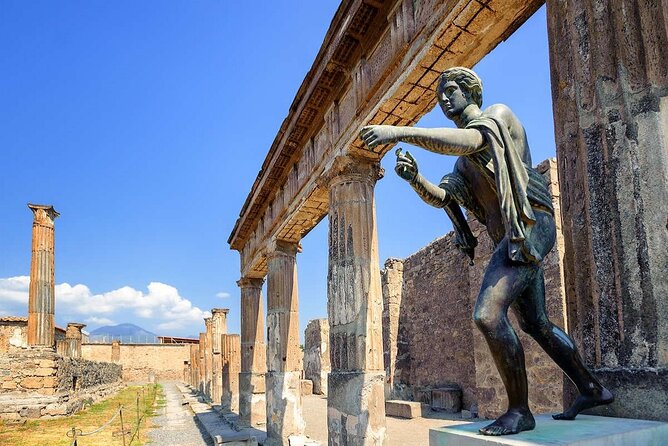
The tour continues with the main square, a thermal bath complex often described as the Roman spa, plaster casts again, and brothels.
That sequence matters. The main square sets the civic tone. The baths show how social and physical life overlapped. Then the plaster casts bring the human story back to the front, and the brothel reference adds a level of realism about how the city worked beyond polite postcard images.
A good guide makes the tone appropriate. You get facts and context without the tour turning awkward or sensational. In one example of how this can play out, people have highlighted guides like Maria for thoughtful pacing—meeting early and keeping the experience calm and clear. If you start at a time that fits your energy level, this portion can feel deeply readable rather than overwhelming.
Private Guide Value: Why This Works for Families and Friends
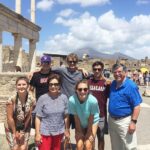
This tour is built for groups that want more control. It’s a private tour where only your group participates, up to 10 people. That size is small enough to keep conversations going, but big enough to be practical if you’re traveling with friends, grandparents, and kids together.
If you’re visiting with a child, this can be one of the best ways to do Pompeii without losing them to boredom. A guide can adjust the pace and make explanations interactive. The goal is not to water down the site. It’s to bring the site closer to their brain.
If you’re a group of adults, you’ll still benefit because you can ask for specifics—how spaces were used, what you’re seeing in terms of design, and what the key features meant in daily life. The private route is especially helpful when you want to move from one major zone to another without wasting time.
Price and Logistics: What You Pay for the Time Saved
The price is $299.82 per group (up to 10) for about 2 hours. That’s not a budget ticket, but it is a time-and-attention purchase.
Here’s the math that matters. The park admission is €19.00 per person and is not included. So the total cost depends on your headcount, and larger groups spread the base fee. If you’re two or four people, you’ll feel the private guide premium more strongly. If you’re a fuller group, the per-person cost gets easier to justify.
I like this arrangement when you have a reason to be efficient: limited time in Pompeii, mixed ages, or a desire to learn instead of just wander. Skip-the-line access is a big part of the value proposition because Pompeii can eat time fast once you add entry and crowd flow into your plan.
Language-wise, the experience is offered in English. If your group needs something else, it’s worth confirming at booking since guides vary by day.
Should You Book Pompeii Exclusive 2h Private Tour?
I’d book this when you want Pompeii with less stress and more meaning. It’s especially smart if you’re going with kids, older relatives, or a mixed-interest group where different people want different things from the ruins.
You should also book it if you care about explanations tied to real features—theatres, street life, houses, the main square, Roman spa areas, and those unforgettable plaster casts. This is the kind of route where a guide’s pacing and context genuinely change what you notice.
Skip it if you’re traveling solo on a strict budget and you don’t mind reading guide signage on your own. In that case, you can still have a great Pompeii day, but you won’t get the same tailored pace or the same fast start.
FAQ
FAQ
How long is the Pompeii private tour?
It lasts about 2 hours.
What’s included in the price?
The tour includes a professional archeological guide and a custom route if needed. Skip-the-line tickets to the Pompeii archaeological park are part of the experience.
Is the Pompeii admission ticket included?
No. Admission is €19.00 per person and is not included.
Where do we meet for the tour?
You meet at Scavi di Pompei – Biglietteria Porta Marina Superiore, Via Villa dei Misteri, 2, 80045 Pompei NA, Italy.
Is this tour private?
Yes. It’s private, and only your group will participate.
Can I get a full refund if plans change?
Yes. You can cancel for a full refund up to 24 hours in advance of the experience’s start time.