REVIEW · POMPEII
2 Hours Private Tour in Pompeii with Archaeologist
Book on Viator →Operated by Napoli e dintorni - Archaeological tour guide · Bookable on Viator
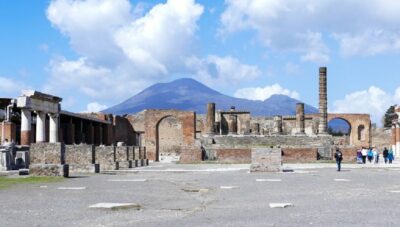
Pompeii clicks when an archaeologist leads. This 2-hour private walk through Pompeii is built around expert interpretation, not just sightseeing. You’ll move through major spaces—public, private, and even the city’s edge—guided by a licensed guide with a specialized archaeology focus.
What I like most is the guidance level. Having Francesco (an archaeologist who works at Pompeii) talk through the site makes everyday life feel real, and he’s good at answering lots of questions, including kid questions, without rushing people. I also love the practical problem-solving: when some in the group didn’t have admission tickets ready, Francesco helped by standing in line for the rest to keep the tour moving.
One thing to consider: two hours is short for Pompeii. Also, entrance fees for the archaeological park are not included, so you’ll want to line up those tickets ahead of time to avoid time loss.
Key points at a glance
- Licensed guide + specialized archaeologist for site-specific explanations
- Private group up to 15 so you’re not shoved into a crowd flow
- Seven targeted stops, from Palestra Grande to Porta Nocera necropolis
- Fresco focus at multiple houses, not just big monuments
- Mobile ticket for easier check-in
- Best for highlights, not for a full day through every street
In This Review
- How This 2-Hour Pompeii Tour Really Feels On the Ground
- Where You Meet and How You Start (So You Don’t Burn Time)
- Stop 1: Palestra Grande, Pompeii’s Gymnasium World
- Stop 2: Anfiteatro Romano, One of the Best-Preserved Amphitheaters
- Stop 3: Praedia di Giulia Felice, a Look at Elite Private Property
- Stop 4: House of Venus in the Shell, Frescoes Up Close
- Stop 5: Casa di Ottavio Quartione and the Outdoor Biclinium
- Stop 6: Orto dei Fuggiaschi, 13 Victims and the Real Stakes of the Eruption
- Stop 7: Necropoli di Porta Nocera, Outside the City Walls
- Licensed Guide vs. Specialist Archaeologist: Why This Format Is Worth It
- Price and Value: $267.46 Per Group Up to 15
- Timing, Weather, and the Realities of Crowds
- Who This Tour Suits Best (And Who Should Pick Something Longer)
- Should You Book This Pompeii Archaeologist Tour?
- FAQ
- How long is the private Pompeii tour?
- How many people are in the private group?
- What is the price for this Pompeii tour?
- What tickets are included, and are entrance fees covered?
- Where do we meet for the tour?
- Do I get a mobile ticket?
- Is the tour dependent on weather?
- Who provides the tour guidance?
- What is the cancellation policy?
- Is the tour accessible for everyone?
How This 2-Hour Pompeii Tour Really Feels On the Ground
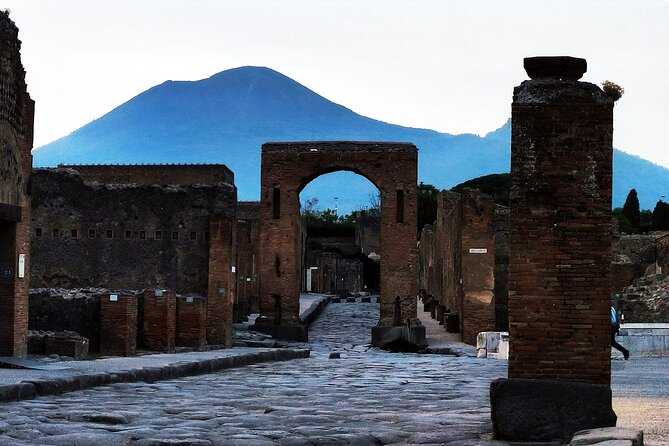
Pompeii is huge. Without a plan, you end up walking in circles with a phone map and a growing sense of, what am I even looking at? This tour solves that with a tight timeline and a real guide on the ground—someone who can explain what you’re seeing and why it mattered.
You get a private experience for your group (up to 15). That matters because Pompeii has crowds, and it’s easy for a big group to fracture. People in the same party were kept together, and questions stayed part of the tour instead of becoming a distraction.
The tour is about main attractions plus the archaeologist’s interpretation. Expect it to feel like a guided story of the city—public life, elite homes, and the darker side of the eruption—rather than a long list of stops.
Where You Meet and How You Start (So You Don’t Burn Time)
You meet at Via Roma, 101, 80045 Pompei NA, Italy. It ends back at the meeting point, so you’re not trying to figure out a second pickup location after walking for two hours.
This tour uses a mobile ticket and you’ll get confirmation at booking. Since the schedule is compact, your best move is to show up early enough to settle your group and make sure everyone has what they need for entry.
The listing also notes the tour may be reduced if you’re late. That’s not just fine print—two hours is the whole point of the format, so don’t gamble with timing.
You can also read our reviews of more private tours in Pompeii


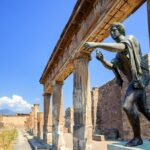
Stop 1: Palestra Grande, Pompeii’s Gymnasium World
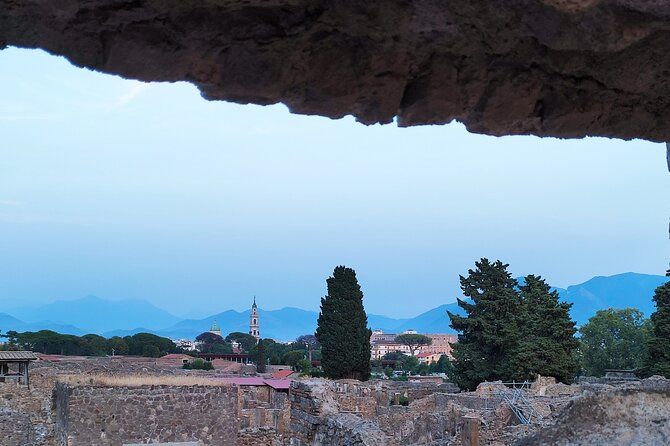
Your first stop is the Palestra Grande, described as the largest gymnasium in Pompeii. It’s the kind of place that helps you understand Roman life beyond temples and streets.
A Roman gymnasium wasn’t just about exercise. It was also about social behavior—who hung out where, how leisure worked, and how public spaces supported daily routines. With an archaeologist guiding you, you’re not only looking at stone remains; you’re getting help reading the site as a functioning environment.
Admission isn’t included for this stop. That means the quality of your experience starts before you even step inside—if your entry tickets are ready, the guide can spend more time explaining and less time dealing with delays.
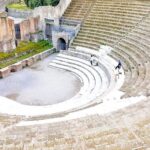
Stop 2: Anfiteatro Romano, One of the Best-Preserved Amphitheaters
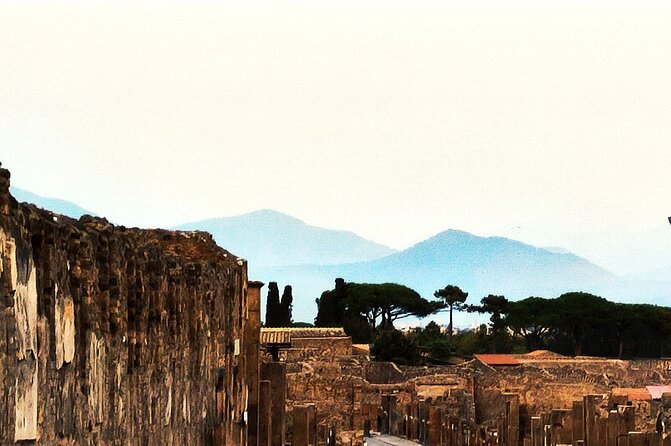
Next comes the Roman Amphitheater, one of the best-preserved buildings of its kind. It’s also noted as one of the oldest in the world, which gives you a sense of scale right away.
Here, the archaeologist angle is useful because amphitheaters can look similar at first glance. The guide helps you interpret what you’re seeing—how the design shaped crowds and how entertainment fit into city life. It’s an easy stop to connect to, because amphitheaters are recognizable even when the details are ancient.
Again, admission tickets are not included. If you’re traveling during peak hours, it’s smart to treat tickets as part of your “tour strategy,” not an afterthought.
Stop 3: Praedia di Giulia Felice, a Look at Elite Private Property

Then you head to Praedia di Giulia Felice, described as one of Pompeii’s largest private houses. This stop shifts the tone from public spectacle to the wealthier end of daily life.
Private estates like this were more than one household sitting in one room. They typically included multiple spaces that served different roles—work, storage, leisure, and social gatherings. With a specialized archaeologist guiding you, you’ll likely focus on how the estate functioned and what remains can still tell us.
One tradeoff of a two-hour tour: you’ll see the high-value highlights, not every corner. But this stop is one of the right ones if you want a quick yet meaningful window into how elite Pompeians lived.
Stop 4: House of Venus in the Shell, Frescoes Up Close
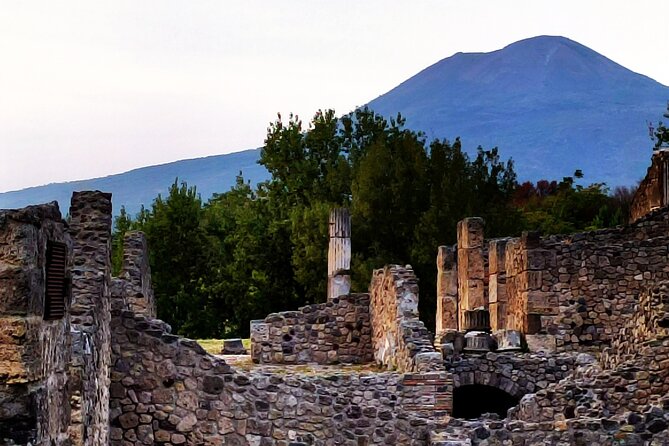
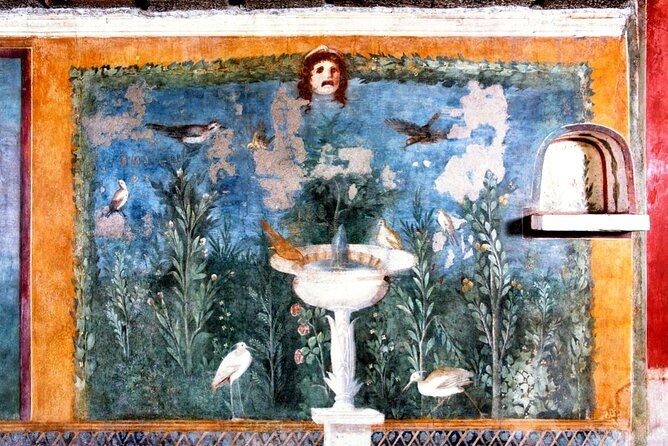
At the House of Venus in the Shell, the focus is explicitly on frescoes. Frescoes can be the difference between Pompeii feeling like ruins and Pompeii feeling like a lived-in place.
This is where the archaeologist background pays off most. Frescoes are visual and emotional, but they’re also physical evidence—what pigments survived, how rooms were arranged, and how decoration signaled identity and status.
Admission isn’t included here either. If you plan ahead and have tickets sorted, the guide can keep momentum and you’ll spend more time learning and less time waiting.
You can also read our reviews of more tours and experiences in Pompeii



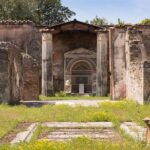
Stop 5: Casa di Ottavio Quartione and the Outdoor Biclinium
Next is Casa di Ottavio Quartione, where you can admire magnificent frescoes plus a splendid outdoor biclinium.
A biclinium is essentially a dining space designed for meals—so even if you’re standing amid archaeological fragments, you’re still getting a clue about routines. Outdoor dining also highlights how the climate and daily rhythm shaped architecture.
This is a good stop for couples, history-minded travelers, and families. If someone in your group likes art, frescoes will hold attention. If someone else prefers daily life details, the dining layout does that job too.
Stop 6: Orto dei Fuggiaschi, 13 Victims and the Real Stakes of the Eruption
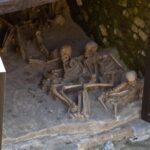
Then the tour moves to Orto dei Fuggiaschi, also described as the place where 13 victims were found at the time of excavation.
This is the stop that turns “ruins” into consequences. It’s not a cheerful section of the city, but it’s central to understanding Pompeii. An archaeologist can talk about what evidence survives and what it suggests—without turning tragedy into a show.
This timing also works in a weird way. After you’ve seen public life and elite spaces, this stop lands harder because you understand what people had been living inside. If your group is sensitive to heavier subject matter, you’ll want to give yourselves a minute to process before moving on.
Stop 7: Necropoli di Porta Nocera, Outside the City Walls
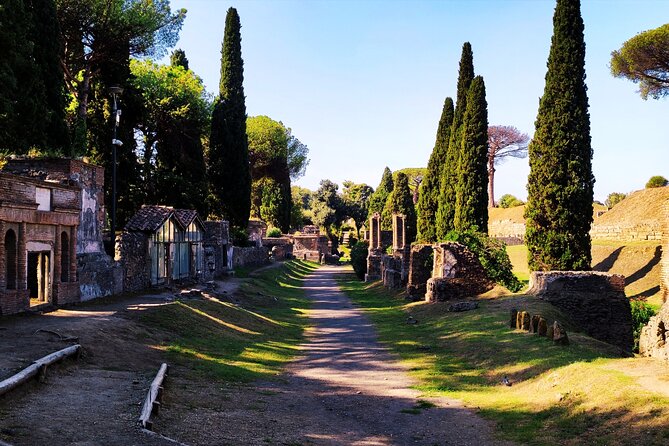
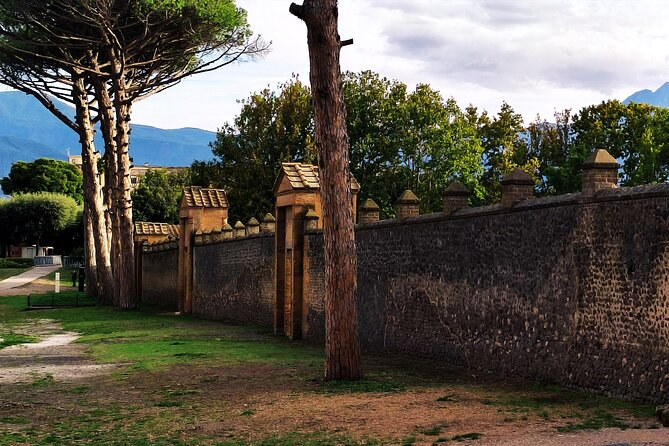
Finally, you cross the city walls to reach Necropoli di Porta Nocera, one of the largest Roman cemetery areas in the city.
Cemeteries can be overlooked when people sprint through Pompeii for the famous rooms. But Porta Nocera is useful because it shows Pompeii as a whole city, including what came before and after life inside the walls.
The necropolis stop is listed as 30 minutes, longer than the other stops. That extra time makes sense: cemeteries reward a slower look. It also gives the group time to ask questions before the tour ends back at the meeting point.
Licensed Guide vs. Specialist Archaeologist: Why This Format Is Worth It
Plenty of Pompeii tours have a guide. This one pairs a licensed tour guide with a specialized archaeological guide. In practice, that usually means you get both the logistics of navigating crowds and the interpretive skill to explain what you’re seeing.
What I like here is the balance. You’re not stuck in long lectures. You’re moving, stopping at meaningful places, and getting real context that helps the site make sense. That’s why people with kids often do well on this format—questions don’t feel like they’re slowing everything down.
It also helps when your group is a mix of ticket readiness. In one of the experiences tied to this tour, Francesco even handled standing in line for people who didn’t have tickets in advance—so the tour kept its rhythm. That’s not glamorous, but it’s the kind of service you feel.
Price and Value: $267.46 Per Group Up to 15
The price is $267.46 per group for up to 15 people. That is the kind of pricing where the value swings depending on your group size.
If you have a group of:
- 2 people, you’re paying roughly $133 per person for a two-hour private specialist tour
- 7 people, you’re paying about $38 per person
- 15 people, you’re paying about $18 per person
Because Pompeii is big and confusing, the “per person” value gets much better as your group fills out. The private archaeologist component is also the product here—this isn’t only about walking with a guide for a couple photos.
Two extra things to keep in mind:
- Entrance fees are not included. You’ll still need the archaeological park tickets (and any site entry that applies to your stops).
- Two hours is a highlight circuit. If you’re the type who wants to linger in every room, you may wish you had more time.
Timing, Weather, and the Realities of Crowds
The tour is about 2 hours (approx.). It also notes the experience requires good weather. If it gets canceled due to poor weather, you’ll be offered a different date or a full refund.
Pompeii crowds are real. A guide matters because you’re not just trying to see things—you’re also trying to get through the bottlenecks quickly enough to stay on schedule. Even with a private group, crowds can slow entry. The archaeologist guidance helps you keep your focus on what’s happening in front of you rather than on how long you’re waiting.
If you’re booking, it’s also listed as being booked on average 46 days in advance. That’s a clue that good times can go fast. If your dates are flexible, you might still find options closer in. If your dates are fixed, book earlier so you get the time you want.
Who This Tour Suits Best (And Who Should Pick Something Longer)
This works especially well if you:
- want Pompeii highlights with archaeologist-level interpretation
- prefer a private format where your group stays together
- have kids or mixed interests and want questions answered without chaos
- want a time-efficient plan for a stop-by-stop understanding of the city
It may not suit you as much if you:
- want to spend lots of time exploring beyond the major highlights
- plan to do extra independent stops all over Pompeii during the same day
- don’t want to manage entry tickets ahead of time (since admission fees are not included)
For most people, a two-hour private tour is a smart “starter dose” if you’re also planning additional time on your own.
Should You Book This Pompeii Archaeologist Tour?
I think this is a strong yes if you want Pompeii to feel understandable fast. You’re paying for more than movement through ruins. You’re paying for interpretation from a specialist—plus a guide who can keep the group together and handle real-world issues like ticket lines.
If you’re on a tight schedule, this format is especially efficient: Palestra Grande, the amphitheater, elite houses with frescoes, Orto dei Fuggiaschi, and Porta Nocera in one compact arc. Just be honest about your expectations: you’ll see major highlights, not every street corner.
If you can bring a positive attitude toward crowds and you’re ready to plan your entrance tickets, this is the kind of Pompeii tour that makes the city stop feeling overwhelming and start feeling human.
FAQ
How long is the private Pompeii tour?
It runs for about 2 hours.
How many people are in the private group?
Your group can be up to 15 people.
What is the price for this Pompeii tour?
The price is $267.46 per group.
What tickets are included, and are entrance fees covered?
The tour includes a licensed guide and assistance, but admission/entrance fees for the archaeological park are not included.
Where do we meet for the tour?
The meeting point is Via Roma, 101, 80045 Pompei NA, Italy.
Do I get a mobile ticket?
Yes, the tour includes a mobile ticket.
Is the tour dependent on weather?
Yes. It requires good weather. If canceled due to poor weather, you’ll be offered a different date or a full refund.
Who provides the tour guidance?
You get a licensed tour guide, with specialized archaeological guidance for the experience.
What is the cancellation policy?
You can cancel for a full refund up to 24 hours in advance. If you cancel less than 24 hours before the start time, the amount paid is not refunded.
Is the tour accessible for everyone?
Most travelers can participate, and service animals are allowed. It’s also near public transportation.