REVIEW · POMPEII
Pompeii & Herculaneum Family Adventure | Guide+Transport+Tickets
Book on Viator →Operated by Leisure Italy · Bookable on Viator
Volcano days can go either way—this one clicks. I love how Herculaneum’s preservation makes the past feel touchable, and I also love the private family guiding that keeps kids curious without slowing adults down. You get a full 8-hour outing built around both the emotional seaside ruins and the big, famous Pompeii highlights, with the added bonus that you’re not hustled up Vesuvius for a view you can get from down low.
The main drawback is simple: you are walking through two major archaeological sites in one day. If your group has very little walking tolerance, plan for breaks, pacing, and sunscreen, because Pompeii especially covers ground fast.
In This Review
- Key takeaways before you go
- A family-proof day between Vesuvius and the shoreline
- Herculaneum: where the city feels preserved, not just excavated
- Parco Acheologico Di Ercolano (2 hours 30 minutes)
- Roman Boat Pavilion and maritime equipment
- Antiquarium: carbonized wood you can almost touch
- Ancient shoreline and the human story of escape by sea
- House of the Deer (seafront villa)
- Exercise courtyard and public training culture
- A restored house with wall paintings and wooden shutters
- The ancient shop with terracotta jars (cucumae)
- Neptune and Amphitrite mosaic panel house
- Women’s section of the public baths
- Cult of the Emperor hall
- Pompeii: the civic center, the markets, and the theater
- Porta Marina and the sense of arrival
- Basilica: contracts and legal life
- Temple of Apollo and the Vesuvius sightline
- Forum: Pompeii’s public heart
- Macellum marketplace: food as a daily anchor
- Forum Baths: relaxation with mosaics and rooms
- Aristocratic home with gardens and mosaics
- House of the Vettii: frescoes and a restored layout
- Pompeii’s lively street: stepping stones and shop signs
- Raised platform: the dollhouse effect
- Main theater: sound, seating, and public entertainment
- Antiquarium: everyday objects that humanize the ruins
- How the guide and skip-the-line tickets change the whole experience
- Price and value: why $738.31 can make sense for families
- What to pack and how to pace an 8-hour ruins day
- Should you book this Pompeii & Herculaneum family tour?
- FAQ
- How long is the Pompeii & Herculaneum family tour?
- Do you get pickup, and where can pickup happen?
- Is this tour private?
- Are entrance tickets included?
- Is a meal included?
- Is bottled water provided?
- What’s the cancellation policy?
Key takeaways before you go
- Herculaneum’s preservation effect: carbonized wood, painted walls, and streets that feel almost intact.
- Private Blue Badge guide in both sites: you get explanations tuned to families, not one-size-fits-all tours.
- Boat Pavilion and harbor storytelling: trade, sea travel, and a port-town feel instead of only ruins.
- Pompeii structure that works with kids: gates, forum spaces, markets, and theaters arranged for flow and variety.
- Skip-the-line tickets + private transport: less waiting, more real time inside.
- Vesuvius from the bottom: strong photo moments without a drive to the top.
A family-proof day between Vesuvius and the shoreline
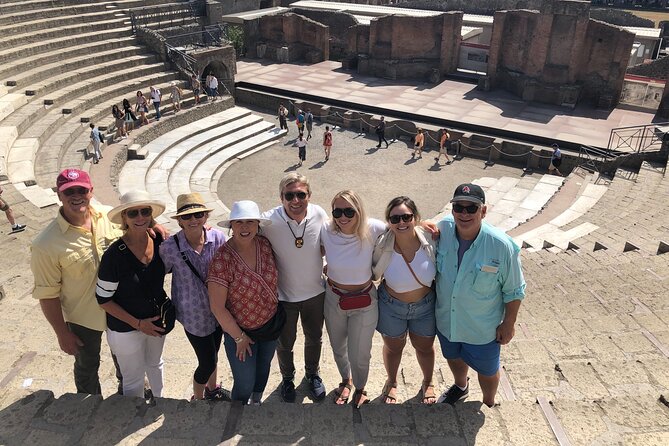
This tour is built for families who want the big names—Pompeii and Herculaneum—but also want the day to feel organized. You start with pickup that can work from Naples, Sorrento, Pompeii, train stations, airports, or even cruise terminals, then travel by private vehicle straight into the ruins. For a family, that matters. It reduces stress and keeps the day from turning into a scavenger hunt.
The overall rhythm is also smart: you begin in Herculaneum (the smaller site), then move to Pompeii (the larger site). That order helps because Herculaneum tends to hit people emotionally right away, especially kids who can grasp stories and objects rather than just scale.
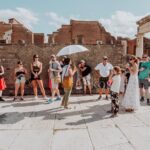
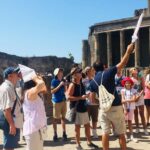
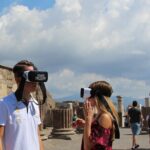
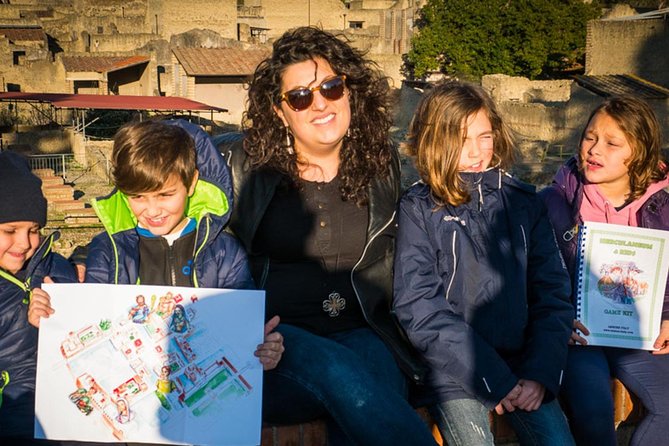
Your guide leads you through both places with family-friendly activities, including booklet-and-map style learning. And yes, the day includes a volcano angle, but with one key point: you’ll see Vesuvius from the bottom and take great pictures from Pompeii and Herculaneum. You are not driving up to the top, which keeps the outing focused on the ruins you came for.
You can also read our reviews of more tours and experiences in Pompeii

Herculaneum: where the city feels preserved, not just excavated
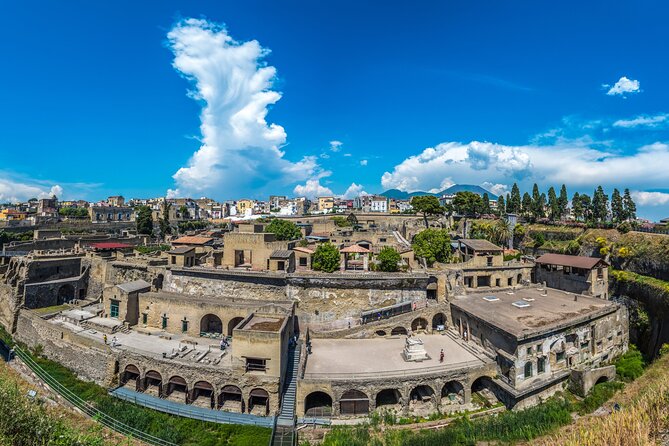
Herculaneum is the reason many families fall in love with this day. Pompeii was buried under ash and pumice, but Herculaneum was hit by a superheated volcanic surge that sealed and carbonized materials in ways archaeology rarely gets. The result is a place where you can picture daily life with eerie clarity—wooden beams, doors, furniture traces, painted walls, mosaics, and everyday objects that survived in conditions that just don’t happen often.
Parco Acheologico Di Ercolano (2 hours 30 minutes)
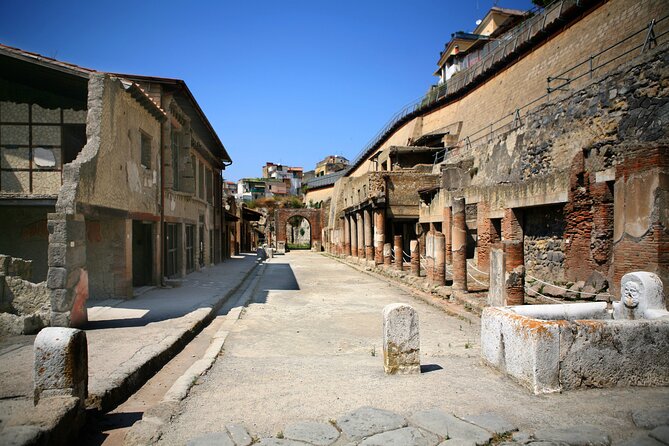
You start here with a guide who helps you understand what you’re seeing as more than scenery. The site is compact, so it’s easier for kids to stay oriented and for adults to keep their bearings. You’ll walk arcades, townhouses, and the old shoreline zone, and your guide will connect spaces to routines—families eating, merchants working, and residents navigating a seaside town at the base of Vesuvius.
A big plus: because it’s less crowded than Pompeii on many days, Herculaneum gives you breathing room. Kids can absorb details without feeling rushed, and adults can enjoy the “how did this look in real life?” feeling.
Roman Boat Pavilion and maritime equipment
Kids usually light up at this stop. You enter the Boat Pavilion area where a Roman vessel and maritime equipment were discovered. It’s not just a ship fact. It’s a chance to picture Herculaneum as a working port: fishermen and sailors preparing to leave, goods moving across the bay, and trade that brought people into the town’s orbit.
For adults, the maritime angle adds meaning fast. Instead of thinking of Herculaneum as a frozen tragedy, you see it as connected to travel and commerce—something alive until 79 AD changed everything.
Antiquarium: carbonized wood you can almost touch
Inside the Antiquarium, you focus on objects that survived in extraordinary condition, including carbonized wood from doors, beams, furniture, and even shelves. This is one of those stops that makes a teacher in your brain shut up and a curious kid in your brain speak first.
You’ll learn why wood can survive when it’s sealed by volcanic material, and why Herculaneum is such a special case for preservation. For families, it’s also a great “science meets stories” moment. You can point at an object and say, this is what actually lived in a household.
You can also read our reviews of more guided tours in Pompeii



Ancient shoreline and the human story of escape by sea
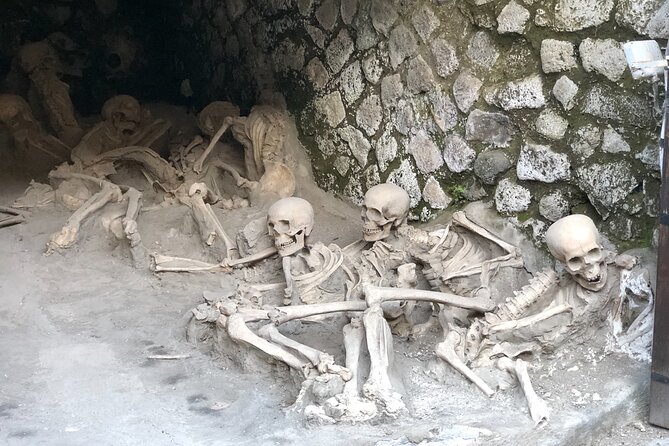
Your guide brings you down to the ancient shoreline so you can understand the geography and how sea level and surroundings changed after the eruption. You’ll hear about the discovery in 1980 of over 300 skeletons found inside boathouses—men, women, and children who sought to escape by sea.
This stop needs a gentle hand, and your guide leads it with sensitivity so families can absorb the human weight at their own pace. For kids, it turns the day from a “wow ruins” activity into a real history lesson that doesn’t feel like it’s yelling at them.
House of the Deer (seafront villa)
The House of the Deer is where luxury and landscape show up together. You’ll see the villa’s reputation for marble sculptures of deer attacked by dogs, plus the idea of terraces and sea views. Kids tend to enjoy the dramatic animal theme. Adults usually appreciate the way Roman leisure culture is built into the architecture.
It’s a reminder that these were not only work spaces. People lived, hosted, and relaxed too—and the town’s wealth showed in the details.
Exercise courtyard and public training culture
Next is the exercise courtyard, used by young citizens for athletic training and social life. Your guide explains how this wasn’t only about sports. It was also where future elites developed discipline and social networks, with porticoes, classrooms, and oversight from teachers.
For families, it’s a surprisingly easy concept to grasp: the ancient version of training plus school plus community. And the scale helps you see pride in education and public life.
A restored house with wall paintings and wooden shutters
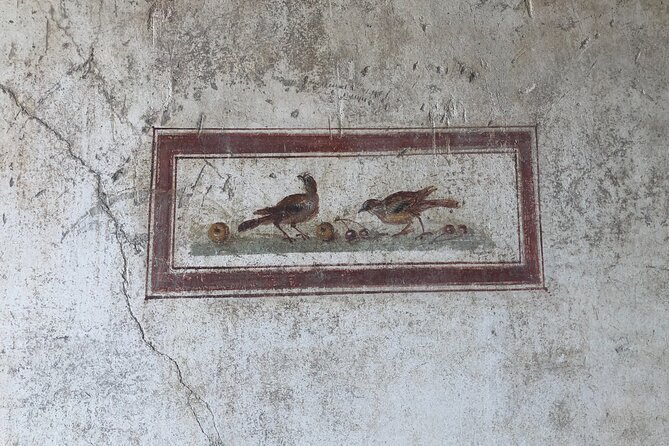
You’ll step into one of the most celebrated residences, reopened after restoration. Here the domestic life pieces click: preserved wall paintings, wooden shutters, and structures spanning multiple levels. Your guide points out how the restoration work lets you experience rooms as if residents stepped away only moments ago.
This is a key stop if you’re wondering whether Pompeii-style “big rooms” are all you’ll get. In Herculaneum, the detail level makes it feel personal.
The ancient shop with terracotta jars (cucumae)
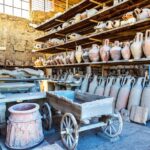
Then comes commerce. You’ll visit an ancient shop recognizable by rows of terracotta jars set into a marble counter. Your guide helps you see how residents bought food and drinks in a way that feels familiar: storage, serving, and shelving that survived the eruption.
If your kids like pretending, this stop gives lots of story fuel. If you’re an adult, it helps you understand daily commerce without getting lost in names and dates.
Neptune and Amphitrite mosaic panel house
This is one of those interiors that can change a whole day. You’ll see a mosaic panel featuring Neptune and Amphitrite, with deep blues and golden glass tesserae. Your guide connects it to dining and social gatherings, so you’re not just looking at an artwork—you’re imagining banquets, status, and guests around a shared table.
For families, bright color and myth scenes can make ancient religion and art feel less intimidating.
Women’s section of the public baths
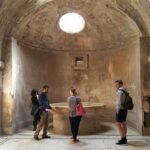
Bathrooms in Roman life were never just bathrooms. In this stop, you’ll explore the women’s section of public baths preserved thanks to the burial conditions. You’ll see benches, painted walls, and wooden shelving, plus changing and warm/hot rooms where steam once filled the space.
Your guide explains baths as hygiene and social time. Kids may compare it to modern routines (and adults will appreciate the way architecture supports daily culture).
Cult of the Emperor hall
You end the Herculaneum run with a richly decorated hall dedicated to the cult of the Emperor, with frescoes showing mythological scenes. Your guide discusses the role of the Augustales, a prestigious local group of freedmen, which gives you a clearer picture of social hierarchy and civic culture.
This can be a thoughtful moment for families. If kids start to fade, I’d treat this as a 10-minute reset rather than a deep reading exercise—your guide helps you pace it.
Pompeii: the civic center, the markets, and the theater
After Herculaneum, you move to Pompeii for the famous sights, but the day is still managed for families. Pompeii is expansive, so your guide uses a route that makes sense: big civic architecture first, then religion and public square life, then marketplaces and everyday street energy. Depending on the day and season, your guide may suggest an afternoon timing when the site can be less crowded, and the plan can adjust for your pace and schedules.
Pompeii’s main trick is scale. If you go without a guide, you can get lost in wow moments that never connect. With a guide, you see Pompeii as a functioning community that processed business, worship, entertainment, and daily errands.
Porta Marina and the sense of arrival
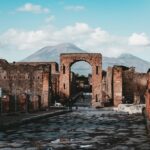
You start at Porta Marina, one of Pompeii’s main gateways. It’s a smart entry point because it frames Pompeii as connected to the port—merchants and sailors coming in, goods moving in, and the city waking up to Mediterranean trade.
Your guide helps you picture the morning of the eruption, which makes the site feel like a place with tempo, not only ruins.
Basilica: contracts and legal life
Next is the Basilica, a key civic building where legal disputes were heard and contracts agreed. Walking among the surviving columns, you’ll see how authority and public business were built into architecture. Even without its roof, it conveys how Pompeii functioned.
For families, this stop can become a story about rules and decisions. It helps kids understand that governments existed beyond speeches—they handled real-life disputes.
Temple of Apollo and the Vesuvius sightline
The Temple of Apollo introduces religion as public identity. Kids often enjoy the idea of ceremonies and spotting statues of Apollo and Diana. Adults learn how religious spaces shaped politics and identity in Roman society.
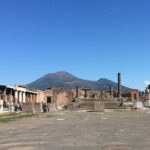
This is also a practical location for a volcano view. From the temple terrace, you can get a clear sightline toward Mt. Vesuvius, tying landscape and history into one frame without any strenuous detour.
Forum: Pompeii’s public heart
Your guide brings you into the Forum as the beating heart of civic life, where business deals, ceremonies, and speeches happened. It’s a great “big picture” stop because everything around the forum supports understanding how Roman cities organized public life.
Kids can imagine vendors, priests, and citizens moving through the space. Adults will appreciate seeing civic layout as a system, not a random collection of buildings.
Macellum marketplace: food as a daily anchor
Then you hit the Macellum, the bustling marketplace for meat, fish, fruit, and imported delicacies. Your guide points out marble counters, storage vessels, and decorative elements that explain what Romans bought and sold.
This is often where families feel the most practical connection. Food is universal, and markets help kids picture everyday routines instead of only dramatic deaths.
Forum Baths: relaxation with mosaics and rooms
You’ll visit the Forum Baths, where Romans came to wash, relax, and socialize. You’ll walk through changing rooms and heated bathing areas, including original mosaics and stucco decorations that survived the eruption.
If your kids are starting to feel museum-tired, baths are a nice break in content because the topic is relatable. It also adds realism: people didn’t only work. They kept up hygiene, chatted, and exercised too.
Aristocratic home with gardens and mosaics
Next is a grand aristocratic home with gardens and intricate mosaics, including the dancing faun bronze statue and a mosaic floor depicting Alexander the Great in battle. You’ll move through courtyards, dining rooms, and private spaces, which helps families understand what wealth looked like day to day.
For adults, it’s a solid lesson in Roman art as status. For kids, it can feel like an art scavenger hunt if you ask them to find the “story scenes.”
House of the Vettii: frescoes and a restored layout
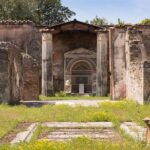
The House of the Vettii is famous for vibrant frescoes and a refined garden courtyard. Kids often like the mythological panels—heroes, gods, and dramatic creatures painted like story scenes. Adults learn about how the Vettii brothers rose to wealth and used art to express culture and standing.
The restored layout helps you see how household life worked between meals, work, and leisure.
Pompeii’s lively street: stepping stones and shop signs
You walk along Pompeii’s liveliest ancient street lined with bakeries, bars, and storefronts. The street fountains, shop counters, and signage make the area feel familiar. Kids can hop across stepping stones and imagine carts rattling over basalt pavement.
Adults get a quick lesson in the “errands and routines” side of city life. This is where Pompeii becomes a living neighborhood in your mind.
Raised platform: the dollhouse effect
From a raised platform, you get a bird’s-eye view of an entire Pompeian city block. Kids love the dollhouse effect: rooms without roofs that make imagining movement through kitchens, workshops, and dining areas much easier. Adults will appreciate how archaeologists interpret spaces to reconstruct daily routines.
This is also where you understand how densely the city was built behind street façades.
Main theater: sound, seating, and public entertainment
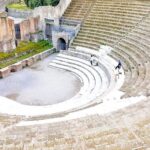
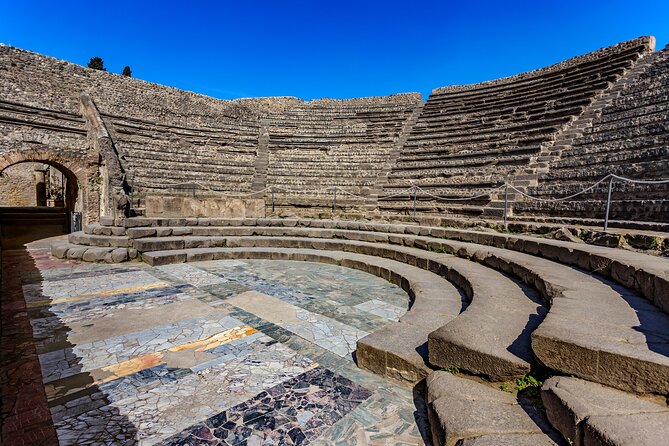
You visit Pompeii’s main theater built directly into the hillside so sound carries. Kids enjoy testing the acoustics from the stage—asking and answering with voices. Adults learn how public entertainment shaped Roman culture.
Sitting on the stone steps makes the moment feel more like an event than a lesson.
Antiquarium: everyday objects that humanize the ruins
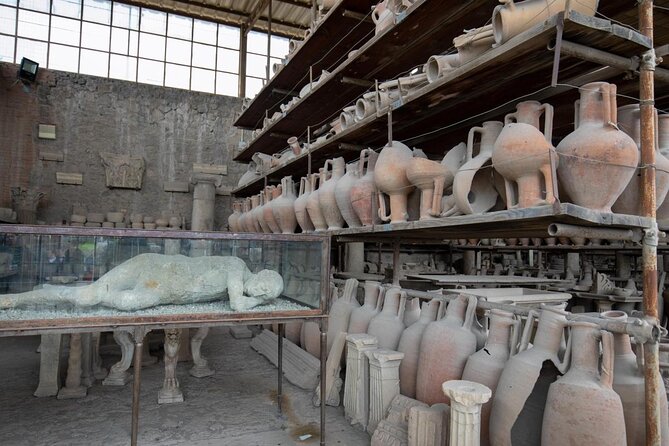
You end at the Antiquarium with real artifacts recovered from excavations: jewelry, coins, tools, and household objects. This is where the day stops being only architecture and becomes personal life. Kids can recognize items they’ve seen in the ruins, and adults get a curated view of ordinary materials tied to real routines.
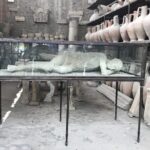
The plaster casts of eruption victims are introduced sensitively, with pacing that gives families room to understand the human side without overwhelming younger kids.
How the guide and skip-the-line tickets change the whole experience
This isn’t just a self-guided walk through famous stone. It’s a private tour with a Blue Badge private guide for both Herculaneum and Pompeii, plus skip-the-line access and family-friendly activities built into the route.
That’s the value for your time. Pompeii can eat hours with lines and confusion. With express access and a guide steering the flow, you spend more time seeing actual things instead of figuring out where to go next.
The private format also matters when you’re with kids. You’re not stuck listening to an adult-focused lecture while children wander. Your guide can keep the story moving and adjust explanations on the spot.
And the personal touch shows in real outcomes. One standout detail from the guide side: Giuseppe D’Angelo is named in a top-rated experience as thoughtful and kind, with help that made the day work smoothly for families.
Price and value: why $738.31 can make sense for families
At $738.31 per person, this is not a budget outing. But it is also not just a ticket to ruins. You’re paying for private vehicle transport, a private guide in both places, and admission tickets with skip-the-line handling. For families, those three pieces often outweigh the ticket price because they reduce friction.
Here’s how I’d think about value:
- If you’d otherwise spend a half-day hunting tickets, buses, and meeting points, the transport + organized entry starts to pay off.
- If your children need story hooks to stay interested, a private guide can turn a struggle into a win.
- If you want both Herculaneum’s preservation and Pompeii’s big highlights in one day, you’re buying someone else’s route-planning.
The “consideration” is that one price covers a group of services, so it can feel steep if your party would rather do a slower, independent visit. If that’s your style, you might prefer flexible self-guided time. If your style is structured and guided, this price usually feels more fair.
Meals are not automatically included, unless you select the Pizza Lunch Option. Also note that bottled water is not included, so plan on carrying a bottle or purchasing once you’re on site.
What to pack and how to pace an 8-hour ruins day
Comfort matters here. You should have a moderate physical fitness level, comfortable walking shoes, and sunscreen. Pompeii in particular can be tiring because it’s large and busy, even with a guide managing the stops.
I’d also plan mentally for a long day of “looking up and walking.” Stone is cool, but the ground is still ground, and the routes between major stops take time.
A practical tip: keep expectations realistic about the volcano. You will see it from the bottom and get photos from Pompeii and Herculaneum, which is great. But if you’re hoping for a full climb or a dramatic summit experience, this tour doesn’t aim there. It’s focused on the eruption story at ground level.
Finally, bring a little flexibility. If your family needs breaks, ask your guide to adjust pace. A private tour is meant to do that.
Should you book this Pompeii & Herculaneum family tour?
Book it if you want a day that’s organized, family-friendly, and built around preservation. Herculaneum is the emotional highlight for many people because it shows wood, walls, and everyday objects with unusual survival. Pompeii then gives you the civic scale—forum life, markets, baths, and theater—so you leave understanding how a city worked, not only how it fell.
Skip it (or switch formats) if your group wants lots of downtime, minimal walking, or an unstructured day. At 8 hours across two major archaeological parks, you’ll be moving.
If you’re traveling with kids and you want the guide to do the hard work of translation—turning mosaics, harbors, and baths into stories you can actually remember—this is a strong choice.
FAQ
How long is the Pompeii & Herculaneum family tour?
The tour runs about 8 hours.
Do you get pickup, and where can pickup happen?
Pickup is flexible and can operate from Naples, Sorrento, Pompeii, hotels, vacation rentals, train stations, airports, and cruise terminals/ports. You specify your pickup place when booking.
Is this tour private?
Yes. It’s a private tour/activity, and only your group participates.
Are entrance tickets included?
Yes. Express skip-the-line tickets for Herculaneum and Pompeii are included.
Is a meal included?
Meals are only included if you choose the Pizza Lunch Option.
Is bottled water provided?
No. Bottled water is not included.
What’s the cancellation policy?
You can cancel up to 24 hours in advance for a full refund.