REVIEW · POMPEII
Private Tour with Official Guide through the wonders of Pompeii.
Book on Viator →Bookable on Viator
Pompeii clicks into place with the right guide. This private walk through Pompeii is built around big-picture landmarks and the tiny details that make a Roman city feel real, led by an official guide who keeps you oriented from the start at Teatro Grande. I like that you move briskly but thoughtfully, with enough context to understand why each stop matters.
I also love the guide style, especially if Paolo is leading: an archaeologist background, clear explanations, and humor that never fights with the ruins. One thing to plan for is cost beyond the tour price: the Pompeii Archaeological Park ticket is not included, so your total budget depends on buying that entry separately.
In This Review
- Key highlights to expect
- How this private Pompeii tour runs (price, time, and meeting point)
- Teatro Grande: start with tragedies and comedies
- Villa time: Casa dei Vettii, Casa del Fauno, Casa degli Amorini Dorati, and Casa del Poeta Tragico
- Casa dei Vettii: frescoes, mosaics, and design details
- Casa del Fauno: one of the oldest villas in Pompeii
- Casa degli Amorini Dorati: the beauty-focused villa stop
- Casa del Poeta Tragico: the famous mosaic house
- Suburban Baths and Terme Stabiane: spa life near the walls
- Suburban Baths: the extraordinary spa near the walls
- Stabian Baths (Terme Stabiane): the largest baths of Pompeii
- Odeon and the Forum: entertainment, singing tradition, and the main square
- Odeon and Teatro Piccolo: a symbol of singing tradition
- Foro de Pompeya: the main square
- Temples of Jupiter and Apollo: religion as the city’s big framework
- Tempio di Giove Capitolino: the temple of the temples
- Temple of Apollo: Apollo as sun god, son of Zeus
- Via dell’Abbondanza and Thermopolium Regio VI: the city’s everyday street life
- Via dell’Abbondanza: the main street
- Thermopolium Regio VI, Insula VIII, 8: a restaurant of the time
- What your guide brings: Paolo’s humor, archaeologist background, and detail spotting
- Price and value: is $102.35 a good deal for Pompeii?
- Tips to make this tour feel great, not rushed
- Should you book this Pompeii guided tour?
- FAQ
- FAQ
- How long is the Pompeii private tour?
- What language is the tour offered in?
- What is the meeting point and start time?
- Is the Pompeii Archaeological Park ticket included?
- What’s included with the tour?
- Is this a private tour?
- Can I cancel for a full refund?
Key highlights to expect
- Official guide in English for a private, question-friendly pace
- A route that balances major sights and everyday city spots from theatre to baths to markets
- Villa stops with art focused on frescoes, mosaics, and architecture
- Time built into the schedule for photos and questions
- Bottled water and a map included, but the park ticket is on you
How this private Pompeii tour runs (price, time, and meeting point)
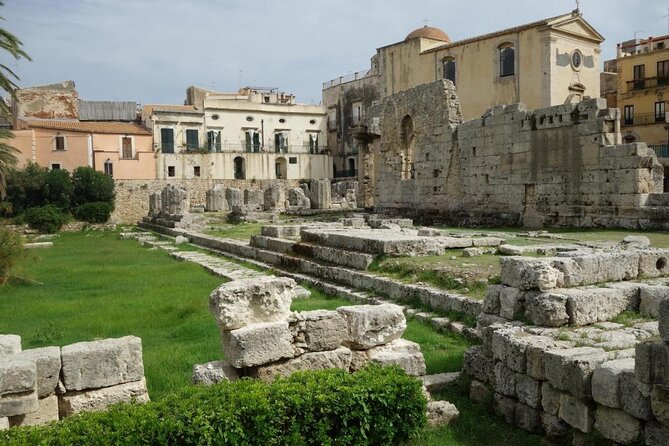
This is a private Pompeii experience, meaning only your group participates. It runs about 2 to 3 hours, and it starts at 12:30 pm at Via Villa dei Misteri, 1, 80045 Pompei (near Pompeii’s city area). You finish back at the same meeting point, which keeps the logistics simple after you’ve been walking in the ancient streets.
You’ll get an official guide, plus a Pompeii map and bottled water. The tour is listed in English, and it uses a mobile ticket, which can be handy if you prefer everything on your phone. Service animals are allowed, and it’s marked as suitable for most travelers.
Now the money part: the tour costs $102.35 per person. That’s paying for your guide, route planning, and the time you gain by not guessing what to look at. What’s not included is the Archaeological Park Pompeii ticket, so add that to your total when you budget.
You can also read our reviews of more guided tours in Pompeii

Teatro Grande: start with tragedies and comedies
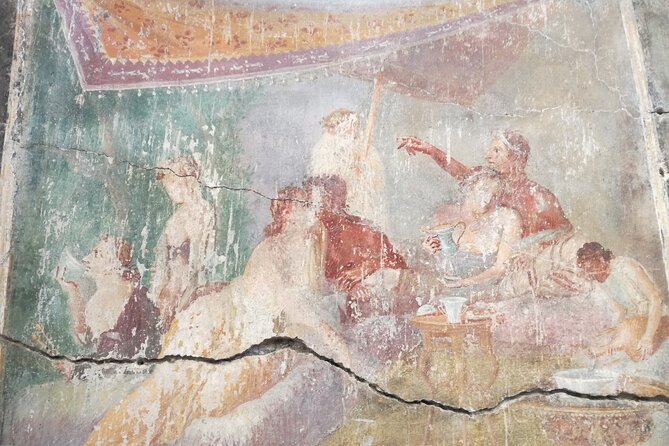
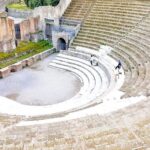
Your first major stop is Teatro Grande, described as the majestic theater for major Greek-Roman tragedies and comedies. It’s a smart way to begin because it sets the rhythm of Pompeii as a place where entertainment was public, communal, and built into city life. Even if you know nothing before you arrive, you can follow the “what this was for” thread right away.
This stop is timed at about 10 minutes, which means you won’t get stuck. You’ll get enough context to notice the scale and understand how theatre shaped gathering and storytelling—then you move on before the route starts to feel like a checklist.
Practical note: because the time is short, come with a couple of priorities in mind. If you’re photo-first, say so early. If you want explanations, ask for them right after the guide sets the scene.
Villa time: Casa dei Vettii, Casa del Fauno, Casa degli Amorini Dorati, and Casa del Poeta Tragico
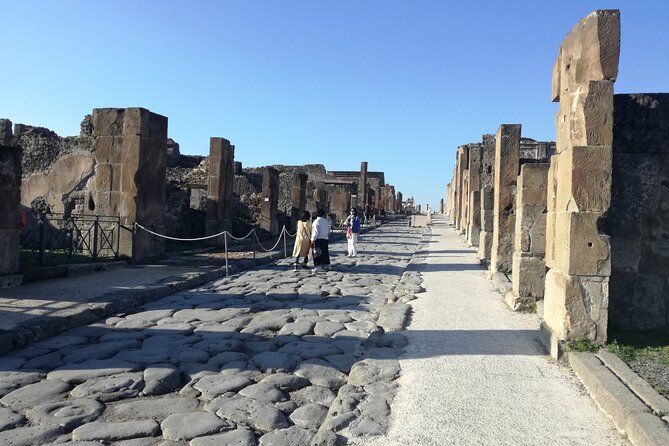
One of the best parts of this tour is the sequence of villas. You’ll see a string of domestic spaces that highlight different artistic and architectural styles—and you’ll have guided time long enough to connect the dots.
Casa dei Vettii: frescoes, mosaics, and design details
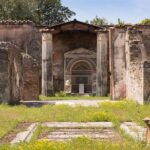
Casa dei Vettii is framed around architecture plus frescoes and mosaics. The value here is that villas can look like “cool rooms” if you’re walking on your own. With a guide, you can learn how to read the visual clues: where the decoration draws attention, and what the design suggests about everyday priorities.
You have about 20 minutes here, which gives you enough time to slow down without dragging the whole tour. If you like art more than big monuments, this is where you’ll likely feel most satisfied.
Casa del Fauno: one of the oldest villas in Pompeii
Next is Casa del Fauno, described as one of the oldest villas in Pompeii. The appeal isn’t just the label—it’s the way older sites help you picture the city changing over time. Your guide’s job is to make that timeline feel understandable, not academic.
This is another 10-minute stop, so treat it as a focused look. Let the guide point out the main elements; then take a breath and re-scan the space with your new context.
You can also read our reviews of more private tours in Pompeii


Casa degli Amorini Dorati: the beauty-focused villa stop
Casa degli Amorini Dorati comes next, and the tour notes it as a beauty that’s hard to put into words. That description matters because it hints at what you should do in the moment: don’t race through. Give your eyes a moment to adjust so you can catch the decoration and overall effect.
You get about 20 minutes, so you can do both: read what the guide explains and still spend time letting the visuals land.
Casa del Poeta Tragico: the famous mosaic house
Finally in the villa stretch is Casa del Poeta Tragico, timed at about 5 minutes. It’s known for the famous mosaic. Even with the short stop, this can be a strong payoff because the mosaic becomes a clear focal point. You’re not expected to study the whole house; you’re meant to understand why that one artwork is such a key part of Pompeii’s story.
This is also a good stop for questions. If you want to know what you’re looking at and what makes the mosaic significant, ask while the guide is still right beside you.
Suburban Baths and Terme Stabiane: spa life near the walls
After the villas, the tour shifts from private home spaces to something communal: bathing. That change is useful. It shows Pompeii isn’t just houses and temples—it has routines, social rhythms, and infrastructure.
Suburban Baths: the extraordinary spa near the walls
You’ll visit Suburban Baths (about 15 minutes), described as an extraordinary spa built near the walls. This phrasing points to an experience you can actually imagine: bathing as part of daily life tied to the city’s structure. With a guide, you can understand how a place like this fits into movement, meeting, and routine.
Because it’s time-boxed, keep your attention on the “why here” idea the guide highlights.
Stabian Baths (Terme Stabiane): the largest baths of Pompeii
Then comes Stabian Baths, also called Terme Stabiane, and the notes call them the largest baths of Pompeii. You get about 20 minutes here, giving you time to take in the overall layout and then zoom in on what your guide points out.
If you like infrastructure—how cities solved everyday needs—this is a great match. If you prefer art or monuments, think of the baths as the practical counterweight to the more decorative stops.
Odeon and the Forum: entertainment, singing tradition, and the main square
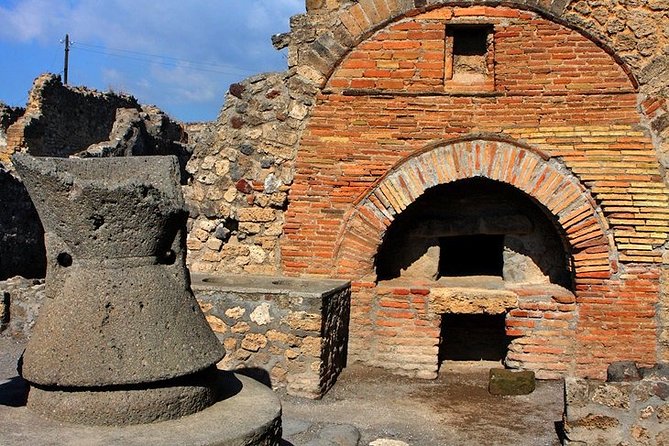
Next up is a blend of culture and civic space: theatre again, plus the city’s main square.
Odeon and Teatro Piccolo: a symbol of singing tradition
Odeon – Teatro Piccolo is described as the theater symbol of the singing tradition, with about 10 minutes on the clock. This stop helps round out the entertainment theme, showing that Pompeii’s performance culture wasn’t only one big theatre.
It’s a quick stop, but it can be memorable if you ask the guide to explain the difference in feel between the venues. Short time doesn’t mean shallow—just focused.
Foro de Pompeya: the main square
Then you reach Foro de Pompeya, the main square, with about 20 minutes. A forum is the place where power, daily movement, and community life tend to intersect. For me, this timing is perfect: you’ve seen enough houses and leisure spots that the square feels like the “how people lived together” anchor.
Use this longer stop to get your bearings. Take a wider look first, then ask where to look for details that might not jump out immediately.
Temples of Jupiter and Apollo: religion as the city’s big framework
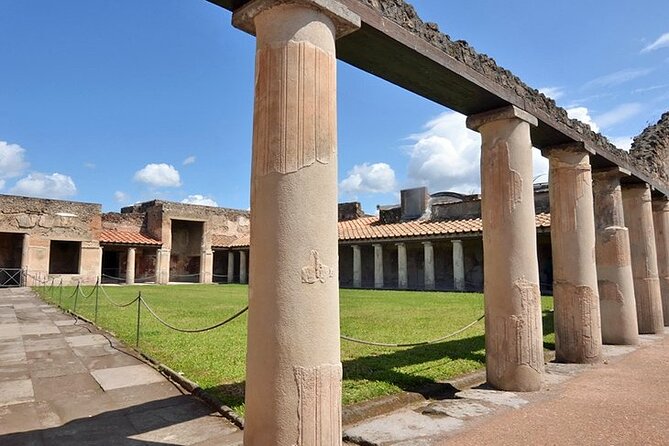
You’ll visit two key religious sites: Tempio di Giove Capitolino and the Temple of Apollo. These stops are short—about 10 minutes each—but they’re important because they give the city its ideological frame.
Tempio di Giove Capitolino: the temple of the temples
Tempio di Giove Capitolino is labeled as the Temple of the temples. That language is a strong cue for what to focus on: scale and the sense that this is a core religious landmark. In a tour like this, the guide’s job is to connect symbols and stories to the physical space you’re standing in.
Temple of Apollo: Apollo as sun god, son of Zeus
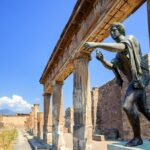
At the Temple of Apollo, the guide points to Apollo as god of the sun and son of Zeus. Even if you don’t know Greek mythology well, you can follow the idea quickly: the city is anchored by gods tied to everyday themes like light and time.
Because the stops are brief, don’t try to “complete the study” yourself. Let the guide supply the key points, then take a quick look and move on.
Via dell’Abbondanza and Thermopolium Regio VI: the city’s everyday street life
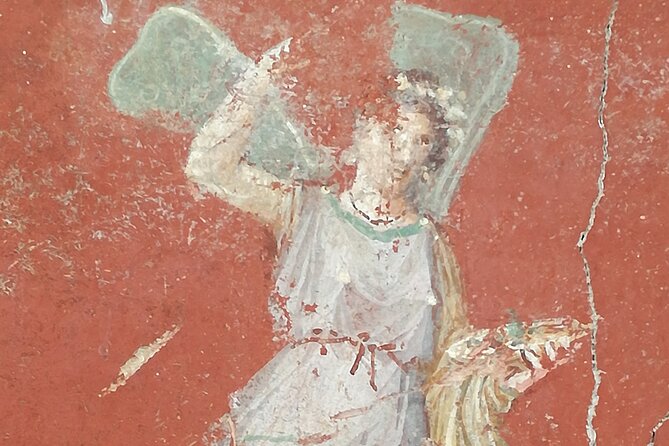
After temples and squares, the route lands on daily life—where people walked and grabbed food.
Via dell’Abbondanza: the main street
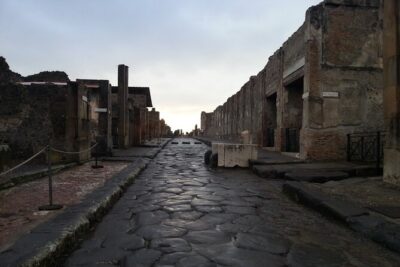
Via dell’Abbondanza is described as the main street, with about 10 minutes. Main streets are great for orientation because they show you movement patterns. Even if you only get a short view, you can start to picture how the city connected entertainment, civic space, and residential areas.
If you like photography, this is often a better area for it than the more detail-heavy indoor-ish spaces.
Thermopolium Regio VI, Insula VIII, 8: a restaurant of the time
Finally, there’s Thermopolium Regio VI, Insula VIII, 8, timed at about 5 minutes, described as one of the restaurants of the time. A stop like this is easy to undervalue when you rush. But food-focused points are where Pompeii feels human fast—because you’re thinking about breaks, snacks, and routine.
In a short window, I’d treat this as a “scene setting” moment: ask the guide what this place tells you about everyday habits, then snap a couple of photos and keep your energy for the walk back.
What your guide brings: Paolo’s humor, archaeologist background, and detail spotting
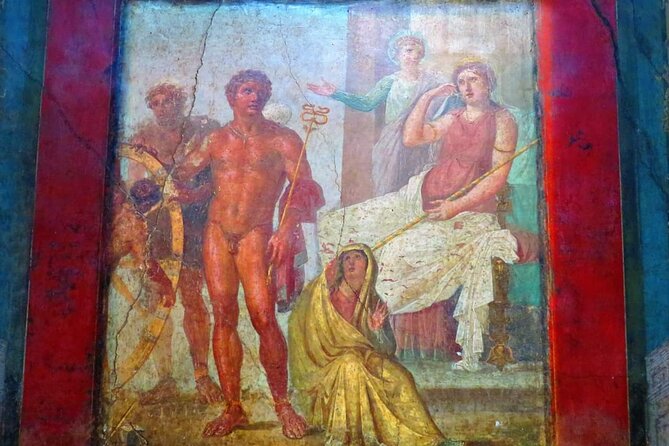
This tour shines because it’s not just a route. The guide adds a layer of interpretation that helps the ruins stop being disconnected objects.
Paolo’s style, for example, is described as brilliant and funny, with just the right amount of humor. He also has an archaeologist background from work connected to excavation efforts, which shows in how he explains what’s been uncovered and why it matters. If you ask questions, he’s described as patient and willing to tailor the tour to what the group wants to see.
Another strong point: the guide helps you notice small details that are easy to miss on self-paced visits. That’s exactly where guided value lives. Pompeii rewards attention, but attention is hard when you’re staring at dozens of stops at once.
And yes, there’s room for photos and questions. You don’t feel like you’re being marched through a checklist.
Price and value: is $102.35 a good deal for Pompeii?
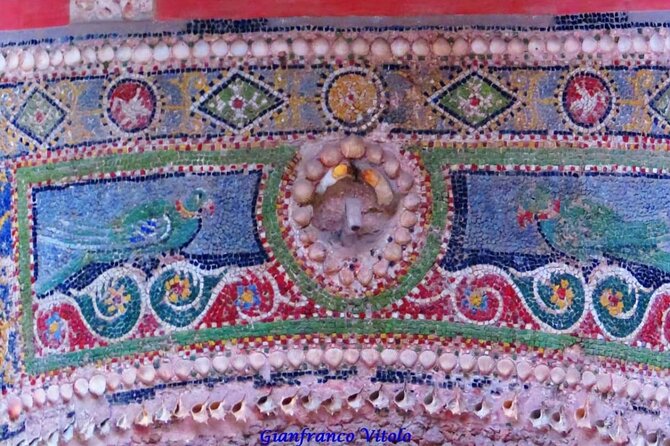
At $102.35 per person, you’re paying for a private official-guided walk with a structured route and a guide who can explain what you’re seeing. You also get bottled water and a Pompeii map included, which is practical on a day that’s mainly walking.
The catch is what’s not included: the Pompeii Archaeological Park ticket. So your total cost is tour price plus entry. If you were planning to buy the ticket anyway, the guide cost can feel more reasonable because you’re converting admission into context and direction.
There are also group discounts listed. If you’re traveling with friends or family, check pricing with your provider so you don’t pay the private premium when you could share it.
Tips, though, are not included. If you like to tip guides, plan for that extra cost.
Tips to make this tour feel great, not rushed
This route is packed with stops that range from about 5 to 20 minutes each. That means the best strategy is to decide what you want from your time: art details, religion, architecture, or everyday life.
A few practical moves that help:
- Bring the Pompeii park ticket so you’re not scrambling at the start.
- Ask your top question early, then follow up at the next stop. The guide can only answer what you ask.
- Take photos in short bursts during each stop, not while the guide is explaining something important.
- If your group wants extra time somewhere, a patient guide can sometimes work around pacing, as long as the overall route stays on track.
This experience is also marked as near public transportation, so if you’re not driving, you can likely plan your arrival without stress.
Should you book this Pompeii guided tour?
If you want Pompeii to feel understandable—where theatres, villas, baths, temples, and streets connect into one living city—this is a strong choice. You’re getting a private format, English guidance, and a route that balances the big monuments with the kinds of details that make the ruins more than scenery.
I’d especially recommend it if:
- you prefer a guide-led pace over wandering alone,
- you care about both art (frescoes and mosaics) and daily-life spots,
- you want someone to point out what to look for in each stop.
If you’re the type who only wants a quick taste and you’re already very confident with Pompeii on your own, you might feel the cost more than the added value. But if you want your time to count, a good guide turns a ticket into real comprehension.
FAQ
FAQ
How long is the Pompeii private tour?
The tour lasts about 2 to 3 hours.
What language is the tour offered in?
It is offered in English.
What is the meeting point and start time?
The tour meets at Via Villa dei Misteri, 1, 80045 Pompei NA, Italy and starts at 12:30 pm. It ends back at the same meeting point.
Is the Pompeii Archaeological Park ticket included?
No. The Archaeological Park Pompeii ticket is not included.
What’s included with the tour?
The tour includes an official tourist guide, a map of the Archaeological Park Pompeii, and bottled water.
Is this a private tour?
Yes. It’s a private tour/activity, so only your group will participate.
Can I cancel for a full refund?
Yes. You can cancel up to 24 hours in advance for a full refund. If you cancel less than 24 hours before the start time, the amount paid is not refunded.