REVIEW · POMPEII
Guided Private Tour in Pompeii
Book on Viator →Operated by Capri Top Tours · Bookable on Viator
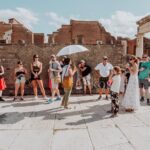
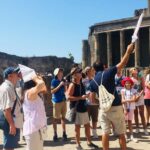
There are few places where 2,000-year-old streets still feel walkable, and this Pompeii tour is built for that. I like the small private group setup (up to 5), and I really like that the guide is an archaeologist who explains daily Roman life as you move from site to site.
The one thing to think about is pacing: it’s a 2.5-hour highlights route with lots of ground to cover, so if you want to linger for an hour in just one house, this format may feel fast.
In This Review
- Key highlights that make this Pompeii tour worth your time
- What this tour feels like on the ground
- Meeting point near Piazza Esedra: start where the city opens up
- Getting into Pompeii fast (and why the entrance choice matters)
- Teatro Grande: theaters, views, and the reality of current access
- Temple areas: Isis and the clues archaeologists use to tell the story
- Termopolio di Vetuzio Placido: Pompeii’s answer to street food
- Stabian Baths: the real Roman spa routine (and how to use it)
- The Piccolo Lupanare: sex trade history, handled with context
- Casa del Fauno: luxury housing and what “wealth” looked like
- Pompeii’s public core: basilica, forum, and temples in one flow
- Macellum market: food commerce, frescoes, and plaster casts
- Price and value for a private group up to 5
- What you’ll like most if you enjoy this style of travel
- Who should skip it (or adjust expectations)
- Should you book this Pompeii private guided tour?
- FAQ
- How long is the Guided Private Tour in Pompeii?
- Is this a private tour or a shared group?
- Where does the tour meet?
- What’s included in the tour price?
- Are Pompeii entry tickets included?
- What do we do at the Stabian Baths?
- Is the Teatro Grande panoramic view always available?
- When does the tour operate during the listed season?
- What is the cancellation policy?
- Is the tour suitable for most travelers?
Key highlights that make this Pompeii tour worth your time
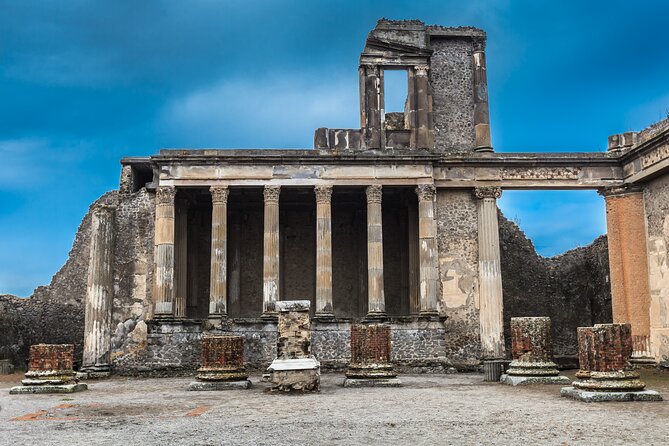
- Archaeologist guide focused on how people lived, not just what got found
- Small private group (up to 5) for questions and a calmer pace
- Skip-the-friction entry strategy via Piazza Esedra and Porta Marina Inferiore
- Hands-on Roman rhythms like a Roman-style bathing ritual at the Stabian Baths
- Food and street-life stops including Termopolio di Vetuzio Placido and the Macellum market
- Major monuments plus everyday corners from the forum to houses like Casa del Fauno
What this tour feels like on the ground
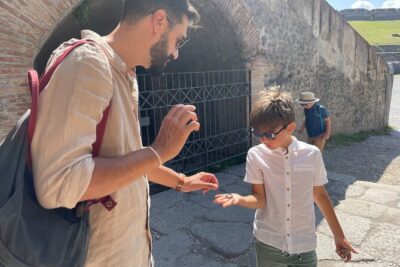
This is Pompeii as a lived-in city, not a checklist. The archaeologist guide leads you along streets and through the big public spaces, then balances that with everyday stuff—baths, snack bars, markets, and homes—so you keep seeing the city as Romans would have experienced it.
You also get a “guided path” advantage. Pompeii is huge, and it’s easy to wander into the wrong area or spend your limited time figuring out what you’re looking at. Here, the route is designed so you hit the standout buildings and get the context fast.
And with a group capped at 5, you’re not stuck waiting for everyone to catch up or for the guide to slow down for a large crowd. That matters in Pompeii, where sightlines and foot traffic can get tight.
You can also read our reviews of more guided tours in Pompeii

Meeting point near Piazza Esedra: start where the city opens up
Your tour meets at Ristorante Suisse, Piazza Esedra, 10/13, 80045 Pompei. It’s a practical starting spot because you’re close to one of the main entry zones used to get into the archaeological park without wasting time.
When you arrive, you’ll want to look for your guide there and get your timing sorted quickly. The tour runs during the park’s daily hours shown for the season listed (9:00 AM to 3:00 PM, Mon–Sun, for 05/28/2025–06/16/2026). If you’re traveling in hotter months, earlier start times can make a difference for comfort.
The big value here is that you begin with a plan. Pompeii rewards people who move with intention.
Getting into Pompeii fast (and why the entrance choice matters)
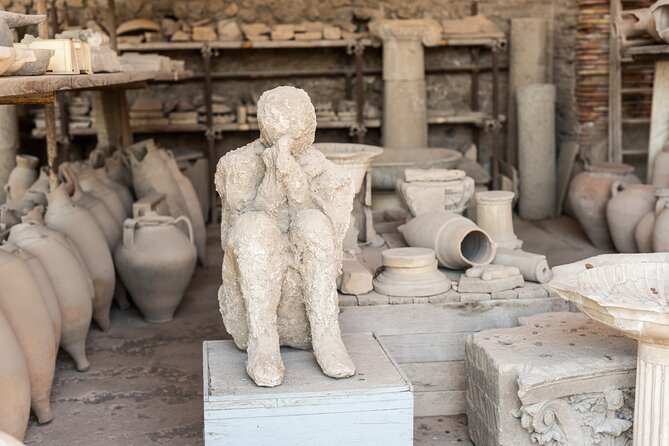
Stop 1 is timed around entrance flow, using Piazza Esedra and Porta Marina Inferiore. That’s the kind of detail that sounds minor until you hit Pompeii in high season. Getting in smoothly means more time for buildings you’ll actually want to photograph and understand.
You’ll also use a mobile ticket, so there’s less fumbling with paper. (Still, you should keep an eye on your phone battery, because Pompeii walks are long and power outlets aren’t your friend.)
Once inside, the guide’s first job is to set the mental map: where the port-related activity sits, how neighborhoods link together, and how public life pulls people into the center.
Teatro Grande: theaters, views, and the reality of current access
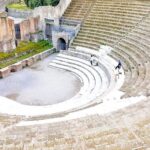
From the early route you’ll head to Teatro Grande, including the area connected to the Little Theater. The tour is designed to give you a sense of where entertainment fit into daily Roman life.
A small heads-up: the panoramic viewpoint connected to this segment is not accessible at the moment. That means your best look might be from where access is allowed, not the prettiest wide-angle photo spot. The good news is you still get the entertainment zone context and the spatial feel of the theaters.
This is a smart stop early in the tour because it helps you understand the city beyond buildings. Pompeii wasn’t just a place to live—it was also a place to watch performances and gather.
Temple areas: Isis and the clues archaeologists use to tell the story
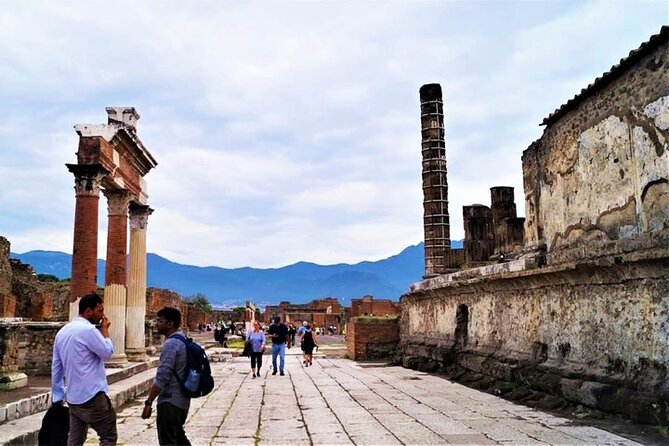
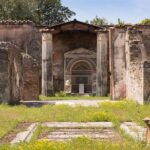
Next comes Tempio di Iside (Temple of Isis), plus a house right in front of the temple. This segment is tied to the way archaeologists uncovered and interpreted key parts of Pompeii, so it’s not just about admiring columns and stonework.
What I like about doing a temple stop like this is that the guide can connect religion to real behavior. You start asking questions like: Who lived nearby? What rituals drew people in? How did sacred space shape street life?
Even if you’re not a religion-history person, temples help you see the city’s priorities. Romans were intensely social, but they were also intensely structured, and sacred spaces were part of that structure.
You can also read our reviews of more private tours in Pompeii


Termopolio di Vetuzio Placido: Pompeii’s answer to street food
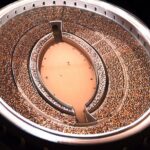
Then you’ll hit Termopolio di Vetuzio Placido, one of Pompeii’s famous quick-food locations. Think of it as Roman fast service with serious style. The standout here is the fresco decoration, which makes the place feel more vivid than plain ruins.
This stop is valuable because it turns Pompeii into something you can taste with your imagination. The tour description also includes Roman-style snacks and freshly baked bread from a local bakery, along with explanations of ingredients and cooking techniques used back then. Even without modern flavors, that kind of context makes you read the food spaces differently.
If you’re the type who likes travel experiences that hit your senses, this is one of the best parts of the route.
Stabian Baths: the real Roman spa routine (and how to use it)
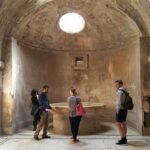
The tour spends about 20 minutes at the Stabian Baths (Terme Stabiane). This is one of the most human-scale stops in Pompeii, because baths weren’t a luxury for only a few people. They were social space, routine, and sometimes even a way to stay safe and healthy in Roman terms.
The guide includes the chance to experience a Roman-style bathing ritual, which is exactly the kind of storytelling you can feel in your body (as much as a ruin tour allows). You’re not just looking at rooms—you’re understanding how a day moved from one temperature zone to another and how people used the facilities.
One practical tip: wear shoes you trust here. Baths floors and uneven stone surfaces can be slippery or simply rough underfoot. If you know you’re prone to sore feet, bring something with a good grip.
The Piccolo Lupanare: sex trade history, handled with context
Next is Piccolo Lupanare, the area tied to Pompeii’s red light district, with a visit to the brothel complex. This is one of those stops that people either want deeply explained or would rather skip. The key is how it’s framed: this tour treats it as a window into Roman society, not just scandal.
You’ll likely notice the physical layout matters—the way rooms connect, how visitors might move through space, and how architecture shaped behavior. A good guide keeps it grounded so it becomes anthropology, not shock value.
If you’re easily uncomfortable with sexual or adult-history topics, decide in advance. You don’t need to force it. Knowing how you feel about this type of stop helps you enjoy the rest.
Casa del Fauno: luxury housing and what “wealth” looked like
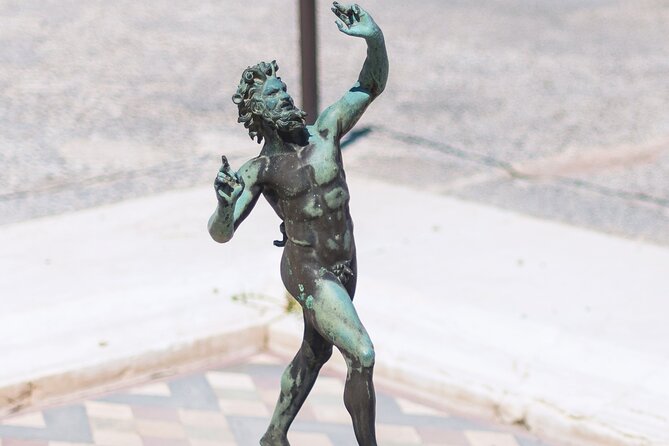
You’ll then visit Casa del Fauno, one of Pompeii’s best-known luxury homes. This is where the tour helps you understand social levels in concrete form: better materials, more decorative surfaces, and a layout that shows how people displayed status.
This is also a moment where the experience leans into atmosphere. The tour description includes a garden of a Roman villa, frescoes on the walls, and a glass of wine while reflecting on your walk through ancient Pompeii. That combination makes the house feel like a place, not just a museum exhibit.
If you’re the kind of traveler who wants your Pompeii to feel personal—like you’re learning how daily life changed by class—this is a major highlight.
Pompeii’s public core: basilica, forum, and temples in one flow
After the homes, the route shifts into governance and public action.
You’ll pass Pompei La Basilica, described as the Roman forum-parliament space with high-style marble decoration. Even if the stone is worn by time, this is still the part of Pompeii that reads like power. It’s where you can picture arguments, paperwork, and civic routines.
Then you’ll get the run of sacred and civic anchors:
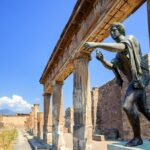
- Temple of Apollo (Apollo’s sanctuary)
- Tempio di Venere (Venus’ sanctuary)
- Tempio di Giove Capitolino (Jupiter’s sanctuary)
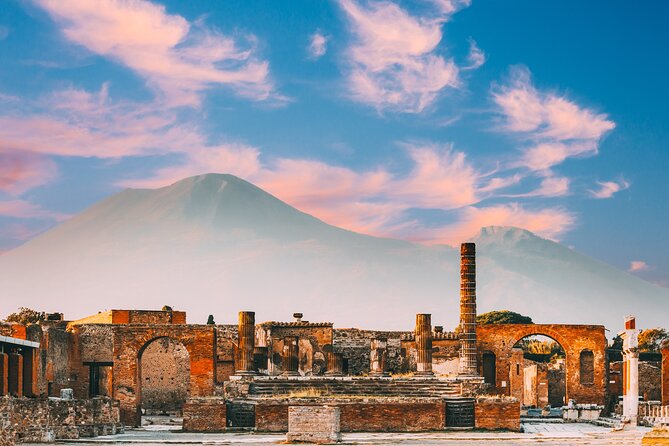
- Foro de Pompeya (the main square, the city heart)
These stops matter because they stitch together what Pompeii was good at: organizing public life. In a short 2.5-hour window, the guide keeps moving so you build a mental map of the city’s center—where people gathered, where speeches happened, and where sacred structures framed politics and culture.
Macellum market: food commerce, frescoes, and plaster casts
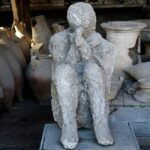
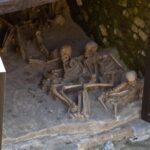
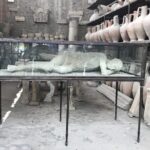
One of the most striking stops is the Macellum, the food market. You’ll spend about 15 minutes here and see high-quality fresco decoration as well as body casts.
This is a powerful segment because markets are where ordinary people met. Even if you’re not planning to memorize Latin, you can understand what mattered: goods, prices, routines, and social browsing.
The body casts bring an emotional reality check. In a tour that’s otherwise full of daily-life storytelling, this moment changes the tone. It’s not meant to turn Pompeii into a horror attraction. It’s meant to remind you that the city’s story was interrupted abruptly.
Price and value for a private group up to 5
The tour price is $326.72 per group (up to 5) for about 2 hours 30 minutes. That can work out well if you’re traveling with 3–5 people who want the same guide and the same route.
Here’s the simple math to use:
- If you fill the group with 5 people, the tour fee is about $65 per person.
- On top of that, the Pompeii Archaeological Park entrance ticket is listed separately at 18 euros per person (free under 18).
- Tips are not included.
So what are you really paying for? Time and interpretation. With an archaeologist guide, you’re not buying extra ruins—you’re buying understanding. And because the tour is private, you’re paying to avoid the typical Pompeii problem: wandering and guessing.
If you’re traveling solo or as a couple, the “per person” value drops. But if you’re the type who hates crowds and wants clean, guided context, it can still be worth it.
What you’ll like most if you enjoy this style of travel
This tour is a good match if you like:
- Places explained through daily life, not just monument facts
- Roman topics like baths, food, and public civic spaces
- A fast-but-thoughtful highlights route that gets you oriented quickly
- A guide who tells stories with enough clarity that you can actually picture the city
It also works well if you have limited time in Pompeii and you want the biggest names without losing the thread of what connects them.
Who should skip it (or adjust expectations)
If you’re hoping for a slow, museum-style pace with long stops in one house, you may prefer a longer tour or a lighter walking route. This one is designed to cover many categories: entertainment, religion, food, baths, housing, and the civic center.
Also, if you strongly prefer to avoid adult-history content, you might want to plan how you feel about the Piccolo Lupanare stop before booking.
Should you book this Pompeii private guided tour?
If you want Pompeii to feel understandable within a short window, I’d book it. The archaeologist-led storytelling, the tight private-group format, and the way the tour balances everyday life (baths, food, homes) with the civic center make it a smart use of limited time.
Do it especially if you’re traveling with others and can fill up to 5 people to lower the per-person cost. Bring sturdy shoes, charge your phone for the mobile ticket, and go in ready to learn how Romans actually structured a day.
FAQ
How long is the Guided Private Tour in Pompeii?
It lasts about 2 hours 30 minutes.
Is this a private tour or a shared group?
It’s a private tour. Only your group participates, with a maximum group size of up to 5 people.
Where does the tour meet?
The meeting point is Ristorante Suisse, Piazza Esedra, 10/13, 80045 Pompei NA, Italy. The tour ends back at the meeting point.
What’s included in the tour price?
The tour includes an Authorized Archeologist Guide Service for about 2.5 hours and the private tour. A mobile ticket is also part of the experience.
Are Pompeii entry tickets included?
The Pompeii Archaeological Park entrance ticket is not included. The listed entrance fee is 18 euros per person (free under 18). The tour uses a mobile ticket, but you should still plan for that separate park fee.
What do we do at the Stabian Baths?
You spend about 20 minutes at the Stabian Baths, and the tour includes an opportunity to experience a Roman-style bathing ritual.
Is the Teatro Grande panoramic view always available?
The panoramic viewpoint connected to Teatro Grande is noted as not accessible at the moment, so you may not be able to access that specific viewpoint right now.
When does the tour operate during the listed season?
For the dates 05/28/2025 to 06/16/2026, the listed hours are 9:00 AM to 3:00 PM, Monday through Sunday.
What is the cancellation policy?
You can cancel for a full refund if you cancel at least 24 hours in advance. If you cancel less than 24 hours before the start time, the amount paid is not refunded.
Is the tour suitable for most travelers?
The information lists that most travelers can participate.