REVIEW · POMPEII
Pompeii Small Group Guided Tour with Skip-the-line Admission
Book on Viator →Operated by Pompeiify · Bookable on Viator
Pompeii is big, and crowds can swallow your time. This small-group Pompeii tour keeps things moving in about 2 hours, while also giving you real context for what you’re seeing. I especially liked the way the guide, like Roberta, can make Roman daily life feel clear and human, and not like a textbook. You also hit major public spaces, classic streets, and famous houses without feeling totally lost.
Two things I’d call out as standout: you get skip-the-line admission handled for you, and the route mixes big-ticket sights with everyday details like Roman shops (including thermopolia and a pistrinum). One possible drawback: if your date doesn’t reach the minimum number of participants, the operator may offer alternatives that can change the total cost—so it’s worth double-checking what you’re paying for in your specific booking.
In This Review
- Key highlights to look for
- Why this Pompeii tour works in about 2 hours
- Entering the park fast: skip-the-line plus mobile tickets
- The small-group advantage (max 15) at a ruined city
- Pompeii Archaeological Park: how the route gives you the full picture
- Via dell’Abbondanza and the Forum: the city’s main spine
- Public buildings: theatres, temples, and thermal baths
- Thermopolia and pistrinum: eating like Romans
- Famous houses: what wealth and design looked like
- The “red-light district” and wall paintings: a strange kind of realism
- The petrified victims focus: what to expect emotionally
- Price and value: is $82.91 for two hours worth it?
- What it’s like with English guiding and a group you can question
- Booking timing: when you should lock in your Pompeii day
- Who this tour suits best (and who might want something else)
- Should you book this Pompeii small-group guided tour?
- FAQ
- How long is the Pompeii Small Group Guided Tour with Skip-the-line Admission?
- Where does the tour take place?
- What is the price per person?
- Is skip-the-line admission included?
- Is the tour guided in English?
- How many people are in the group?
- Do I get a mobile ticket?
- Is admission ticket included in the tour duration?
- What is the cancellation policy?
- Are service animals allowed?
Key highlights to look for
- Max 15 travelers means more time for questions and less standing around.
- Roberta-style storytelling keeps history practical, not lecture-y.
- Via dell’Abbondanza + the Forum give you the city’s main “spine” in one sweep.
- Roman food and shops: thermopolia (fast-food style) and a pistrinum (bread-baking style).
- Famous houses like the House of Menander, the House of the Faun, and the House of the Vettii.
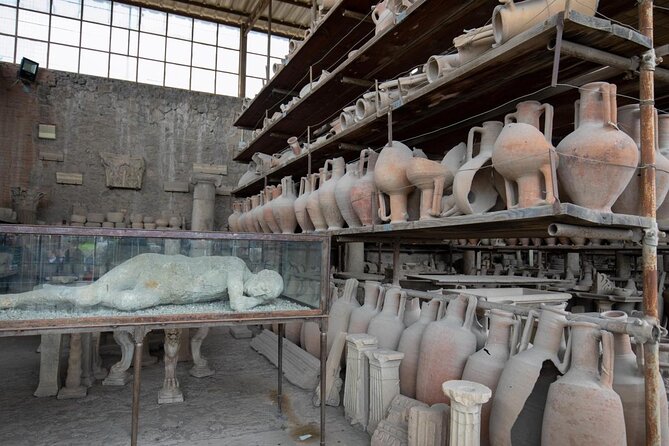
- A focused look at victims using the petrified bodies as a central emotional anchor.
Why this Pompeii tour works in about 2 hours
Pompeii rewards momentum. When you only have a short window, you need a plan that gets you to the key zones fast and still explains what you’re looking at. This tour is set up for exactly that: around two hours, small group size, and English language guiding.
You also get a mobile ticket, which helps you avoid last-minute paper chasing. Add skip-the-line admission and you reduce the most annoying part of Pompeii—waiting when you’d rather be walking.
The best part is the balance. You don’t just race through ruins; you move through the city like it’s a real place, with public buildings, streets, homes, and the darker side of what happened in the eruption.
You can also read our reviews of more guided tours in Pompeii


Entering the park fast: skip-the-line plus mobile tickets
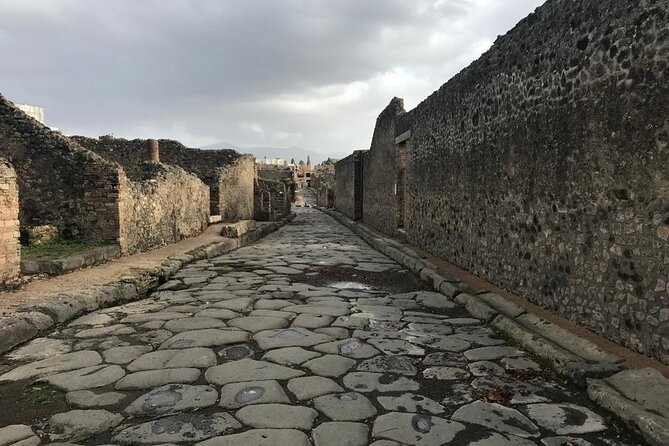
The big practical win here is the combination of skip-the-line admission and a mobile ticket. Pompeii’s entry lines can be time-heavy, and that matters when your whole visit is only about two hours.
In real terms, this means you’re more likely to spend your limited time inside the archaeology instead of hovering at the gate. You’ll also want to keep your phone charged and your ticket handy so you can move quickly at check-in.
If you’re planning to visit Pompeii on a tight day—maybe you’re also seeing Naples or Vesuvius—this setup can help you keep the rest of your schedule intact.
The small-group advantage (max 15) at a ruined city
Pompeii isn’t like most museums where you can pause anywhere. Paths narrow, crowds cluster, and it’s easy to lose the thread when you’re hopping between sights.
A group capped at 15 travelers helps with that. You’re less likely to be stuck behind a wall of people, and the guide can slow down when something needs explaining—especially when you’re looking at art, daily-life details, or the layout of neighborhoods.
The other quiet benefit: small groups feel easier for first-timers. If you’re wondering what matters most, you’re not guessing. The guiding style described by Roberta’s fans (clear, lively, and focused on helping you avoid congestion) fits this kind of site really well.
Pompeii Archaeological Park: how the route gives you the full picture
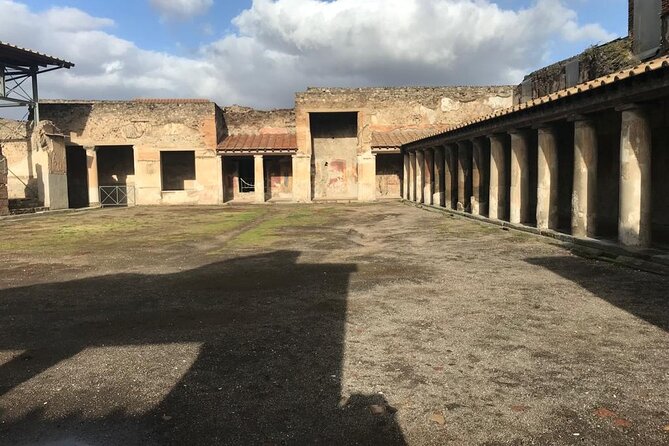
This tour focuses on the parts of Pompeii that help you understand the city as both a public world and a private world. You’ll see major buildings and city spaces, plus homes that show how wealth and taste looked in daily life.
The route also includes a deliberate mix of themes:
- Roman public entertainment and civic buildings (theatres and temples)
- Thermal baths, which were both functional and social
- Street life and commerce
- Residential neighborhoods and famous houses
- A somber focus on victims of the eruption
That structure matters. If you only see big monuments, Pompeii can feel like a pile of stone. If you only see homes, it can feel like a study in wealth without the city around them. This tour tries to connect the dots.
Via dell’Abbondanza and the Forum: the city’s main spine
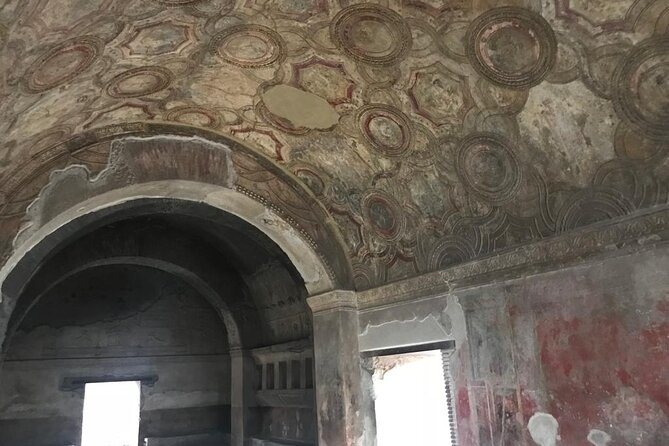
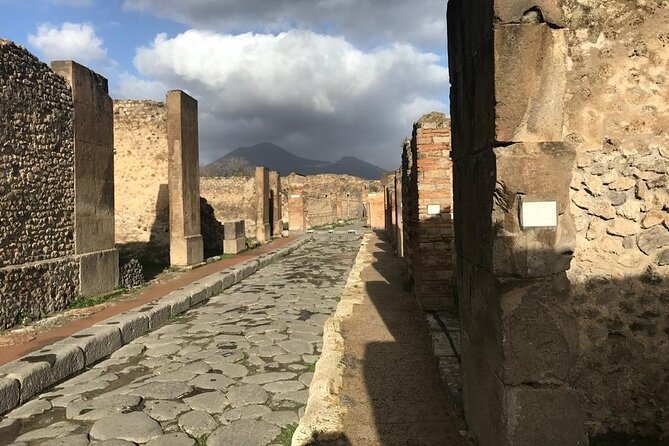
You’ll walk down Via dell’Abbondanza, Pompeii’s main street. This is the kind of route that instantly helps you get your bearings, because you can imagine the city’s flow—people moving for errands, meals, work, and events.
From there, you reach the Forum, the main town square. Think of the Forum as the social and civic center, where the city’s public life would have been visible. Seeing it after walking the main street gives you a stronger sense of how daily movement and public power connect.
Even with only two hours, this pairing helps you avoid the most common first-timer problem: wandering without a mental map.
You can also read our reviews of more tours and experiences in Pompeii





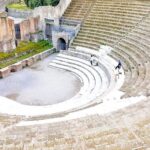
Public buildings: theatres, temples, and thermal baths
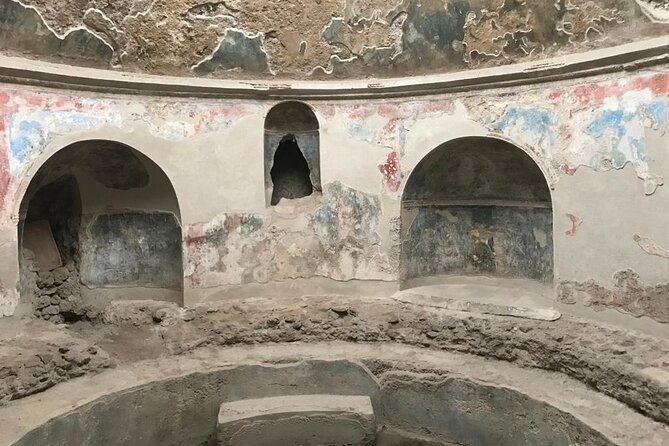
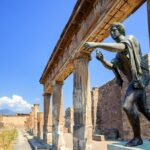
The tour highlights major public buildings: theatres, temples, thermal baths, and more. Each one shows a different side of Roman urban life.
- Theatres point to entertainment and public gatherings.
- Temples reflect religious life and civic identity.
- Thermal baths show routine social culture—an important reminder that Romans didn’t treat bathing as a solo activity.
There’s a second layer, too. When you see these buildings as a set, you understand how Pompeii worked as a community hub, not just a set of ruins.
A heads-up: public buildings and open areas can get crowded quickly. The guide’s job is to steer you so you can keep moving and still look closely.
Thermopolia and pistrinum: eating like Romans
One of the most fun parts of the route is the attention to Roman shops, especially thermopolia and the Roman equivalent of a bakery, the pistrinum.
If you’re picturing today’s quick meals, that’s the right comparison. A thermopolium is basically fast-food in Roman form—places where people could grab hot or ready-to-eat items. The pistrinum ties in because bread and grains were core parts of everyday food supply.
Why this matters: ruins can feel distant unless you connect them to habits. Food is one of the easiest habits to visualize, and these shop types give you a practical mental picture of how Pompeiians lived day to day.
Famous houses: what wealth and design looked like
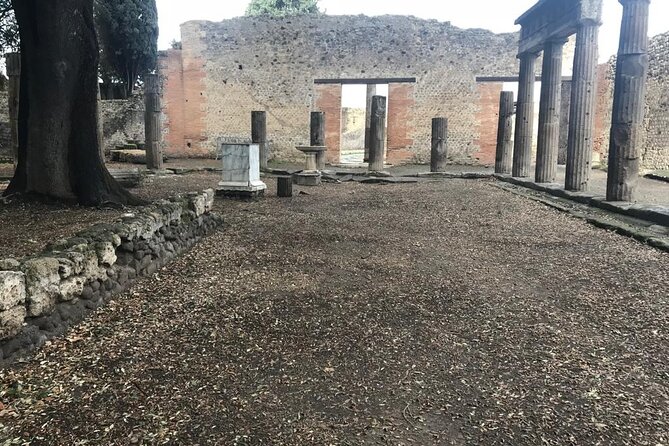
Pompeii is famous for its residences, and this tour uses that fame wisely. You’ll get time in notable homes such as:
- the House of Menander
- the House of the Faun
- the House of the Vettii
- the House of Caecilius Iucundus
You’re also encouraged to look past the wow-factor and notice layout and decoration choices. Famous names usually come with famous artifacts, but the real value is seeing how these homes relate to the street and the city outside.
Homes in Pompeii also give you contrast. Next to grand public buildings, they show what private life looked like for different social classes. In a short tour, that contrast is the difference between seeing sights and understanding the city.
The “red-light district” and wall paintings: a strange kind of realism
You’ll visit the area people often associate with the red-light district, including suggestive wall paintings. It’s a jarring moment for many visitors—because it’s so direct and so human.
Here’s the useful way to handle it: don’t treat it like shock value. Use it as evidence that Pompeii’s street life included the same messy, complicated parts of human behavior that exist today. The ruin doesn’t filter it out.
Your guide’s storytelling tends to make this feel less awkward and more informative, which helps you keep moving without your brain getting stuck in the wrong gear.
The petrified victims focus: what to expect emotionally
A special part of this tour puts attention on the victims of the eruption, shown as petrified bodies. This isn’t a side note. It’s a central focus, and it can hit hard.
If you’re the type who prefers a lighter approach, plan for the tone shift. If you’ve been to tragic historical sites before, you’ll still feel the gravity here because the bodies are directly present in the ruins.
The best advice is simple: give yourself a minute. Let the moment land before rushing to the next stop. When you do that, the rest of Pompeii’s beauty doesn’t turn into background noise—it becomes part of a bigger story.
Price and value: is $82.91 for two hours worth it?
At about $82.91 per person for roughly two hours, you’re paying for three main things: guided interpretation, a small group limit (max 15), and skip-the-line admission handled as part of the tour.
Is it cheap? No. But Pompeii isn’t the place to chase the lowest price if you want a meaningful experience in a limited time.
In my view, the value comes from compression. Without a guide, you still see a lot, but you risk walking away with a pile of names and photos instead of understanding how the city’s systems fit together. With this tour, the route’s structure does the thinking for you: streets lead to squares, squares connect to public buildings, and public life transitions into shops and homes.
One more practical note: there’s at least one documented case where a guest faced extra charges when the operator changed the format to a private tour due to group minimums. So don’t assume every variation always costs the same. Check what your booking includes and what happens if the group doesn’t reach its minimum.
What it’s like with English guiding and a group you can question
The tour runs in English and is designed so most people can participate. Service animals are allowed, and the meeting area is near public transportation, which helps if you’re using buses or trains to get there.
Because the group is small, it’s easier to get answers to the things you’d otherwise Google later. You can ask what a building was used for, or why certain details matter. That kind of instant context is one reason small-group tours often feel more worth it at a site like Pompeii.
Also, the guide’s experience is tied to how the tour avoids crowd traps. When you’re moving through key zones fast, crowd management is not a luxury. It’s part of the quality of the visit.
Booking timing: when you should lock in your Pompeii day
This tour is commonly booked about 74 days in advance on average. That’s a hint that popular dates fill up.
If you’re traveling in high season or you only have one day for Pompeii, I’d book early. Pompeii is not a place where you want to gamble on last-minute availability, especially when you care about a specific time window and a guided route that keeps the visit efficient.
Who this tour suits best (and who might want something else)
This tour fits you best if:
- you want a guided Pompeii visit that covers the big themes in a short time
- you care about Roman daily life, not just the famous photos
- you prefer smaller groups so you can keep asking questions
- you’re visiting as a first-timer and want a structure to remember later
It may not fit as well if:
- you’re expecting a full, slow, no-rhythm exploration of every corner of Pompeii
- you want to spend extra time lingering in only one type of site (like only houses or only public monuments)
- you have strict cost sensitivity and want zero risk of any format change due to minimum participant numbers
Should you book this Pompeii small-group guided tour?
If you want Pompeii to feel understandable in two hours, I’d say yes. The small-group cap, skip-the-line admission, and the route’s mix of streets, public buildings, shops, major houses, and a victims-focused segment make it a strong choice for most first-time visitors.
Book it especially if you like your sightseeing with explanations that connect Roman life to what you see in front of you. Just do one smart check before you go: confirm exactly what your admission covers in your booking, and keep an eye on how costs could change if the operator needs to adjust formats due to minimum group size.
FAQ
How long is the Pompeii Small Group Guided Tour with Skip-the-line Admission?
The tour lasts about 2 hours.
Where does the tour take place?
The tour takes place in Pompeii, Italy, at the Pompeii Archaeological Park.
What is the price per person?
The price is $82.91 per person.
Is skip-the-line admission included?
Yes, skip-the-line admission is included.
Is the tour guided in English?
Yes, the tour is offered in English.
How many people are in the group?
The group size has a maximum of 15 travelers.
Do I get a mobile ticket?
Yes, the tour provides a mobile ticket.
Is admission ticket included in the tour duration?
The tour summary indicates that an admission ticket is included.
What is the cancellation policy?
You can cancel up to 24 hours in advance for a full refund.
Are service animals allowed?
Yes, service animals are allowed.