REVIEW · POMPEII
Private Pompeii & Ravello Day Trip via Amalfi Coast (Tickets)
Book on Viator →Operated by Leisure Italy · Bookable on Viator
Two thousand years, then lemon terraces.
This private day trip is interesting because you get hotel pickup plus a full-day driver-led route, so the Amalfi Coast views don’t come with a “where do we park?” headache. I like that Pompeii can be done at your own speed, or you can upgrade for tickets and a private, licensed Pompeii guide. You’ll also get onboard English commentary that helps you read what you’re seeing, not just take photos.
One key consideration: you’re on coastal roads for a long stretch, so traffic and heat can compress walking time and make the day feel a bit rushed—especially in peak season or on busy days.
In This Review
- Key highlights worth planning for
- Private pickup plus a full-day driver: how the logistics actually work
- Pompeii planning: self-paced vs a licensed guide option
- Entering Pompeii at Porta Marina and learning the city’s layout
- Temple of Apollo to the Forum: religion and civic life in one walk
- Macellum and Forum Baths: the everyday Pompeii people actually lived
- Houses of power: House of the Faun and House of the Vettii
- Insula, Via dell’Abbondanza, and the Teatro Grande: seeing Pompeii as a city
- Antiquarium and the Basilica: context that helps everything else click
- Amalfi Coast drive: why a private route is worth it
- Ravello: Piazza Duomo, Villa Rufolo, and Villa Cimbrone Gardens
- Minori and Maiori: the coast without the full crowd pressure
- Cetara and Vietri sul Mare: fishing village realism and ceramic color
- Price and value: what $508.61 is buying you
- Who this works best for (and who should rethink it)
- Should you book this private Pompeii and Ravello day?
- FAQ
- How long is the Pompeii and Ravello day trip?
- Is hotel pickup included?
- Is this tour private?
- Is the tour in English?
- Can I visit Pompeii at my own pace?
- Are Pompeii tickets and a guide included?
- Are tickets mobile?
- What’s included at Ravello and the villa gardens?
- Is lunch included in the price?
Key highlights worth planning for
- Hotel pickup and a full-day driver: you spend less time figuring things out and more time looking out the window.
- Pompeii flexibility: self-guided pacing or a licensed Pompeii guide option to add context.
- Skip-the-line option in Pompeii: available only if you choose the Pompeii guide package.
- Ravello’s elevated pace: Duomo square and two major villa gardens with famous terraces.
- More than the usual Amalfi hits: Minori, Maiori, Cetara, and Vietri sul Mare add variety.
- Family-friendly responsiveness: guides are reported to adjust to kids and specific interests.
Private pickup plus a full-day driver: how the logistics actually work
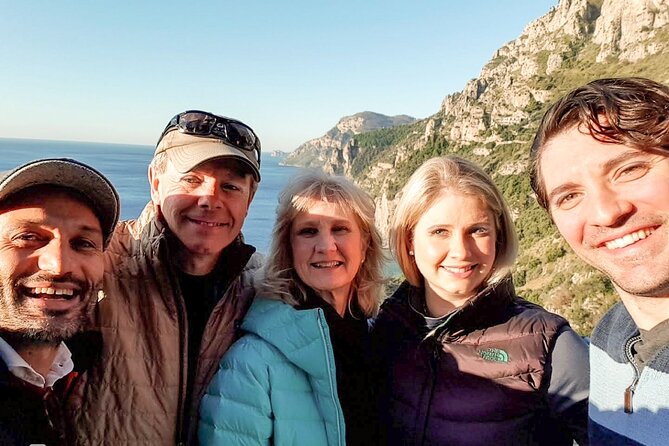
This is built for people who want the big names without the stress. You’re picked up from places like Naples, Sorrento, Pompeii, train stations, airports, and cruise ports. That matters because the hardest part of a Pompeii + Amalfi day isn’t the sightseeing. It’s getting between two very different worlds—ruins and coastline—using roads that can slow to a crawl.
The vehicle part is not just comfort. It’s time management. You’ve got a full-day driver, plus live commentary in English on board. That means when you’re transferred from Pompeii to the Amalfi Coast road, you’re not staring at your phone trying to guess what you’re looking at. And when you’re tired, you’re still moving forward with someone handling the map.
The day is also private. Only your group rides together. That’s a big deal for pacing. In real terms, it means you can linger if you’re enjoying a view, and you can cut something if your group runs out of energy.
You can also read our reviews of more tours and experiences in Pompeii


Pompeii planning: self-paced vs a licensed guide option
Pompeii is huge. It’s also easy to waste time if you don’t have a plan for what to prioritize. This tour solves that with a choice: you can visit Pompeii at your own pace, or upgrade so Pompeii tickets and a private guide are included (and you can use Pompeii Express skip-the-line tickets only with the Pompeii guide option).
If you’re the type who likes to wander, self-paced can be satisfying—Porta Marina feels like a true arrival, and the streets give you plenty to discover on your own. But if you want the “why this matters” layer, the guide option is where you can feel the difference.
In guides’ hands, Pompeii becomes more than a list of buildings. You start seeing patterns: Greek influence before Roman rule at the Temple of Apollo, the civic machine of the Forum, and the everyday rhythms you can trace through markets, baths, and residential blocks. Several reviews also highlight licensed guides like Viviana and Lavinia for making the stories click—and even tailoring to families and kids.
Entering Pompeii at Porta Marina and learning the city’s layout
Your first impression in Pompeii is Porta Marina, one of the city’s ancient gates and a main Roman-era entrance. Walking through a gate is not a dramatic trick—it’s useful. It gives you a sense of arrival, like merchants and travelers would have felt nearly 2,000 years ago.
From here, you get a strong visual anchor: the defensive walls. Even after centuries, they still look solid. That’s a good reminder that Pompeii wasn’t a loose collection of ruins. It was a carefully planned city.
If you’ve upgraded to a guided Pompeii visit, this is where the guide help is practical. You’ll understand how the streets and neighborhoods fit together, so the site stops feeling like separate postcard stops and starts feeling like a working urban layout.
Temple of Apollo to the Forum: religion and civic life in one walk
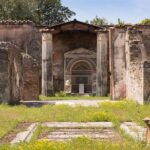
One of Pompeii’s key religious anchors is the Temple of Apollo, tied to early foundations and Greek influence before full Roman control. You’ll see the portico and podium areas, and the setting connects religion to daily life—especially with views toward Mount Vesuvius.
Then comes the Forum, Pompeii’s civic heart. Even without a roof, it hits hard. You can picture politics, markets, and public gatherings forming one shared space. The colonnades also frame Mount Vesuvius in a way that’s hard to replicate elsewhere. It’s one of those moments where the geography does some storytelling for you.
In plain terms: Apollo shows you belief. The Forum shows you power and routine.
Macellum and Forum Baths: the everyday Pompeii people actually lived
For me, the most “you had to be there” sections are the ones tied to normal routines.
The Macellum (the principal food market) is one of Pompeii’s best-preserved commercial spaces. You’ll get a sense of how organized food distribution was—marble counters, storage areas, and basins that suggest a system, not chaos. You also see the way commerce and politics braided together, including a shrine tied to the imperial family.
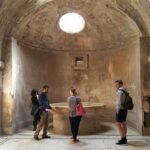
Right nearby (in spirit if not on the same breath) are the Forum Baths. Roman bathing wasn’t just cleanliness. It was social time and routine. The room sequence—changing areas to warm and hot spaces—still reads clearly. You can even spot the engineering logic: heated floors and ventilation concepts that show serious know-how.
If you want Pompeii to feel human and not just ancient, these stops do the job. They help you visualize what people did between errands, meals, and gatherings.
You can also read our reviews of more private tours in Pompeii




Houses of power: House of the Faun and House of the Vettii
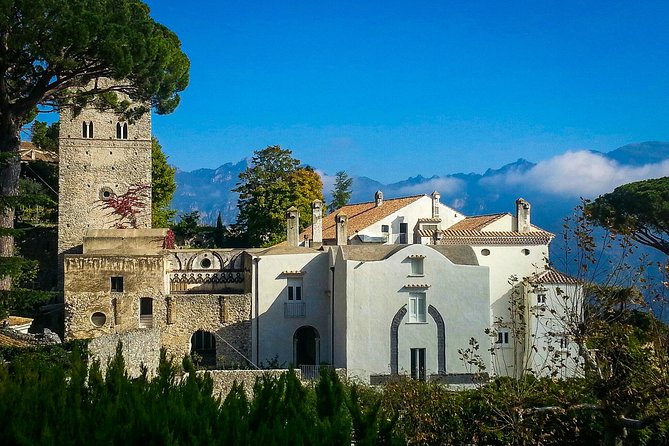
Pompeii’s elite homes can feel like a totally different planet compared to the Forum and markets. The House of the Faun is vast—covering an entire city block—and it looks more like a palace than a home. The courtyard layout, columned gardens, and high-end mosaics (including the Alexander Mosaic) make it clear these weren’t modest residences.
Then the House of the Vettii adds a different kind of punch. It’s packed with colorful frescoes and a layout that helps you imagine daily life for wealthy merchants. Many walls still preserve painting schemes well enough that you can feel the personality of the place.
A practical note: these homes take time and attention. If your group gets restless, tell your guide early (or in a self-paced plan, set a target). You don’t need to “do everything.” You need to do enough to build a mental picture.
Insula, Via dell’Abbondanza, and the Teatro Grande: seeing Pompeii as a city
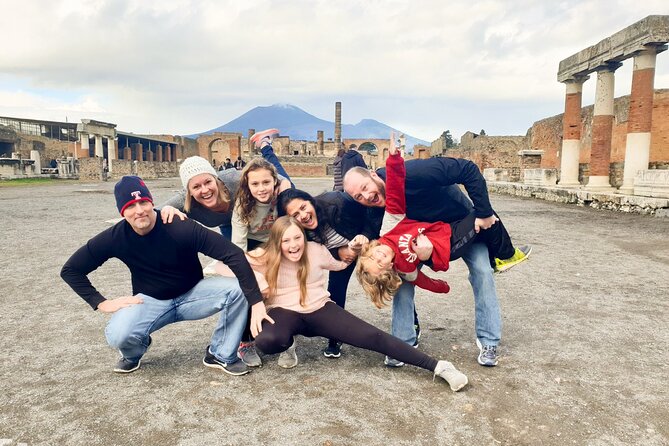
Two big “city feel” stops are the residential/commercial block area (the insula with ongoing-life details) and Via dell’Abbondanza.
That insula area is fascinating because it reads like a living neighborhood. Elevated walkways and ramps let you see rooms and courtyards without disturbing layers underneath. You also see evidence of work-in-progress—ovens, counters, building materials left mid-setup—which can change how you interpret the eruption’s impact.
Via dell’Abbondanza is the closest thing to an ancient main street. It’s lined with what once served daily crowds: shops, bakeries, bars, workshops. Stepping stones and water features remind you this was designed for pedestrians. Even faded commercial signs and election-style posters (where visible) help the street feel less like a ruin and more like a place people argued, traded, and voted from.
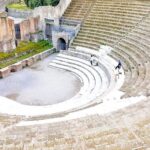
Then you get to the Teatro Grande. This open-air theater carved into a hillside is one of Pompeii’s best scale moments. You sit where thousands once watched comedies and dramas, and the acoustic design still holds up. Elevated walkways above the stage give you a view of the theater’s semicircular layout and remind you how engineered the site was.
Antiquarium and the Basilica: context that helps everything else click
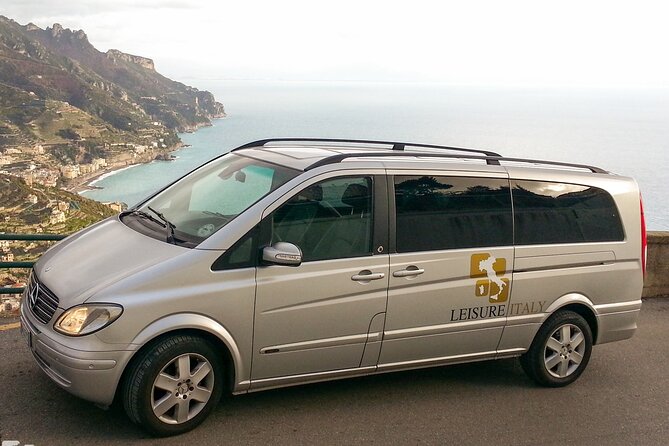
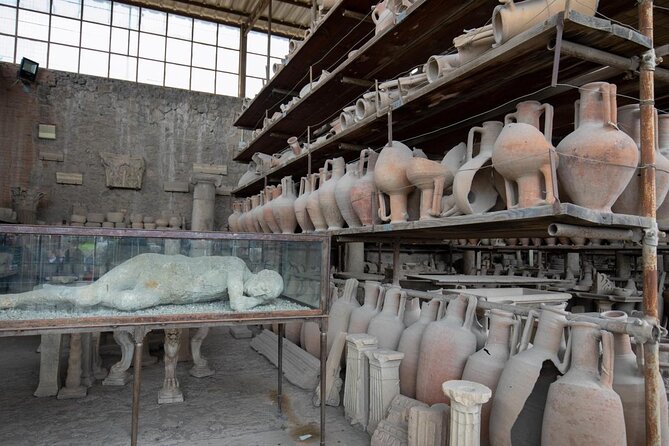
The Antiquarium is Pompeii’s museum space for interpretation. If you’re tempted to skip it to save time, don’t. The exhibits help connect what you’ve been walking through: everyday objects, fresco fragments, luxury items, and plaster casts that communicate the eruption’s final moments.
Right after that, the Basilica section (a major public building used for civic business and law court functions) is the “how government ran” counterpart to the Forum. Tall columns and a clear hall layout make it easier to imagine magistrates and citizens negotiating disputes or deals. It’s a reminder that civic life in Pompeii was not abstract. It had physical spaces built for it.
Amalfi Coast drive: why a private route is worth it
The Amalfi Coast drive is the reason many people book this day. But it’s also where frustration can happen if you’re doing it on the cheap.
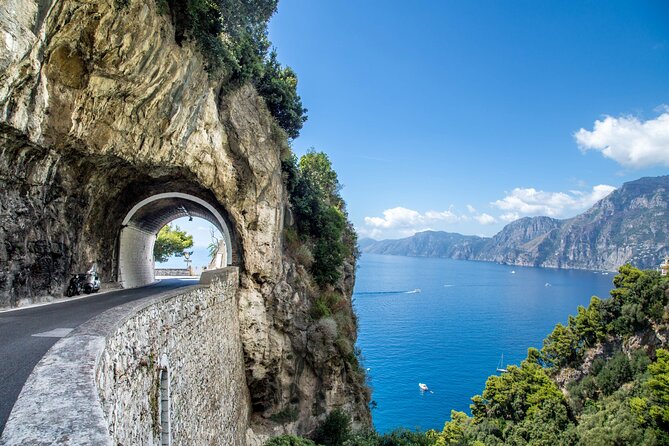
With a private driver, you can relax through tunnels, perched villages, and cliffside bends. You’re not constantly asking where to stop safely, and you’re more likely to hit the viewpoints without wasting time on trial-and-error parking.
You’ll be catching views as the road curves. Terraced lemon groves, pastel houses, and tiny harbors below are part of the drama. This is one of those routes where quick pull-offs can make or break the day—so having someone who can work with the road and timing is a real advantage.
One small travel tip: bring water and a light layer. Even if your vehicle has AC, July heat can still feel like a lot when you jump out for photos.
Ravello: Piazza Duomo, Villa Rufolo, and Villa Cimbrone Gardens
Ravello is the quieter, higher-altitude counterpoint to the busier coast towns. It’s perched above the shoreline, with medieval-feeling streets and sea views that seem to float over everything below.
You get about an hour of free time for Ravello. That free time is important. It lets you choose: a slow walk, artisan shops, or sitting down with a view. Ravello’s main anchor is Piazza Duomo and its 11th-century Cathedral, including bronze doors and a bright interior.
Then there are the villa gardens, which are where Ravello becomes famous for good reason.
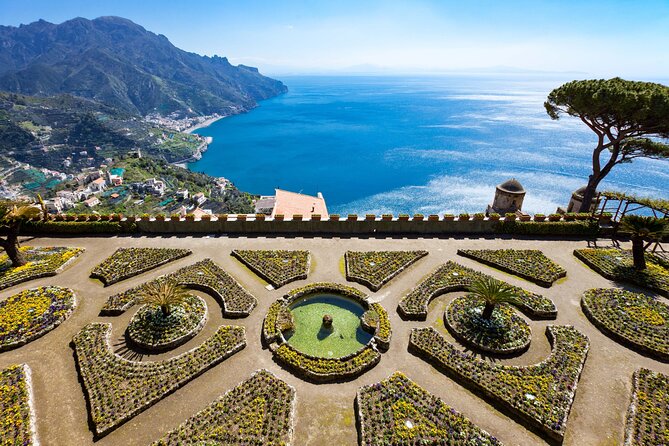
Villa Rufolo sits just off the main square. It has cloistered courtyards, layered architecture, and tiered gardens that open onto sweeping panoramas. It’s also associated with the Grand Tour era and inspired composer Richard Wagner in its artistic atmosphere. Practically, this stop is shorter (about 15 minutes), so it’s best for a quick stroll and a view snapshot rather than a deep garden exploration.
Villa Cimbrone Gardens are next, and the time is around 30 minutes. This is where you’ll look for the Terrace of Infinity, a signature panorama moment where a balustrade lines up with sky and sea in a way that feels almost staged. Even if you’re not chasing “Instagram,” it’s one of the best view payoffs on the day.
Minori and Maiori: the coast without the full crowd pressure
After Ravello, the itinerary shifts to smaller seaside towns—Minori and Maiori—where the atmosphere stays more local.
Minori is known as the City of Taste. You’ll find a small beach, a gentler waterfront, and pastry shops. It also has ancient roots as a Roman maritime village, and there are 1st-century remains you can visit in town (time-permitting). If you like eating while you walk, Minori’s narrow lanes filled with lemon and handmade pasta vibes are easy to enjoy.
Maiori feels breezier and more open than the cliff-clinging neighbors. It has one of the longer beaches on the Amalfi Coast, plus a wide promenade for easy strolling. Behind the waterfront, pastel buildings climb toward the mountains, and you get that sense of a working trade and seaside life that doesn’t always show up in the most famous photo corners.
Both stops are brief (around 30 minutes each), so think snack, walk, photo, and then move on.
Cetara and Vietri sul Mare: fishing village realism and ceramic color
Cetara is one of those quick coast snapshots that can change how you understand the region. From the road, you’ll see a small, authentic fishing village tucked between steep mountains and sea. The tiny harbor, colorful boats, and a medieval watchtower suggest a place still organized around daily catch. Cetara is especially known for its anchovy tradition, so it’s worth savoring the local food angle if you get the chance.
Then you reach Vietri sul Mare, often treated as the artistic gateway to the Amalfi Coast. From the coastal approach, its ceramic tiles and domed church stand out. Even if you’re not shopping, the tile patterns give you a quick cultural hit—this town turns decoration into architecture.
These stops are short, but they add variety. They help the day feel like a real route, not just a checklist of the biggest landmarks.
Price and value: what $508.61 is buying you
At $508.61 per person for an 8–9 hour private day, you’re not paying for “entry fees and a bus.” You’re paying for control: pickup, private transportation, and the ability to manage time across two tough regions.
Here’s how I think about value for this kind of trip:
- Pompeii alone is complicated. Admission and guide upgrades can change your experience. The option for a Pompeii licensed guide also unlocks Pompeii Express skip-the-line tickets.
- The Amalfi Coast isn’t just pretty. It’s time-consuming and traffic-prone. You’re paying to reduce friction.
- Lunch is not included, so you’ll want to budget for food yourself.
One caution from real-world experience patterns: on busy days, you can feel rushed. That doesn’t mean the company is doing something wrong. It means roads win. If you’re trying to do this in peak summer heat or on a busy weekend, build in patience and plan for less walking time than you’d get on a calm day.
Who this works best for (and who should rethink it)
This tour fits best if you want:
- A private day that uses your time well
- A guide option for Pompeii if you want interpretation (especially if it’s your first time)
- Amalfi Coast views without the stress of driving and parking
It may not fit if your priority is a long beach day. Your Amalfi stops are short by design, and the itinerary is built around viewpoints and multiple towns.
It also helps if your group has moderate physical fitness. Pompeii involves walking, uneven ground, and long museum-like transitions. The good news: there are cafes and gift shops right in front of the ticket office if you need a break.
Should you book this private Pompeii and Ravello day?
I’d book it if you want a high-payoff day with clear structure and minimal logistics pain. Pompeii gets the attention it deserves when you choose the guide option, and Ravello delivers the calm “high above the coast” feeling that’s hard to find in the low towns.
I’d hesitate only if you know your group melts in traffic or hates heat and walking. If that’s you, consider going on a weekday if possible, arrive with comfortable shoes, and bring water so you’re not scrambling when the day compresses.
If you’re aiming for a memorable first taste of both Pompeii and the Amalfi Coast in one go, this is a strong way to do it—private pacing, smart stop choices, and enough variety to keep the day from feeling repetitive.
FAQ
How long is the Pompeii and Ravello day trip?
It’s listed as about 8 to 9 hours.
Is hotel pickup included?
Yes. Pickup is offered from places including Naples, Sorrento, Pompeii, train stations, airports, and cruise ports. You choose your pickup place when booking.
Is this tour private?
Yes. It’s private, meaning only your group participates.
Is the tour in English?
Yes. English is offered, and there is live commentary on board.
Can I visit Pompeii at my own pace?
Yes. You can choose a self-paced Pompeii option, or you can upgrade for Pompeii tickets and a private tour with a licensed Blue Badge guide.
Are Pompeii tickets and a guide included?
Admission fees at Pompeii are not included unless you select the Guide in Pompeii option. A private Pompeii guide is also only included if you select that option.
Are tickets mobile?
Yes. The tour includes mobile tickets.
What’s included at Ravello and the villa gardens?
Ravello itself has free admission on the schedule (about an hour). Villa Rufolo and Villa Cimbrone gardens are listed with admission not included.
Is lunch included in the price?
No. Lunch is not included.