REVIEW · POMPEII
Pompeii and Herculaneum Private Tour with Native Guide and Skip the Line Tickets
Book on Viator →Operated by Tours of Pompeii with Lello & Co. · Bookable on Viator
Two buried cities, one well-paced day. You’ll get skip-the-line entry plus a private guide who helps the ruins click into place, not just look impressive. The payoff is huge: you see major Pompeii sights and then shift to Herculaneum, which feels noticeably different even though they share the same volcanic disaster story.
I like the way the day is built around guided time inside the archaeology sites. First you start with a private Pompeii visit with Lello & Co., then you continue through standout areas with your guide’s commentary so you can understand what you’re looking at as you move.
One possible drawback: transport between Pompeii and Herculaneum isn’t included, and lunch is also not included. So you’ll want to plan food and how you’ll get to the next area, especially if you’re not staying in central Pompeii.
In This Review
- Key things I’d bank on
- Pompeii and Herculaneum in One Day: why this combo hits differently
- Skip-the-Line Tickets That Let You Spend More Time Walking
- Entering Pompeii With Lello & Co.: your orientation to the city
- Teatro Grande: hearing the city the way Romans intended
- Stabian Baths (Terme Stabiane): where people cooled off and socialized
- Via dell’Abbondanza: the shopping street you can almost picture
- Herculaneum Parco Acheologico di Ercolano: the second half of the story
- Guides matter: Italo, Rossana, Giovanna, and Roberta’s impact on what you get
- Timing, movement, and how to pace yourself (moderate fitness, real walking)
- Price and Value for $431.33: what you’re really paying for
- Should you book this Pompeii and Herculaneum tour?
- FAQ
- How long is the Pompeii and Herculaneum private tour?
- Is this tour private or shared with other groups?
- Does the price include skip-the-line tickets?
- What sites are included in the tour?
- Is hotel pickup or drop-off included?
- Do I need to bring lunch?
- What language is the guide?
- What fitness level do I need?
- Where does the tour start and end?
- What is the cancellation policy?
Key things I’d bank on
- Fast-track entry to spend more time walking the sites instead of waiting at entrances
- Private, local guiding tuned to your pace and interests
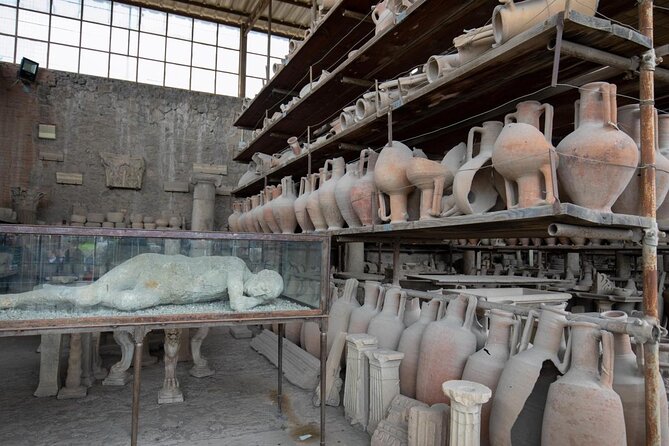
- A focused Pompeii route that includes Teatro Grande, the Stabian Baths, and Via dell’Abbondanza
- Herculaneum highlights with its own private time in Parco Acheologico di Ercolano
- Only your group participates, so questions and slow stops are welcome
Pompeii and Herculaneum in One Day: why this combo hits differently
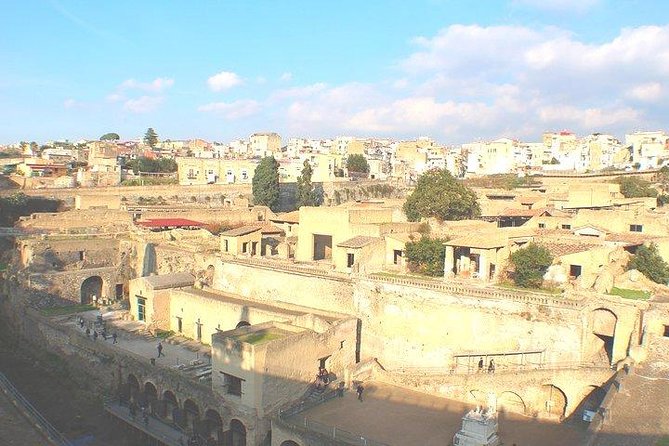
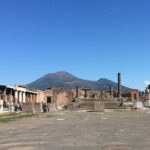
Pompeii is the loudest name in Italian archaeology, but Herculaneum is the surprise. On this kind of one-day pairing, you get more than two lists of ruins—you get a comparison of how the same catastrophe can produce a very different kind of archaeological experience.
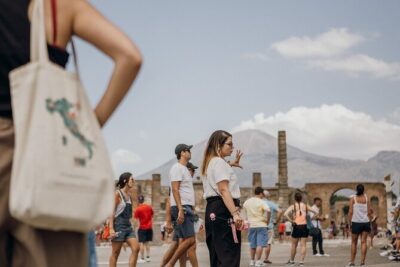
In Pompeii, your guide can help you read the city like a layout. You’re moving through streets and major public spaces, so the story lands through location: where people walked, gathered, shopped, and cooled off. In Herculaneum, the feel changes. Even without getting technical, the place tends to feel tighter and more intimate, which makes your guide’s explanations especially useful.
This tour is also structured so you’re not stuck in one site all day. That matters if you’re short on time in the Naples area. You’ll still see major Pompeii highlights, but you also leave room to actually understand why Herculaneum deserves a spot on your itinerary.
You can also read our reviews of more tours and experiences in Pompeii


Skip-the-Line Tickets That Let You Spend More Time Walking
Skip-the-line tickets are one of the simplest value upgrades you can buy in Pompeii. Archaeological sites can have serious bottlenecks at entry, and losing time to waiting cuts into the time you actually want to spend looking.
Here, the “skip-the-line” part pairs with the private format in a practical way. A guide can get you moving as soon as you’re in, which helps you build momentum. Instead of pausing every few minutes to regroup, you can follow a logical route and let the explanations connect the dots.
There’s another benefit: when you’re not waiting around, the day feels less rushed. Even though the tour duration is listed at about 5 hours, the schedule is still designed to give you focused time across both sites rather than a long, chaotic cram.
Entering Pompeii With Lello & Co.: your orientation to the city
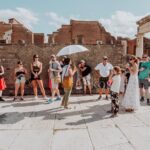
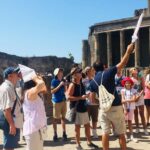
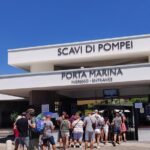
Your Pompeii day starts with a private tour with Lello & Co. You’ll spend about 2.5 hours in the archaeological site with a top-rated guide. That’s the most important part of the whole experience because early context is what makes everything else easier.
Think of this as getting your bearings fast. Pompeii can feel like a maze until someone gives you the map in words: how the streets work, what certain buildings were for, and what you’re looking at when you see walls, doorways, and public spaces. When the guide can explain Roman life while you’re standing in the locations, the details stop being random.
The biggest pro here is pacing. Private guiding means you can ask questions at the moment they pop into your head. You’re also not stuck watching a group march past the best photo spots. The guides described in the experience feedback—like Italo and Rossana—are repeatedly praised for being friendly, efficient, and able to keep a good tempo for all ages.
Teatro Grande: hearing the city the way Romans intended
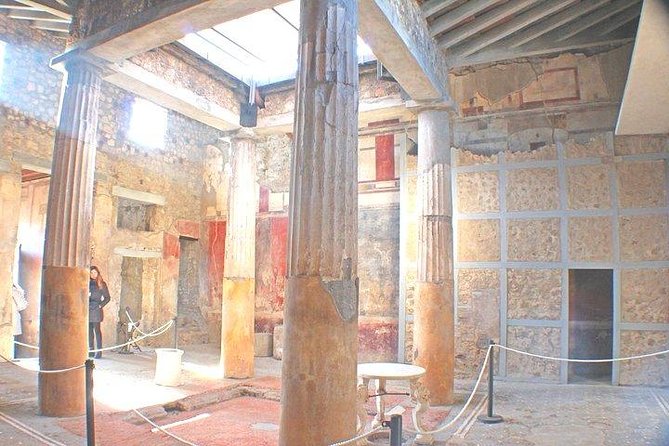
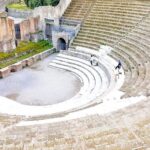
One of the tour stops is Teatro Grande. This isn’t just a look-and-go photo stop. You’ll see the theater and then listen to the acoustic setup—one of the most famous aspects of Roman theater design.
Why this matters: Pompeii isn’t only about architecture and art. It’s about how everyday people used public spaces. In a theater, sound is part of the design. When your guide walks you through what you’re hearing and where you’re standing, the site becomes more functional in your mind, not just scenic.
Your time here is listed at about 30 minutes, so keep expectations realistic. This is a highlights day, so you’ll get the key moment rather than a full lecture. Still, the acoustic focus gives it a unique payoff compared with many quick Pompeii routes.
Stabian Baths (Terme Stabiane): where people cooled off and socialized
Another Pompeii stop is the Stabian Baths (Terme Stabiane). Baths in Roman cities were more than washing stations. They were social hubs, places to talk, relax, and move through different temperature zones.
Even if you don’t get stuck in every room, being guided here helps you interpret what you’re seeing. With your guide’s commentary, you can connect the layout to how people would actually move through the space. That’s the difference between seeing a ruin and understanding it.
This stop is also around 30 minutes, which is about right for a tour structured for both Pompeii and Herculaneum. You’ll get the highlight without turning the day into a long-only Pompeii marathon.
You can also read our reviews of more guided tours in Pompeii



Via dell’Abbondanza: the shopping street you can almost picture
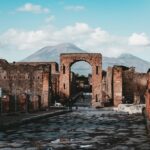
Then you’ll walk Via dell’Abbondanza, described as the main street of commerce. This is one of the most effective places to see Pompeii as a working city. Streets with shops and storefront rhythms are where ancient life feels closest to real life.
Walking it with a guide helps you spot the clues that bring commerce to life—locations that make sense for trade, how the street functions, and why the city would be designed the way it is. It’s also one of the more natural ways to keep moving through the site, especially if you’re trying to avoid getting mentally exhausted by too many heavy public buildings in a row.
Time here is listed at about 30 minutes, which fits the tour style. You’ll likely come away with a clearer sense of how a city street shaped daily routines.
Herculaneum Parco Acheologico di Ercolano: the second half of the story
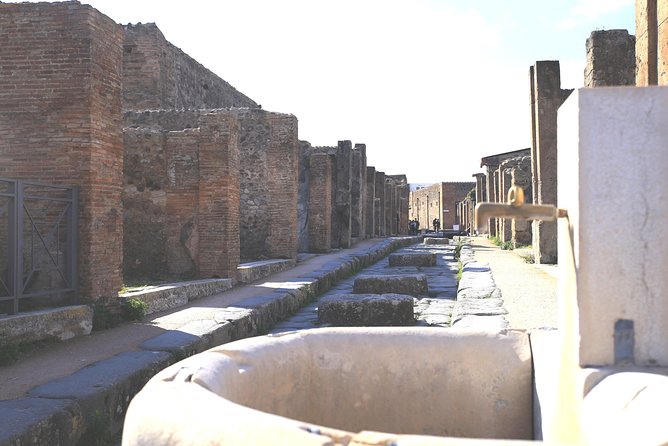
After Pompeii, your day shifts to Parco Acheologico di Ercolano, with about 2 hours of private highlights time. This is the part I’d watch for if you’re deciding whether to spend more than one afternoon in the area: Herculaneum often changes your whole understanding of what you saw in Pompeii.
The reason is simple. You’re not just collecting another set of ruins. You’re switching archaeological mood. Herculaneum’s preserved character makes the explanations feel practical—like you’re learning how people lived, not only what buildings were.
Your guide helps you see the major highlights, and that time is long enough to actually process it. Two hours with a private guide is a strong chunk for a site like this, especially compared with rushed group tours that barely scratch the surface.
Guides matter: Italo, Rossana, Giovanna, and Roberta’s impact on what you get
A Pompeii day lives and dies by the guide. In the feedback tied to this tour, several names come up in a positive way: Italo, Rossana, Giovanna, and Roberta.
- Italo is praised for friendliness and keeping things running smoothly and on time, including a good pace for families and kids. If you’re traveling with younger people, this style is exactly what you want.
- Rossana is singled out for making the site feel alive. One of the most useful ideas from the feedback is that the tour can support a longer Pompeii focus if you want more time in that site.
- Giovanna is described as an archaeologist who explains Roman life in a way that feels fascinating rather than textbooky.
- Roberta is credited with painting a clear picture of daily life 2000 years ago—again, the kind of storytelling that helps the ruins stop being just stones.
So here’s what you should take from those names: don’t think of this as a ticket scan. You’re buying explanation, timing, and a route that makes sense. A strong guide turns a short visit into something that feels much more substantial.
Timing, movement, and how to pace yourself (moderate fitness, real walking)
The tour lists moderate physical fitness for participants. That usually means you should expect a decent amount of walking and standing, with uneven ground and time outdoors in the elements.
You’ll also be moving across major areas in Pompeii, then transitioning to Herculaneum. Even if the day feels structured, your body will still notice the outdoor walking and the heat or sun. Bring comfortable shoes you trust. If you’re prone to getting tired in crowds, plan to hydrate early.
One practical tip: since transportation isn’t included, treat the “in-between” time as part of your day. Decide how you’ll move between Pompeii and Ercolano Scavi ahead of time, and build a little cushion. The tour ends at Ercolano Scavi, so you’re not closing out back in central Pompeii.
Price and Value for $431.33: what you’re really paying for
At $431.33 per person, this is not a budget tour. The value comes from what’s bundled and what’s protected by that bundle: private guiding, skip-the-line tickets, and time inside the sites that’s organized around understanding.
If you’re comparing, think about three costs you’d otherwise manage yourself:
- time lost to entrance lines and delays,
- paying for separate tickets and then trying to figure out a coherent route,
- and booking a guide for only one site rather than getting both Pompeii and Herculaneum in one day.
Because this is private and only your group joins, you’re also paying for flexibility. Your guide can adjust the pace to questions and interests, which is often the difference between a “saw it” visit and a “I understood it” visit.
Group discounts are listed, so if you’re traveling with friends or family, this can become a better deal than you might expect at first glance. The tour is also in English, which is useful if you want guidance without translation gaps.
Should you book this Pompeii and Herculaneum tour?
Book it if you want a guided, structured day that hits both headline sites without turning your trip into a logistics puzzle. This works especially well if you like the idea of learning Roman daily life while you stand in the locations—Teatro Grande for sound, Stabian Baths for social routines, and Via dell’Abbondanza for commerce—then finishing with Herculaneum’s contrasting perspective.
Don’t book it (or plan differently) if you need everything handled for you end to end. Hotel pickup/drop-off isn’t included, and transportation between the two sites isn’t included, plus lunch is not provided. If that kind of add-on planning sounds annoying, you might prefer a package that handles more of the day’s movement.
FAQ
How long is the Pompeii and Herculaneum private tour?
The tour duration is listed at about 5 hours.
Is this tour private or shared with other groups?
It’s private. Only your group will participate.
Does the price include skip-the-line tickets?
Yes. Admission tickets and skip-the-line access are included.
What sites are included in the tour?
You’ll visit Pompeii and Herculaneum, including major areas such as Teatro Grande, the Stabian Baths, and Via dell’Abbondanza, plus highlights in the Parco Acheologico di Ercolano.
Is hotel pickup or drop-off included?
No. Hotel pickup and drop-off are not included.
Do I need to bring lunch?
Lunch is not included.
What language is the guide?
The tour is offered in English.
What fitness level do I need?
The tour recommends a moderate physical fitness level.
Where does the tour start and end?
It starts at Hotel Vittoria, Piazza Esedra, Pompei (80045), and ends at Ercolano Scavi (80056 Ercolano).
What is the cancellation policy?
Free cancellation is available up to 24 hours in advance for a full refund.