REVIEW · POMPEII
Pompeii Private Tour with an Archaeologist Guide
Book on Viator →Operated by Askos Tours · Bookable on Viator
Pompeii gets easier with a real expert. This private archaeologist-guided tour helps you make sense of what you’re seeing fast, while you move at your own pace and ask questions as you go.
I especially like the undivided guide time—you’re not stuck listening from the back while everyone else rushes ahead. I also love that the route hits practical highlights like the Stabian Baths and the Forum without turning the visit into a checklist sprint. One thing to consider: Pompeii is huge, so 2 hours can feel tight if you want to slow down for photos and extra reading, and you should plan for the separate Pompeii park entry ticket.
In This Review
- Key things that make this Pompeii tour work
- Meeting at Porta Marina Superiore: the start that saves time
- Why an archaeologist guide changes everything at Pompeii
- Casa dei Vettii and the House of Faun: seeing art, status, and daily life
- The Lupanar and Vetutius Placidus: the city’s everyday side
- Stabian Baths and Forum Baths: why Pompeii feels social
- Walking Via dell’Abbondanza: the street that ties it all together
- Macellum, House of Menander, and the Forum zone: market life and power
- The 2-hour route: what you’ll get, and what you might miss
- Price and value: is $178.45 per person a fair deal?
- Who this private archaeologist tour suits best
- Should you book this Pompeii private tour?
- FAQ
- How long is the Pompeii Private Tour with an Archaeologist Guide?
- Where do we meet the guide?
- Is the Pompeii entrance ticket included?
- What’s included in the tour?
- Is this tour private or shared?
- What language is the tour offered in?
- What’s the cancellation policy?
Key things that make this Pompeii tour work
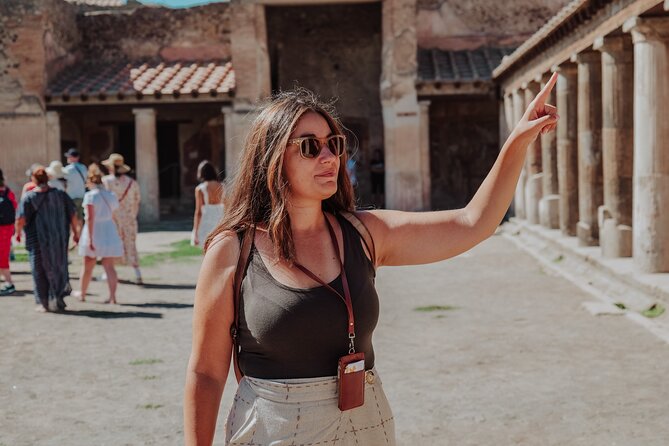
- Private, English-language guide time that keeps things calm and focused
- Archaeology-led explanations that connect ruins to daily life
- Top Pompeii stops like Casa dei Vettii, Lupanar, the Baths, and the Forum
- A paced route that helps you spend time on what matters, not just what’s closest
- Good value for couples and small groups who want a structured visit
Meeting at Porta Marina Superiore: the start that saves time
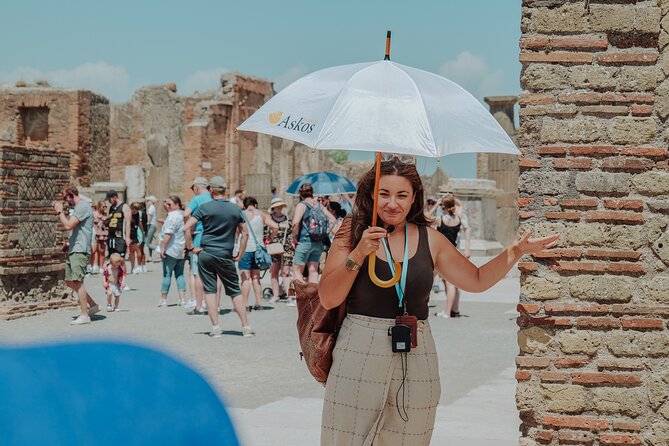
The tour starts at the Pompeii entrance area near Via Villa dei Misteri, 1. You’ll meet your guide at Porta Marina Superiore, and they’ll be holding a sign for Askos Tours so you can spot them quickly.
This matters because Pompeii is a maze of entrances, crowd flow, and signage. If you show up with a plan and someone who can steer it, you lose less time and feel less stressed right away. The tour ends back at the same pickup address, and the guide can also help you figure out how to get back or which station is closest.
You can also read our reviews of more guided tours in Pompeii


Why an archaeologist guide changes everything at Pompeii
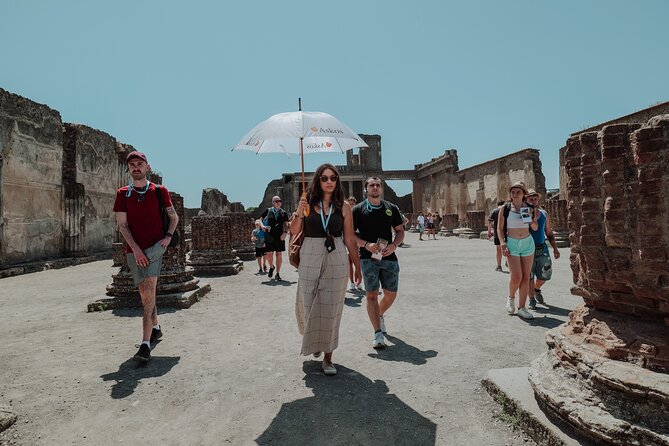
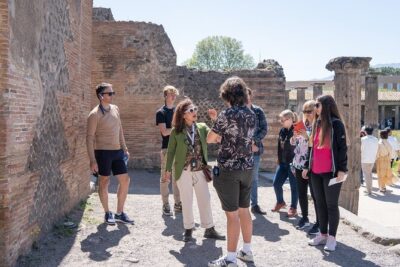
Pompeii can feel like a pile of walls until someone explains how the city functioned. With an archaeologist guide, you get context for the big stuff and the small stuff—how people lived, worked, ate, shopped, bathed, and socialized.
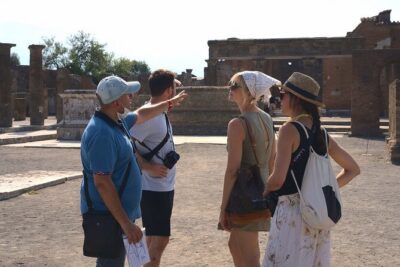
In real private tours I’ve reviewed, the best part is always the question time. On this one, you’re encouraged to ask as many questions as you wish, and the pacing is built around your group. That’s why guides like Rossana and Paolo, who come across as excited and animated about Pompeii, can make the ruins feel less frozen in time.
There’s also a practical advantage: a good guide knows how to route you so you’re not constantly trapped in slow-moving bottlenecks. In your 2 hours, that kind of navigation is the difference between seeing highlights and just getting tired.
Casa dei Vettii and the House of Faun: seeing art, status, and daily life
Your first real deep-look stop is Casa dei Vettii. This house gives you a strong sense of how wealthy Pompeians displayed taste and power through interior decoration. Look for how rooms are laid out and how the house works as more than just pretty spaces—these homes were designed for living and hosting.
From there, the tour continues toward major household sites, including the House of the Faun. One of Pompeii’s most famous home features is the large mosaic associated with Alexander, and this is the kind of detail a guide can point out so it clicks instead of going unnoticed. The benefit of a private format is that you can linger when something sparks your interest and then move on when you’re ready.
If you’re the type who likes to read the room—who wonders what people actually did in these spaces—this stretch is where the tour earns its keep. You’ll understand the architecture better, not just walk past it.
The Lupanar and Vetutius Placidus: the city’s everyday side
Pompeii isn’t polite. Some of its most memorable stops are blunt reminders of human behavior—what people wanted, how they spent time, and how entertainment worked.
The tour includes the Lupanar, a well-known brothel site. A guide can help you interpret the layout and the surviving markings without making it feel like sensational theater. It’s also a useful contrast to the wealthier homes, showing a different slice of the same society.
You’ll also see the House and Thermopolium of Vetutius Placidus. A thermopolium is essentially a Roman counter-service spot—think of it as an early version of grab-and-go food. This is where Pompeii gets oddly relatable. If you’ve ever eaten something on the run after work, this stop helps you connect with everyday rhythms from almost 2,000 years ago.
Then comes Teatro Grande, the big theatre space. Even if you don’t know Roman performance traditions, a guide can explain how theatre shaped public life—who went, what people watched, and why these venues mattered.
Stabian Baths and Forum Baths: why Pompeii feels social
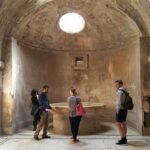
Baths are one of the best ways to understand how a Roman city ran, and this tour includes two of the most significant areas. You’ll visit the Stabian Baths (Terme Stabiane) and also the Forum Baths.
The Stabian Baths stop is short but meaningful: you’re shown key parts of the complex so you can imagine the movement of the day—where people cooled down, warmed up, and socialized. The same goes for the Forum Baths. Bathing wasn’t just hygiene; it was a social routine, plus gossip time.
If you’re visiting in hot weather, baths can be a welcome mental break too. Even in ruins, they help explain how people handled comfort and downtime, and a guide can connect those ideas to the layout you’re seeing.
You can also read our reviews of more private tours in Pompeii



Walking Via dell’Abbondanza: the street that ties it all together
A standout moment on this route is the walk through Via dell’Abbondanza. This is the spine of the city experience—wide enough to feel like a real street, but surrounded by structures that explain commerce and movement.
On a private tour, you’re not forced to “keep going” every time someone wants to stop and look up. That’s helpful here because the street view links together places you’ve already visited and places you’ll hit next.
This stretch is also where you’ll start to feel how Pompeii worked as a living city, not just a set of attractions. You get the sense of flow: homes off to the sides, public spaces drawing people in, and commerce moving along the street.
Macellum, House of Menander, and the Forum zone: market life and power
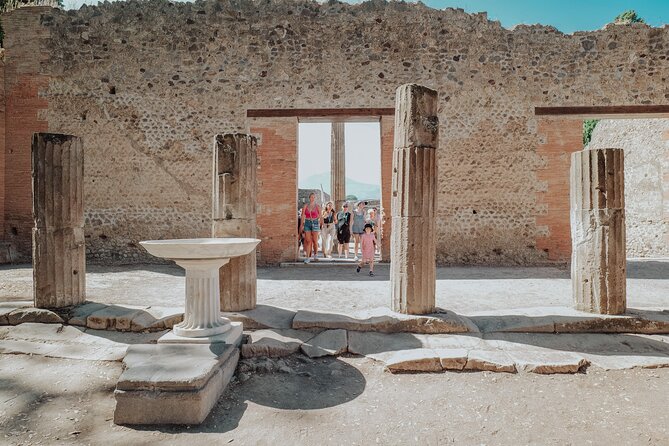
Next you move into the commercial and civic heart of the city. You’ll see the Macellum, Pompeii’s market area. A market stop sounds straightforward, but with a guide you start noticing how food and supplies shaped daily life—what was sold, how spaces were organized, and why the market mattered beyond shopping.
You’ll also visit the House of Menander, another major household stop. It’s a good “in-between” moment: after the market’s public energy, you get the chance to compare how elite private life looked and worked inside.
Then the tour enters the Forum area, including stops for the Forum Baths, the Granaries of the Forum, and the Foro de Pompeya. Granaries are especially important because they explain the supply side. Food doesn’t appear by magic; it’s stored, moved, and managed. A guide helps you connect that storage logic to why the Forum was so central.
You’ll also see why the Forum is more than a big open space. It was part of governance, public gatherings, and everyday civic drama. Even if you only skim the surfaces, a good guide translates what you’re looking at into how it functioned day to day.
The 2-hour route: what you’ll get, and what you might miss
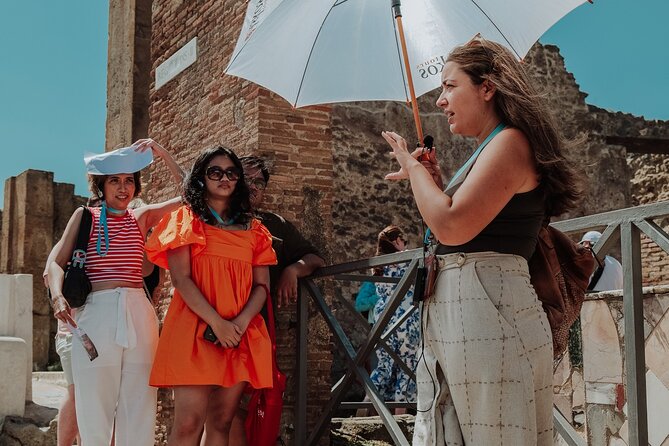
This tour is about 2 hours, which is a smart “high-impact” time window if you’re trying to see Pompeii without losing the whole day. You’ll hit major sites, learn context, and still have time to explore on your own afterward if you want.
The trade-off is size. Pompeii is enormous, and even with a planned route, you can’t slow down everywhere. If you want hours of wandering and soaking up fresco-level details at multiple houses, you’ll probably wish you’d booked longer.
Still, this time frame can be perfect if you want orientation plus enough depth to make your self-guided walk afterward much better. Several people also point out that private pacing is a big help in heat, especially when you want breaks and less crowd stress.
Price and value: is $178.45 per person a fair deal?
At $178.45 per person for a private 2-hour tour, this isn’t a “cheap and cheerful” option. You’re paying for two things: professional expertise and your own group’s schedule.
Is it worth it? If you’re traveling as a couple or small group who wants to reduce wasted time and get explanations tied to specific places, the value tends to land well. I’ve found this kind of price makes more sense when you’d otherwise be spending time trying to figure out Pompeii on your phone while the crowds steamroll your plans.
One more money note: Pompeii entrance ticket is not included in the tour price. So you should budget for site entry on top of the guide cost. Reviews also reflect that this can catch people by surprise, so treat it as a separate line item.
If you’re a solo traveler on a tight budget, you might weigh the cost against doing a standard group tour plus extra self-guided time. But if your priority is learning while you see the best stops in a controlled timeline, this private format usually feels like it pays you back quickly.
Who this private archaeologist tour suits best
This tour is a strong match if you want structure. You’ll enjoy it if you’re interested in how Pompeii worked as a real city—homes, baths, markets, streets, and the Forum—rather than just taking photos of ruins.
It also makes sense if anyone in your group prefers asking questions without feeling rushed. Even families can do well here because the pacing is guided and the tour format supports engagement instead of just endurance.
You might choose something else if your dream Pompeii day is long, slow, and highly flexible with zero route constraints. In that case, 2 hours may feel like a preview rather than a full experience.
Should you book this Pompeii private tour?
I’d book it if you want the biggest payoff from your limited time. The private archaeologist-led approach helps you understand what you’re seeing, adds context to major stops like the Stabian Baths and the Forum, and gives you a real chance to ask questions instead of guessing.
I’d hesitate if you’re hoping for a long, wandering “soak up everything” day. Pompeii is too big for that in 2 hours, and you’ll also want to budget for the separate entrance ticket.
Bottom line: for many visitors, this tour is the practical way to make Pompeii feel logical and human, not just impressive.
FAQ
How long is the Pompeii Private Tour with an Archaeologist Guide?
It runs for about 2 hours.
Where do we meet the guide?
The guide meets you at the main entrance of the archaeological site at Porta Marina Superiore. The tour start point address is Via Villa dei Misteri, 1, 80045 Pompei NA, Italy.
Is the Pompeii entrance ticket included?
No. The Pompeii entrance ticket is not included in the tour price.
What’s included in the tour?
You get guidance and assistance by an archaeologist and a private tour for your group.
Is this tour private or shared?
This is a private tour/activity. Only your group participates.
What language is the tour offered in?
The tour is offered in English.
What’s the cancellation policy?
You can cancel for a full refund if you cancel at least 24 hours before the experience starts.