REVIEW · POMPEII
Pompeii Small Group with an Archaeologist and Skip The Line
Book on Viator →Operated by ELIANA SANDRETTI · Bookable on Viator
Pompeii is huge. This small-group tour helps you see the right pieces fast, with skip-the-line entry and an archaeologist guide who can explain what you are looking at instead of just pointing. I love that you get fast-track access plus a real expert, so the time you spend inside feels efficient.
I also like the format: a group of up to 10 keeps things calmer, and the tour is built around major stops that most first-timers will want. You’ll get an easy-to-use mobile ticket, and admission to the featured areas is included in the price.
One possible drawback: it’s about 2 hours, so it is a lot of ground in a short time. If you want to linger for long chats in one neighborhood, you may feel a little rushed, especially during busy periods or heat.
In This Review
- Key things to know before you go
- Skip-the-Line Entry That Actually Buys You Time
- Meet the Team: When the Guide Can Answer Real Questions
- The Two-Hour “Hit List” Approach (And Why It Works)
- Getting Your Bearings: Theater, Music, and Pompeii’s Daily Rhythm
- Cross the Main Street and Let Color Do the Teaching
- The Forum Area: Where Power and Fear Get Brought Back
- Theatres District: Training, Power, and the Lupanar
- Casa del Fauno: Why One House Can Make Pompeii Click
- Price and Value: What You’re Paying For
- Who Should Book This Tour (And Who Might Want a Longer Plan)
- Practical Tips That Make the Tour Easier
- Should You Book This Pompeii Skip-the-Line Archaeologist Tour?
- FAQ
- How long is the Pompeii Small Group with an Archaeologist and Skip The Line tour?
- What is included in the ticket price?
- What group size is this tour?
- Is this tour offered in English?
- Do I need to print anything or can I use a mobile ticket?
- Where does the tour start?
- Is transportation included?
- Are food and drinks included?
- Is cancellation free, and how far in advance can I cancel?
Key things to know before you go
- Skip-the-line entrance means less queuing and more time among the ruins
- Archaeologist-led storytelling (often with Eliana Sandretti and other archaeologically trained guides)
- Up to 10 people keeps the pace relaxed and questions realistic
- Major Pompeii highlights in one sweep, from theaters and baths to the forum area and famous houses
- Good for a short visit, when you want the essentials without a full day on your feet
- Bring water and sun protection; the stops can be exposed on hot days
Skip-the-Line Entry That Actually Buys You Time
Pompeii’s main entrance and routes can turn into a slow shuffle, especially when tour groups stack up. This tour solves a big chunk of that problem by starting with authorized skip-the-line tickets already in place for you, so you spend less energy waiting and more time walking where it counts.
It also helps that the tour is designed as a focused sprint through key areas, not a random wander. Even if you are the kind of traveler who likes to stop and read every sign, you’ll appreciate the structure here. The guide’s job is to help you understand what matters, and the ticket setup prevents that frustrating moment where you finally arrive and then lose your prime hours to the line.
The meeting point is at Ristorante Suisse, Piazza Esedra, 10/13, 80045 Pompei. That is fairly straightforward to find, and it is near public transportation, which matters because Pompeii can be easier with a simple walk from transit rather than juggling transfers.
You can also read our reviews of more tours and experiences in Pompeii


Meet the Team: When the Guide Can Answer Real Questions
What makes this tour stand out is the guide style. The provider is Eliana Sandretti, and at least one review notes she works as an archaeologist at Pompeii (since she was 18). That kind of background changes how Pompeii feels. You don’t just get a summary of dates. You get context: how people used spaces, how the city worked day to day, and what the excavations are still revealing.
The reviews also mention other names stepping in, like Francisco/Francesco, Dario, and Anna, usually as part of the same guiding team. In practical terms, that means you are likely to keep the same approach: someone who can explain details and respond when you ask something like Why was this built here? or What would daily life have been like?
One small caution: in one review, a guest had trouble hearing when the guide was farther away or when surrounding noise rose. If you have hearing limitations, do yourself a favor—stay closer to the guide and ask to repeat anything you miss. In a small group, that is often easy to fix on the spot.
The Two-Hour “Hit List” Approach (And Why It Works)
This is not a full-day Pompeii deep dive. It is a 2-hour, highlights-first approach that aims to give you a coherent picture of the city.
That matters because Pompeii can feel like chaos if you are alone: you see streets, houses, baths, temples, theaters, and you wonder how it all connects. With a guide, the ruins become a map of Roman life—entertainment, worship, justice, business, and social status—tied together with explanations as you walk.
For many visitors, this timing is perfect. You get the big icons and the most meaningful spaces without turning the day into sore feet and decision fatigue. The trade-off is obvious: you cannot do everything twice. If you fall in love with one house or one fresco, you may wish you had scheduled more time to linger after the tour ends.
Getting Your Bearings: Theater, Music, and Pompeii’s Daily Rhythm
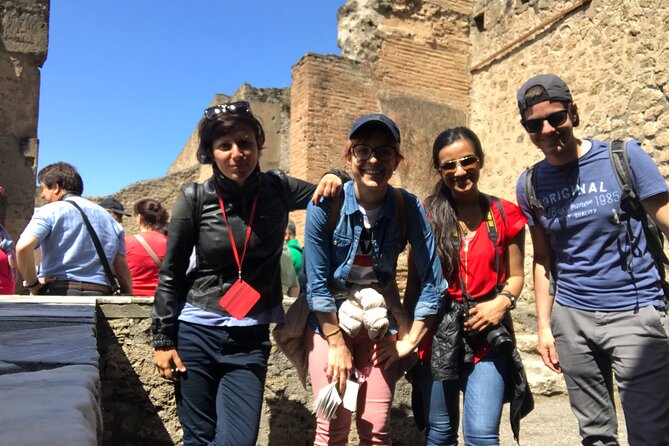
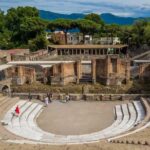
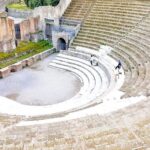
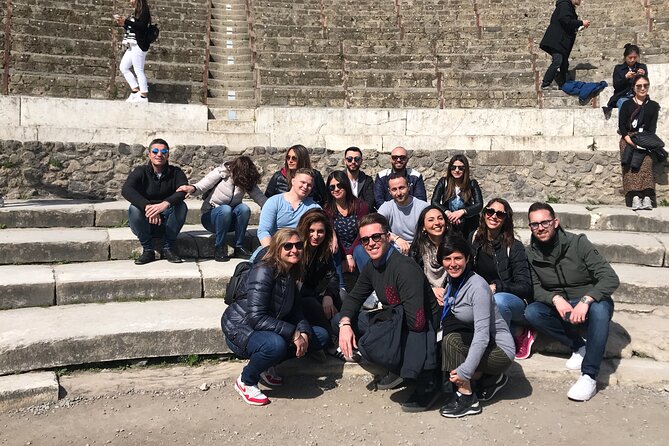
One of the first stops focuses on a small theater, the kind of designated space used for musical and singing performances. That detail matters because Pompeii wasn’t only about emperors and dramatic tragedies. It also hosted everyday entertainment. Once you hear the guide connect the venue to what people actually did for fun, you start noticing the city’s rhythm.
Then you move to Teatro Grande, where Greek and Roman comedy and tragedy performances took place. Even if you already know the idea of Roman theaters, you might not realize how much these venues mattered for public life. They were social engines. People gathered, listened, and shared stories and jokes, all while the city’s political and cultural identity played out in spectacle.
A practical note: theaters are usually easier walking targets than some house interiors. They also give you a chance to regroup mentally. If you are visiting during heat, this kind of early “anchor stop” can make the rest of the walk feel more manageable.
Cross the Main Street and Let Color Do the Teaching
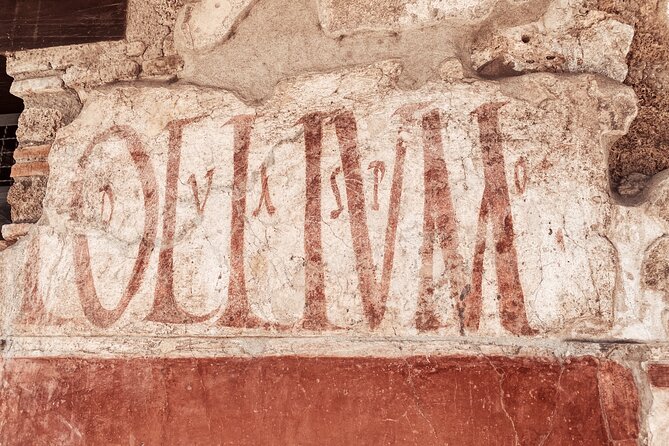
One segment includes crossing the main street of Pompeii to admire its colors. This sounds like a simple visual moment, but it is useful. Pompeii’s streets and facades help you understand that the city was not stone-only. Bright paint and painted details shaped first impressions—and they likely influenced how residents navigated, advertised, and celebrated.
A guide’s value here is subtle. You learn what to look for. Instead of seeing surfaces, you start noticing design choices: how public space communicates status, how walls separate private life from street life, and how the city’s layout guided movement.


The Forum Area: Where Power and Fear Get Brought Back
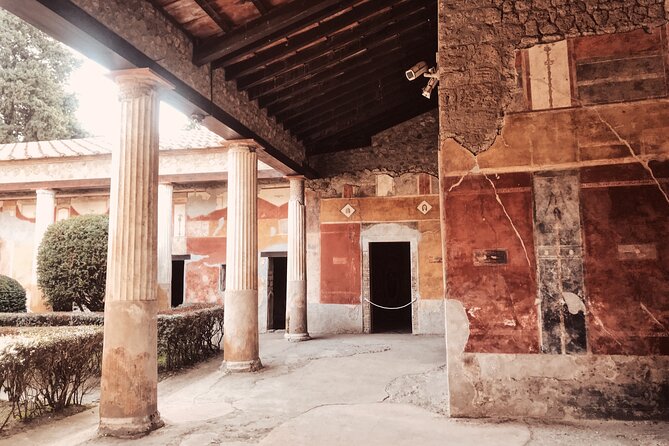
Pompeii’s forum area is where the city becomes most “real.” Not real like modern life, but real in the sense that you see the civic backbone: community spaces, institutions, and what happens when disaster hits.
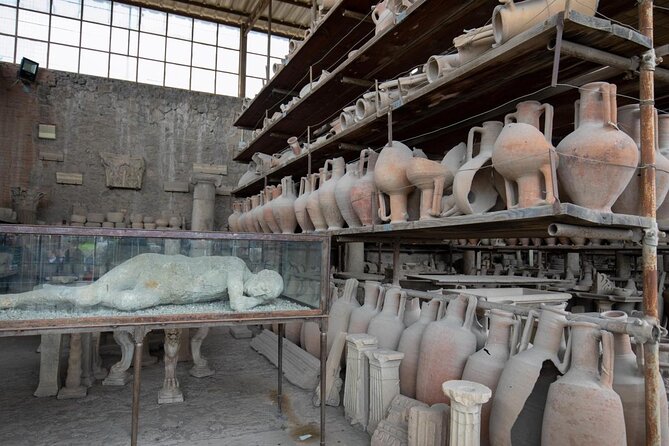
The tour includes the Granai del Foro, where barns near the forum let you see casts of victims who died during the 79 AD eruption. This stop is heavy, but it is also essential. You cannot understand Pompeii as a living city unless you face the catastrophe as part of the story. Your guide helps keep it grounded—what these forms represent and why the site preserved evidence in this way.
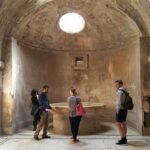
Next come the Stabian Baths (Terme Stabiane), famous for colorful frescoes. Baths can be one of the most visually rewarding stops, especially if you like art and everyday architecture. People used bath spaces for hygiene, conversation, and downtime. Standing here with an explanation in mind helps you read the rooms like a routine rather than a museum display.
Then you’ll visit the Foro di Pompei, the main square, followed by Pompei La Basilica, which served as the seat of court and justice. That pairing matters: the forum was not just about speeches and statues. It was about decisions, commerce, and legal life. When you connect the square to the basilica, the city feels organized around human behavior—arguing, working, settling disputes, and gathering in the same spaces.
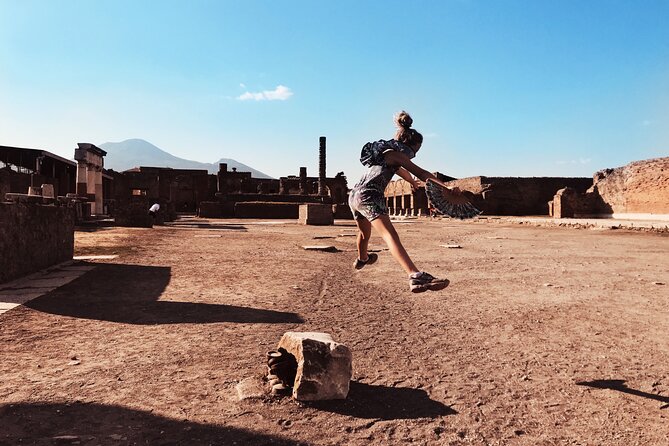
You also get a stop at the Temple of Jupiter, with Vesuvius as its backdrop. This is where Pompeii’s geography becomes part of the viewpoint. The volcano is not an abstract threat here—it is physically framed by the city. You understand why the relationship between worship, power, and the landscape was so direct.
Theatres District: Training, Power, and the Lupanar
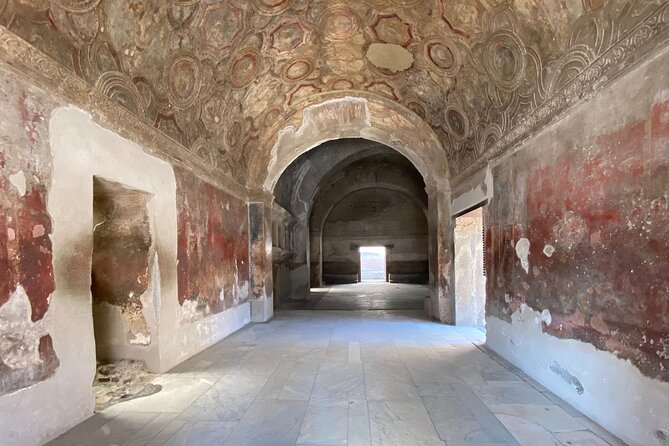
Another key area focuses on the quadriporticus of the theaters, and within that zone you get to see the Gladiator Barracks—including apartments and where gladiators trained. This is one of those stops where a guide can turn architecture into character. You start imagining routines: training cycles, living quarters, and the social world that formed around performance fighting.
Then you move to the Lupanar, Pompeii’s old red light district. This is not a stop most people put on their “maybe” list until they are there. But it changes your understanding of how the city functioned. The lupanar is a reminder that Pompeii had a full spectrum of social life, including the commercial side of entertainment and desire. Your guide’s role is important here: they help you interpret rather than sensationalize.
You also stop at the Temple of Venus, where the city venerated the divinity connected with love and fertility. Pairing a temple with the lupanar in the same broader outing creates a fast reality check: Pompeii’s spirituality and its street life were intertwined. In a short tour, this kind of contrast is a powerful way to learn.
Casa del Fauno: Why One House Can Make Pompeii Click
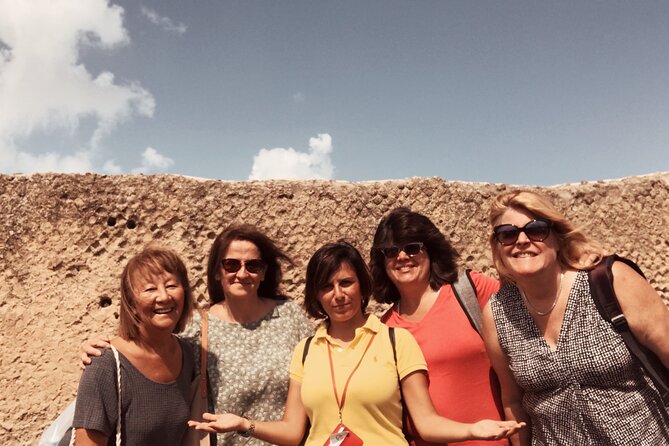
The tour ends with Casa del Fauno, one of the richest and most luxurious residences in Pompeii. If you have ever wondered why Pompeii feels so emotional and personal, houses like this are often the reason.
Luxury spaces show you daily choices: how rooms connect, how wealth was displayed, and how people lived differently depending on class. A guide helps you notice details that you would likely skip alone—like how certain areas functioned for gatherings or how decoration and layout reinforced status.
At the same time, this is not just a “rich people museum.” Pompeii houses can teach you about family life, privacy, and public-facing behavior. When you walk out of Casa del Fauno feeling like you understand how status shaped space, you’re getting the point of guided time.
Price and Value: What You’re Paying For
At $217.69 per person for about 2 hours, this tour is not a budget add-on. So the value needs to make sense, and for most first-timers it does.
Here’s what you are really paying for:
- Skip-the-line entry saves time and reduces the frustration of waiting at one of Italy’s most popular archaeological sites
- An archaeologist guide (often Eliana Sandretti, with other guides like Dario, Francesco/Francisco, or Anna mentioned in the guiding team) gives you context, not just navigation
- Admission is included for the featured areas, so you are not juggling ticket math while trying to enjoy your day
- The group is limited to 10, which usually means fewer interruptions and more room for questions
If you compare this to the cost of hiring a random guide or piecing together tickets yourself, the “all-in” approach is often easier. It also protects your schedule. Pompeii is a place where a half-day plan is often better than a vague plan.
Who Should Book This Tour (And Who Might Want a Longer Plan)
This tour is ideal if:
- You have limited time in Pompeii and want major highlights connected by story
- You like asking questions and want answers grounded in excavation and architecture
- You want a calmer experience than the biggest crowds, thanks to small group size
You might want a different approach if:
- You want to spend long stretches in one area, like staying in baths or one especially detailed house
- You are sensitive to noise or distance—stay close to your guide if you need the explanation clearly
- You are traveling very slowly and need lots of rest breaks throughout the two-hour walk
Heat is another factor. One review specifically encouraged preparing for hot weather with water, sunscreen, and a hat or umbrella. The tour is outdoors and moves between sun-exposed spaces, so don’t treat Pompeii like an indoor museum day.
Practical Tips That Make the Tour Easier
A few small moves can improve your experience:
- Wear comfortable shoes. Pompeii’s surfaces aren’t gentle, and you are covering multiple zones
- Bring water and sun protection, especially if you are visiting midday
- If you have mobility needs or are with a stroller, ask how the route will work for you; one review mentioned the guide helped manage a stroller over tougher parts
- Consider going later in the day when it is less busy. One review recommended starting at 4pm for a calmer feel and easier pacing
Should You Book This Pompeii Skip-the-Line Archaeologist Tour?
Book it if you want the smart shortcut: skip-the-line access, a small group, and an archaeologist-style guide who helps you connect the dots between theaters, baths, the forum, and elite homes.
Skip it (or add extra time) if you already plan to spend a full day in Pompeii and you prefer to roam slowly at your own pace without being on a fixed route. Also, if you know you’ll struggle hearing from a moving guide, position yourself closer to the front and be ready to ask for repeats.
For most visitors, this is a strong match for a short visit because it turns Pompeii from a list of ruins into a city you can actually picture.
FAQ
How long is the Pompeii Small Group with an Archaeologist and Skip The Line tour?
The tour lasts about 2 hours.
What is included in the ticket price?
Admission tickets for the main stops are included, along with an authorized tourist guide and archaeologist guidance during the tour.
What group size is this tour?
The group is limited to a maximum of 10 travelers.
Is this tour offered in English?
Yes, it is offered in English.
Do I need to print anything or can I use a mobile ticket?
You get a mobile ticket.
Where does the tour start?
The meeting point is at Ristorante Suisse, Piazza Esedra, 10/13, 80045 Pompei NA, Italy.
Is transportation included?
No, transport is not included.
Are food and drinks included?
No, food and drinks are not included.
Is cancellation free, and how far in advance can I cancel?
Cancellation is free. You must cancel at least 24 hours in advance for a full refund, and the experience may also be rescheduled or refunded if it is canceled due to poor weather.