REVIEW · POMPEII
Private Archaeologist service to explore Pompeii’s secrets any time ticket incl.
Book on Viator →Operated by Pompei Trip&Transfer · Bookable on Viator
Pompeii feels manageable with a private guide. This plan is interesting because you can choose your start time, slip in with skip-the-line entry, and get commentary built for your group only.
I especially like that the tour keeps things focused instead of turning into a sprint through rooms and streets. And yes, you still cover the big “wow” stops without the usual Pompeii chaos.
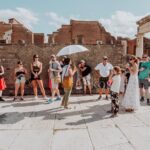
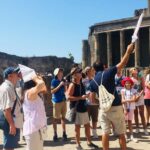
Another thing I really like: the guide adapts on the spot. With guides like Mari and Giancarlo, the tour style is practical—clear explanations, answers to questions, and pacing that lets you actually look. You also hear everything as you walk, not while reading tiny labels later.
One possible drawback to consider: in about 2 hours you cover a handful of key sites. If you want to wander the entire park on your own afterward, you’ll want to plan extra time.
In This Review
- Key points worth knowing
- Why this Pompeii tour works better than the big-group versions
- Price and timing: what $144.03 buys you
- Meeting at Camping Zeus: start here, stay organized
- Stop 1: Archaeological Park of Pompeii with skip-the-line entry
- Stop 2: Casa del Fauno and the scale of daily luxury
- Stop 3: Casa del Poeta Tragico and the paintings that do the talking
- Stop 4: Teatro Grande, Odeion, and why Pompeii still performs
- The private guide effect: what you’ll notice on the ground
- Who this tour is best for
- Should you book it?
- FAQ
- Is this a private tour?
- What’s included in the price?
- How long does the tour take?
- What sights are included?
- What language is the guide?
- Where do we meet?
- Can I cancel for a full refund?
Key points worth knowing
- Skip-the-line ticket entry keeps your first minutes in Pompeii from getting eaten by queues
- Your own group only means less waiting and more back-and-forth questions
- Four tightly chosen stops: Casa del Fauno, Casa del Poeta Tragico, Teatro Grande, plus the park orientation
- English-speaking guide service with a “here’s what you’re seeing and why it matters” approach
- Flexible start time helps you match Pompeii to the rest of your day
- Real-world help like organizing taxis and handling small logistics has shown up with some guides
Why this Pompeii tour works better than the big-group versions
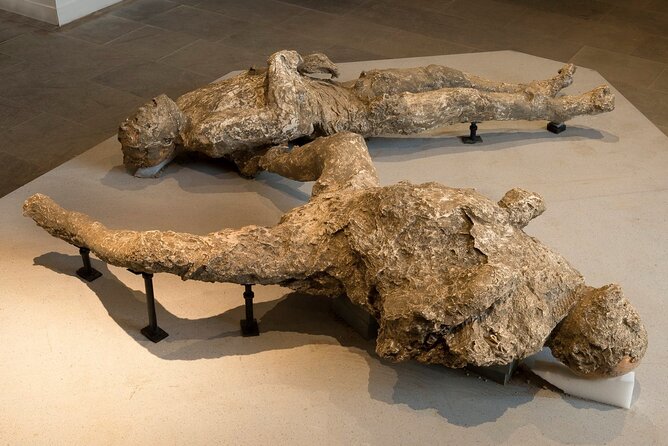
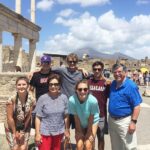
Pompeii is one of those places where the wrong plan turns a miracle into misery. If you show up with a standard group tour, you often spend time herding people, stopping for photos, and listening while your feet cool down. This private format fixes the rhythm. You arrive, you get through the ticket process without the long delay, and then you move site to site with a guide talking directly to your group.
I also like the balance of “must-see” and “not just the postcard.” The tour doesn’t try to cover everything in the park. Instead, it chooses the kind of stops where you can learn the layout of everyday life—homes, art, and public space—and then connect them with context as you go.
Finally, there’s an important quality-of-life factor: the tour is done in English, and communication is straightforward. That matters a lot at Pompeii, where so much of the story depends on details—paintings, architecture, and even what people did in public.
You can also read our reviews of more tours and experiences in Pompeii


Price and timing: what $144.03 buys you
At $144.03 per person, this isn’t a bargain-basement deal. But the value comes from combining three things that normally cost you time or money: a private official guide, admission to the Pompeii Archaeological Park, and fast entry that prevents your morning from turning into queue-time.
The tour is listed at about 2 hours. The guide service is described as around 2.5 hours for the private guided experience, so think of it as a short, high-impact visit rather than an all-day tour. In practice, that’s a good match for most schedules: you’ll see the centerpiece homes and theater areas, learn the main threads, and still have energy left to explore more on your own afterward if you want.
If you’re traveling with a smaller group, the private setup tends to feel even better. You’ll spend less time waiting for other people’s pace and more time getting questions answered while you’re standing exactly where the story happened.
Meeting at Camping Zeus: start here, stay organized
You meet at Camping Zeus, Via Villa dei Misteri, 3, 80045 Pompei (NA), Italy. The location is near public transportation, which is handy if you’re not driving or if parking is a pain on your day.
This kind of meeting point matters in Pompeii because the site is big, and directions can get messy when the crowds hit. Starting at a clear, fixed spot means you’re less likely to waste your first hour trying to find the right entrance and the right line.
Also, the tour includes ticket entry, so you’re not stuck managing a ticket purchase while everyone else begins stomping around the ruins. One of the smartest parts is the “skip the line to the ticket office” approach at the start—so you lose less time before you ever see a single wall painting.
Stop 1: Archaeological Park of Pompeii with skip-the-line entry
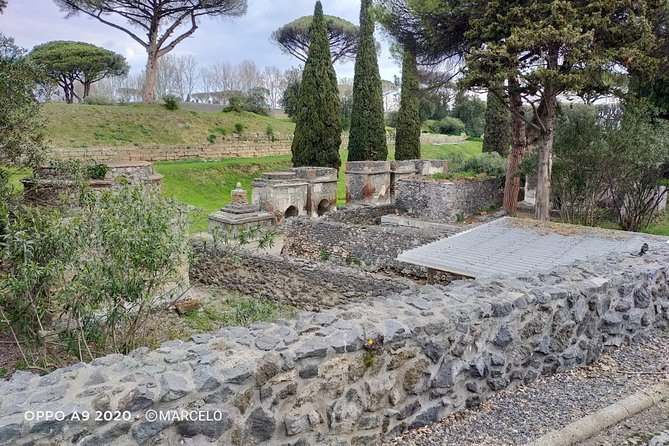
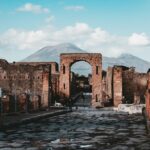
Your first stop is the Archaeological Park of Pompeii, where the private service starts with skipping the line to the ticket office. Admission is included, so you don’t need to juggle payment steps while your group gathers.
This first hour is where a good guide earns their keep. The aim isn’t to overwhelm you with every fact known to archaeology. It’s to get your bearings—how Pompeii is organized, what areas you’re heading toward next, and what you should notice while you’re walking. At Pompeii, your eyes matter. A guide helps you see things you might otherwise overlook: changes in architecture, the purpose of spaces, and the way daily life shows up in the layout.
This is also the moment when questions work best. Once you’ve stood in the right spot and learned how to read it, it’s easier to understand why the later homes and public areas connect to the broader story of the city.
Stop 2: Casa del Fauno and the scale of daily luxury
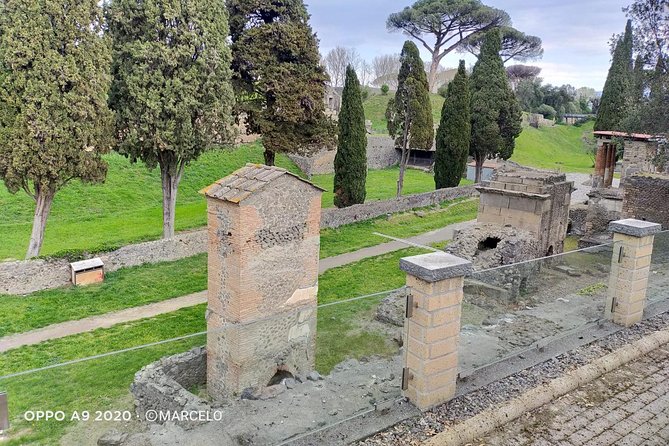
Next up is Casa del Fauno, famous for the Dancing Faun theme and for its overall size. The home is built in the 2nd century, then expanded in the century after. The tour frames it as one of Pompeii’s most beautiful and also among the widest houses in the city, with about 2,970 square meters of space.
That number matters because it changes how you imagine the family who lived there. This isn’t a tiny townhouse. It’s the kind of property that would feel like a small world inside the city. A guide helps you understand why a large house like this wasn’t just about comfort—it was about status, space management, and hosting.
You’ll spend about 20 minutes here. That’s enough time to see the main layout and absorb the key visual points without turning it into an endless stop. The best approach is to keep your eyes moving: notice how the house is arranged, how rooms connect, and how the space would have been used day to day.
You can also read our reviews of more private tours in Pompeii


Stop 3: Casa del Poeta Tragico and the paintings that do the talking
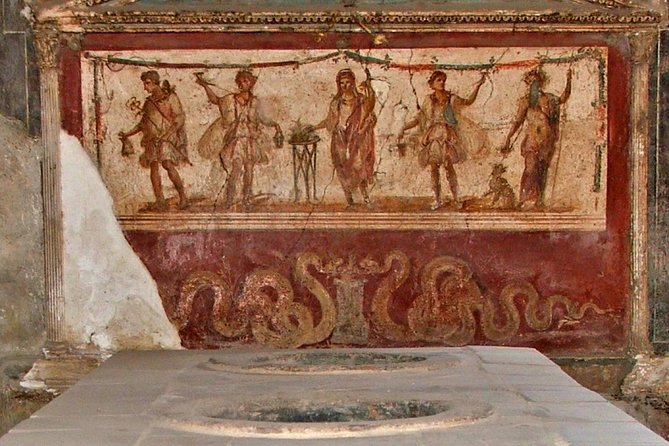
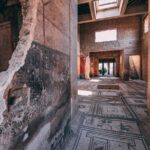
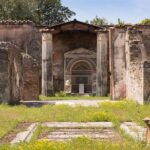
Then you move to Casa del Poeta Tragico, a richly decorated home often associated with the famous warning inscription Cave Canem (watch out for the dog). Even without becoming a full-time art history student, you can feel why this stop is one of the big highlights.
What makes it special here is the artwork. The home includes some of Pompeii’s most admired paintings, often with mythological subjects. In the entrance hall, you’ll see striking representations, including Zeus and Hera and Achille and Briseide.
You’ll get about 20 minutes in this house. That’s a good time window: long enough to notice the scenes and learn how to connect them to the idea of myth and identity, but short enough that you don’t rush past the best parts.
A fair heads-up: houses like this can be visually similar if you’re tired. This is where a strong guide makes the difference—because the point isn’t just seeing paint on walls. It’s understanding what you’re looking at and how it fits into the life of the people who lived there.
Stop 4: Teatro Grande, Odeion, and why Pompeii still performs
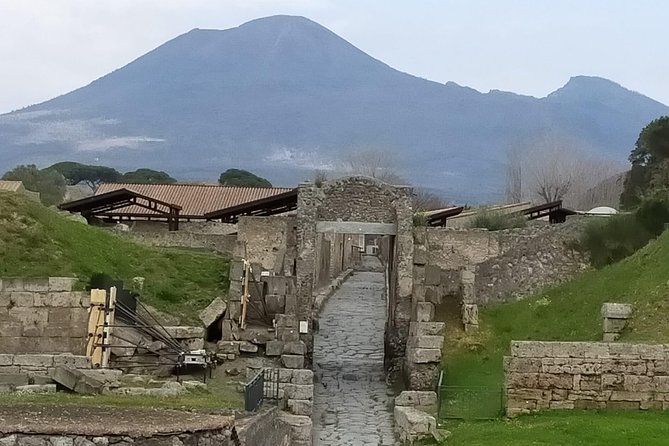
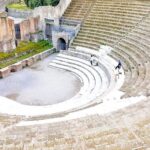
The last stop is Teatro Grande, and this is where a guide’s phrasing really matters. It’s not quite correct to call it only a single theatre. There were actually two: the larger theatre (uncovered) and a smaller one (covered) called the Odeion.
The tour also points out something that helps you connect then-and-now. The large theatre is still used for shows today. That continuity can make the ruins feel less frozen in time and more like a real city space that stayed in use.
You’ll spend about 10 minutes here. Short, yes—but it’s a sensible ending. You’ve already learned how people lived in homes and painted their values. The theatre finishes the picture with public life—gathering, performances, and city identity.
If you like photo stops, this is also a better choice than trying to squeeze in every viewpoint. The theatre space is visually strong and easy to understand with a quick guide framework.
The private guide effect: what you’ll notice on the ground
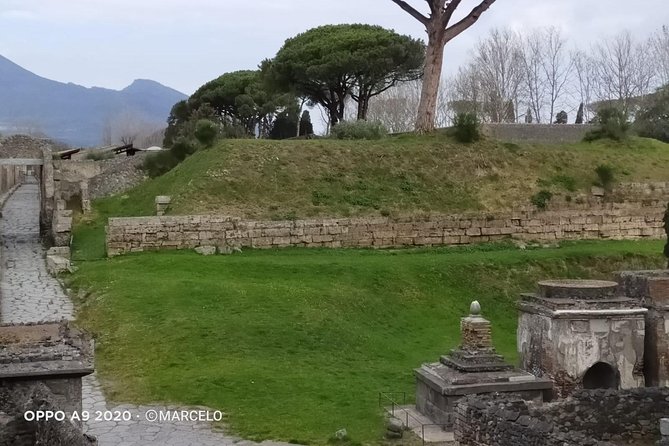
A big theme across the guide examples is simple: you get answers as you go. Guides like Mari, Giancarlo, Luca, and JohnLuca are described as practical storytellers who keep people engaged—adults and teenagers included—without turning Pompeii into a lecture.
You’ll also notice the pacing. One guide style is to move you through areas efficiently, so you spend less time stuck in dense groups. Another style is to tailor the explanations to what your group cares about—archaeology details, architecture, or the human side of daily life.
There’s also a very “real vacation” advantage in some cases. Some guides have been noted helping with small logistics like storing backpacks and even assisting with taxis after the tour. That kind of help doesn’t replace good planning, but it reduces the stress once you’re done walking.
Who this tour is best for
This private format works especially well if you:
- Want Pompeii without the herd and prefer your group moving at your pace
- Care about getting explanations tied to what you’re seeing right now
- Travel with teens or mixed ages and need storytelling that holds attention
- Prefer English narration and easy communication over translating on your phone
It’s also a solid fit if your schedule is tight. You’re not losing half the day to administration or to a long crawl through areas you may not even enjoy.
If you want to cover dozens of spots across the entire park, this might feel short. In that case, I’d treat it as the “guided core,” then add self-guided time afterward.
Should you book it?
I’d book this private Pompeii experience if you value time and clarity more than ticking off every building. The skip-the-line entry, the four well-chosen stops, and the private guide format make Pompeii feel less like a chore and more like a story you can actually follow.
I’d reconsider if you’re the type who wants to roam the park freely for hours, making your own route and staying as long as you want in each area. This tour is designed for focus, not total sprawl.
FAQ
Is this a private tour?
Yes. It’s a private tour/activity, and only your group participates.
What’s included in the price?
The private official guide service and the ticket entrance to the Pompeii Archaeological Park are included.
How long does the tour take?
The tour is listed at about 2 hours, and the guided private experience is described as around 2.30 hours.
What sights are included?
The tour includes the Archaeological Park of Pompeii, Casa del Fauno, Casa del Poeta Tragico, and Teatro Grande.
What language is the guide?
The guide service is offered in English.
Where do we meet?
You start at Camping Zeus, Via Villa dei Misteri, 3, 80045 Pompei NA, Italy, and the tour ends back at the meeting point.
Can I cancel for a full refund?
Yes. You can cancel for a full refund up to 24 hours before the experience start time.